Volume: 14 Issue: 3 November 2016 - Supplement - 3
FULL TEXT
Objectives: Human leukocyte antigens and HLA-specific antibodies are important before and after transplant treatment. The determination of the alloantibodies before transplant is useful for the estimation of risk for antibody-mediated rejection. Virtual crossmatch uses solid-phase assay to detect anti-HLA antibodies and allows exclusion of donors with unacceptable HLA antigens. The aim of our retrospective study was to investigate HLA class I and class II alleles and panel reactive antibody and Luminex Corporation (Austin, TX, USA) single-antigen bead assay positivity frequencies in the Southeastern region of Turkey
Material and Methods: Tissue typing results for HLA class I (HLA-A, HLA-B, HLA-C) and class-II (DRB1and DQB1 haplotypes) in 1756 patients and 2951 donors who were at Baskent University Adana Research and Medical Center between 2010 and 2015 for transplant were studied using sequence-specific primers and/or sequence-specific oligonucleotides. Serum samples were analyzed by Luminex bead technology for antibody detection.
Results: We found that, for class I, HLA-A*02,HLA-B*35, and HLA-A*24 and, for class II, DRB*11, DRB*01, and DRB*04 were the 4 most common antigens and HLA-A02, B49, A68, B7 were the 3 most common anti-HLA antibodies, with mean fluorescence intensity values ≥ 2000 in our population group. Human leukocyte antigen alleles and anti-HLA antibodies were compared with each other except HLA-A*02, A2, with no correlations between allele and panel reactive antibody frequencies identified. However, there was a weak correlation between panel reactive antibodymean fluorescence intensity scores of 5000 and above with Luminex single-antigen bead assay.
Conclusions: This study is the first to conduct such a mass screening of a Turkish population. Our study results show that there is no correlation between HLA frequencies and anti-HLA antibody frequencies. However, there was a weak correlation between panel reactive antibody mean fluorescence intensity scores of 5000 and above with Luminex single-antigen bead assay. Of note, this pattern is important to know for virtual cross-match.
Key words : Panel reactive antibody, Single antigen, Rejection
Introduction
The most important immunologic complication is the rejection of graft by host. Human leukocyte antigen (HLA) and HLA-specific antibodies are key aspects before and after transplant. The knowledge and the determination of HLA frequency distributions are of great importance for identifying which donor is a possible match.1,2 Humoral and cellular responses are evaluated by immunologic tests such as HLA typing and anti-HLA panel reactive antibodies (PRA) screening and specificities, which are made to predict pretransplant potential risks and to clarify the reasons for posttransplant immunologic responses. Panel reactive antibody screening presents the degree of sensitization by percentage and depends on the panel composition. Calculated PRA is the percentage of donors expected to have HLA antigens listed as unacceptable for a candidate on a wait list, considering HLA antigen frequencies of the target population.3,4 Human leukocyte antigen-specific antibody profiles are more accurately identified by Luminex Corporation (Austin, TX, USA) technology, with acceptable (antibody-negative) and unacceptable (antibody-positive) HLA specificities easily determined.
The aim of our retrospective study was to investigate the HLA class I and class II alleles and PRA and Luminex single-antigen bead assay (LSA) positivity frequencies in the Southeastern region of Turkey.
Materials and Methods
This retrospective study was conducted by the Immunology and Tissue Typing Laboratory, Baskent University, Adana, Dr. Turgut Noyan Research and Medical Center. Human leukocyte antigen typing results were obtained from 1756 patients and 2851 donors seen at our center for transplant between 2010 and 2015. Class I (HLA-A, HLA-B, HLA-C) and class II (HLA-DR, HLA-DQ) antigens were determined by molecular techniques (Lifecodes SSO typing kit, Immucor Inc, Norcross, GA, USA) and by Luminex. Anti-HLA/donor specific antibodies (DSA) determinations were performed (from pretransplant sera of all patients) with anti-HLA class I and class II antibody Luminex Lifecodes single-antigen beads. All immunologic test results were systematically observed for predicted immunologic risk profiles in the posttransplant period. We also evaluated the previous 5-year complement-dependent crossmatches, flow-cytometer crossmatches, PRA screening results and specificities, and LSA results. During the evaluation process, duration, cost-effectiveness, sensitivity and specificity, and clinical usefulness of all tests were examined.
We investigated 51 PRA-positive patients (mean fluorescence intensity [MFI] ≥ 2000). Serum samples were analyzed by Luminex bead technology for antibody detection. Panel reactive antibody class I and class II results were compared with LSA class I and class II results. All patient serum samples were evaluated before and/or after transplant for complement-dependent cytotoxicity crossmatch and flow-cytometry crossmatch. Anti-HLA antibodies were studied by LSA bead assays that used a panel of color-coded beads coated with purified single HLA antigens. The beads included class I (HLA-A, HLA-B, HLA-C) and class II (HLA-DR, HLA-DQ) antigens. Antibody specificity and strength were analyzed with HLA Fusion Software (Hologic, Inc., Marlborough, MA, USA). The cutoff value for a positive DSA was a MFI of ≥1000.
Statistical analyses
Reliability analysis of congruence between PRA and LSA was tested and
assessed by intraclass correlation coefficients. Correlation coefficients were
interpreted as either having an excellent(r ≥ 0.91), good (0.90 ≤ r ≥ 0.71),
fair (0.70 ≤ r ≥ 0.51), weak (0.50 ≤ r ≥ 0.31), or little or no relation (r ≤
0.3). P = .01 was taken as level of significance. P < .05 was
considered statistically significant.
Results
In this study, HLA allele frequencies were determined initially in 4707 cases. These data are important to the allele distribution in the region. Class I HLA-A*02, B*35, A*24, B*51, B*44, C*04, C*07, C*12 and class II HLA-DRB*11, DRB*01, DRB*04, DQB1*03, DQB1*05, DQB1*06 were shown to be the most common alleles in the Southeastern region of Turkey (Table 1). Panel reactive antibody class I and II definitions were analyzed in transplant candidate patients, with MFI values above 2000 identified. For PRA class I A02, A68, A23, B49, B37, and B7 and class II DR7, DR14, DR11, DQ9, DQ8, and DQ2, the 3 most common HLA alleles and anti-HLA antibodies were compared with each other (except HLA-A*02, A2), and no correlation between allele and PRA frequencies was identified (Table 1).
Discussion
In our study, we found that HLA-A*02, B*35, and A*24 and HLA-DRB*11, DRB*01, and DRB*04 are the 3 most important alleles in this population for class I and class II. Our data are in in accordance with other studies in Turkey. In 2 of these studies, the samples were selected from individuals who lived in Istanbul, with the other study reporting on the East Anatolia region.5-7Arnaiz-Villena and associates investigated HLA alleles and haplotypes in the Turkish population (n = 228). They observed that HLA-A*02,HLA-B*51, and HLA-DRB1*11 are the most frequent HLA alleles in unrelated Turkish individuals.8 According to the literature, HLA-A*02, HLA-B*51, and HLA-DRB1*11 are found in Armenians and HLA-A(∗)02, HLA-B(∗)35, and HLA-DRB1(∗)11 are found in Brazilian renal transplant candidates.9,10 When we look at the PRA positivity, we found that A02, A68, A23, B49, B37, B7, DR7, DR14, DR11, DQ9, DQ8, and DQ2 were the most common anti-HLA antibodies. When we compared them with each other (except HLA-A*02, A2), we did not find any correlation between allele and PRA frequencies. However, some researchers demonstrated correlations between PRA positivity and HLA antigens in highly sensitized patients.11,12 In these studies, the antibodies were analyzed with single antigen bead array by using LUMINEX. A positive correlation between PRA and LSA could not be detected. Importantly, there was a weak correlation between PRA MFI scores of 5000 and above with LSA. Evaluation of PRA class II positivity along with LSA and MFI values should increase the potential of transplant in patients with high PRA levels who are nearing the top of deceased-donor waiting list.
Conclusion
This is the first study to conduct a mass screening of a Turkish population. Our study showed no correlations between patients and donors. Therefore, we can accept our results as the real HLA frequencies independent from hematologic disease and end-stage renal failure. There is no correlation between HLA alleles and anti-HLA antibody frequencies. However, PRA specificity results are not always correlated with LSA. There was a weak correlation between PRA MFI scores of 5000 and above with LSA. It is important to know these findings for virtual crossmatching.
References:
- Schmidt AH, Baier D, Solloch UV, et al. Estimation of high-resolution
HLA-A, -B, -C, -DRB1 allele and haplotype frequencies based on 8862 German
stem cell donors and implications for strategic donor registry planning. Hum
Immunol. 2009;70(11):895-902.
CrossRef - PubMed - Hurley CK, Maiers M, Marsh SG, Oudshoorn M. Overview of registries, HLA
typing and diversity, and search algorithms. Tissue Antigens. 2007;69(Suppl
1):3-5.
CrossRef - PubMed - Cecka JM. Calculated PRA (CPRA): the new measure of sensitization for
transplant candidates. Am J Transplant. 2010;10(1):26-29.
CrossRef - PubMed - Paramesh AS, Zhang R, Baber J, et al. The effect of HLA mismatch on
highly sensitized renal allograft recipients. Clin Transplant.
2010;24(6):E247-E252.
CrossRef - PubMed - Uyar FA, Dorak MT, Saruhan-Dreskeneli G. Human leukocyte antigen-A,-B
and -Calleles and human leukocyte antigen haplotypes in Turkey: relation to
other population. Tissue Antigens. 2004;64(2):180-187.
CrossRef - PubMed - Saruhan-Direskeneli G, Uyar FA, Bakar S, Eraksoy M. Molecular analysis
of HLA-DRB1,-DQA1 and DQB1 polymorphism in Turkey. Tissue Antigens.
2000;55(2):171-174.
CrossRef - PubMed - Kayhan B, Kurtoglu EL, Taskapan H, et al. HLA-A, -B, -DRB1 allele and
haplotype frequencies and comparison with blood group antigens in dialysis
patients in the East Anatolia region of Turkey. Transplant Proc.
2013;45(6):2123-2128.
CrossRef - PubMed - Arnaiz-Villana A, Dimitroski K, Pacho A, et al. HLA genes in Macedonians
and the sub-Sharan origin of the Greeks Tissue Antigens. 2001;57(2):118-127.
CrossRef - PubMed - Ivanova M, Rosemuller E, Tyufekchiev N, Michailova A, Tilanus M, Naumova
E. HLA polymorphism in Bulgarians defined by high-resolution typing methods
in comparison with other populations. Tissue Antigens.2002;60(6):496-504.
CrossRef - PubMed - Ravazzi Gauch C, Bajay MM, Caldas HC, Abbud-Filho M. HLA-A, -B, and
-DRB1 allele and haplotype diversity in a cohort of Brazilian renal
transplant candidates. Hum Immunol. 2016;77(6):464-469.
CrossRef - PubMed - Heise E, Manning C, Thacker L. HLA phenotypes of ESRD patients are risk
factors in the panel reactive antibody response. Clin Transplant.
2001;15(Suppl 6):22-27.
CrossRef - PubMed - Karahan GE, Kekik C, Oguz FS, et al. Association of HLA phenotypes of
end-stage renal disease patients preparing for first transplantation with
anti-HLA antibody status. Ren Fail. 2010;32(3):380-383.
CrossRef - PubMed

Volume : 14
Issue : 3
Pages : 53 - 55
DOI : 10.6002/ect.tondtdtd2016.P5
From the 1Department of Immunology, Baþkent University, Ankara,
Turkey; and the 2Baþkent University Adana Research and Medical
Center, Immunology Tissue Typing Laboratory, and the 3Baþkent
University Adana Research and Medical Center Biostatistics Unit, Adana, Turkey
Acknowledgements: The authors declare that they have no sources of
funding for this study, and they have no conflicts of interest to declare.
Corresponding author: Bilkay Baþtürk, Baskent University Faculty of
Medicine, Department of Immunology, Adana Dr Turgut Noyan Research and Medical
Center, Transplantation and Tissue Typing Laboratory, Adana, Turkey
Phone: +90 322 327 2727 ext. 2500
E-mail:
bilkay@baskent-adn.edu.tr
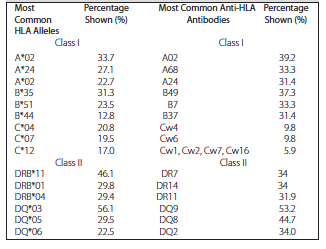
Table 1. The Most Common HLA Alleles and Anti-HLA Antibodies