Volume: 14 Issue: 3 November 2016 - Supplement - 3
FULL TEXT
Objectives: The aim of this study was to investigate the present status regarding brain death, its consequences, and transplant activities in Islamic countries.
Materials and Methods: A thorough literature survey was conducted about transplant activities in Islamic countries, and the Turkish Ministry of Health Web site was analyzed. Expert opinions about the issue were obtained.
Results: The present status of brain death and transplant activities has shown a heterogeneous appearance in the Islamic world. Our literature survey clearly revealed that transplant is still in its early stages in many Islamic states. The legislative framework, infrastructure, and related education needs radical improvements in these states.
Conclusion: The concept of death has to be redefined and a consensus should be reached about brain death. The pioneer countries like Turkey, Iran, and Saudi Arabia. which already have considerable experience in transplant, should share their expertise and knowledge with the countries that need guidance.
Key words : Islamic ethics, Organ donation, Organ transplant, Religious officials
Introduction
Countries with at least 50% of their population belonging to Islam religion may be called Islamic states. Muslim countries constitute the world’s second largest religious group. It is estimated that there are 1.6 billion adherents, making up over 22% of the world population. Islamic countries are geographically located in northern Africa, the entire Middle East except Israel, partly in Central Asia, and in the Far East (Indonesia and Malaysia) ( Figure 1).
In addition to these countries, Muslims live as minorities in many major European countries, in the United States, in Australia, in Suriname, and in Guyana. Islam is a dynamic religion. Ijtihad and Fatwas are very important in social and religious life. The Koran states that saving the life of 1 person is as great a charity as saving the life of the whole of humanity.
In this study, our aim was to investigate the present status regarding the concept of brain death, its applications, and transplant activities in Islamic countries.
Materials and Methods
We conducted a thorough PubMed search using the key words “brain death,” “Islamic ethics,” “Islam religion,” “organ donation,” and “transplantation and transplant.” The pertinent manuscripts were read. We also analyzed transplant activities as reported on the Turkish Ministry of Health Web site. Opinions of experts were obtained through verbal communication.
Results
The present status of brain death and transplant activities has shown a heterogeneous appearance in the Islamic world. The literature survey clearly revealed that transplant is still in its early stages in many Islamic states, with many basic problems still needing to be solved. The legislation, infrastructure, and education surrounding these concepts need radical improvements in these states. Religion seems to play a role in the attitude of many people towards brain death, organ donation, and transplant.
The initial step should be to redefine the concept of death, since it is still controversial from legislative and religious perspectives as to when an individual is considered dead. A consensus about brain death is needed. The pioneer countries in transplant (Turkey, Iran, and Saudi Arabia), who have considerable experience in transplant, should share their expertise and knowledge with those countries needing support. An example to such cooperation is the leadership of Professor Mehmet Haberal, who recently organized international congresses in Kazakhstan and Azerbaijan that paved the way for more scientific meetings in the future.
Discussion
The discussion is devoted to 4 issues: (1) the concept of death in Islam religion, (2) the concept of brain death in Islam religion, (3) the attitude toward organ donations in Muslim countries, and (d) transplant activities in Muslim countries.
The concept of death in Islam religion
Like Christianity and Judaism, Islam determine death by looking at the cessation
of bodily organs such as the heart, brain, or lungs.1 In 1986,
Islamic scholars and medical experts gathered to produce its “Resolution of the
Council of Islamic Jurisprudence on Resuscitation Apparatus, Amman, 1986.” The
group considered an individual legally dead, all dispositions of the Islamic law
in case of death applying, if 1 of the following criteria is fulfilled: (1)
there is total cessation of cardiac and pulmonary functions, and doctors have
ruled that such cessation is irreversible; and (2) there is total cessation of
all cerebral functions, and doctors have ruled that such cessation is
irreversible and the brain has started to disintegrate.2
The concept of brain death in Islam religion
There is no complete consensus among Muslim leaders about the concept of brain
death. Fear of hastening death and confusion with coma are the main reasons of
hesitation. The Third International Conference of Islamic Jurists organized in
Amman in October 1986 agreed on Resolution No. 5, which considered brain death
practically the same as cardiac death.3
In Iran, the “Organ Transplantation and Brain Death Act” in 2000 legalized donations after brain death.4 A declaration of brain death in Iran is signed by 5 physicians (an internist, a neurologist, a neurosurgeon, an anesthesiologist, and a forensic medicine specialist) appointed by the Ministry of Health and Medical Education.
Organ donation in Muslim countries
Organ donations are generally low among Muslim countries and also low among
Muslims living in other countries as minorities. Most Muslim scholars have
agreed that organ donation is permitted on the conditions that it will help the
recipient with certainty, it does not cause harm to the donor, and the donor
donates the organ or tissue voluntarily and without financial compensation.
In Turkey, the Directorate of Religious Affairs clearly stated that Islamic belief does not interfere with deceased-donor organ transplant. The religious support should be continuous, and muftis and other religious officials should work in cooperation with medical teams and government officials to inform the general public about the concept of brain death and the importance of organ donation from deceased individuals.
A study from Turkey about intellectuality and attitudes of clergy about organ donation revealed that 82% of the 2154 participants stated that Islam allows organ donation. Nineteen participants had organ donation cards, accounting for less than 1%. Fifty-four percent were reluctant to donate their organs themselves, and 56% lacked sufficient knowledge about the subject. No information was available regarding organ donation in Faculties of Theology.5
A survey among the 40 religious officials in the Zeytinburnu district of the city of Istanbul showed that 92.5% of the questioned officials asserted that the religion of Islam looked positively on organ donation and transplant, but 55% stated that the knowledge of the religious officials in the country was inadequate about the subject. The survey also showed that 65% emphasized the important role of religious officials in regard to increasing organ donation. Of those questioned, 52.5% considered their knowledge on organ donation and transplant to be adequate.6
The statistics of the Turkish Ministry of Health has shown that the tendency of families to donate has gradually decreased over the years, as illustrated in Figure 2. In the last 5 years, 23% have agreed to donate; however, this rate was nearly 75% during the first decade of the 21st century. This dramatic decline in contrast to the steadily increasing numbers of reported brain-dead cases has to be questioned, and actual reasons as to why such an attitude has emerged should be investigated.7
The 12th session of the Council of Arab Ministers of Health meeting in Khartum in March 1987 devised the Unified Arab Draft Law on Human Organ Transplants, which states “specialist physicians may perform surgical operations to transplant organs from living or dead person to another person for the purpose of maintaining life, according to the conditions and procedures laid in this law.”
A landmark Fatwa in Saudi Arabia came in Decision No. 99, dated 1982, stating that, according to Islamic Jurisprudence, it is possible to perform deceased-donor transplant, which stimulated deceased-donor renal transplant in this country.8
A study conducted of 400 freshmen of various medical disciplines at Mashhad University of Iran aimed to assess the knowledge of students about religious leader’s Fatwa on organ donation and its effect on willingness to donate organs. The results showed that 41.5% of the students were aware of the religious authorities’ views on organ donation and 55.6% were willing to donate organs. The main reasons for lack of willingness to donate were fear of organ donation before brain death is confirmed (52%), unwillingness to disfigure their body (51%), and belief in the burial of organs (50%). The willingness of organ donation for students who were aware of religious leaders’ opinions was more than twice of those who were not aware. Female gender, the Shia religion, and awareness of the correct definition of brain death were associated factors affecting the desire to donate organs; however, their effects were not statistically significant.9
Research performed in an Arabic-speaking community in Australia revealed that this community was unfamiliar with, unnerved by, and skeptical about the organ donation process. The reasons for this attitude included respecting parental authority, intense emotionality, avoiding taboo, and fearing judgement.10
A study from Egypt aiming to analyze donor motivations in living-donor liver transplant has shown that all donors had expressed the importance of their religious beliefs in their decision.11
Some Muslim scholars claim that living-donor organ transplant, extraction of organs from dead individuals, and transplant are prohibited.12 However, Sheikh Hassanein Makhlouf, the Grand Mufti of Egypt, allowed corneal grafting in 1952. Sheikh Hureidi extended the Fatwa to other organs in 1966. Sheikh Khater permitted harvesting of skin from unidentified bodies in 1973.3
Transplant activities in Muslim countries
In Turkey, the first kidney transplant from a deceased donor was performed on
November 3, 1975, and the first liver transplant from a deceased donor was
performed on December 8, 1988. The first partial liver transplant from living
donor occurred on March 15, 1990. All of these surgeries were done by Professor
Mehmet Haberal and his team. He also initiated the legislative activities about
transplant, which ultimately resulted in passing of the law coded 2238, titled
“Harvesting, Storage, Grafting, and Transplantation of Organs and Tissues” in
1979. There are 72 centers in Turkey that can perform transplant surgery (62
centers for kidney, 19 centers for liver, 9 centers for heart, and 6 centers for
lung). An effectively functioning network titled the “National Coordination
Center” is also in place. Reporting of brain-dead cases to the Ministry of
Health is compulsory by law.
The first kidney transplant in Iran was performed in 1967. A regulated living unrelated donation program was approved by the Council of Guardians, which was set up by the government in 1988 as a national supervised initiative. This organization caused tremendous increases in the number of renal transplant centers and naturally in the number of kidney transplants. Through this way, financial incentives became officially permissible in Iran. In 1997, the Board of Ministers decided on a “Gift of Altruism” to any kidney donor (related or unrelated), further increasing living donations.13 However, Ghahraman and associates14 addressed the serious flaws of the system and claimed that it inhibited substantial growth in deceased-donor organ transplant in the country.
End-stage renal disease is a serious health problem in the Arab states as it is in the rest of the world. In general, Arab countries have a high prevalence of chronic kidney disease. A study in the Tabuk area of Saudi Arabia revealed that the prevalence of end-stage renal disease is 460 cases per million population, with 17% of those patients treated by kidney transplant.15 A similar study from El-Minia Governorate of Egypt showed that the incidence of end-stage renal disease is 367 cases per 1 million population, with only 2% of this group treated with kidney transplant.16
The first kidney transplant in the Arab world was performed in Jordan in 1972 at King Hussein Medical Center.8 The remaining Arab countries performed their first kidney transplants in the 1970s and 1980s, all from living related donors.
The first liver transplants in the Arab countries were performed in Saudi Arabia (1990), with Egypt in 1991, Tunisia and Lebanon in 1998, Algeria in 2003, Jordan in 2004, Libya in 2005, United Arab Emirates in 2007, Kuwait in 2010, and Iraq and Qatar in 2011.17
It has been reported that, in 22 Islamic countries of sub-Saharan Africa, living-donor kidney transplant has only been performed in Sudan and Nigeria. Deceased-donor organ transplant has been considered illegal in this region. In all 5 countries of North Africa, living-donor kidney transplant has been performed. In 14 countries of the Middle East, living-donor kidney transplant is an established practice. Turkey, Iran, and Saudi Arabia have the highest rates of organ transplant activity. In 2013, Turkey had the highest rate of living-donor kidney and liver transplants. In 2013, Iran had the highest rate of deceased-donor kidney and liver transplants. Regarding the 7 Central Asian countries, organ transplant is nonexistent in Afghanistan and Turkmenistan; in the other 5 countries, a limited number of living-donor kidney or liver transplants have been performed. In 6 South-South East Asian countries, living-donor kidney transplant has been performed, with Malaysia having a limited number of deceased-donor kidney transplants. Albania, Suriname, and Guyana have only had a few living-donor kidney transplants performed.18 In Oman, almost all transplants are from living related donors, despite permission from religious and legal authorities to use deceased donors.19
The level and standard of transplant in Islamic countries display a heterogenous appearance. Turkey, Iran, and Saudi Arabia have a developed organ procurement and organ distribution systems and have considerable experience in transplant activities. On the contrary, most Islamic countries still have many drawbacks to transplant, including lack of legislation; insufficient medical infrastructure; untrained medical personnel; and cultural, religious, and traditional beliefs, leading to inadequate awareness of the public about the importance of organ donation and transplant. Patient apprehension, physician bias, commercial incentives that favor dialysis, and geographical remoteness have been reported as probable causes of poor transplant rates in many Arab countries.20,21
The governments, medical scholars, religious leaders, and media should spend every effort to increase the awareness of the general public and also of the medical community about the correct meaning of death, brain death, and benefits of organ donation both from living and from deceased donors. This can be performed by Fatwas in countries where religion dominates the society. The recommended actions are funding campaigns to promote organ donation and increasing the availability of organ donation information at mosques.22 Furthermore there is a need to conduct proper epidemiologic studies on chronic kidney disease in the Arab world and also to stress the importance of prevention measures against chronic kidney disease.23
References:
- Setta SM, Shemie SD. An explanation and analysis of how world religions
formulate their ethical decisions on withdrawing treatment and determining
death. Philos Ethics Humanit Med. 2015;10:6.
CrossRef - PubMed - Padela AI, Shanawani H, Arozullah A. Medical experts & Islamic scholars
deliberating over brain death: gaps in the applied Islamic bioethics
discourse. Muslim World. 2011;101(1):53-72.
CrossRef - PubMed - Albar MA. Islamic ethics of organ transplantation and brain death. Saudi
J Kidney Dis Transpl. 1996;7(2):109-114.
PubMed - Mahdavi-Mazdeh M, Rouchi AH, Rajolani H, Norouzi S, Aghighi M, Ahrabi S.
Transplantation registry in Iran. Transplant Proc. 2008;40(1):126-128.
CrossRef - PubMed - Aykas A, Uslu A, Dogan SM. Intellectuality and attitudes of clergy about
organ donation in Turkey: metasynthesis of observational studies. Transplant
Proc. 2015;47(4):1066-1069.
CrossRef - PubMed - Tarhan M, Dalar L, Yildirimoglu H, Sayar A, Altin S. The View of
Religious Officials on Organ Donation and Transplantation in the Zeytinburnu
District of Istanbul. J Relig Health. 2015 Dec;54(6):1975-85.
CrossRef - PubMed - Turkish Ministry of Health Organ and Tissue Transplantation and Dialysis Official Website. https://organ.saglik.gov.tr/. Accessed 20 July.
- Al Sayyari AA. The history of renal transplantation in the Arab world: a
view from Saudi Arabia. Am J Kidney Dis. 2008;51(6):1033-1046.
CrossRef - PubMed - Afzal Aghaee M, Dehghani M, Sadeghi M, Khaleghi E. Awareness of
Religious Leaders' Fatwa and Willingness to Donate Organ. Int J Organ
Transplant Med. 2015;6(4):158-164.
PubMed - Ralph AF, Alyami A, Allen RD, et al. Attitudes and beliefs about
deceased organ donation in the Arabic-speaking community in Australia: a
focus group study. BMJ Open. 2016;6(1):e010138.
CrossRef - PubMed - Abdeldayem H, Kashkoush S, Hegab BS, Aziz A, Shoreem H, Saleh S.
ِAnalysis of donor motivations in living donor liver transplantation. Front
Surg. 2014;1:25. doi: 10.3389/fsurg.2014.00025. eCollection 2014.
CrossRef - PubMed - Kuddus RH. Islamic founding principles on organ transplantation and the
evolution of Islamic scholarly opinions on the subject. Transplant Proc.
2014;46(6):2043-2045.
CrossRef - PubMed - Mahdavi-Mazdeh M, Rouchi AH, Khatami SM. Development of a kidney
transplantation program--inverted funnel approach. Clin Nephrol. 2015;83(7
Suppl 1):90-94.
CrossRef - PubMed - Ghahramani N. Paid Living Donation and Growth of Deceased Donor
Programs. Transplantation. 2016;100(6):1165-1169.
CrossRef - PubMed - El Minshawy O, Ghabrah T, El Bassuoni E. End-stage renal disease in
Tabuk Area, Saudi Arabia: an epidemiological study. Saudi J Kidney Dis
Transpl. 2014;25(1):192-195.
CrossRef - PubMed - El Minshawy O. End-stage renal disease in the El-Minia Governorate,
upper Egypt: an epidemiological study. Saudi J Kidney Dis Transpl.
2011;22(5):1048-1054.
PubMed - Khalaf H, Marwan I, Al-Sebayel M, et al. Status of liver transplantation
in the Arab world. Transplantation. 2014;97(7):722-724.
CrossRef - PubMed - Ghods AJ. Current status of organ transplant in Islamic countries. Exp
Clin Transplant. 2015;13 Suppl 1:13-17.
PubMed - Mohsin N, Militsala E, Budruddin M, et al. Attitude of the Omani
population toward organ transplantation. Transplant Proc.
2010;42(10):4305-4308.
CrossRef - PubMed - Garcia GG, Harden P, Chapman J, World Kidney Day Steering C. The global
role of kidney transplantation. Lancet. 2012;379(9820):e36-38.
CrossRef - PubMed - Shaheen FA, Souqiyyeh MZ. Current obstacles to organ transplant in
Middle Eastern countries. Exp Clin Transplant. 2015;13 Suppl 1:1-3.
CrossRef - PubMed - Rady MY, Verheijde JL. Campaigning for Organ Donation at Mosques. HEC
Forum. 2016 Mar 3. [Epub ahead of print].
CrossRef - PubMed - Chamsi-Pasha H, Albar MA. Kidney transplantation: ethical challenges in
the Arab world. Saudi J Kidney Dis Transpl. 2014;25(3):489-495.
CrossRef - PubMed

Volume : 14
Issue : 3
Pages : 48 - 52
DOI : 10.6002/ect.tondtdtd2016.P2
From the Departments of 1Neurosurgery and 2General
Surgery, Faculty of Medicine, Baþkent University , Ankara, Turkey
Acknowledgements: The authors declare that they have no sources of
funding for this study, and they have no conflict of interest to disclose.
Corresponding author: Nur Altýnörs, Baþkent University, Faculty of
Medicine, Department of Neurosurgery, 10.sokak No. 45, Bahçelievler 06490,
Ankara, Turkey
Phone: +90 312 212 6699
E-mail: mnaltinors@gmail.com
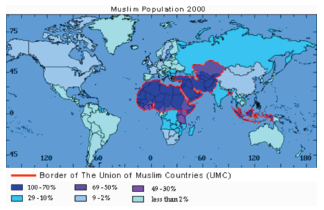
Figure 1. Muslim Countries in the World
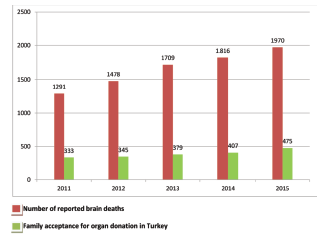
Figure 2. Number of Reported Brain-Dead Cases and Rates of Family Agreement for Organ Donation in Turkey Between 2011 and 2015 Inclusive