Volume: 14 Issue: 3 November 2016 - Supplement - 3
FULL TEXT
The rapid rise of transplantation over the past 60 years has been marked by a number of critical milestones. Donation after circulatory death (DCD) has played an important role in the development of this young field. Although early observations by Dr. Tom Starzl touched on the importance of warm ischemic time, new and exciting data may be changing our views of ischemia. Indeed, as we learn more about the importance of time-to-death for DCD donors after circulatory death, the hemodynamic changes experienced by DCD donors, and the other physiologic perturbations surrounding all forms of death, we are beginning to drill down to the factors that drive recipient outcomes after deceased donor transplant. As far as the future? Only time will tell.
Key words : Donation after circulatory death, Organ donation, Organ transplantation, Time-to-death
The Beginning of Time, in Transplantation
The history of donations after circulatory death (DCD) in many ways is a history
of modern transplantation itself. Whereas the first successful kidney transplant
was performed between identical twins in 1954, many of the “first” solid-organ
transplants were actually from donors who we would now classify as DCD.1
Indeed, after the pioneering work of Alexis Carrel, which demonstrated surgical
success with vascular anastomoses (and which led to the Nobel prize in 1912),
scientists began to consider the technical challenges of implanting an intact
human organ.2-5 Although Dr. Joseph Murray is rightfully credited with
performing the first successful kidney transplant procedure (Table 1), Yu Yu
Voronoy, a Ukranian surgeon, actually attempted human kidney transplant much
earlier, in 1936.6 Voronoy, practicing in Kiev, attempted transplantation
procedures for a series of 6 patients who developed renal failure from mercury
poisoning.7 In one of Voronoy’s earliest experimental surgeries, the kidney
donor was not an identical twin but rather a donor who died after circulatory
death. Unfortunately, Voronoy did not recognize the detrimental effects of warm
ischemia time (DCD with > 6 hours) or donor-recipient blood-type matching. As
such, his earliest transplant (and his whole series) resulted in failure.7 After
his landmark operation in 1954, Dr. Murray also performed the first successful
DCD kidney transplant in 1962 along with Dr. David Hume. In 1963, the first
successful lung transplant was performed for Dr. James Hardy, and his chosen
donor was indeed also a DCD.8
The tumultuous past of liver transplantation has also been highly dependent on DCD. Indeed, the first 3 attempts at liver transplantation in humans were from DCD donors, an experience that was neatly and colorfully documented in Surgical Gynecology and Obstetrics in 1963.9,10 Although Dr. Starzl was years ahead of his time with regard to the procedural aspects of DCD procurement (Figure 1) and extremely astute at recognizing that ischemia to DCD livers was likely damaging, his first 3 recipients all died, chronologically, on the operating room table, on day 22, and on day 7.10 With an almost foreshadowing quality to his prose Dr. Starzl wrote in his seminal publication that “ischemia of more than 120 minutes invariably resulted in an unsuccessful outcome.” Succinctly, and with a sense of humanism, he described these experiences as “disappointing” and then went on to state that, given the death of these 3 patients, “in the present study, the influence of hepatic tissue injury is … strikingly illustrated.”9,10
The first DCD pancreas transplant was performed in 1967, only 1 year after the first successful pancreas transplant was performed. Dr. Kelly and Dr. Lillehei performed both aforementioned procedures. Even the first heart transplant, which was performed by Dr. Christian Barnard in 1967, was procured from a DCD donor. In 1968, Dr. Barnard performed a DCD heart transplant that yielded more than 1 year of posttransplant graft survival.11,12 Indeed, Dr. Murray, Starzl, Hardy, Lillehei, and Barnard changed the landscape of modern medicine, largely using the gifts of DCD donors.
Changing Times
Then the world changed. In 1968, the ad hoc committee at Harvard Medical School
delivered its groundbreaking treatise allowing for the, previously absent,
diagnosis of “irreversible coma” or what we now refer to as “brain death.”13
This committee had gathered in the hopes of establishing this diagnosis for 2
reasons. First, resuscitative measures of the day had improved, with many
patients surviving significant trauma, although in some cases only with “partial
success.” That is, there was an increasingly significant population of patients
who were critically injured but left “with a permanent loss of intellect.” As
such, it was recognized that this permanent neurologic injury was extremely
burdensome not only for their families but also for the healthcare system as a
whole. For this reason, a clearer definition of “irreversible coma” or “brain
death” was required. Second, and of equal (if not greater) importance, the ad
hoc committee reasoned that the lack of a clear definition for death would cause
ethical controversy over obtaining donor organs for transplantation, a
burgeoning field of surgery and medicine.13,14
Subsequently, and with the diagnosis of brain death permitting, physicians were able to avoid the use of organs from patients who died from circulatory death in favor of those who died after brain death. This allowed not only for a great many more organs for transplantation, but organs that were not (before recovery) exposed to long periods of ischemia. This was a dramatic move forward for the field of transplantation and for organ donation. However, still greater scientific findings were in the near future.
The late 1960s and early 1970s were akin to a “big bang” for transplantation. With the use of organs donated after brain death, a rapid expansion of transplantation could occur. However, the immunologic barriers of transplantation remained heavily in the foreground.15 Then, it happened. In 1968, accounts of azathioprine, the first available immunosuppressive agent, were published and shortly thereafter so were Sir Roy Calne’s first human trials with cyclosporine in 1978. These successes were merely foreshadowing that the length of organ transplant wait lists would soon far outpace the number of available donor organs.16 This woeful disparity between organ supply and organ demand created need. Thus, the question was posed: how can we expand the organ donor pool? The solution to this question has remained elusive.
With an unmet need for organs now tangible, there began a resurgence of interest in transplantation using DCD. Accordingly, the Institute of Medicine recognized the potential problems of the developing organ shortage and clearly advocated for the use of DCD organs in a 1997 statement published in the National Academy Press. In this statement, the Institute of Medicine highlighted the ethics and procedures surrounding DCD organ procurement. They suggested that DCD was a feasible mechanism by which the donor pool could be expanded and laid out specific recommendations for its adoption. Despite these efforts, and even as recently as 2002, only 3% of organ donors in the United States were DCD.17 Indeed, there was a great deal of hesitation on the part of the transplant field to embrace DCDs. Although the explanation was not unifactorial, one of the reasons for transplantation’s initial timid approach to the use of DCD organs was (as Dr. Starzl alluded to) related to the understudied potential harms of warm ischemia and the subsequent risks for poor outcomes in recipients of DCD organs.
As the organ shortage continued to increase, so too did the interest in the use of DCD organs. With time, several publications revealed unexpectedly reasonable recipient outcomes after transplantation with DCD organs. In 2004, a seminal article published in the Annals of Transplantation demonstrated that, with 10-year follow-up, there was no difference in renal graft survival when DCD donors were compared with donations after brain death (DBD).17 However, in that study, recipients of DCD kidneys were more likely to have an elevated creatinine level at discharge. In addition, recipients of DCD kidneys had higher rates of delayed graft function (25.7%) than did recipients of DBD kidney transplants (5.3%).17 Subsequent investigations also began to refine the understanding of donor risk factors associated with graft failure after DCD kidney transplant.18-20 Indeed, and corroborating the prior findings, the authors found that younger DCD donors (< 50 y old) experienced no difference in death-censored graft survival compared with standard criteria DBD donors as many as 5 years after transplantation. In contrast, older DCD donors (≥ 50 y old) had outcomes not dissimilar to extended-criteria DBD donors.21 With these data, it finally looked as though DCD in the modern era was here to stay.
Improvements Over Time
Beyond the kidney, subsequent reports showed no difference in pancreatic graft
survival after DCD pancreas transplantation compared with DBD transplant
recipients.22 In that same study, there was also no difference in renal
transplant survival
after DCD simultaneous pancreas and kidney transplantation. However,
recapitulating the results from the above-mentioned studies, authors identified
a higher rate of delayed graft function in kidneys of patients who underwent
simultaneous kidney-pancreas transplants.22
Although most of the data at that time appeared to support the use of DCD organs (at least for select groups of patients), other investigations began to show that not all organs were created equally. Perhaps rekindling the observations of Dr. Starzl 50 years earlier, authors in 2005 found that, after DCD liver transplantation, patient and graft survival rates were worse with DCD livers than with DBD livers. In the DCD patients, the authors observed increased rates of biliary stricture (33% vs 10%), increased rates of hepatic arterial thrombosis (16% vs 5%), and increased rates of posttransplantation biloma formation (16% vs 8%).23,24 However, as clinicians began to learn from earlier experiences, the published rates of biliary complications, particularly ischemic cholangiopathy, began to decrease and are now thought to be approximately 9%.25 These improvements with DCD liver transplantation are likely explained by better donor-recipient matching, technical improvements, and improved postoperative care and immunosuppressive treatment in the recent era.
Emerging data have shown, just as for DCD kidney transplantation, the potential detrimental effects of DCD in liver transplant are age dependent.26 Accordingly, investigators from the University of Wisconsin recently published that, compared with older DBD donors (> 60 y old), graft survival after DCD liver transplant was superior when the DCD donor was young (< 50 y old) and when the DCD liver cold ischemia times were minimized.26 However, DCD liver transplant outcomes overall were observed to be worse than for DBD liver recipients. These findings suggest that DCD livers should not be turned down in favor of older DBD livers. In addition, acceptance of these livers (many are currently discarded) could add many transplantable organs to the donor pool.26
Only Time Will Tell
In the most recent literature, our understanding of DCD has continued to
blossom. Data are beginning to suggest that warm ischemia time, at least
regarding the kidney, is not quite as important as we once thought.27
Investigators at the University of Pennsylvania recently showed, with a
follow-up of 3 years, that time-to-death during DCD recoveries was not
significantly associated with worse patient or graft outcomes. This is of
significant interest because it implied that there may be fairly minimal effects
of cumulative ischemia imparted onto the DCD kidney, as the donor’s blood
pressure and oxygen saturation fall after withdrawal of support, but before
death.27,28 This group did find that early hemodynamic changes, particularly in
oxygen saturation, within the first 10 minutes after withdrawal of life support
were associated with recipient outcome after DCD renal transplantation.27,29
However, time-to-death itself was not predictive of patient or graft survival.30
Similar findings have also been described by our European colleagues, who have
recently observed that DCDs now comprise approximately 50% of all donors for
deceased-donor renal transplants.31
The story regarding donor hemodynamics in DCDs is still in evolution. The hemodynamic findings by Allen and associates27,30 (referenced above) were confirmed and expanded on in a more recent analysis by Scalea and associates, who presented a follow-up of 8 years,32 showing no difference in patient or graft survival for DCD kidneys from donors whose time-to-death was shorter (< 1 h) versus longer (between 1 and 2 h).29,33 The group then suggested that perhaps the most detrimental effects of DCD occur early after the withdrawal process and that these detrimental effects may be related to the way in which the donor died, as opposed to the ischemia to which the recovered kidney was exposed. Authors proposed that perhaps the incremental increase in cumulative ischemia in patients with increased time-to-death is simply not as important as we have long been taught.32,33 Mechanistically, acidosis, damage-associated molecular patterns, or alternative inflammatory pathways may explain the detrimental effects of DCDs, as these are not pathways typically associated with brain death.32,34,35
Given that there are no current national standards for DCD renal procurement in the United States, investigators then suggested a series of guidelines allowing for the acceptance of DCD kidneys with a time-to-death of up to 2 hours. The authors then extrapolated this proposed guideline (to the United States) based on a prospectively performed survey of each of the nation’s organ procurement organizations. The group reported that, if a system allowing for increased acceptance of kidneys with longer times to death was adopted, hundreds if not thousands more renal transplants could be performed in the United States annually.32,33
Summary
Donation after circulatory death is incredibly important to the field of transplantation.36 Indeed, many of the landmark findings in the young field of transplantation have involved DCD organs. In the recent literature, we have begun to learn that perhaps some of what we thought we knew regarding ischemia of donor organs may be incorrect. As we continue to learn more, the importance of DCD organs for transplantation is likely to become increasingly important.
References:
- Murray JE. The Nobel Lectures in Immunology. The Nobel Prize for Physiology
or Medicine, 1990. The first successful organ transplants in man. Scand J
Immunol. 1994;39(1):1-11.
PubMed http://www.ncbi.nlm.nih.gov/pubmed/8290887 - Carrel A. Patching of the abdominal aorta with a piece of rubber. J Exp Med.
1911;14(2):126-128.
CrossRef - PubMed - Carrel A. Landmark article, Nov 14, 1908:Results of the transplantation of
blood vessels, organs and limbs. By Alexis Carrel. JAMA. 1983;250(7):944-953.
CrossRef - PubMed - Carrel A. Landmark article Nov 11, 1911: Rejuvenation of cultures of tissues.
By Alexis Carrel. JAMA. 1983;250(8):1085.
CrossRef - PubMed - Carrel A. Ultimate results of aortic transplantations. J Exp Med.
1912;15(4):389-392.
CrossRef - PubMed - Merrill JP, Murray JE, Harrison JH, Guild WR. Successful homotransplantation
of the human kidney between identical twins. J Am Med Assoc.
1956;160(4):277-282.
CrossRef - PubMed - Watson CJ, Dark JH. Organ transplantation: historical perspective and current
practice. Br J Anaesth. 2012;108 Suppl 1:i29-42.
CrossRef - PubMed - Dalton ML. The first lung transplant. Am Surg. 2004;70(4):364-5.
PubMed - Starzl TE, Marchioro TL, Vonkaulla KN, Hermann G, Brittain RS, Waddell WR.
Homotransplantation of the Liver in Humans. Surg Gynecol Obstet.
1963;117:659-676.
PubMed - Starzl TE, Marchioro TL, Huntley RT, et al. Experimental and clinical
homotransplantation of the liver. Ann N Y Acad Sci. 1964;120:739-765.
CrossRef - PubMed - Barnard CN. Human heart transplantation. The diagnosis of rejection. Am J
Cardiol. 1968;22(6):811-819.
CrossRef - PubMed - Barnard CN. Human cardiac transplantation. An evaluation of the first two
operations performed at the Groote Schuur Hospital, Cape Town. Am J Cardiol.
1968;22(4):584-596.
CrossRef - PubMed - A definition of irreversible coma. Report of the Ad Hoc Committee of the
Harvard Medical School to Examine the Definition of Brain Death. JAMA.
1968;205(6):337-340.
CrossRef - PubMed - When is a patient dead? JAMA. 1968;204(11):1000.
CrossRef - PubMed - Starzl TE, Demetris AJ. Transplantation tolerance, microchimerism, and the
two-way paradigm. Theor Med Bioeth. 1998;19(5):441-455.
CrossRef - PubMed - Merion RM, White DJ, Thiru S, Evans DB, Calne RY. Cyclosporine: five years'
experience in cadaveric renal transplantation. N Engl J Med.
1984;310(3):148-154.
CrossRef - PubMed - D'Alessandro AM, Fernandez LA, Chin LT, et al. Donation after cardiac death:
the University of Wisconsin experience. Ann Transplant. 2004;9(1):68-71.
PubMed - Bellingham JM, Santhanakrishnan C, Neidlinger N, et al. Donation after
cardiac death: a 29-year experience. Surgery. 2011;150(4):692-702.
CrossRef - PubMed - Bernat JL, D'Alessandro AM, Port FK, et al. Report of a National Conference
on Donation after cardiac death. Am J Transplant. 2006;6(2):281-291.
CrossRef - PubMed - Reich DJ, Mulligan DC, Abt PL, et al. ASTS recommended practice guidelines
for controlled donation after cardiac death organ procurement and
transplantation. Am J Transplant. 2009;9(9):2004-2011.
CrossRef - PubMed http://www.ncbi.nlm.nih.gov/pubmed/19624569 - Locke JE, Segev DL, Warren DS, Dominici F, Simpkins CE, Montgomery RA.
Outcomes of kidneys from donors after cardiac death: Implications for allocation
and preservation. Am J Transplant. 2007;7(7):1797-807.
CrossRef - PubMed - Fernandez LA, Di Carlo A, Odorico JS, et al. Simultaneous pancreas-kidney
transplantation from donation after cardiac death: successful long-term
outcomes. Ann Surg. 2005;242(5):716-723.
CrossRef - PubMed - Foley DP, Fernandez LA, Leverson G, et al. Donation after cardiac death: the
University of Wisconsin experience with liver transplantation. Ann Surg.
2005;242(5):724-731.
CrossRef - PubMed - Foley DP, Fernandez LA, Leverson G, et al. Biliary complications after liver
transplantation from donation after cardiac death donors: an analysis of risk
factors and long-term outcomes from a single center. Ann Surg.
2011;253(4):817-825.
CrossRef - PubMed - Doyle MB, Collins K, Vachharajani N, et al. Outcomes using grafts from
donors after cardiac death. J Am Coll Surg. 2015;221(1):142-152.
CrossRef - PubMed - Scalea JR, Redfield RR, Foley DP. Liver transplant outcomes using ideal
donation after circulatory death livers are superior to using older donation
after brain death donor livers. Liver Transplant. 2016;22(9):1197-1204.
CrossRef - PubMed - Allen MB, Billig E, Reese PP, et al. Donor hemodynamics as a predictor of
outcomes after kidney transplantation from donors after cardiac death. Am J
Transplant. 2016;16(1):181-193.
CrossRef - PubMed - Abt PL, Praestgaard J, West S, Hasz R. Donor hemodynamic profile presages
graft survival in donation after cardiac death liver transplantation. Liver
Transplant. 2014;20(2):165-172.
CrossRef - PubMed - Scalea JR, Fernandez LA. Predicting donor death: early changes in oxygen
saturation after withdrawal of support predict successful donation during DCD.
Transplant Proc. In press.
PubMed - Allen MB, Billig E, Reese PP, et al. Donor hemodynamics as a predictor of
outcomes after kidney transplantation from donors after cardiac death. Am J
Transplant. 2016;16(1):181-193.
CrossRef - PubMed - Reid AW, Harper S, Jackson CH, et al. Expansion of the kidney donor pool by
using cardiac death donors with prolonged time to cardiorespiratory arrest. Am J
Transplant. 2011;11:995-1005.
CrossRef - PubMed - Scalea JR, Redfield RR, Arpali E, et al. Does DCD donor time-to-death after
withdrawal of support affect recipient outcomes? Implications of time-to-death
at a high-volume center in the United States. Am J Transplant. 2016. Jul 4. doi:
10.1111/ajt.13948. [Epub ahead of print]
CrossRef - PubMed - Scalea JR, Redfield RR, Rizzari MD, et al. When do DCD donors die? Outcomes
and implications of DCD at a high-volume, single-center OPO in the United
States. Ann Surg. 2016;263(2):211-216.
CrossRef - PubMed - Scalea JR, Bromberg J, Bartlett ST, Scalea TM. Mechanistic similarities
between trauma, atherosclerosis, and other inflammatory processes. J Crit Care.
2015;30(6):1344-1348.
CrossRef - PubMed - Schneeberger H, Schleibner S, Schilling M, et al. Prevention of acute renal
failure after kidney transplantation by treatment with rh-SOD: interim analysis
of a double-blind placebo-controlled trial. Transplant Proc.
1990;22(5):2224-2225.
PubMed - Scalea J, Mezrich J. As they lay dying. Atlantic. 2015:31-3.

Volume : 14
Issue : 3
Pages : 27 - 31
DOI : 10.6002/ect.tondtdtd2016.L28
From the Division of Transplantation, Department of Surgery, University of
Wisconsin, Madison, Wisconsin, USA
Acknowledgements: The authors have no financial disclosures and have no
conflicts of interest to disclose. Portions of data were presented by Dr. Joseph
R Scalea at the American Transplant Congress in Boston, MA, USA, in June 2016
and by Dr. Hans W Sollinger as Surgical Grand Rounds in Baku, Turkey, in March
2016.
Corresponding author: Joseph R. Scalea and Hans W. Sollinger, 600
Highland Avenue, Madison, WI 53705, USA
Phone: +1 608 263 9903
E-mail: jscalea@som.umaryland.edu,
hans@surgery.wisc.edu
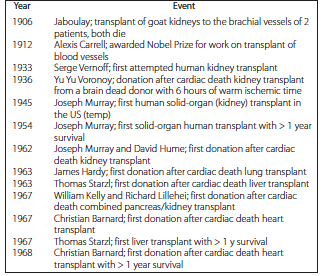
Table 1. A Brief History of Time in Transplantation
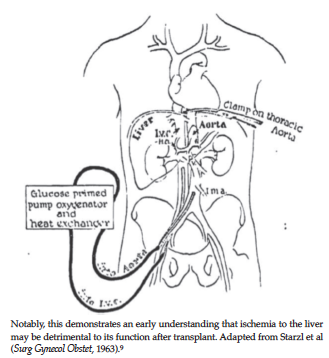
Figure 1. Original Schematic of Dr. Tom Starzl’s Approach to Perfusing the Donation After Cardiac Death Liver