Volume: 14 Issue: 3 November 2016 - Supplement - 3
FULL TEXT
Objectives: Our objective was to analyze the incidence of pulmonary disorders in solid-organ transplant recipients and report on outcomes in these patients.
Materials and Methods: Seventy liver and kidney transplant patients, who underwent lung biopsy because of pulmonary symptoms between January 2000 and December 2015, were enrolled in the study. We examined and evaluated histopathologic findings of these patients based on clinical data recorded in patients’ files.
Results: Patients’ mean age was 44.5 ± 16.4 years. Of 70 patients, 25 underwent liver transplant and 45 patients underwent kidney transplant. Forty-six patients received organs from living donors and 24 from deceased donors. Biopsy results of all patients included nonspecific findings (28), organized pneumonia (2), tuberculosis (6), fungal infections (11), tumors (5), amyloidosis (1), diffuse alveolar damage (4), mixed bacterial infection (1), and bronchopneumonia (12). Forty-two patients (60%) died within 54.1 ± 53.3 months after transplant and 24.6 ± 41.9 months after lung biopsy. Autopsies were performed on 14 patients. The causes of fatal lung diseases included fungal infections (8), malignant tumors (4), amyloidosis (1), diffuse alveolar damage (4), and mixed bacterial infection (1). Aspergillosis was the most frequently implicated lung infection, occurring in 54.5% of patients with fungal infections.
Conclusions: Pulmonary diseases remain an important cause of morbidity and mortality in solid-organ transplant recipients. Fungal infection, especially aspergillosis, was the leading cause of early death in these patients.
Key words : Solid-organ transplant, Lung biopsy, Kidney transplant, Liver transplant, Fungal infection
Introduction
Solid-organ transplant has been established as an accepted therapy for some end-stage organ diseases. Solid-organ transplant (SOT) recipients have a higher risk of developing infectious and noninfectious pulmonary diseases due to their immunocompromised state.1 The incidence of pulmonary infections is, however, decreasing owing to the use of prophylactic regimens and the adjustment of immunosuppressive medications; however, pulmonary infections remain largely responsible for mortality and morbidity among SOT recipients.2
In this study, we analyzed the incidence of pulmonary disorders in SOT recipients and outcomes in these patients.
Materials and Methods
Seventy liver and kidney transplant patients, who underwent lung biopsy because of pulmonary symptoms between January 2000 and December 2015, were included in the study. Study pathologists reevaluated histopathologic findings of patients’ lung biopsies. Demographic data and clinical findings, including age, sex, and type of donor (living or deceased donor) were derived from patients’ recorded files.
Statistical analyses were performed with statistical software (SPSS for Windows, version 16.0, IBM Corporation, SPSS Inc, Armonk, NY, USA). For quantitative variables, values are given as mean ± standard deviation. Categorical data were compared using the chi-squared test. Patient survival was computed using the Kaplan-Meier method. Statistical significance was defined as P < .05.
Results
The female-to-male ratio of the 70 patients was 13/57. Patients’ mean age was 44.5 ± 16.4 (range, 2 to 74 years). Forty-six patients (65.7%) had living donors and 24 (34.3%) had deceased donors. Twenty-five of the patients underwent liver transplant. The remaining 45 patients underwent kidney transplant.
The biopsy results for all patients are shown in Table 1. The majority of patients had nonspecific findings. Among patients with fungal lung infections, Aspergillus and Candida species were the most frequently detected organisms (54.5% and 27.3%). The distribution of fungal infections is shown in Table 2.
Tumors were identified in 5 patients. Metastatic hepatocellular carcinoma, the most common finding, occurred in 40% of patients and resulted in the death of 2 patients (Table 3).
The mean follow-up for all patients was 76.3 ± 66.8 months after transplant and 36.9 ± 46.5 months after lung biopsy. A total of 42 patients (60%) died within 54.1 ± 53.3 months after transplant and 24.6 ± 41.9 months after lung biopsy. The causes of death in 18 of these patients were noted as lung disease, which included fungal infections, malignant tumors, amyloidosis, diffuse alveolar damage, and mixed bacterial infection.
Four of 5 patients with malignant tumors died of disease within 21.7 ± 14.1 months. The remaining patient had an inflammatory myofibroblastic tumor and was alive at the last follow-up (79 mo) (Table 3).
The overall 1-, 2-, and 3-year survival rates for patients diagnosed with tumors was 60%, 40%, and 20%. The 1- and 2-year survival rates for patients with fungal infections were 24% and 0%, respectively. The remaining 28 patients (40%) were alive at 109.5 ± 71.9 months after transplant and 58.6 ± 47.1 months at the time of lung biopsy.
A significant difference was observed in patient survival between kidney recipients and liver recipients (P < .001). The average survival of patients who underwent liver and kidney transplant was 39.4 ± 43.1 months and 97.0 ± 68.9 months.
Discussion
Pulmonary diseases are common in SOT recipients. In the early posttransplant period, chronic infections are the most common findings. Long-term treatment of such infections is often required; however, successful treatment is possible.3
Pulmonary infections in SOT recipients are considered a medical emergency. Because the patients are immunocompromised, the spectrum of pathogens is likely to differ from those found in immunocompetent patients.4 Approximately 80% of SOT recipients encounter an infection, especially in the early posttransplant period.5 Bacterial infections and fungal infections, such as aspergillosis, tend to develop shortly after transplant. Coccidioidomycosis, tuberculosis, and cryptococcosis, however, are more likely to appear 3 to 24 months after transplant.3 In a study by Eyüboðlu and colleagues, the overall mortality of SOT recipients with pulmonary infections ranged between 21% and 35%.2 They concluded that providing empiric antibiotic therapy without waiting for culture results and using prophylactic antibiotic regimens might decrease mortality rates.2
Fungal infections are less frequent than bacterial infections in SOT recipients; however, the effect of fungal infections on patient survival is more significant. Solid-organ transplant recipients are at risk for invasive fungal infections. Candida and Aspergillus species have been reported as the most common fungal pathogens among transplant recipients.6 Singh reported that Candida and Aspergillus accounted for the most invasive fungal infections in SOT patients.7 Similarly, these were also the most common fungal agents detected in our patients.
Neoplastic diseases are more common in long-term SOT survivors.3 Solid-organ transplant increases the risk of malignancy three- to fourfold in SOT patients compared with the general population.8 Pulmonary mass lesions and nodules are critical findings, especially in liver transplant recipients, and require early diagnosis and treatment. Afessa and colleagues identified several causes for a pulmonary mass: aspergillosis, cryptococcosis, metastatic hepatocellular carcinoma (HCC), posttransplant lymphoproliferative disorder (PTLD), Staphylococcus aureus, squamous cell carcinoma, and undifferentiated carcinoma.9 The 2 most common malignancies likely to occur in SOT recipients are nonmelanoma skin cancer and lung carcinoma.10
Candidiasis, invasive aspergillosis, and cryptococcosis remain the most commonly observed invasive fungal infections among SOT patients, with some occurring preferentially in specific organ types. Invasive aspergillosis more commonly occurs in lung transplant recipients, whereas cryptococcal infection occurs predominantly in kidney transplant recipients.7,12 Invasive fungal infections, although not common among kidney transplant recipients, constitute one of the important causes of morbidity and mortality in these patients.11 In a study by Neofytos and colleagues, mortality was highest in liver transplant recipients who had invasive fungal infections.6 Similarly, liver recipients with invasive fungal infections tended also to have a poor mortality and graft prognosis.6 Our results corroborated these and other findings in the literature.
Liver transplant is the treatment choice for a substantial number of patients with HCC. Among liver transplant recipients, the lung is the most common location of HCC recurrence, being reported between 2 months and 2 years posttransplant. Among our patients, HCC recurrence was the most common pulmonary lesion.
Posttransplant lymphoproliferative disorders are lymphoid proliferations that arise in patients who have undergone solid-organ or bone marrow transplant. The overall frequency of PTLDs among patients who have received all types of organ transplant is approximately 2%.13 Younger patients are more likely to have PTLDs than are older patients. Intestinal transplant recipients appear to have the greatest risk of developing PTLD, followed by liver, lung, heart, pancreas, and kidney allografts.14 Almost half of thoracic PTLDs occur within the first year after transplant. Similar to metastatic HCC, PTLD also presents as multiple small nodules.3 Biopsy is required to confirm a diagnosis of HCC or PTLD.
We conclude that pulmonary diseases remain a leading cause of morbidity and mortality in kidney and liver recipients. Fungal infections, especially aspergillosis, are the main cause of early death in SOT patients. Overall survival was found worse among liver transplant recipients.
References:
- Kritikos A, Manuel O. Bloodstream infections after solid-organ
transplantation. Virulence. 2016;7(3):329-340.
CrossRef - PubMed - Eyüboðlu FÖ, Küpeli E, Bozbaþ ÞS, et al. Evaluation of pulmonary
infections in solid organ transplant patients: 12 years of experience.
Transplant Proc. 2013;45(10):3458-3461.
CrossRef - PubMed - Paterson DL, Singh N, Gayowski T, Marino IR. Pulmonary nodules in liver
transplant recipients. Medicine (Baltimore). 1998;77(1):50-58.
CrossRef - PubMed - Küpeli E, Eyüboðlu FÖ, Haberal M. Pulmonary infections in transplant
recipients. Curr Opin Pulm Med. 2012;18(3):202-212.
CrossRef - PubMed - Sganga G, Bianco G, Frongillo F, Lirosi MC, Nure E, Agnes S. Fungal
infections after liver transplantation: incidence and outcomes. Transplant
Proc. 2014;46(7):2314-2318.
CrossRef - PubMed - Neofytos D, Fishman JA, Horn D, et al. Epidemiology and outcome of
invasive fungal infections in solid organ transplant recipients. Transplant
Infect Dis. 2010;12(3):220-229.
CrossRef - PubMed - Singh N. Fungal infections in the recipients of solid organ
transplantation. Infect Dis Clin North Am. 2003;17(1):113-134.
CrossRef - PubMed - Turkeli M, Simsek M, Aldemir MN, et al. Are we late in the diagnosis of
malignities occurring in solid organ transplant recipients? 11 years’
experience. Eurasian J Med. 2016;48(1):33-36.
CrossRef - PubMed - Afessa B, Gay PC, Plevak DJ, Swensen SJ, Patel HG, Krowka MJ. Pulmonary
complications of orthotopic liver transplantation. Mayo Clin Proc.
1993;68(5):427-434.
CrossRef - PubMed - Stehlik J, Edwards LB, Kucheryavaya AY, et al. The Registry of the
International Society for Heart and Lung Transplantation: twenty-seventh
official adult heart transplant report-2010. J Heart Lung Transplant.
2010;29(10):1089-1103.
CrossRef - PubMed - Minari A, Husni R, Avery RK, et al. The incidence of invasive
aspergillosis among solid-organ transplant recipients and implications for
prophylaxis in lung transplants. Transpl Infect Dis. 2002;4(4):195-200.
CrossRef - PubMed - Trabelsi H, Néji S, Sellami H, et al. Invasive fungal infections in
renal transplant recipients: about 11 cases. J Mycole Med.
2013;23(4):255-260.
CrossRef - PubMed - Ioachim HL, Medeiros LJ. Post-transplant lymphoproliferative disorders. In: Ioachim’s Lymph Node Pathology. 4th ed. Philadelphia, PA: Wolters Kluwer; 2009:553-563.

Volume : 14
Issue : 3
Pages : 135 - 137
DOI : 10.6002/ect.tondtdtd2016.P65
From the Departments of 1Pathology and 2Transplant
Surgery, Baþkent University Medical School, Ankara, Turkey
Acknowledgements: The authors declare that they have no sources of
funding for this study, and they have no conflicts of interest to declare.
Corresponding author: Gonca Özgün. Baþkent University Medical School,
Department of Pathology, 79. Sokak No: 7/4, Bahçelievler, Ankara 06490, Turkey
Phone: +90 312 212 6591
E-mail: gbarit@gmail.com
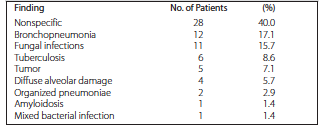
Table 1. Histopathologic Findings of Lung Biopsies

Table 2. Distribution and Frequency of Fungal Infections and Mortality Rates
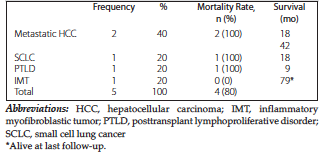
Table 3. Distribution and Frequency of Tumors