Volume: 14 Issue: 3 November 2016 - Supplement - 3
FULL TEXT
Objectives: Systemic infection is among the common complications after solid-organ transplant and is associated with increased mortality and morbidity. Because it has prognostic significance, timely diagnosis and treatment are crucial. Procalcitonin is a propeptide of calcitonin and has been increasingly used as a biomarker of bacterial infection. Here, we investigated procalcitonin’s role in identifying infectious complications in solid-organ transplant recipients.
Materials and Methods: We retrospectively evaluated the records of 86 adult patients who underwent solid-organ transplant (between 2011 and 2015) with procalcitonin levels determined at our center. Clinical and demographic variables and laboratory data were noted. Relation between C-reactive protein and procalcitonin serum levels were compared in patients who were diagnosed as having pneumonia on clinical, microbiologic, and radiologic findings.
Results: Mean age of our patients was 45.5 ± 13.4 years (range, 18-70 y), with 61 male patients (70.9%). We included 26 liver, 44 kidney, 14 heart, and 2 heart and renal transplant recipients. Procalcitonin was positive in 43 patients (50%). Of the 39 patients who were diagnosed with pneumonia, procalcitonin was positive in 18 patients (46.2%). There was a significant correlation between serum levels of procalcitonin and C-reactive protein (r = 0.45; P < .001) and neutrophil count (r = 0.24; P = .025). There was no correlation between mortality and procalcitonin level, CRP level, or leukocyte count (P > .05).
Conclusions: Our findings indicate that procalcitonin is a promising biomarker to detect infectious complications in transplant recipients. Physical examination and radiologic findings of bacterial pneumonia may be nonspecific, and in a considerable number of immunocompromised patients the site of infection could not be identified. Serum levels of procalcitonin should not be used as sole criteria for clinical decision making; however, it can guide us in therapy of such conditions in addition to currently used serum markers of infection.
Key words : C-reactive protein, Infection, Organ transplantation
Introduction
Systemic infection is among the common complications after solid-organ transplant (SOT) and is associated with increased mortality and morbidity. Studies have shown that bacterial pneumonia is the most common cause of acute respiratory failure despite the advances in prophylactic and immunosuppressive regimens that reduce the incidence of pulmonary infections after transplant.1 Because it has prognostic significance, timely diagnosis and treatment of infections are crucial. Currently used biomarkers for acute infection, serum neutrophil count, and C-reactive protein (CRP) levels are not sensitive enough to identify severe bacterial infection. For example, CRP levels alone cannot be used to differentiate bacterial from viral infection. Other inflammatory stimuli in these patients such as surgical trauma and autoimmune and chronic inflammatory diseases may also cause a meaningful increase in CRP levels.2 We also found that serum CRP levels can increase during rejection in transplant recipients, making this marker especially ineffective in diagnosing infection in this patient population.3,4
Procalcitonin is a propeptide of calcitonin that has been increasingly used as a biomarker of bacterial infection. It can differentiate bacterial from viral infection and systemic from local infection. It guides us in decisions regarding antibiotics in patients with lower respiratory tract infection or bloodstream infections. Elevated procalcitonin levels are observed in patients with severe bacterial infections, whereas viral infections and rejection lead to only moderate or even no changes in procalcitonin levels. Thus, elevations in procalcitonin levels help us in differentiating bacterial from viral infections.5
In SOT recipients, many factors like surgical trauma, organ damage, and use of immunosuppressive agents may lead to an increase in serum procalcitonin levels but to a lesser degree than that shown with bacterial infections.6 Although use of serum procalcitonin levels has increased over time, we still do not have enough experience and study data in SOT recipients. In this study, we aimed to evaluate the role of procalcitonin in identifying infectious complications in SOT recipients.
Materials and Methods
We retrospectively evaluated the records of 86 adult patients who underwent SOT between 2011 and 2015 and who had procalcitonin levels determined at our center. Clinical and demographic variables and laboratory data were noted. Patients in whom rejection developed, those who underwent retransplant, and those receiving hemodialysis were excluded. All patients received initial triple immunosuppressive therapy with prednisolone, an anti-metabolite (mycophenolate mofetil or azathioprine), and a calcineurin inhibitor (cyclosporine or tacrolimus) or mammalian target of rapamycin inhibitor (sirolimus or everolimus). Later, mycophenolate mofetil was substituted for azathioprine, tacrolimus for cyclosporine, and sirolimus (rapamycin) for impaired renal function.7 Rejection was defined histopathologically on biopsy specimens. Infection was defined by clinical symptoms supported by pathologic proof from culture of blood or body fluid specimens. Pulmonary infections were defined by the presence of respiratory insufficiency, fever, and associated radiographic findings on imaging findings with or without positive culture of bronchial aspirate.
Procalcitonin levels were measured using an automatic analyzer (Elecsys BRAHMS procalcitonin assay, Mannheim, Germany). With this method, the lower limit of detection of the assay was 0.05 ng/mL. Serum levels of CRP and procalcitonin were compared in patients who were diagnosed as having pneumonia on clinical, microbiologic, and radiologic findings.
The study protocol complies with the Helsinki Declaration of 1975, and our Institutional Review Board approved the research protocol.
Statistical analyses
Statistical analyses were performed using a commercially available program
(SPSS version 12; SPSS Inc., Chicago, IL, USA). Data are presented as means ±
standard deviation or frequency counts (with percentages) as appropriate. The t
test was used for comparison of continuous variables. Categorical variables of
the groups were compared using chi-squared test. All given P values are
2-tailed, and P values were accepted as significant at < .05.
Results
Our patient group had a mean age of 45.5 ± 13.4 years (range, 18-70 y), with 61 male patients (70.9%). We included 26 liver, 44 kidney, 14 heart, and 2 heart and renal transplant recipients (Table 1). Solid-organ transplant was ordered in 53.5% of patients during inpatient care, in 43.0% of patients during intensive care unit stay, and in 3.5% of patients during outpatient care. Procalcitonin was positive in 43 patients (50.0%). More patients in the intensive care unit had positive procalcitonin levels (P < .005).
On follow-up, measurement of procalcitonin level was repeated in 41 patients. Time to remeasurement of control procalcitonin level was 9.7 ± 15.4 days (range, 1-60 d). Procalcitonin levels became positive in 6 patients who had negative procalcitonin on first measurement.
Of the 39 patients who were diagnosed with pneumonia, procalcitonin was positive in 18 patients (46.2%). There was a significant correlation between serum levels of procalcitonin and CRP (r = 0.45; P < .001) and neutrophil count (r = 0.24; P = .025).
Microorganism growth was identified in 52 patients (60.5%) on culture. The culture results are shown in Table 2. Urinary tract infection was the most common infection on culture (18 patients, 34.6%). Procalcitonin level was positive in 30 of 52 patients who had a microorganism growth on culture. There was no association between positive culture and procalcitonin level (P = .06). However, in 15 of 34 patients (44.1%) with negative culture result, antibiotic therapy was initiated because of clinical and radiographic signs of pneumonia. In 19 patients in whom no infection site was identified (culture negative, no radiologic findings of infection), serum procalcitonin level was positive in 9 and negative in 10 patients. In 10 patients (19.2%), sputum or tracheal aspirate culture was positive, and in 9 patients more than 1 culture was positive. Regarding the microorganism on culture, Klebsiella pneumoniae was the most common pathogen identified. In 16 patients (30.8%), growth on culture was polymicrobial. On follow-up, 27 patients (31.4%) died. There were no correlations between mortality and procalcitonin level, CRP level, or leukocyte count (P > .05).
Discussion
Our findings indicate that serum procalcitonin level can be a promising biomarker for the accurate identification of infectious complications in SOT recipients.
The criterion standard in the diagnosis of infections in SOT recipients is the isolation of microorganisms on culture growth or biopsy findings. However, obtaining a microorganism growth specimen on culture is time consuming and biopsy is an invasive procedure. Therefore, more practical methods are needed to reach an early and accurate diagnosis of infection among SOT recipients with undifferentiated febrile symptoms. For this purpose, several biomarkers such as neopterin, interleukin 2 receptors, CRP, interleukin 6, interleukin 8, and tumor necrosis factor-alpha have been investigated. However, none of these biomarkers has shown a satisfactory accuracy to justify a change in present practice.6 Of the novel biomarkers, procalcitonin seems to be the most promising. It has been demonstrated that serum levels of procalcitonin are superior over other biomarkers in diagnosing systemic infection in both normal and immunocompromised populations. Yu and associates showed that determining procalcitonin levels had a high sensitivity and moderate specificity for diagnosis of infectious complications among SOT recipients. The results implied that serum levels of procalcitonin have low accuracy as a “rule-out” test. However, in cases with suspected acute rejection, a low procalcitonin value may provide evidence to rule out the presence of superimposed bacterial infection.6
In a recent meta-analysis, the role of procalcitonin as a potential biomarker for use in identifying infectious complications after transplant was analyzed. A sensitivity of 85% and a specificity of 81% were reported for procalcitonin in identifying bacterial infection after transplant.7-10 No specific cutoff value for serum levels of procalcitonin was defined for the identification of early infection after transplant. Depending on the type of allograft used and whether the surgical procedure involves larger wound area, an increase in inflammatory response after transplant occurs and as a result serum levels of procalcitonin may increase.11 For this reason, when elevated serum levels of procalcitonin persist or a new increase is detected on follow-up, infection should be suspected. Serum levels of procalcitonin do not change significantly in cases of rejection unless there is an associated bacterial infection.
Hammer and associates showed that procalcitonin levels did not increase above the cutoff level of 0.5 ng/mL during rejection. With this cutoff value (0.5 ng/mL), it has been reported that procalcitonin had a sensitivity of 89% and specificity of 89% to detect infectious episodes.12
Procalcitonin levels may also show the severity and progression of the infectious process. Therefore, it can be used to guide determination of the length of the antimicrobial therapy and to assess the response to treatment.13 Serial measurement of serum procalcitonin levels can help detect early bacterial infections. In a retrospective study involving kidney transplant recipients, patients with serum CRP levels > 10 mg/dL or procalcitonin levels > 8.8 ng/mL have been reported to have worse prognosis.14 Because it has prognostic significance, bacterial infections in this special population necessitate early identification and timely therapeutic intervention.15 In our study, 27 patients (31.4%) died on follow-up. There was no correlation between mortality and procalcitonin level, CRP level, or leukocyte count (P > .05). In our patients, antimicrobial therapy was started early as a result of clinical and radiologic findings rather than laboratory results, including procalcitonin levels. We believe that this may have been the reason why mortality was not associated with infectious parameters.
The main disadvantages of currently available microbiologic methods may be as follows: diagnostic delays for culture methods, suboptimal sensitivity for blood cultures, low specificity due to contamination for sputum cultures, and complications and risks with lung biopsy.
Because of the insufficient sensitivity of currently available serum markers of infection, procalcitonin has gained interest as a potentially more specific marker for bacterial infection. It is produced in a unique way in response to endotoxin or mediators released in response to bacterial infections. It has been demonstrated that serum levels of procalcitonin are strongly correlated with the extent and severity of bacterial infections.16,17 It was also shown that procalcitonin levels are not affected with use of nonsteroidal and steroidal anti-inflammatory agents, another advantage over other biomarkers. Therefore, the diagnostic performance of procalcitonin is not compromised in SOT recipients receiving immunosuppressive therapy.
In our patients, procalcitonin was positive in 30 of 52 patients who had a microorganism growth on culture. There was no association between positive culture and procalcitonin level. However, in 44.1% of patients with negative culture results, antibiotic therapy was initiated because of clinical and radiographic signs of pneumonia. In 19 patients with no identified infection (culture negative, no radiologic findings of infection), serum levels of serum procalcitonin were positive in 9 patients.
Like other laboratory measurements, the limitations of every procalcitonin measurement include false-positive and false-negative results.18 For this reason, procalcitonin levels should always be interpreted in conjunction with a careful clinical and microbiologic assessment.19 That is, clinical decisions should not be based on a single procalcitonin value; serial procalcitonin measurements should be obtained to reach a more confirmative diagnostic in SOT recipients.
In a study by Cooper and associates, it was demonstrated that bacterial and fungal infections could be diagnosed more accurately when CRP and procalcitonin results were combined.20 When deciding the duration of antimicrobial therapy, a single value of procalcitonin should not be regarded as the sole parameter; rather, repeat measurements of procalcitonin with low values should be obtained to decrease the risk of early discontinuation of antibiotic treatment in SOT recipients.
Limitations and conclusions
The retrospective design is 1 limitation of our study. Inherent to the
retrospective nature, additional detailed work-up could not be performed.
Furthermore, the number of patients included was small. More definitive
conclusions could have been reached if the study had been larger.
In conclusion, the use of serum procalcitonin levels is a promising biomarker to detect infectious complications in transplant recipients. Physical examination and radiologic findings of bacterial pneumonia may be nonspecific, and in a considerable number of immunocompromised patients the site of infection could not be identified. Serum levels of procalcitonin alone should not be used as the sole criteria for clinical decision making; however, it can guide us in the therapy of such conditions in addition to currently used serum markers of infection.
References:
- Canet E, Osman D, Lambert J, et al. Acute respiratory failure in kidney
transplant recipients: a multicenter study. Crit Care. 2011;15(2):R91.
CrossRef - PubMed - Young B, Gleeson M, Cripps AW. C-reactive protein: a critical review.
Pathology. 1991;23(2):118-124.
CrossRef - PubMed - Lempert N, Laffin RJ, Fitzgerald K, Freed BM. Elevation of serum
C-reactive protein levels during graft rejection. Transplant Proc. 1987;19(1
Pt 2):1683-1685.
PubMed - Harris KR, Digard NJ, Lee HA. A useful and economical marker of immune
activation in renal transplantation. Transplantation. 1996;61(11):1593-1600.
CrossRef - PubMed - Oczenski W, Fitzgerald RD, Schwarz S. Procalcitonin: a new parameter for
the diagnosis of bacterial infection in the peri-operative period. Eur J
Anaesthesiol. 1998;15(2):202-209.
CrossRef - PubMed - Yu XY, Wang Y, Zhong H, Dou QL, Song YL, Wen H. Diagnostic value of
serum procalcitonin in solid organ transplant recipients: a systematic
review and meta-analysis. Transplant Proc. 2014:46(1):26-32.
CrossRef - PubMed - Sezgin A, Akay TH, Gültekin B, et al. The midterm results of cardiac
transplantation patients. Transplant Proc. 2008;40(1):259-262.
CrossRef - PubMed - Subervýola B, Castellanos-Ortega A, Ballesteros Ma, Zurbano F, Naranjo
S, Mýnambres E. Early identification of infectious complications in lung
transplant recipients using procalcitonin. Transpl Infect Dis.
2012;14(5):461-467.
CrossRef - PubMed - Eberhard OK, Langefeld I, Kuse ER, et al. Procalcitonin in the early
phase after renal transplantation–will it add to diagnostic accuracy? Clin
Transplant. 1998;12(3):206-211.
PubMed - Prieto B, Llorente E, Gonzalez-Pinto I, Alvarez FV. Plasma procalcitonin
measured by time-resolved amplified cryptate emission (TRACE) in liver
transplant patients. A prognosis marker of early infectious and
non-infectious postoperative complications. Clin Chem Lab Med.
2008;46(5):660-666.
CrossRef - PubMed - Jaresová M, Striz I, Cermáková J, et al. Serum procalcitonin
concentrations in transplant patients with acute rejection and bacterial
infections. Immunol Lett. 1999;69(3):355-358.
CrossRef - PubMed - Hammer S, Meisner F, Dýrschedl P, et al. Procalcitonin: a new marker for
diagnosis of acute rejection and bacterial infection in patients after heart
and lung transplantation. Transpl Immunol. 1998;6(4):235-241.
CrossRef - PubMed - Sandkovsky U, Kalil AC, Florescu DF. The use and value of procalcitonin
in solid organ transplantation. Clin Transplant. 2015;29(8):689-696.
CrossRef - PubMed - Dizdar OS, Ersoy A, Akalýn H. Pneumonia after kidney transplant:
incidence, risk factors, and mortality. Exp Clin Transplant.
2014;12(3):205-211.
PubMed - Chong AS, Alegre ML. The impact of infection and tissue damage in
solid-organ transplantation. Nat Rev Immunol. 2012;12(6):459-471.
CrossRef - PubMed - Schuetz P, Albrich W, Mueller B. Procalcitonin for diagnosis of
infection and guide to antibiotic decisions: past, present and future. BMC
Med. 2011;9:107.
CrossRef - PubMed - Gogos CA, Drosou E, Bassaris HP, Skoutelis A. Pro- versus
antiinflammatory cytokine profile in patients with severe sepsis: a marker
for prognosis and future therapeutic options. J Infect Dis.
2000,181(1):176-180.
CrossRef - PubMed - Christ-Crain M, Muller B. Procalcitonin in bacterial infections–hype,
hope, more or less? Swiss Med Wkly. 2005;135(31-32):451-460.
PubMed - Gilbert DN. Procalcitonin as a biomarker in respiratory tract infection.
Clin Infect Dis. 2011;52(4):S346-350.
CrossRef - PubMed - Cooper D, Sharples L, Cornelissen J, Wallwork J, Alexander G, Trull A.
Comparison between procalcitonin, serum amyloid A, and C-reactive protein as
markers of serious bacterial and fungal infections after solid organ
transplantation. Transplant Proc. 2001;33(1-2):1808-1810.
CrossRef - PubMed

Volume : 14
Issue : 3
Pages : 116 - 120
DOI : 10.6002/ect.tondtdtd2016.P49
From the 1Department of Pulmonary Disease and the 2Department
of General Surgery, Baskent University Faculty of Medicine, Ankara, Turkey
Acknowledgements: The authors declare that they have no sources of
funding for this study, and they have no conflicts of interest to declare. This
work was presented in part at the Congress of the Turkish Transplantation
Society and the Turkic World Transplantation Society, June 1-3, 2016, Baku,
Azerbaijan.
Corresponding author: Þerife Savaþ Bozbaþ, Baskent University Faculty of
Medicine, Department of Pulmonary Medicine, F. Cakmak Cad, Bahcelievler, 06490
Ankara, Turkey
Phone: +90 505 669 0610
E-mail: serifesb@gmail.com
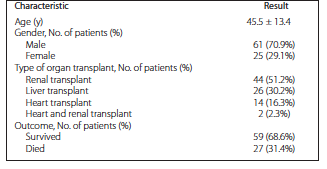
Table 1. Demographic and Clinical Characteristics of the 86 Study Patients
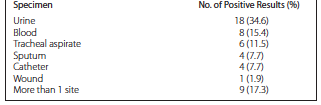
Table 2. Positive Microbial Growth on Culture (n = 50)