Volume: 13 Issue: 3 November 2015 - Supplement - 3
FULL TEXT
Objectives: This study sought to evaluate the incidence, risk factors, and outcomes of acute respiratory failure in cardiac transplant recipients.
Materials and Methods: Cardiac transplant recipients >15 years of age and readmitted to the intensive care unit after cardiac transplant between 2005 and 2015 were included.
Results: Thirty-nine patients were included in the final analyses. Patients with acute respiratory failure and without acute respiratory failure were compared. The most frequent causes of readmission were routine intensive care unit follow-up after endomyocardial biopsy, heart failure, sepsis, and pneumonia. Patients who were readmitted to the intensive care unit were further divided into 2 groups based on presence of acute respiratory failure. Patients’ ages and body weights did not differ between groups. The groups were not different in terms of comorbidities. The admission sequential organ failure assessment scores were higher in patients with acute respiratory failure. Patients with acute respiratory failure were more likely to use bronchodilators and n-acetylcysteine before readmission. Mean peak inspiratory pressures were higher in patients in acute respiratory failure. Patients with acute respiratory failure developed sepsis more frequently and they were more likely to have hypotension. Patients with acute respiratory failure had higher values of serum creatinine before admission to intensive care unit and in the first day of intensive care unit. Patients with acute respiratory failure had more frequent bilateral opacities on chest radiographs and positive blood and urine cultures. Duration of intensive care unit and hospital stays were not statistically different between groups. Mortality in patients with acute respiratory failure was 76.5% compared with 0% in patients without acute respiratory failure.
Conclusions: A significant number of cardiac transplant recipients were readmitted to the intensive care unit. Patients presenting with acute respiratory failure on readmission more frequently developed sepsis and hypotension, suggesting a poorer prognosis.
Key words : Heart, Transplant, Pulmonary complications, Intensive care
Introduction
Heart transplant, performed by Christiaan Barnard for the first time in 1967, continues to be the standard therapy for patients with end-stage heart failure.1 Cardiac transplant recipients may face early and late postoperative complications including infection, rejection, and adverse events of immunosuppressive therapy.2 Among posttransplant systemic complications, infective and noninfective pulmonary complications occur in 29.9% of the cases, and are due to pneumonia, primarily of bacterial origin (one half).3 Risk factors for pulmonary complications in cardiac transplant recipients are duration of heart failure, multiple organ failure, need for postoperative extracorporeal therapies and intense immunosuppression.3 Pulmonary complications in cardiac transplant recipients remain a major concern since they may cause acute respiratory failure (ARF) associated with significant morbidity and mortality.2-4 Acute respiratory failure in these patients commonly necessitates readmission to the intensive care unit (ICU) during the posttransplant period and adversely affects clinical outcomes. Therefore, this study sought to evaluate cardiac transplant recipients admitted to the ICU to identify the ARF incidence and causes and to assess the risk factors and outcomes of those with ARF.
Materials and Methods
We conducted a retrospective chart review on patients who underwent heart transplant (HT) using the bi-caval technique from January 2005 through January 2015 at Baskent University Hospital. The indication for HT was in agreement with the generally accepted international criteria.5 The same surgical and anesthetic techniques were used in all patients. At the end of the surgeries, all patients were admitted to the ICU, and the same protocol was applied to all patients from the same team.
All cardiac transplant recipients admitted to the ICU for respiratory or nonrespiratory reasons and those with prolonged mechanical ventilation (> 48 h) after HT were screened. Acute respiratory failure was defined as severe dyspnea, respiratory distress, decreased oxygen saturation (<92%), hypoxemia (PaO2 < 60 mm Hg) or hypercapnia (PaCO2 > 60 mm Hg) on room air or requirement of noninvasive or invasive mechanical ventilation. Patients under the age of 15 years and patients with missing data were excluded from the study. Patients were categorized according to whether or not they had ARF upon admission to the ICU.
Many patient characteristics were assessed, including demographics (age, sex, height, weight), causes of heart failure, accompanying systemic diseases, EuroSCORE during HT and interval from transplant to ICU readmission, characteristics of ARF, such as need for and duration of invasive or noninvasive mechanical ventilation, ventilator settings, presence of infections, acute renal failure, need for renal replacement therapy and sequential organ failure assessment (SOFA) scores during ICU stay. The laboratory values, culture results, and arterial blood gas analysis of the patients for calculation of partial pressure of arterial oxygen to fractional inspired oxygen ratio (PaO2/FiO2) were recorded. Outcome parameters, including lengths of ICU and hospital stay and mortality, were recorded.
Pleural effusion, pneumonia, pulmonary atelectasis, acute pulmonary edema and pneu-mothorax were the included causes for ARF. They were diagnosed with the help of clinical and radiologic criteria using chest radiograph or computed tomography. Pneumonia was defined by the Centers for Disease Control criteria.
Statistical analyses were performed with SPSS software (SPSS: An IBM Company, version 21.0, IBM Corporation, Armonk, NY, USA). Mean ± standard deviation for continuous variables and numbers for categorical variables (%) were used. Chi-square and Mann-Whitney U test were used during comparison of the groups. The variables of clinical and statistical significance between groups for presence of ARF at ICU admission were used to determine the predictors in the logistic regression analysis and a P value less than .05 was considered significant.
The study was approved by the Ethical Review Committee of the Research Center. All of the protocols conformed to the ethical guidelines of the 1975 Helsinki Declaration. Written informed consent was obtained from all subjects.
Results
A total of 91 patients underwent heart transplants at our center. Among these cardiac transplant recipients, 39 (42.9%) were admitted to ICU after HT. The mean age at the time of transplant was 40.7 ± 15.1 years, and mean EuroSCORE during HT was 9.6 ± 2.0. The most common cause of end-stage heart failure was dilated cardiomyopathy (92.3%). Major comorbidities were hypertension (38.5%), cardiovascular disease (33.3%), and chronic renal failure (17.9%). Twelve patients (30.8%) had a history of acute rejection before ICU admission. The median time from HT to ICU admission was 66.0 ± 1097 days. The most common reasons for ICU admission were routine follow-up after endomyocardial biopsy (48.7%), heart failure (25.6%), sepsis (12.5%), and pneumonia (12.5%). Patients admitted to the ICU were divided into 2 groups based on the presence of ARF: those with ARF (n = 17, 43.6%) and without ARF (n = 22, 56.4%). Patient characteristics are given in Table 1. Patient age, weight, size and comorbidities did not differ among the groups (P > .05 for all).
Admission SOFA scores were higher in patients with ARF than those without ARF (8.3 ± 1.7 vs 7.1 ± 0.9; P = .018). When compared with patients without ARF, those with ARF were more likely to use bronchodilators and n-acetylcysteine before ICU admission (76.5% and 27.3%; P = .004 and 76.5% and 31.8%, P = .010). Noninvasive mechanical ventilation was used in 1 patient (3%) and invasive mechanical ventilation was required in all other patients with ARF. Among 17 patients with ARF, 1 patient required tracheotomy for prolonged mechanical ventilation and tracheotomy. Patients were similar regarding PaO2/FiO2 ratios (291 ± 74 and 275 ± 91; P = .81). Average peak inspiratory pressure was higher in patients with ARF when compared with those without ARF (12.0 ± 1.7 cm H2O vs 11.0 ± 1.2 cm H2O; P = .02).
The major causes of ARF were infection (60%) and cardiogenic pulmonary edema (40%). Patients with ARF developed sepsis more frequently (64.7% and 4.5%; P < .001) and they were more likely to have hypotension at ICU admission (70.6% and 18.2%; P = .003). Patients with ARF had higher values of serum creatinine before ICU admission and in the first day of ICU (1.7 ± 1.7 mg/dL vs 1.0 ± 0.2 mg/dL; P = .019 and 2.1 ± 1.6 mg/dL vs 1.3 ± 0.7 mg/dL; P = .02). However, requirement for renal replacement therapy were similar in both groups (65% vs 41%; P = .14).
Patients with ARF had more frequent bilateral opacities on chest radiograph (64.7% and 9.1%; P < .001) and positive blood and urine cultures (70.6% and 18.2%; P = .003 and 64.7% and 22.7%; P = .011). Pneumonia was more frequent in patients admitted because of ARF (59% and 18%; P = .009). Types of infections are presented in Table 2. Duration of ICU and hospital stay was not statistically different between groups (P > .05 for both). Mortality in patients with ARF was 76.5% compared with 0% in patients without ARF (P < .001) (Table 3).
Logistic regression analyses revealed that serum creatinine before ICU admission (odds ratio [OR], 19.748; 95% confidence interval [CI]:1.474-264.651; P = .02), presence of sepsis (OR, 79.818; 95% CI: 4.620-1379.074; P =. 003) and hypotension at ICU admission (OR, 23.582; 95% CI: 2.240-248.248; P = .009) were independent risk factors for development of acute respiratory failure.
Discussion
In our series of cardiac transplant recipients admitted to ICU during the posttransplant period, the incidence of ARF was 43.6%. Among those with ARF, the most common cause was infection. Risk factors for the development of ARF were higher serum creatinine levels before ICU admission, sepsis, and hypotension at ICU admission with an association of increased mortality.
Several investigators have reported that transplant recipients carry a high risk of respiratory complications because of immunosuppressive regimens and surgery-related problems.6 Respiratory complications can be infectious or noninfectious and may occur early or late during the postoperative period. Respiratory problems may be associated with ARF and transplant recipients may need ICU admission that might affect their clinical outcomes. Early postoperative pulmonary complications after heart transplant develop in 35% of the recipients. The most common ones are pleural effusion, atelectasis, and pulmonary edema.7 Some risk factors for the development of respiratory complications after heart transplant have been described in the literature.8,9 In heart transplant recipients duration of heart failure, multiple organ failure need for postoperative extracorporeal therapies and intense immuno-suppression have been reported as risk factors for pulmonary complications.3 Among our cardiac transplant recipients admitted to ICU, heart failure was the cause in 25.6% of the cases.
Infectious respiratory complications remain a life-threatening complication. About two-thirds of lung infiltrates observed after transplant are of infectious origin. The lung is the leading infectious site in heart transplant recipients. In a retrospective review, Lenner and associates reported that the most common pulmonary complication in cardiac transplant recipients is bacterial pneumonia, which occurs with similar frequency in the first days and after 6 months after transplant.10 Also, late-onset, community-acquired pneumonias had good prognosis with empiric antibiotherapy; whereas, bacterial pneumonias within the first 6 months after transplant were nosocomial in origin with high mortality.10 In our series of 39 patients admitted to ICU, the mean time from heart transplant to ICU admission was 66.0 ± 109.7 days, in which sepsis and pneumonia accounted for half of the reasons for admission.
Among our patients with acute respiratory failure, 60% had an infectious cause. Pneumonia was the most frequent type of infection, with bilateral opacities observed in the chest radiograph. All patients required invasive mechanical ventilation. In our series, sepsis and septic shock were more frequent in patients with ARF with higher SOFA scores and increased creatinine levels at ICU admission. Accordingly, when compared with patients without ARF, mortality was significantly increased.
The reported mortality rates for heart transplant recipients who develop pneumonia range from 20% to 30%.11 Kim and associates did not show a relation between mortality and respiratory problems in their 239 heart transplant patients in the early postoperative period.9 In contrast, our mortality in patients with ARF was 76.5%. The reason might be due to higher SOFA scores in our group of patients with ARF that was associated with organ failure, including acute renal dysfunction and hypotension at ICU admission.
There are several limitations of our study. First, our study was retrospective, and we analyzed registry data. Missing data were common and misclassification of important exposures was possible. Another limitation is that we included patients over 10 years during which changes in treatment practices probably occurred.
Conclusions
Respiratory problems after solid-organ transplant are a serious cause of morbidity and mortality. In our study, among heart transplant recipients admitted to ICU, ARF is common and mainly because of pneumonia, with severe sepsis associated with high mortality. Risk factors for the development of ARF in cardiac transplant recipients include high creatinine levels, hypotension at ICU admission, and sepsis.
References:
- Memories of the heart. Daily Intelligencer. November 29, 1987:A–18.
- Kriett JM, Kaye MP. The Registry of the International Society for Heart
and Lung Transplantation: Eighty Official Report-1991. J Heart Lung
Transplant. 1991;10(4):491-498.
PubMed - Zeyneloðlu P. Respiratory complications after solid-organ
transplantation. Exp Clin Transplant. 2015;13(2):115-125.
CrossRef - PubMed - Topal AE, Erin MN. Risk factors for the development of pneumonia post
cardiac surgery. Cardiovasc J Afr. 2012;23(4):212-215.
CrossRef - PubMed - Mehra MR, Kobashigawa J, Starling R, et al. Listing criteria for heart
transplantation: International Society for Heart and Lung Transplantation
guidelines for the care of cardiac transplant candidates 2006. J Heart Lung
Transplant. 2006;25:1024-1042.
CrossRef - PubMed - Kotloff RM, Ahya VN, Crawford SW. Pulmonary complications of solid organ
and hematopoietic stem cell transplantation. Am J Respir Crit Care Med.
2004;170(1):22-48.
CrossRef - PubMed - Firat AC, Komurcu O, Zeyneloglu P, et al. Early postoperative pulmonary
complications following heart transplantation. Transplant Proc. 2015;4
(4):1214-1216.
CrossRef - PubMed - Brueckmann B, Villa-Uribe JL, Bateman BT, et al. Development and
validation of a score for prediction of postoperative respiratory
complications. Anesthesiology. 2013;118:1276-1285.
CrossRef - PubMed - Kim HJ, Jung SH, Kim JJ, et al. Early postoperative complications after
heart transplantation in adult recipients: Asan Medical Center experience.
Korean J Thorac Cardiovasc Surg. 2013;46:426-432.
CrossRef - PubMed - Lenner R, Padilla ML, Teirstein AS, et al. Pulmonary complications in
cardiac transplant recipients. Chest. 2001;120(2):508-513.
CrossRef - PubMed - De Gasperi A, Feltracco P, Ceravola E, Mazza E. Pulmonary complications
in patients receiving a solid-organ transplant. Curr Opin Crit Care.
2014;20(4):411-419.
CrossRef - PubMed

Volume : 13
Issue : 3
Pages : 22 - 25
DOI : 10.6002/ect.tdtd2015.O14
From 1Baskent University, School of Medicine, Department of
Anesthesiology and Critical Care Medicine and 2Baskent University,
School of Medicine, Department of Cardiovascular Surgery, Ankara, Turkey
Acknowledgements: The authors have no conflict of interest to declare. No
grants or other financial support have been received for this study.
Corresponding author: Ozgur Komurcu, Baskent University, School of
Medicine, Department of Anesthesiology and Critical Care Medicine, Yukarý
Bahçelievler Mh., Fevzi Çakmak Cd., 10. Sk., No: 45, Ankara, Turkey
Phone: +90 312 203 6868 ext. 4817
Fax: +90 312 223 7333
E-mail: zgrkom@gmail.com
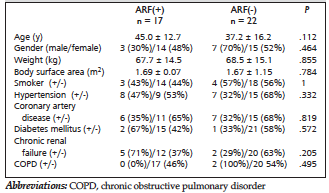
Table 1. Characteristics of the Groups [Mean ± SD or Number (%)
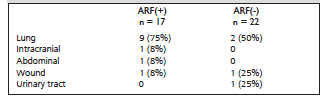
Table 2. Types of Infections in Patients With and Without Acute Respiratory Failure
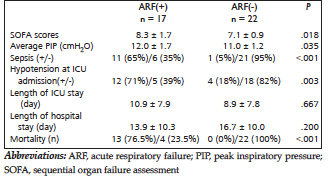
Table 3. Comparison of Patients With and Without Acute Respiratory Failure