Volume: 13 Issue: 3 November 2015 - Supplement - 3
FULL TEXT
Objectives: The aim of this study was to analyze microbiologic screening results of patients before and after liver transplant.
Materials and Methods: We analyzed the micro-biologic screening results (throat and nasal swabs and sputum samples) before and after liver transplant of 16 patients who were treated in the Department of Transplantation at the National Scientific Medical Research Center during 2013 and 2014. Identification of isolates and antibiotic susceptibility testing were performed with the Vitek 2 Automated System (bioMerieux, Chemin de l'Orme 69280 Marcy l'Etoile France).
Results: Microbiologic screening results of the respiratory tract before liver transplant showed that 10 of 15 patients (66.6%) had isolates at concentrations of 105 colony-forming units/mL and above. One patient did not receive microbiologic screening. In throat and nasal swabs, 8 patients (53.3%) displayed association of isolates. Throat swab results showed Streptococcus pneumoniae in 6 patients from this group at a concentration of 105 to 106 colony-forming units/mL and above. Enterococcus durans and Enterobacter aerogenes were identified in 1 patient at a concentration of 105 colony-forming units/mL. In nasal swabs, 5 patients (33.3%) showed Staphylococcus aureus and 3 patients (20%) showed Staphylococcus epidermidis (20%) infections. Sputum samples revealed isolates at infectious concentrations in 33.3% of patients. After transplant, microbiologic screening results showed qualitative and quantitative changes in the microbial spectrum of patients. The proportion of patients who had infectious levels of isolates increased to 66.6%. In throat and nasal swabs, isolates were identified as Streptococcus pneumoniae (44.4%), Streptococcus pyogenes (22.2%), Klebsiella pneumoniae (22.2%), and Enterobacter aerogenes (11.1%).
Conclusions: Before transplant, 66.6% of patients showed Streptococcus pneumoniae and Staphylo-coccus aureus in their respiratory tract. After transplant, there were qualitative and quantitative changes in the microbial spectrum of patients. We found that 40.0% of patients had multidrug-resistant gram-negative isolates.
Key words : Infectious concentration, Isolates, Septic complications
Introduction
The protocol adopted by the Royal Infirmary’s Scottish Liver Transplant Unit (Edinburgh, Scotland) lists microbiologic studies as a requirement for assessment of patients. These studies include urine culture, sputum samples, screening for methicillin-resistant Staphylococcus aureus, and, for patients who meet the risk criteria, screening for carbapenemase-producing Enterobacteriaceae.1 Chronic infections of the upper and lower respiratory tract can cause serious complications during immunosuppressive therapy in the posttransplant period.2
The progression of an infectious disease usually occurs more rapidly in people with weakened immune systems, resulting in a need for early and effective antimicrobial therapy.3 Appropriate microbiologic samples should be obtained when possible, before antibiotic therapy, which can then be selectively controlled on the basis of the micro-biologic screening results.4
The aim of this study was to analyze micro-biologic screening results of patients before and after liver transplant.
Materials and Methods
We analyzed the results of 16 patients (10 women and 6 men, age 21-55 y) before and after liver transplant who were treated in the Department of Transplantology at the National Scientific Medical Research Center during 2013 and 2014. During the study period, 120 samples were collected and processed.
Sputum samples, swabs from the throat and nose, and urine samples from patients were collected for quantitative bacteriologic examination. Each patient was informed about the right fence of the material. For urine collection, patients used prepared sterile, sealed containers for collection of 5 to 10 mL of midstream urine; sterile containers for sputum collection and sterile swabs for nose and throat were also used.
Samples were quantitative analyzed with the use of culture media (blood agar, Endo agar, vitelline salt agar, and Candida agar plates). Specimens were cultured for 24 hours at 37ºC; however, Candida agar plates were cultured for 5 days at 22ºC.5
Infection was identified when concentration of isolates measured 105 colony-forming units/1 mL and above. Identification of infection and antibiotic susceptibility testing were performed with the use of the Vitek 2 Automated System (bioMerieux, Chemin de l'Orme 69280 Marcy l'Etoile - France).
Results and Discussion
Before transplant, microbiologic screening results of the respiratory tract showed that 10 of 15 patients (66.6%) displayed isolates at a concentration of 105 colony-forming units/mL and above. One patient did not receive microbiologic screening before transplant. Throat and nasal swabs in 8 patients (53.3%) showed infectious concentrations of isolates. In 6 of these patients, Streptococcus pneumonia was identified in throat at a concentration of 105 to 106 colony-forming units/mL and above. Enterococcus durans and Enterobacter aerogenes were isolated in 1 patient at concentration of 105 colony-forming units/mL. In nasal swabs, 5 patients (33.3%) showed Staphylococcus aureus at a concentration of 104 to 105 colony-forming units/mL, with Staphylococcus epidermidis isolated in 3 patients (20%). Microbiologic analyses of sputum samples revealed infectious concentrations of isolates in 5 patients (33.3%), with Streptococcus pneumonia in 4 patients and Enterococcus durans in 1 patient (Table 1).
After transplant, qualitative and quantitative changes were shown in the microbial spectrum of patients. The proportion of patients showing infection increased to 66.6%. In throat and nasal swabs, isolates were identified as Streptococcus pneumoniae (44.4%), Streptococcus pyogenes (22.2%), Klebsiella pneumoniae (22.2%), and Enterobacter aerogenes (11.1%). The patient who did not receive microbiologic screening before transplant began antimicrobial therapy for Pseudomonas aeruginosa (isolated from nose, throat, and urine samples), Acinetobacter baumannii (isolated from urine and sputum samples), and Enterobacter cloacae (isolated from throat samples). In the other patients, Enterobacter aerogenes at concentrations of 105 to 107 colony-forming units/1 mL was isolated from nasal swabs, urine samples, and tracheostomy samples after transplant.
In conclusion, Streptococcus pneumonia and Staphylococcus aureus were isolated in the respiratory tract in 66.6% of patients before liver transplant. After transplant, patients showed qualitative and quantitative changes in their microbial spectrum. In addition, we found that 40.0% of patients had multidrug-resistant gram-negative isolates.
References:
- Scottish Liver Transplant Unit, Royal Infirmary, Edinburgh. Protocol of assessment of liver transplantation in patients with chronic liver disease. Published October 2013. Accessed July 17, 2015.
- Massachusetts General Hospital. Transplant Infectious Diseases Program 2013-2014. http://www.massgeneral.org/transplant/services/treatmentprograms.aspx?id=1182. Accessed July 17, 2015.
- Rath PM, Saner F, Paul A, et al. Multiplex PCR for rapid and improved
diagnosis of bloodstream infections in liver transplant recipients. J Clin
Microbiol. 2012 Jun. 50(6):2069-2071.
CrossRef - PubMed - Munoz SJ, Rothstein KD, Reich D, Manzarbeitia C. Long-term care of the liver
transplant recipient. Clin Liver Dis. 2000 Aug. 4(3):691-710.
CrossRef - PubMed - Vandepitte J, Verhaegen J, Engbaek K, Rohner P, Piot P, Heuck CC. Basic Laboratory Procedures in Clinical Bacteriology. Geneva, Switzerland: World Health Organization; 2003.

Volume : 13
Issue : 3
Pages : 123 - 125
DOI : 10.6002/ect.tdtd2015.P68
From the Microbiology Laboratory, National Scientific Medial Research Center,
Astana, Kazakhstan
Acknowledgements: The authors declare that they have no sources of
funding for this study, and they have no conflicts of interest to declare.
Corresponding author: Aigerim Yergaliyeva, Microbiology Laboratory,
National Scientific Medical Research Center, Astana, Kazakhstan
Phone: +77 172 577 652
E-mail: gegchik@mail.ru
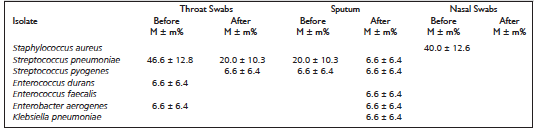
Table 1. Microbiologic Screening Results of Patients Before and After Liver Transplant