Volume: 13 Issue: 3 November 2015 - Supplement - 3
FULL TEXT
Objectives: Reasons for chronic liver and kidney failure may vary; sometimes more than 1 family member may be affected, and may require a transplant. The aim of this study was to examine the similarities or differences between the perioperative characteristics of siblings undergoing liver or kidney transplant.
Materials and Methods: The medical records of 6 pairs of siblings who underwent liver transplant and 4 pairs of siblings who underwent kidney transplant at Baskent University Hospital between 1989 and 2014 were retrospectively analyzed. Collected data included demographic features; comorbidities; reasons for liver and kidney failure; perioperative laboratory values; intraoperative hemodynamic parameters; use and volume of crystalloids, colloids, blood products, cell saver system, and albumin; duration of anesthesia; urine output; and postoperative follow-up data.
Results: The mean age of the 6 sibling pairs who underwent liver transplant was 16.3 ± 12.2 years. All 12 patients had Child-Pugh grade B cirrhosis, with mean disease duration of 7.8 ± 3.9 years. There were no significant differences between siblings with respect to intraoperative blood product transfusion, crystalloid and colloid fluid replacements, hypotension frequency, blood gas analyses, urinary output, duration of anhepatic phase, inotropic agent administration, postoperative laboratory values, need for mechanical ventilation and vasopressors, occurrence of acute renal failure and infections, and duration intensive care unit stay (P > .05). The mean age of the 4 sibling pairs who underwent kidney transplant was 21.3 ± 6.4 years, with mean duration of renal insufficiency of 2.2 ± 1.6 years. There were no significant differences between siblings with respect to intraoperative crystalloid and colloid fluid administration, duration of anesthesia, intraoperative mannitol and furosemide administration, and postoperative laboratory values (P > .05).
Conslusions: In conclusion, the 6 sibling pairs who underwent liver transplant and 4 sibling pairs who underwent kidney transplant in our cohort had similar perioperative characteristics.
Key words : Family, Perioperative characteristics, Solid-organ transplant recipients
Introduction
Transplant for end-stage liver and kidney failure is a high-cost technique and is the only definitive treatment.1 There are several causes of end-stage liver and kidney failure. More than 1 family member also may be affected, some as a result of the same cause and some from different causes. Therefore, more than 1 family member may require transplant. Being from the same family and having the same disease history not only affects the success of the transplant but also the perioperative follow-up features. The aim of this study was to show the similarities and differences in perioperative characteristics of siblings undergoing liver or kidney transplant.
Materials and Methods
We retrospectively collected the data of 6 pairs of siblings who underwent orthotopic liver transplant and 4 pairs of siblings who underwent kidney transplant at Baskent University Medical School, Ankara Hospital, between 1989 and 2014. The study was approved by the Institutional Review Board and Ethical Review Committee of the Institute. All of the protocols conformed to the ethical guidelines of the 1975 Helsinki Declaration. Written informed consent was obtained from all of the participants.
Collected data included demographic features (sex, age, weight, and smoking status), Child-Pugh scores, reasons for liver or kidney failure, comorbidities, perioperative laboratory values (hematocrit, serum urea nitrogen, creatinine, aspartate aminotransferase, alanine aminotransferase, albumin, platelets, international normalized ratio, bilirubin), intraoperative parameters (blood glucose levels, insulin requirements, duration of anhepatic phase, graft weight, doses of methylprednisolone and furosemide), hemodynamic parameters (systolic and diastolic arterial blood and central venous pressure), body temperature, peripheral oxygen saturation, blood gas analyses, and lactate levels. We also collected data on the use and volume of crystalloids, colloids, blood products, and the autotransfusion system-cell saver; the duration of anesthesia; urine output; and postoperative follow-up results (postoperative laboratory values, length of stay in the intensive care unit, duration of mechanical ventilation, need for vasopressor treatment, revision surgeries, postoperative blood product transfusions, renal replacement therapies, urine output, postoperative lung injury or acute kidney disease, postoperative infection, graft rejection, graft loss, length of postoperative hospital stay, and mortality).
Data analyses were performed with SPSS software (SPSS: An IBM Company, version 20.0, IBM Corporation, Armonk, NY, USA). For each pair of siblings, siblings were set as related samples, with comparisons made with Wilcoxon rank sum test or McNemar test where appropriate. The level of significance was set at P < .05.
Results
The mean age of the 6 pairs of siblings who underwent orthotopic liver transplant was 16.3 ± 12.2 years. All 12 patients had Child-Pugh grade B cirrhosis, with liver failure duration of 7.8 ± 3.9 years. The 12 liver transplant recipients were treated for the following conditions: biliary cirrhosis (n = 4), viral hepatitis (n = 3), Wilson disease (n = 2), hepatocellular carcinoma (n = 2), and hyperoxalosis (n = 1). We recorded no deaths among the liver transplant patients. The indication for liver transplant was not identical within the sibling groups. Within sibling sets, the ages at transplant were mostly close to each other. There were no significant differences between siblings who underwent liver transplant with respect to intraoperative blood product transfusion, crystalloid and colloid fluid replacements, hypotension frequency, blood gas analyses, urinary output, duration of anhepatic phase, inotropic agent administration, postoperative laboratory values, need for mechanical ventilation and vasopressors, occurrence of acute renal failure and infections, and duration of stay in the intensive care unit (P > .05) (Tables 1-2-3).
The mean age of the 4 pairs of siblings who underwent kidney transplant was 21.3 ± 6.4 years, with duration of renal insufficiency of 2.2 ± 1.6 years. The 8 kidney transplant recipients were treated for the following conditions: polycystic renal disease (n = 5), nephrotic syndrome (n = 1), and renal insufficiency of unknown cause (n = 2). The indications for kidney transplant were identical within the sibling groups. Within the sibling sets,the ages at transplant were mostly close to each other. We recorded 2 deaths among the kidney transplant patients who were brothers. There were no significant differences between siblings who underwent kidney transplant with respect to intraoperative crystalloid and colloid fluid administration, duration of anesthesia, intraoperative mannitol and furosemide administration, and postoperative laboratory values (P > .05) (Tables 4-5-6).
Discussion
The role of anesthesia in transplant is important in the perioperative setting as different patient characteristics are of concern and intraoperative care and postoperative care of these patients can be complex and challenging. Anesthesiologists have a critical role, especially in liver transplants because of the prolonged intensive care period after transplant, the need for meticulous monitoring of hemodynamic parameters, mechanical ventilation, and vigorous postoperative analgesia. Knowing the similarities of the siblings could allow better anesthesia and postoperative care of other siblings.
This retrospective study demonstrated that the 6 pairs of siblings who underwent liver transplant and 4 pairs of siblings who underwent kidney transplant have similar perioperative characteristics. Since 1989, we followed 20 individuals who underwent liver or kidney transplant at Baskent University Medical School Hospital who had 1 sibling with liver transplant or kidney transplant. Because we found the indication for liver or kidney transplant and the age of onset of organ failure identical within the sibling groups, we thought that this could explain the perioperative similarities between siblings.
To the best of our knowledge, this is the first study to examine the similarities between siblings who have had liver or kidney transplant. Previous literature experience of liver or kidney transplant in siblings has disseminated mainly through case reports.2-8 In pediatric cases, the indications for liver transplant were type IV glycogen storage disease,4 familial hypercholesterolemia,5 and Crigler–Najjar syndrome.3 Adult sibling liver transplant recipients generally had amyloid metabolic disturbances.2,7,8 Other indications were related to altered cholesterol metabolism.6 In our series, the indications for orthotopic liver transplant in pediatric cases were biliary cirrhosis, Wilson disease, hepatocellular carcinoma, and hyperoxalosis; in adult cases, the indications were viral hepatitis and biliary cirrhosis. One previous study in Finland collected data on 6 pairs of siblings with liver transplant, which were selected from 886 individuals who received transplants from 1982 to 2013. This study revealed several unique features within sibling pairs, with the cause of liver cirrhosis mostly because of complex genetic abnormalities.9 The study concluded that the prevalence of sibling liver transplant recipients in Finland was low. Because our study only included the recipients who were transplanted at Baskent University Ankara Hospital, we cannot conclude about prevalence of sibling recipients in our country.
There are some limitations to our study. First, it is a retrospective study. Another limitation is that the number of sibling groups with liver and kidney transplant is small. Therefore, our cohort may be too small to make statistically reliable conclusions.
In conclusion, based on the results of the current study, in siblings who underwent liver or kidney transplant, perioperative progress was similar between pairs. Therefore, for patients needing transplant who have a sibling with an organ transplant, our collected data could show how to manage our treatment during the preoperative assessment, during the transplant, and during the intensive care unit period. These findings are especially important for those patients who have the decision of transplant if the patient is not the first sibling.
References:
- Hall TH, Dhir A. Anesthesia for liver transplantation. Semin
Cardiothorac Vasc Anesth. 2013;17(3):180-194.
CrossRef - PubMed - Lauro A, Diago Uso T, et al. Liver transplantation for familial amyloid
polyneuropathy non-VAL30MET variants: are cardiac complications influenced
by prophylactic pacing and immunosuppressive weaning? Transplant Proc.
2005;37(5):2214-2220.
CrossRef - PubMed - Schauer R, Lang T, Zimmermann A, et al. Successful liver transplantation
of two brothers with Crigler–Najjar syndrome type 1 using a single cadaveric
organ. Transplantation. 2002;73(1):67-69.
CrossRef - PubMed - Selby R, Starzl TE, Yunis E, Brown BI, Kendall RS, Tzakis A. Liver
transplantation for type IV glycogen storage disease. N Engl J Med.
1991;324(1):39-42.
CrossRef - PubMed - Kucukkartallar T, Yankol Y, Kanmaz T, Topaloglu S, Acarli K, Kalayoglu
M. Liver transplantation as a treatment option for three siblings with
homozygous familial hypercholesterolemia. Pediatr Transplant.
2011;15(3):281-284.
CrossRef - PubMed - Bonatti H, Falkensammer J, Sawyer R, et al. Fat luck: three siblings
requiring liver transplantation for nonalcoholic steatohepatitis. Transpl
Int. 2008;21(2):189-191.
PubMed - Muller KR, Padbury R, Jeffrey GP, et al. Poor outcome after liver
transplantation for transthyretin amyloid neuropathy in a family with an
Ala36Pro transthyretin mutation: case report. Liver Transpl.
2010;16(4):470-473.
CrossRef - PubMed - Ramirez P, De Mingo P, Andreu F, et al. Long-term results of liver
transplantation in four siblings from the same family with familial
amyloidotic polyneuropathy type I TTR ALA-71. Transplant Proc.
1999;31(6):2489-2490.
CrossRef - PubMed - Koljonen VS, Makisalo HH. Liver transplant in siblings – A single center
experience. Transplantation. 2014;98(6):61-63.
CrossRef - PubMed

Volume : 13
Issue : 3
Pages : 101 - 106
DOI : 10.6002/ect.tdtd2015.P61
From the 1Department of Anesthesiology and Critical Care
Medicine; and the 2Department of General Surgery, School of Medicine, Baskent
University, Ankara, Turkey
Acknowledgements: The authors declare that they have no sources of
funding for this study, and they have no conflicts of interest to declare.
Corresponding author: Zeynep Ersoy, Baþkent University, School of
Medicine, Department of Anesthesiology and Critical Care Medicine, Ankara,
Turkey
Phone: +90 532 614 0245
Fax: +90 312 223 3796
E-mail:
zeynepsener2003@yahoo.com
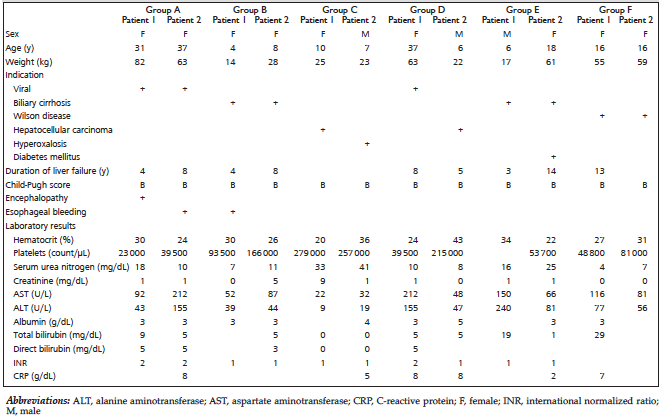
Table 1. Preoperative Liver Transplant Results
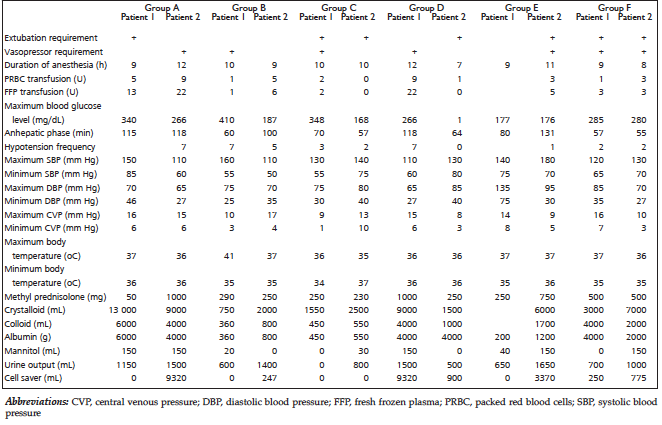
Table 2. Intraoperative Liver Transplant Results
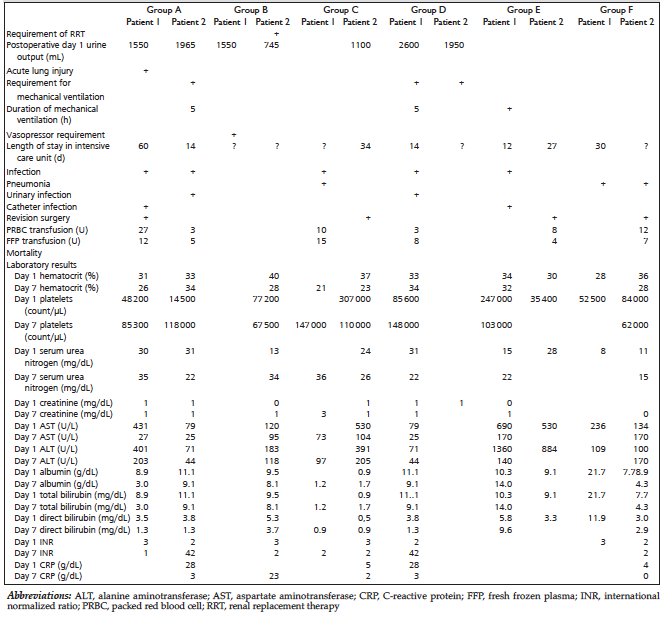
Table 3. Postoperative Liver Transplant Results
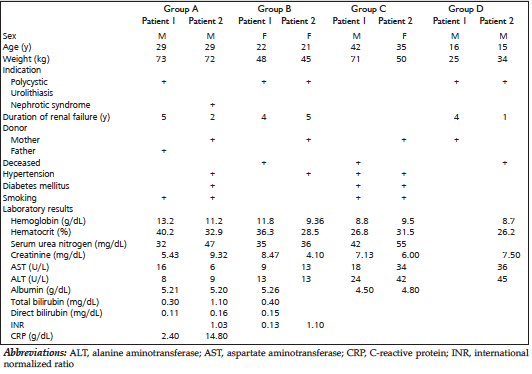
Table 4. Preoperative Renal Transplant Results
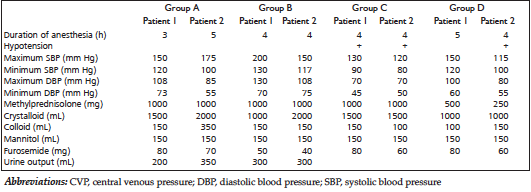
Table 5. Intraoperative Renal Transplant Results
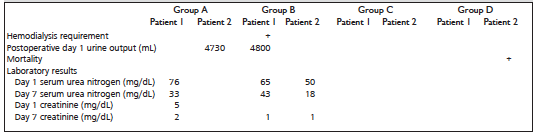
Table 6. Postoperative Renal Transplant Results