Volume: 13 Issue: 3 November 2015 - Supplement - 3
FULL TEXT
Several challenging obstacles remain to increasing the number of organ donations from deceased patients in a hospital setting. These include medical, administrative, and ethical issues. Possible medical obstacles include the failure of early recognition of possible donors and inadequate care of potential and actual donors. To maximize the use of donated organs, proper care of the donors and expedited donor consent cannot be overemphasized. The care rendered to patients should ensure appropriate perfusion and nutrition of the organs, with meticulous follow-up until organ recovery. For example, patients involved in accidents are presumed to be healthy, but many have no available medical history on file. At the time of organ recovery, unexpected infections or malignancies can be minimized by raising the index of suspicion of the presence of serious conditions in donors, especially in donors with unknown medical history. A careful physical examination and an appropriate and aggressive laboratory investigation may disclose the cause of suspected clinical conditions in these potential donors. Individuals who work in intensive care units are the main group of health care providers directly involved in the process of organ donation. Appointing a donor coordinator in each intensive care unit could improve all aspects of organ donation. Such coordination could harmonize efforts toward the goals mentioned above and surmount the obstacles encountered during deceased-donor organ donation.
Here, we describe the preliminary results of the Proactive Detection Program, a collaboration between the Saudi Center for Organ Trans-plantation (the national organ donation and transplant supervising center) and intensive care units of donating hospitals. With its success in Saudi Arabia, it is hoped that it will be widely adopted in other regions.
Key words : Organ transplant, Deceased-donor transplant, Intensive care, Organ procurement
Introduction
Despite the achievements of organ transplant worldwide, which exceeded 110 000 solid-organ transplants, the constantly escalating need has not been matched by an adequate supply of allografts. Only approximately 10% of the demand for organ transplants has been satisfied.1 Several obstacles must be surmounted by countries that wish to achieve self-sufficiency in their organ transplant programs.
The international transplant community and the World Health Organization (WHO) have recently provided a road map for any country that wishes to achieve self-sufficiency in organ transplant.2 In 2008, the Declaration of Istanbul3 called for enforcement of laws against “transplant tourism” and illegal organ trafficking. This agreement was implemented in an update of the 2010 WHO resolution on organ transplant and the rights of organ donors.4 The WHO road map to self-sufficiency in organ donation and transplant included 3 main factors that should be implemented: capacities, responsibilities, and opportunities. Furthermore, the responsibilities of each country should include providing for the ethical care and management of all known possible solid-organ and tissue transplants in its practice. Whenever possible, in addition to encouraging research in the field of organ donation and transplant, countries should take opportunities to educate the public about the importance of organ donation and transplants, promote all possible sources of organ donation, establish bridge therapies for patients waiting for organ transplants, and provide screening, vaccinations, and preventive measures for related diseases.
Sources of donated organs
In the WHO road map to self-sufficiency, the paramount focus was on sources of organ allografts from living and deceased donors. Kidneys and livers still comprise the most frequently transplanted organs, and it is fortunate for patients that deceased and living donors are sources for these. However, an examination of the international map of transplant reveals limitations in the daily practice of different countries in their use of allografts from living and deceased donors. For example, allografts from living donors are more cautiously used by transplant programs because of the divergent attitudes of the population of different countries toward living donation. These issues include the possible long-term risk to the donor, the controversial topic of inadequately available genetically related versus the ethically debatable unrelated donation, and the limited amount of tissue recovered (one kidney, and part of the liver). Deceased donors remain a highly untapped source of organs. Recent practices now consider organ donation after brain death and cardiac death and the expansion of possible donors to include not only intensive care unit (ICU) patients but also emergency suite patients.
Each transplant program worldwide is encouraged to devise a strategy to optimize and maximize the use of living-donor and deceased-donor allografts to meet the expanding need for organ transplants. The Saudi Center for Organ Transplantation (SCOT), which is the Saudi’s national organ donation and transplant program supervising center, has already exemplified positive steps toward this goal.
Proactive detection program in intensive care units in Saudi Arabia
In any hospital, the ICU has greater numbers of possible deceased donors than departments in other areas of the hospital. A study from Spain found that the proportion of deceased patients according to brain criteria versus total hospital admissions was approximately 2.4%; however, this proportion was dramatically higher for the ICU population (13.9%).5 In addition, data from the Ministry of Health in Saudi Arabia showed that the possible donor pool could be double what is reported to SCOT from the organ-donating hospitals. This discrepancy reflects potentially censored reported cases of possible donors (Figure 1).6,7 Furthermore, the process of organ donation in Saudi Arabia still has room for improvement, including in the early recognition and reporting of possible donors, in expediting confirmation of death by brain criteria, and in the care of potential and actual donors.
Several approaches can be used to maximize donations from deceased donors. The Spanish and US models are 2 examples of close coordination among organ procurement centers and the ICUs of organ-donating hospitals. In these countries, close coordination resulted in 73 possible deceased donors per million population in Spain and 43 possible deceased donors per million population in the United States. Procurement rates were also impressively high: 30% to 40% in Spain and 37% to 59% in the United States.8,9 The corresponding numbers in Saudi Arabia lag significantly behind, with 22 possible deceased donors per million population and a 20% procurement rate.7 The Spanish model employs full-time coordinators residing next door to the ICU and working closely with ICU staff.10 The US model has a similar configuration in which regional coordinators frequently visit ICUs and reward organ-donating hospitals for their overall performance.11 In Saudi Arabia, the presence of regional coordinators within SCOT has significantly increased the number of donors during the past 25 years,10 but the overall performance of many donating hospitals is still unsatisfactory.
We believe that, when applying any international model, one should consider local factors that exist in each country and its ICU system, in addition to the budget allocated to the organ donation process. Accordingly, SCOT has recently implemented a new strategy known as the Proactive Detection Program. The center appoints hospital donation coordinators, preferably from ICU staff, to supervise the donation process with the help of regional SCOT coordinators. This coordination continues throughout the donation process, from reporting to use of organs. Removing disincentives from coordinators is an integral part of the SCOT model. The hospital coordinators are not directly involved in the confirmation of patient death, and their role is limited to coordinating with the appropriate experts to expedite the donation process. The results of the Proactive Detection Program are shown in Figure 2. The program is still in the initiation phase, and results will be evaluated toward the end of 2016.
Conclusions
Approaches to organ donation vary from country to country and are influenced by several factors, including the local health system, the structure of the organ transplant program, and the extent to which the program is guided by the WHO road map to organ transplant self-sufficiency. Nevertheless, the exchange of experiences from different models adopted worldwide can enrich any program that seeks to initiate or maximize organ donations. The Saudi Proactive Detection Program model has great potential for success in this endeavor.
References:
- Global Observatory on Donation and Transplantation (GODT) Web Site. Organ donation and transplantation activities 2012. http://issuu.com/o-n-t/docs/2012ad. Accessed July 2, 2015.
- Delmonico FL, Domínguez-Gil B, Matesanz R, Noel L. A call for government
accountability to achieve national self-sufficiency in organ donation and
transplantation. Lancet. 2011;378(9800):1414-1418.
CrossRef - PubMed - Budiani-Saberi DA, Delmonico FL. Organ trafficking and transplant
tourism: a commentary on the global realities. Am J Transplant.
2008;8(5):925-929.
CrossRef - PubMed - World Health Organization Web Site. WHO Guiding Principles on Human Cell, Tissue and Organ Transplantation. The Sixty-Third World Health Assembly, Resolution WHA63.22. Geneva, Switzerland: World Health Organization; May 2010. http://www.who.int/transplantation/Guiding_PrinciplesTransplantation_WHA63.22en.pdf. Accessed July 2, 2015.
- Maccarone D, Parzanese I, Torlone N, Caniglia L, Garofalo A, Famulari A.
The registry of brain deaths in quality control program: evaluation of
potentiality of each hospital in Abruzzo and Molise regions. Transplant
Proc. 2007;39(6):1749-1751.
CrossRef - PubMed - Ministry of Health, Kingdom of Saudi Arabia Web Site. 2012 Health Statistics Annual Book 14333. http://www.moh.gov.sa/en/Ministry/Statistics/book/Documents/1433.pdf. Accessed July 2, 2015. p. 237.
- [No authors listed]. Organ donation and transplantation in the Kingdom
of Saudi Arabia 2013. Saudi J Kidney Dis Transpl. 2014;25(5):1122-1126.
PubMed - U.S. Department of Health & Human Services Web Site. Organ Procurement & Transplantation Network. Donors recovered in the US by donor type. Donors recovered January 1, 1988–March 31, 2015. http://optn.transplant.hrsa.gov/converge/latestData/rptData.asp. Accessed July 2, 2015.
- Manyalich M, Mestres CA, Ballesté C, Páez G, Valero R, Gómez MP. Organ
procurement: Spanish transplant procurement management. Asian Cardiovasc
Thorac Ann. 2011;19(3-4):268-278.
CrossRef - PubMed - US Department of Health & Human Services, Health Resources and Services Administration Web Site. Organ Procurement and Transplantation Network (OPTN). Goal 1: Increase the number of transplants. http://optn.transplant.hrsa.gov/governance/strategic-plan/goal-1. Accessed July 2, 2015.

Volume : 13
Issue : 3
Pages : 1 - 3
DOI : 10.6002/ect.tdtd2015.L3
From the Saudi Center for Organ Transplantation, P.O. Box 27049, Riyadh,
11417, Saudi Arabia
Acknowledgements: The authors declare that they have no sources of
funding for this study, and they have no conflicts of interest to declare.
Corresponding author: Faissal A. M. Shaheen, M.D., Saudi Center for Organ
Transplantation, P.O. Box 27049, Riyadh, 11417, Saudi Arabia
Phone: +966 114 451 100
Fax: +966 114 453 934
E-mail: famshaheen@yahoo.com
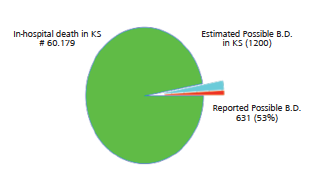
Figure 1. Estimated Hospital Deaths and Possible Organ Donations in Saudi Arabia
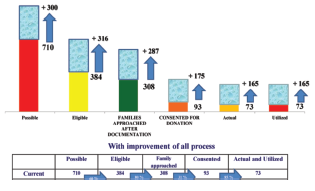
Figure 2. Projected Results of Deceased-Donor Organ Donation From the Proactive Detection Program in Saudi Arabia Compared With Current Annual Results