Volume: 12 Issue: 1 March 2014 - Supplement - 1
FULL TEXT
Objectives: The first liver transplant program in Tehran was started at Tehran University of Medical Sciences in 2002. The purpose of this study was to evaluate patient outcomes in this program.
Materials and Methods: From January 2002 to February 2013, there were 172 deceased-donor orthotopic liver transplants performed in 166 patients, including revision transplant in 6 patients. Outcomes were evaluated for 4 phases of the program: (1) phase 1 (2002 to 2005; 9 transplants); (2) phase 2 (2006 to 2009; 41 transplants); (3) phase 3 (2010 to 2011; 49 transplants); and (4) phase 4 (2012 to 2013; 73 transplants).
Results: The most frequent indications for liver transplant included cryptogenic cirrhosis, auto-immune hepatitis, and hepatitis B and C cirrhosis. During the progression from phase 1 to 4, there were significant decreases in median cold ischemia time, operative time, and transfusions (platelets, packed red blood cells, and fresh frozen plasma). The most frequent complications included infection and acute rejection. The overall median follow-up for all patients was 26 months (range, 9-144 mo). Frequency of 1-month, 3-month, 1-year, and 2-year survival increased from phase 1 to 4. Kaplan-Meier plots showed significant improvement in patient survival from phase 1 to 4 (P ≤ .001). The most common causes of death were sepsis and bleeding.
Conclusions: Clinical outcomes with deceased-donor liver transplant may be improved with a cooperative multidisciplinary team, coordinated care from different specialties, increased experience, and modifications of anesthetic and surgical techniques. Comprehensive unified written protocols for preoperative, perioperative, and postoperative treatment may help improve outcomes after sufficient experience is achieved.
Key words : Hepatic failure, Immunosuppression, Multidisciplinary care, Thromboelastometry
Introduction
Liver transplant is the treatment of choice for patients who have end-stage liver disease. The first successful liver transplant in humans was performed by Thomas Starzl in 1967 in Denver, Colorado, United States.1 Major advances in surgical techniques and immuno-suppressive treatments have markedly improved the outcome of liver transplant, and current 1-year survival is > 90%.2
There is a high demand for liver transplant in Iran.3 Therefore, a liver transplant program was started at Imam Khomeini Hospital Complex in 2002. This was the second liver transplant center in Iran and the first liver transplant program in the capital city of Tehran. The purpose of this study was to review the 11-year experience of this program and to identify factors associated with improved outcomes.
Materials and Methods
Recipients
All patients who had deceased-donor liver transplant from January 2002 to
February 2013 (172 transplants in 166 patients) were enrolled in this study. The
study was divided into 4 chronologic phases: (1) phase 1 (2002 to 2005; 9
transplants): the liver transplant program was established, and 2 liver
transplants per year were performed; (2) phase 2 (2006 to 2009; 41 transplants):
surgical techniques were modified; (3) phase 3 (2010 to 2011; 49 transplants):
real-time assessment of coagulation status was changed, and > 20 liver
transplants per year were performed; and (4) phase 4 (2012 to 2013; 73
transplants): new unified protocols were used, and > 50 liver transplants per
year were performed.
All liver transplant candidates were referred by hepatologists and underwent complete preoperative evaluation including cardiac, pulmonary, renal, psychiatric, gynecologic, and dental assessments. A multidisciplinary selection committee made decisions about adding candidates to the liver transplant waiting list; the committee included transplant surgeons, hepatologists, anesthesiologists, radiologists, pathologists, psychiatrists, infectious disease specialists, and liver transplant coordinators. During phase 1, the primary determinants for prioritization included the Child-Turcotte-Pugh score and presence of major end-stage liver disease complications; from phase 2 to 4, the Model for End-Stage Liver Disease (MELD) score was the primary determinant. It was mandatory to match the donor and recipient for blood group and body size. Patients were excluded from being a candidate for liver transplant for age > 65 years, serious comorbidities, or human immunodeficiency virus seropositive status. Recipient information were recorded prospectively in a database including demographic data, cause of liver disease, preoperative MELD and Child-Turcotte-Pugh scores, perioperative data, and clinical outcome data including patient survival and cause of death.
Medical treatment
Perioperative prophylactic broad spectrum antibiotics were given for 48 to 72 hours unless there was an infection identified
before or after transplant. Immunosuppression was induced with methylprednisolone (1000 mg) during the anhepatic stage. The maintenance
immunosuppression protocol for most patients included a 3-drug regimen including
a corticosteroid, calcineurin inhibitor, and mycophenolate mofetil; several patients received other drug combinations because of
drug intolerance or other severe adverse events.
Surgery
During phase 1, surgery included hepatectomy and cavocaval end-to-end
anastomosis in all patients and venovenous bypass in 2 patients, and an internal
biliary stent was used. In stages 2 to 4, surgery included modified piggyback
technique and cavocaval side-to-side anastomosis without venovenous bypass or
internal biliary stent. Temporary portocaval shunt was not used in any patient.
Portal vein and hepatic artery anastomoses were performed with running suture
and no magnification. A donor iliac artery jump graft from the infrarenal aorta
was used for arterial reconstruction when the native hepatic artery had not
appropriate size for anastomosis or were diseased (19 transplants). In most
patients, the common bile duct was reconstructed with an end-to-end anastomosis;
however, patients who had primary sclerosing cholangitis (12 transplants) and
revision transplant (6 transplants) had a Roux-en-Y choledochojejunostomy.
During phase 3 and 4, continuous intraoperative assessment of coagulation status
was performed with rotational thromboelastometry (ROTEM, Pentapharm GmbH,
Munich, Germany) for control of blood products needed.
Statistical analyses
Data analysis was performed with statistical software (SPSS for Windows, Version
16.0, SPSS Inc., Chicago, IL, USA). Qualitative variables were evaluated with
the chi-square test and quantitative variables were evaluated with 1-way
analysis of variance. Nonparametric data were analyzed with Kruskal-Wallis test.
Patient survival curves were computed with Kaplan-Meier method and compared with
log-rank test. Frequency of survival was calculated with life tables at 1 month,
3 months, 1 year, and 2 years after surgery. Univariate survival analysis was
performed with log-rank test, and multivariate survival analysis was performed
with Cox proportional hazards regression model. Statistical significance was
defined by P ≤ .05.
Results
In the 166 patients who had deceased-donor liver transplant, revision transplant was performed in 6 patients (total 172 transplants: 1 revision in phase 3 and 5 revisions in phase 4). The number of transplants annually increased during the program (3 transplants in 2002; 15 transplants in 2009; 26 transplants in 2010; 60 transplants in 2012). The mean age and Child-Turcotte-Pugh score were greater in phase 4 than the earlier phases (Table 1), but sex, body mass index, and Model for End-Stage Liver Disease score were similar in all phases of the program (Table 1). The most frequent indications for liver transplant included cryptogenic cirrhosis, autoimmune hepatitis, and hepatitis B and C cirrhosis (Table 2). During the progression from phase 1 to 4, there were significant decreases in median cold ischemia time, operative time, and transfusions (platelets, packed red blood cells, and fresh frozen plasma) (Table 3). The most frequent complications included infection and acute rejection, and there was no difference in the number of complications from phase 2 to 4 (Table 4).
The overall median follow-up for all patients was 26 months (range, 9 to 144 mo). Frequency of 1-month, 3-month, 1-year, and 2-year survival increased from phase 1 to 4 (Table 5). Kaplan-Meier plots showed significant improvement in patient survival from phase 1 to 4 (P ≤ .001) (Figure 1). The most frequent causes of death were sepsis and bleeding (Table 6). In most patients who died, death occurred within 1 month after transplant (Table 6).
Univariate analysis showed that survival in phases 2 to 4 was significantly associated with fewer platelet, fresh frozen plasma, and packed red blood cell transfusions (P ≤ .001), shorter operative time (P ≤ .001), and shorter cold ischemia time (P ≤ .001). Multivariate analysis showed that survival in phases 2 to 4 was significantly associated with fewer platelet transfusions (P ≤ .05), fewer packed red blood cell transfusions (P ≤ .002), and shorter operative time (P ≤ .01).
Discussion
The present results document improvement in clinical outcomes including survival in this liver transplant program. The improved outcome during the 4 phases of the study may be attributed to technical advances and experience.
The Brain Death Act was passed in the Iranian parliament in 1998 and became enforced from 2001 one year before the present liver transplant program was organized.4 Many Iranians were reluctant to donate organs during phase 1, but the number of donors subsequently increased. Although cryptogenic cirrhosis was the most common indication for transplant (Table 2), autoimmune hepatitis and hepatitis C may cause 20% liver cirrhosis in Iran.5 In Western countries, autoimmune hepatitis is the indication for 4% to 5% liver transplants,6 and hepatitis C cirrhosis and alcoholic liver disease are the most common indications for liver transplant.7,8 The geographic variation between Iran and Western countries probably was observed because alcohol consumption is prohibited by Islam, and alcoholic steatohepatitis is an uncommon cause of end-stage liver disease in Iranian patients on the liver transplant waiting list (Table 2).
As with most surgical procedures, competency in liver transplant may improve with experience. Centers worldwide have reported initial experiences in establishing liver transplant programs.9 In 2002, a single liver transplant program in China had major improvement in 1-year survival during the first 10 years of the program (43% to 83%).10 The present study showed an increased number of liver transplants from 3 to > 50 transplants per year. In addition, 1-year patient survival increased markedly from 33% in phase 1 to 91% in phase 4, even though most demographic features and Model for End-Stage Liver Disease scores were similar between different stages (Tables 1 and 5). This improvement may be attributed, in part, to the increased experience with surgical technique, preoperative and postoperative care, and immunosuppressive drugs. During phase 1, we built infrastructure, equipped the operating suite and intensive care unit, and clarified transplant protocols. We rearranged the setup of donor and recipient operations to decrease the cold ischemia time. During phase 1, the routine services of the hospital including the blood bank and diagnostic laboratories were not capable of supporting liver transplant at midnight, and the interval between donor and recipient operations was prolonged; after negotiation with hospital authorities, increased support for the liver transplant program was provided, and transplant surgery could be started whenever a graft was ready.
During phase 1, liver transplants had massive blood loss after vena cava clamping in most patients and 3 of 9 patients died because of severe bleeding within 24 hours of surgery. We attempted venovenous bypass in 2 patients but had no improvement in outcome. Subsequently, hepatectomy was modified to spare the vena cava. The piggyback technique was recommended routinely in orthotopic liver transplant as a safe and efficient method with few surgical complications.11-15 Potential advantages of the piggyback technique, started in phase 2, may include decreased risk of bleeding problems (bleeding, hemodynamic instability, or transfusions); shorter operative time (1 less anastomosis with the piggyback technique), and avoidance of venovenous bypass (Table 3).16-21 The improved survival in phase 2 may be attributed to these technical improvements (Table 3, Table 5, and Figure 1). In addition, we changed our vena cava anastomosis to a side-to-side cavocaval anastomosis (modified piggyback technique) after phase 1.22,23 This simpler and faster anastomosis may be associated with decreased intraoperative bleeding, decreased blood product transfusion, and decrease in partial clamping of the inferior vena cava, and it has become a preferred technique by some centers.7,19,24-27 The experience with this technique likely decreased operative time after phase 1 (Table 3), but this could not be confirmed with statistical testing because of small number of transplants in phase 1.
In phases 3 and 4, rotational thromboelastometry during surgery helped control coagulation and guide blood product transfusion. Thromboelastometry may provide an immediate assessment of the state of coagulation, help implement targeted treatment, and help minimize blood product transfusion during liver transplant.28-30 In the present program, factors contributing to the significant decrease in cold ischemia time, operative time, and blood product transfusion (Table 3) included the use of thrombo-elastometry, increased experience, and performance of > 20 transplants per year.
During phase 4 of the liver transplant program, unified protocols were used for every predictable postoperative factor and complication. Teams of specialists had several meetings and wrote these unified protocols for preoperative, perioperative, and postoperative treatment. The significant improvement in the outcome and number of liver transplants in phase 4 may contribute to further modification of these protocols.
In summary, the results of this liver transplant program showed the benefits of continuous revision of technical and administrative aspects of the program. Marked improvement in patient survival after few transplants (phase 1) was caused by continuous internal audit and modifications. The program success also may be attributed to the multidisciplinary team that included > 20 faculty members from 10 departments. A new liver transplant program may have good results when a comprehensive and cooperative group is formed and administrative support is available. Continuous evaluation and timely modifications are necessary to improve outcomes.
References:
- Starzl TE, Groth CG, Brettschneider L, et al. Orthotopic
homotransplantation of the human liver. Ann Surg. 1968;168(3):392-415.
CrossRef - PubMed - Walia A, Schumann R. The evolution of liver transplantation practices.
Curr Opin Organ Transplant. 2008;13(3):275-279.
CrossRef - PubMed - Saberifiroozi M, Serati AR, Malekhosseini SA, et al. Analysis of
patients listed for liver transplantation in Shiraz, Iran. Indian J
Gastroenterol. 2006;25(1):11-13.
PubMed - Malek Hoseini SA, Bahador A, Salahi H, et al. Liver transplantation in
Iran. Transplant Proc. 2003;35(7):2779-2780.
CrossRef - PubMed - Abedian S, Asl Soleimani H, Saberifiroozi M, Malekzadeh R. Common Digestive and Liver Diseases among 5880 Patients Admitted to Shariati Hospital, Tehran, Iran during 2000-2009. Middle East J Dig Dis. 2012;4(1):28-34.
- Schramm C, Bubenheim M, Adam R, et al. Primary liver transplantation for
autoimmune hepatitis: a comparative analysis of the European Liver
Transplant Registry. Liver Transpl. 2010;16(4):461-469.
CrossRef - PubMed - Mehrabi A, Mood ZA, Fonouni H, et al. A single-center experience of 500
liver transplants using the modified piggyback technique by Belghiti. Liver
Transpl. 2009;15(5):466-474.
CrossRef - PubMed - Smith CM, Davies DB, McBride MA. Liver transplantation in the United
States: a report from the UNOS Liver Transplant Registry. Clin Transpl.
1999;23-34.
PubMed - Haberal M, Tirnaksiz MB, Karakayali H, et al. Liver transplantation at
our center: what have we learned? What does the future hold? Transplant
Proc. 1999;31(8):3155-3156.
CrossRef - PubMed - Zheng SS, Liang TB, Wang WL, et al. Clinical experience in liver
transplantation from an organ transplantation center in China. Hepatobiliary
Pancreat Dis Int. 2002;1(4):487-491.
PubMed - Fleitas MG, Casanova D, Martino E, et al. Could the piggyback operation
in liver transplantation be routinely used? Arch Surg. 1994;129(8):842-845.
CrossRef - PubMed - Ducerf C, Rode A, Adham M, et al. Hepatic outflow study after piggyback
liver transplantation. Surgery. 1996;120(3):484-487.
CrossRef - PubMed - Busque S, Esquivel CO, Concepcion W, So SK. Experience with the
piggyback technique without caval occlusion in adult orthotopic liver
transplantation. Transplantation. 1998;65(1):77-82.
CrossRef - PubMed - Parrilla P, Sanchez-Bueno F, Figueras J, et al. Analysis of the
complications of the piggy-back technique in 1,112 liver transplants.
Transplantation. 1999;67(9):1214-1217.
CrossRef - PubMed - Jovine E, Mazziotti A, Grazi GL, et al. Piggy-back versus conventional
technique in liver transplantation: report of a randomized trial. Transpl
Int. 1997;10(2):109-112.
CrossRef - PubMed - Stieber AC. One surgeon's experience with the piggyback versus the
standard technique in orthotopic liver transplantation: is one better than
the other? Hepatogastroenterology. 1995;42(4):403-405.
PubMed - Lerut JP, Molle G, Donataccio M, De Kock M, et al. Cavocaval liver
transplantation without venovenous bypass and without temporary portocaval
shunting: the ideal technique for adult liver grafting? Transpl Int.
1997;10(3):171-179.
CrossRef - PubMed - Steib A, Saada A, Clever B, et al. Orthotopic liver transplantation with
preservation of portocaval flow compared with venovenous bypass. Liver
Transpl Surg. 1997;3(5):518-525.
CrossRef - PubMed - Hesse UJ, Berrevoet F, Troisi R, et al. Hepato-venous reconstruction in
orthotopic liver transplantation with preservation of the recipients'
inferior vena cava and veno-venous bypass. Langenbecks Arch Surg.
2000;385(5):350-356.
CrossRef - PubMed - Khan S, Silva MA, Tan YM, et al. Conventional versus piggyback technique
of caval implantation; without extra-corporeal veno-venous bypass. A
comparative study. Transpl Int. 2006;19(10):795-801.
CrossRef - PubMed - Miyamoto S, Polak WG, Geuken E, et al. Liver transplantation with
preservation of the inferior vena cava. A comparison of conventional and
piggyback techniques in adults. Clin Transplant. 2004;18(6):686-693.
CrossRef - PubMed - Belghiti J, Panis Y, Sauvanet A, Gayet B, Fekete F. A new technique of
side to side caval anastomosis during orthotopic hepatic transplantation
without inferior vena caval occlusion. Surg Gynecol Obstet.
1992;175(3):270-272.
PubMed - Bismuth H, Castaing D, Sherlock DJ. Liver transplantation by
"face-à-face" venacavaplasty. Surgery. 1992;111(2):151-155.
PubMed - Salizzoni M, Andorno E, Bossuto E, et al. Piggyback techniques versus
classical technique in orthotopic liver transplantation: a review of 75
cases. Transplant Proc. 1994;26(6):3552-3553.
PubMed - Gerber DA, Passannante A, Zacks S, et al. Modified piggyback technique
for adult orthotopic liver transplantation. J Am Coll Surg.
2000;191(5):585-589.
CrossRef - PubMed - Gerunda GE, Merenda R, Neri D, Barbazza F, Di Marzio E, Zangrandi F, et
al. Liver transplantation with vena cava in situ and selective use of
temporary portacaval shunt or portal clamping. Hepatogastroenterology.
2001;48(38):486-492.
PubMed - Zieniewicz K, Krawczyk M, Nyckowski P, et al. Liver transplantation:
comparison of the classical orthotopic and piggyback techniques. Transplant
Proc. 2002;34(2):625-627.
CrossRef - PubMed - Roullet S, Pillot J, Freyburger G, et al. Rotation thromboelastometry
detects thrombocytopenia and hypofibrinogenaemia during orthotopic liver
transplantation. Br J Anaesth. 2010;104(4):422-428.
CrossRef - PubMed - Blasi A, Beltran J, Pereira A, et al. An assessment of
thromboelastometry to monitor blood coagulation and guide transfusion
support in liver transplantation. Transfusion. 2012;52(9):1989-1998.
CrossRef - PubMed - Trzebicki J, Flakiewicz E, Kosieradzki M, et al. The use of
thromboelastometry in the assessment of hemostasis during orthotopic liver
transplantation reduces the demand for blood products. Ann Transplant.
2010;15(3):19-24.
PubMed

Volume : 12
Issue : 1
Pages : 86 - 91
DOI : 10.6002/ect.25Liver.P4
From the Departments of 1General Surgery, 2Hepatobiliary and Liver
Transplantation Research Center, Departments of 3Anesthesiology, 4Pathology,
5Infectious Disease, 6Cardiology, 7Nephrology,
8Psychiatry, 9Radiology,
10Internal Medicine, and 11Gastroenterology-Hepatology, Tehran University of
Medical Sciences, Tehran, Iran
Acknowledgements: We thank all donors, families, recipients, and > 100
individuals who helped implement this program. We are grateful to the general
practitioners M. Talebian, F. Ghazi, H. Karimi, M. Tajik, F. Nabavi, and M.
Salehi; S. Manifar who provided dental evaluation of all transplant candidates;
and H. Irajian, L. Jahan, and Z. Najmzahdeh for dedicated coordination of the
program. We appreciate the support of all administrative authorities at Imam
Khomeini Hospital Complex and Tehran University of Medical Sciences. We are
grateful to the many nurses, paramedics, and staff who helped us during the past
10 years. This program is supported by the Ministry of Health but the study was
not supported by any grants, and the authors have no conflicts of interest to
declare.
Corresponding author: Ali Jafarian, Hepatobiliary and Liver Transplantation
Research Center, Imam Khomeini Hospital Complex, Keshavarz Boulevard, Tehran,
14197-33141, Iran
Phone: +98 21 6119 2659
Fax: +98 21 6658 1657
E-mail: jafarian@tums.ac.ir
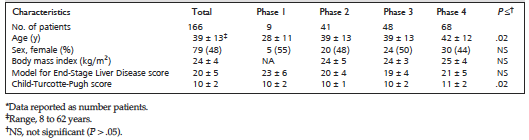
Table 1. Characteristics of Patients Who Had Liver Transplant*
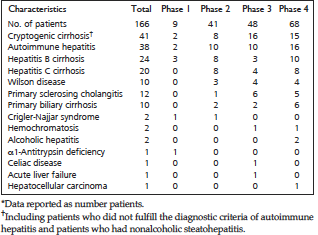
Table 2. Indications for Primary Liver Transplant*

Table 3. Operative Data For Patients Who Had Liver Transplant*

Table 4. Postoperative Complications in Patients Who Had Liver Transplant*
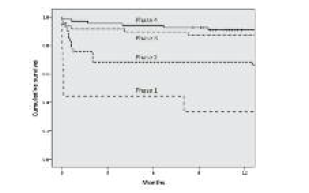
Figure 1. Kaplan-Meier Plots of Cumulative Survival of Patients Who Had Liver Transplant (differences between phases: P ≤ .001
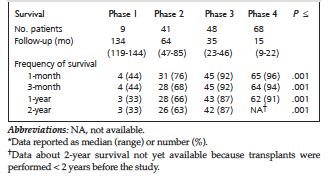
Table 5. Indications for Primary Liver Transplant*
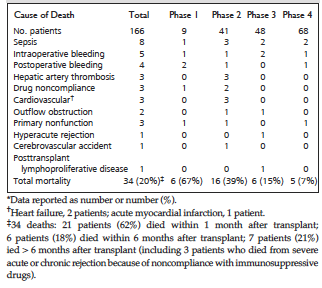
Table 6. Causes of Death After Liver Transplant**