Volume: 12 Issue: 1 March 2014 - Supplement - 1
FULL TEXT
The immunonutrients arginine and omega-3 fatty acids decrease adverse outcomes after solid organ transplant in humans and experimental animals. Kidney transplant recipients who received daily supplements with arginine (9 g) and canola oil (30 mL) had significantly lower frequencies of complications between 30 days to 3 years than transplant recipients who did not receive supplements. In another study in kidney transplant recipients, arginine combined with either canola oil or fish oil was safe, effective, and provided good protection against rejection in patients who had steroid-free immunosuppression. In the 27 patients (50%) who had omega-3 index (percent omega-3 component of all fatty acids in red blood cell membranes) > 6 there was no acute rejection by 1 year after transplant; in 27 patients who had omega-3 index < 6, there were 5 patients (19%) who had acute rejection (P ≤ .01). No studies are available in liver transplant patients that have provided adequate doses or duration of immuno-nutrients. A prospective, randomized, double-blind clinical trial using immunonutrients is proposed for patients having primary liver transplant. In summary, immunonutrition in kidney transplant recipients with high doses of oral arginine and omega-3 fatty acids is effective, safe, and inexpensive, and may decrease the frequency of complications such as rejection, infection, new onset diabetes and cardiovascular disease. Further study with similar protocols in liver transplant recipients is justified.
Key words : Arginine, Complications, Fish oil, Immuno-suppression
Introduction
A dietary supplement containing high levels of protein, additional arginine, and fish oil, developed in the 1980s (Impact, Sandoz Nutrition, Minneapolis, MN, USA), may reduce the frequency of complications in surgical patients such as wound infections, prolonged hospital stay, and systemic inflammatory response syndrome.1-4 Rats that were given this supplement as the only source of nutrition and low-dose cyclosporine for 14 days achieved functional transplant tolerance, with cardiac allograft survival > 200 days to 1 year.5 Experiments with lower doses of cyclosporine showed that arginine and fish oil independently improved cardiac allograft survival in rats.6 Other types of lipids such as alpha linoleic acid, oleic acid, and canola oil (that contained combinations of alpha linoleic acid and oleic acid) also were effective.7 Arginine was the most effective amino acid among those studied.8
Clinical Studies Using Immunonutrients
Based on the results of animal studies, a prospective, randomized clinical trial was performed in 147 kidney transplant recipients who received daily supplements with arginine (9 g) and canola oil (30 mL) or no supplements (control).9 The dietary supplements were not expected to affect cellular function in the first month because 1 month typically is required for sufficient amounts of lipids to be incorporated into cell membranes; there was no difference observed between the 2 patient groups during the first 30 days. However, from 30 days to 3 years after transplant, there were significantly lower frequencies of complications in the supplemented than control groups (Table 1). There were no episodes of acute rejection after the first year in the patients who received supplements. Although the frequency of positive blood cultures was lower in supplemented than control patients, there were no differences between the patients in respiratory, urinary tract, or cytomegalovirus infections.
Immunonutrients and immunosuppression after transplant
Steroids and calcineurin inhibitors are important immunosuppressive drugs but
they have numerous adverse events. A clinical study evaluated immuno-nutrients
as a replacement of immunosuppressive drugs after kidney transplant, with
steroid-free induction and maintenance, early withdrawal of calcineurin
inhibitors, and discontinuation of mycophenolate mofetil (Table 2).10 Cyclosporine was discontinued by 4 to 6 months in subgroups 2 to 4. Most
patients did not have rejection at 1 year (86%) and 3 years (79%) and no patient
in subgroup 4 receiving fish oil for one year had a rejection. No kidney graft
was lost to acute rejection, and steroids were allowed to treat acute rejection.
Most patients who were alive at the end of the study were steroid-free (90%) and
most were not receiving calcineurin inhibitors (87%). Many patients who had a
functioning kidney at 3 years (> 50% patients) were receiving rapamycin and
nutrients only. Therefore, arginine combined with either canola oil or fish oil
is safe and effective and may provide good protection against rejection.
Polyunsaturated fatty acids and ornithine in kidney transplant
Blood samples were drawn from 54 patients, including patients from the previous
2 studies, from 30 to 365 days after kidney transplant; these patients received
arginine and fish oil, arginine and canola oil, or no supplements.11 Amino acid
profiles were performed on plasma, and fatty acid profiles were performed on red
blood cell membranes using gas chromatography and mass spectroscopy. In the 27
patients (50%) who had omega-3 index (percent omega-3 component of all fatty
acids in red blood cell membranes) > 6, there was no acute rejection by 1 year
after transplant. However, in the 27 patients who had omega-3 index < 6, there
were 5 patients (19%) who had acute rejection (P ≤ .01) (Figure 1).11 In cell
membranes, omega-6 fatty acid levels are inversely proportional to omega-3 fatty
acids levels. Therefore, the patients who had low levels of omega-6 fatty acids
did not have rejection, but patients who had high levels of omega-6 fatty acids
had a significantly greater frequency of rejection (20%) (Figure 1). High levels
of ornithine were significantly associated with prevention of new-onset diabetes
mellitus, but there was no relation between serum arginine level and frequency
of new-onset diabetes mellitus
(Figure 2).11
Myeloid-derived suppressor cells, arginine, and omega-3 fatty acids
The biological functions of myeloid-derived suppre-ssor cells and regulatory T
cells have been reviewed, including interactions of cytokines, prostaglandins,
and other mediators.12 Myeloid-derived suppressor cells and regulatory T cells
may prolong allograft survival, induce tolerance and prevent the development of
diabetes. The generation of myeloid-derived suppressor cells and regulatory T
cells during the combined administration of large amounts of arginine and omega-3
fatty acids may inhibit immune responses. In diabetic patients who had islet
cell transplant, myeloid-derived suppressor cells cotransplanted with the islet
allografts protected the islet allografts without immunosuppressive drugs and
caused marked expansion of regulatory T cells.13
Immunonutrition in liver transplant
The use of an oral dietary supplement containing high levels of protein,
additional arginine, and fish oil (before transplant and 5 days after transplant:
600 mL/d) was evaluated after liver transplant (supplement, 15 patients; control
patients who had typical diet with no supplement, 17 patients).14 The supplement
was well tolerated, but there was no difference between groups in frequency of
rejection. In this study, the doses of arginine and omega-3 fatty acids were not
sufficient to suppress inflammatory responses and the supplements were stopped
too early after transplant to observe an effect. Another study by the same
researchers did not show any beneficial effects.15 No studies are available in
liver transplant patients that have provided adequate doses or duration of
immunonutrients.
Proposed Study for Liver Transplant Patients
A prospective, randomized, double-blind clinical trial using immunonutrients is proposed for patients having primary liver transplant. When patients can tolerate oral intake after liver transplant, study patients will take arginine (4.5 g twice daily) and fish oil supplements (1 g capsules; 3 capsules in the morning and 4 capsules in the evening) with food for ≥ 1 year. The control group will receive no supplements and may receive a placebo. Study and control patients will receive similar immuno-suppressive drugs. The primary outcome will be biopsy-proven rejection. The hypothesis is that patients who have supplements will have decreased frequency of rejection. Secondary outcomes will include frequency of new-onset diabetes mellitus, cardiovascular events, and infections; degree of fatty liver; and overall costs.
References:
- Beale RJ, Bryg DJ, Bihari DJ. Immunonutrition in the critically ill: a
systematic review of clinical outcome. Crit Care Med. 1999;27(12):2799-2805.
CrossRef - PubMed - Braga M, Gianotti L, Radaelli G, et al. Perioperative immunonutrition in
patients undergoing cancer surgery: results of a randomized double-blind phase 3
trial. Arch Surg. 1999:134(4):428-433.
CrossRef - PubMed - Moore FA, Moore EE, Kudsk KA, et al. Clinical benefits of an immune-enhancing
diet for early postinjury enteral feeding. J Trauma. 1994;37(4):607-615.
CrossRef - PubMed - Weimann A, Bastian L, Bischoff WE, et al. Influence of arginine, omega-3
fatty acids and nucleotide-supplemented enteral support on systemic inflammatory
response syndrome and multiple organ failure in patients after severe trauma.
Nutrition. 1998;14(2):165-172.
CrossRef - PubMed - Levy AE, Alexander JW. Nutritional immunomodulation enhances cardiac
allograft survival in rats treated with donor-specific transfusion and
cyclosporine. Transplantation. 1995;60(8):812-815.
PubMed - Alexander JW, Levy A, Custer D, et al. Arginine, fish oil, and donor-specific
transfusions independently improve cardiac allograft survival in rats given
subtherapeutic doses of cyclosporin. JPEN J Parenter Enteral
Nutr.1998;22(3):152-155.
CrossRef - PubMed - Alexander JW, Valente JF, Greenberg NA, et al. Dietary omega-3 and omega-9
fatty acids uniquely enhance allograft survival in cyclosporine-treated and
donor-specific transfusion-treated rats. Transplantation. 1998;65(10):1304-1309.
CrossRef - PubMed - Alexander JW, Valente JF, Greenberg NA, et al. Dietary amino acids as new and
novel agents to enhance allograft survival. Nutrition. 1999;15(2):130-134.
CrossRef - PubMed - Alexander JW, Metze TJ, McIntosh MJ, et al. The influence of immunomodulatory
diets on transplant success and complications. Transplantation.
2005;79(4):460-465.
CrossRef - PubMed - Alexander JW, Goodman HR, Cardi M, et al. Simultaneous corticosteroid
avoidance and calcineurin inhibitor minimization in renal transplantation.
Transpl Int. 2006;19(4):295-302.
CrossRef - PubMed - Alexander JW, Goodman HR, Succop P, et al. Influence of long chain
polyunsaturated fatty acids and ornithine concentrations on complications after
renal transplant. Exp Clin Transplant. 2008;6(2):118-126.
PubMed - Ochando JC, Chen SH. Myeloid-derived suppressor cells in transplantation and
cancer. Immunol Res. 2012;54(1-3):275-285.
CrossRef - PubMed - Chou HS, Hsieh CC, Charles R, et al. Myeloid-derived suppressor cells
protect islet transplants by B7-H1 mediated enhancement of T regulatory cells.
Transplantation. 2012;93(3):272-282.
CrossRef - PubMed - Plank LD, McCall JL, Gane EJ, et al. Pre- and postoperative immunonutrition
in patients undergoing liver transplantation: a pilot study of safety and
efficacy. Clin Nutr. 2005;24(2):288-296.
CrossRef - PubMed - Plank LD, Mathur S, Gane EJ, Gillanders L, McIlroy K, McCall JL.
Perioperative immunonutrition in liver transplantation: results of a
double-blink randomized controlled trial [ESPEN abstract OP006]. 32nd ESPEN
Congress, 2010. Clin Nutr. 2010;5(2):3.
CrossRef

Volume : 12
Issue : 1
Pages : 34 - 37
DOI : 10.6002/ect.25Liver.L24
From the Department of Surgery, University of Cincinnati College of Medicine and
Shriners Hospital for Children, Cincinnati, OH, USA
Acknowledgements: The authors have no conflicts of interest to disclose. No
funding was received for this study.
Corresponding author: J. Wesley Alexander, Shriners Hospitals for Children,
Cincinnati Unit, 3229 Burnet Avenue, Cincinnati, OH 45239-3095, USA
Phone: +1 513 872 6066
Fax: +1 513 872 6072
E-mail:
jwesley.alexander@uc.edu
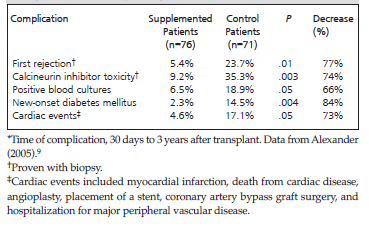
Table 1. Relation Between Supplemental Arginine and Canola Oil and Complications of Kidney Transplant**
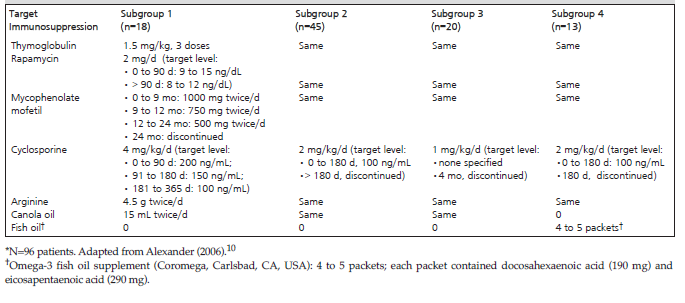
Table 2. Target Immunonutrients and Immunosuppression in a Steroid-free Protocol After Kidney Transplant* (Target = Amount to be Given)
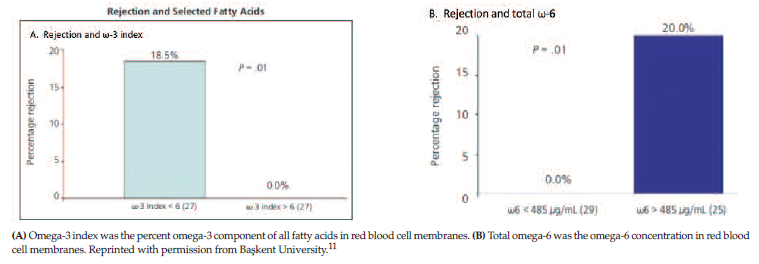
Figure 1. Relation Between Omega-3 and Omega-6 Fatty Acids and Acute Rejection After Kidney Transplant
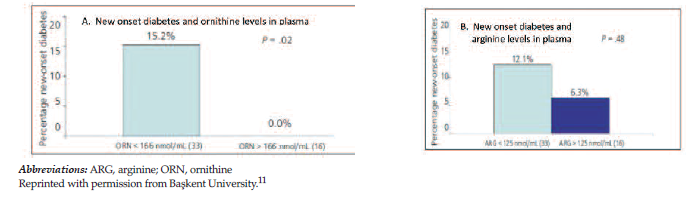
Figure 2. Relation Between Plasma Ornithine (A) and Arginine (B) Levels and New-Onset Diabetes Mellitus After Kidney Transplant