Volume: 12 Issue: 1 March 2014 - Supplement - 1
FULL TEXT
Objectives: We review the pathological findings as determined by autopsy of the liver allografts.
Materials and Methods: We retrospectively analyzed 408 patients who had a liver transplant between January 1990 and December 2012. Thirteen of the 408 patients underwent postmortem examination. Clinicopathologic findings including the age at death, causes of death, and main pathological findings were evaluated.
Results: The study group of 13 patients who underwent a liver transplant had a mean age of 29 years at the time of death. Mean survival was 6 ± 1 months (range, 10-72 mo). Ten of 13 patients (76.9%) died 90 days after the liver transplant. The remaining 3 patients died, 1 case in 1 year, in 2 cases after 1 year. Causes of the deaths were infection (9 cases), respiratory distress (1 cases), multiorgan failure (1 cases), primary graft failure (1 cases), and massive intra-abdominal bleeding (1 cases). The causes of the infection were bacterial infection in 6 cases (67%) and invasive fungal infection in other 3 cases (33%). The main pathological finding was hepatic infarction in 9 cases (69%). Bridging fibrosis (3 cases) and hematoma (1 case) were obtained in the remaining cases.
Conclusions: Our results emphasize that infections are the main cause of death and hepatic infarction is the main histopathologic findings among these 13 patients within the first year of transplant. We consider postmortem examination to have important role in determining the primary graft failure and other causes that increased mortality in liver transplant recipients. An autopsy can provide understanding of the main causes and cause of death.
Key words : Autopsy, Liver transplant, Solid-organ transplant, Histopathology
Introduction
Autopsy is a specialized surgical procedure that determines the cause and the manner of the death. Autopsies are also used in clinical medicine for the evaluation of any disease or injury that may be present. The number of autopsies performed for medical purposes has been decreasing since the 1950s, and this negatively affects detection of early causes that can lead to disease.1,2
Solid-organ transplant has progressively gained wide acceptance to treat end-stage organ failure. Survival of a solid-organ transplant has increased in latter years because of improvements in selecting candidates for transplant, surgical procedures, and postoperative managements of patients. Although transplant offers a good survival rate for the patient and graft, patients have a higher risk of infection, tumoral, and cardiovascular complications compared with normal population.3 The main causes of these complications are permanent immunosuppressive therapy, high incidence of hepatitis B virus and hepatitis C virus infection among transplant patients, transmission of infectious agents throughout the graft itself, reactivation of latent infections after immunosuppressive therapy, and finally metabolic diseases such as amyloidosis and diabetes.3,4 For these reasons, interpretation of biopsy and autopsy material from allograft has gained importance. Autopsy is a valuable method for confirming clinical diagnoses, resolving diagnostic questions, revealing unexpected findings, and determining the cause of death. Postmortem studies are particularly useful for distinguishing between infections with similar clinical presentation; they can identify other coinfections. This subject is especially important for transplant patients.5 Analysis of the causes of death after solid-organ transplant and the findings derived from an autopsy can guide management decisions for subsequent transplant patients; and therefore, help to improve transplant recipient survival.
This study sought to review the causes of death in liver transplant and to determine the pathological findings found on autopsy to gain an important clinicopathologic determinants for better survival of subsequent transplant patients.
Materials and Methods
Patients who underwent an autopsy were selected from 408 liver transplant recipients at Baskent University between January 1990 and December 2012. One hundred forty-nine cases died during this period. Only 13 of 149 deaths (8%) underwent a postmortem examination.
Autopsy reports, medical and electronic records, and microbiologic results were reviewed retrospectively. Patient age at the time of transplant and at the time of death were recorded. Previous history of primary liver disease was obtained from the medical records. When clinical data and biopsy results were not proved by a diagnosis, primary disease was categorized as “unknown.” Also, the occurrence of renal failure requiring hemodialysis after transplant was recorded. Maintenance immunosuppression was accomplished with cyclosporine, azathioprine and prednisone, or tacrolimus. Also, laboratory testing to detect infectious diseases including blood culture or other cultures obtained before death were recorded. Type of donor was reported as living-related or deceased donor Patient survival was defined as the time between transplant and death. Clinical cause of death was recorded for each patient. An infectious cause was considered the main cause of death if it were demonstrated on autopsy or if it were established by positive microbiological cultures in a patient who exhibited suspicious clinical findings such as multiorgan failure. Autopsy data including a review of macroscopic and microscopic reports from the archives of the Department of Pathology at Baskent University. Histopathological changes of a graft organ also were recorded.
All representative histologic sections taken from all organs during autopsy were stained with hematoxylin and eosin. Special stains like Gömöri silver methenamine and periodic acid-Schiff and additional appropriate stains like Masson Fontana, mucicarmine, Alcian blue, periodic acid-Schiff, and Ziehl-Neelsen stain stains were used. In the absence of culture, identification of fungi was made on morphology. Thin, septate hyphae with acute angle branching were diagnosed as Aspergillus species. Candida species was identified by pseudohyphae and budding yeast forms, and Mucorales species was identified by broad, thin walled, nonseptate hyphae. The study was approved by local Ethics Committee of the University. All protocols conformed with the ethical guidelines of the 1975 Helsinki Declaration. Informed consent was obtained from all subjects.
Results
Thirteen liver transplant recipients underwent and autopsy to detect the cause of death from 1997 to 2012. Table 1 summarizes the main clinicopathologic findings of liver transplant recipients who underwent autopsy. There were 9 males (69.3%) and 4 females (30.7%). The mean age of the patients at the time of transplant was 28 ± 18 years (range, 2-58 y), and mean age at death was 29 ± 17 years (range, 2 -58 y). Mean patient survival after transplant was 8.6 ± 1 months (range, 10-72 mo). Three of the 13 deaths (23%) occurred during the first month after liver transplant, and 7 of the 13 deaths (54%) occurred during the first 3 months posttransplant. The remaining 3 patients died, 1 case in 1 year, in 2 cases after 1 year.
Primary liver diseases were Wilson disease (n=3), hepatitis C viral infection (n=3), hepatitis B viral infection (n=1), fulminant hepatitis A viral infection (n=1), Budd-Chiari disease (n=1), autoimmune hepatitis (n=1), and biliary cirrhosis (n=1). Primary disease was unknown in 2 patients. Five of 13 patients (38.4%) had a history of hepatic encephalopathy before the transplant. Renal failure developed in 5 patients after transplant. The graft source was a deceased-donor in 7 patients (53.8%), and a living-related donor in 5 patients (38.4%). Eight patients (62%) received an orthotropic liver transplant, and 3 of 13 patients (23%) received a heterotopic liver transplant. One patient had liver retransplant. He received his first orthotopic liver transplant from a deceased donor and second heterotopic liver transplant from a living-related donor. One patient underwent a sequential transplant for both kidney and liver for the reason of cryptogenic cirrhosis and allograft failure due to chronic allograft injury. Six years before this sequential transplant, she had undergone her first renal transplant because of chronic renal failure because of Henoch–Schönlein purpura.
Among 13 liver transplant recipients who underwent autopsy, the causes of death obtained from clinical data were related to sepsis in 6 cases (46%), multiorgan failure in 2 cases (15%), respiratory distress in 2 cases (15%), primary graft failure in 1 case (8%), massive intra-abdominal bleeding in 1 case (8%), and hepatic encephalopathy in 1 case (8%). When the autopsy findings were evaluated with the clinical data, infections were considered the main cause of death in 9 of 13 cases (69%). Six of 9 patients (67%) had bacterial infection. Five patients (38.4%) had positive blood cultures, and the pathogens that were detected in the blood culture was Klebsiella pneumonia (n=2), Staphylococcus aureus (n=1), Pseudomonas aeruginosa (n=1), and Acinetobacter (n=1). In 1 patient with a negative blood culture before death, gas gangrene (caused by Clostridium septicum) was detected on autopsy. In addition, 3 patients (33%) with negative blood cultures before death revealed invasive fungal infections at autopsy. Of these 3 patients with invasive fungal infection, 2 had invasive pulmonary aspergillosis, and of them had mixed invasive aspergillosis and mucormycosis infection in various organs.
The main pathological findings in the grafts were massive hepatic infarction in 6 cases (46.1%). Among these, 2 had infarction and infection together in the biliary anastomoses. Hepatic artery occlusion had detected in other 2 cases. The additional pathological features were bridging fibrosis in 3 cases (23%). Bridging fibrosis was the result of cirrhosis associated with recurrent chronic B viral hepatitis in 1 patient. Centrilobular hepatic infarction with cholestasis was noted in 2 cases (15.3%) and 1 case (7%) showed small hepatic infarcts. Hematoma with necrobiotic changes was obtained in 1 case (7%) that died from invasive aspergillosis. Also, in 5 patient who developed acute renal failure after liver transplant, diffuse tubular epithelial damage was seen on autopsy. One of these patients developed acute tubular necrosis.
Discussion
Autopsy remains the best method of investigating the cause of death. In recent years, autopsy rates have been falling in general medical and surgery departments.1,2 Reasons for this decline include lower rates of consents from relatives, legal issues, and advance in modern diagnostic techniques.1 However, autopsies play an important educational role answering the questions of the cause of death, especially in solid-organ transplant recipients.5,6 The patient may have died because of medical or surgical complications, as a result of complications of immunosuppressive therapy, graft failure, or unrelated disease.3,5,7 Cuervas-Mons and associates and Sanromán Budiño and associates found that autopsy rate was 37% in liver transplant recipients.8,9 The autopsy rate in our study was less than those reported in these earlier studies.8,9 The most important reason for the lower incidence of autopsy in our center is the difficulty in obtaining consent from relatives because of religious beliefs.
Autopsy studies investigate the cause of death in solid-organ transplant.8,9-12 Results of several autopsy studies have indicated that infections are the most common cause of death in liver transplant recipients. Torbenson and associates observed that the frequency of infectious cause of death was 64% and second common causes of death was liver disease (12%).10 Cuervas-Mons and associates found that infectious cause of death was 52.5%.8 In our study, the frequency of infectious cause of death was 69%, comparable with the literature. Bacterial infections were the most frequent infection followed by fungal infections.8,10 Detection of bacterial infection rates reportedly range from 48% to 81%.8,10 Similarly, in our patients, we found bacterial infections (67%) were the most common infectious cause of death.
Invasive fungal infections cause morbidity and mortality for patients who underwent solid-organ transplant. Aspergillus and Candida species are the most common causes of invasive fungal infections in solid-organ transplant recipients.13 These infections occur in 5% to 45% transplant recipients.14,15 The incidence of fungal infections has been reported to be approximately 40% in the liver transplant recipients.15,16 The mortality rate of invasive aspergillus infection is nearly 100%. The mortality of candida infections appears less than the mortality of invasive aspergillus infection.17 Mortality rates caused by invasive fungal infections vary significantly in the different autopsy studies. While the prevalence of candida infection is reportedly 3% to 48%, the reported prevalence rate for aspergillus infection was 8% to 19% on autopsy series for solid-organ transplant recipients.9,11,18 Early recognition of fungal infection and prompt treatment are essential to a patient’s survival. Some risk factors include biliary/vascular complications, renal insufficiency, and improper immunosuppression are associated with the fungal infections in liver transplant recipients.15 In our study, invasive fungal infections were found on autopsy in 3 patients (23%). Two of 3 cases had invasive aspergillosis in various organs, especially the lung. Invasive aspergillosis was accompanied by mucormycosis in 1 case. In all 3 cases, renal insufficiency was also detected. Two of 3 cases had acute renal failure and received hemodialysis. The other patient had renal transplant before receiving a liver-kidney sequential transplant. Renal insufficiency may predispose invasive fungal infections in our patients.
Advances in immunosuppressive therapy and close monitoring of patients have improved survival results. However, some patients die after a liver transplant.7,19 Several studies emphasize that immunosuppression-related causes were the most common cause of death in short term after someone undergoes a liver transplant.7,19 In the present study, most patients died within the first 3 months (77%) after liver transplant, and we found that infection was the most common cause of the death. Rejection is an important cause of death during short term after a liver transplant. The incidence of rejection is reported to have fallen because of new immuno-suppressive regimens.8 The cause of death because of a graft rejection is lower than because of an infection in several studies.8 Cuervas-Mons and associates established the ratio of graft rejection at 7.5% in the liver transplant recipients.8 Kashyap and associates reported this ratio at 1.1%.7 In present study, acute/chronic rejection was not observed. In 1 patient whose data were recorded as primary graft failure, massive hepatic infarction was seen in the graft organ. Bridging fibrosis and cirrhosis because of recurrent chronic B viral hepatitis were seen in the liver allograft in 1 patient. Any primary or secondary disease has the possibility of recurring after transplant. The frequency of recurrence, and patient and graft survival vary according to the type of primary disease.4,20-23 Recurrence of hepatitis B virus or hepatitis C virus infection play a key role in the outcome after liver transplant in recipients, and cirrhosis and graft failure are major complications of recurrence.20 The recurrence rate of hepatitis B is less than 5% with prophylaxis.21,22 Some risk factors for hepatitis B virus recurrence were identified by Berenguer and Wright, such as lack of postorthotopic liver transplant hepatitis B virus prophylaxis, acquired resistance to prophylaxis, and acquisition of hepatitis B virus at the time of liver transplant.23 Also, it has been reported that recurrence of hepatitis B virus is associated with presence of hepatitis B e antigen and high titers of hepatitis B virus DNA.23 Hepatitis B e antigen positivity in preliver transplant is associated with poor survival. Our patient had hepatitis B e antigen in preliver transplant period, and was given lamivudine.
In conclusion, autopsy is in important surgical procedure to give information about infections, recurrent disease, and cause of unexpected death in transplant recipient. Postmortem examination is an important educational tool to improve transplant recipient survival.
References:
- Loughrey MB, McCluggage WG, Toner PG. The declining autopsy rate and
clinicians' attitudes. Ulster Med J. 2000;69(2):83-89.
PubMed - Shojania KG, Burton EC, McDonald KM, Goldman L. Changes in rates of
autopsy-detected diagnostic errors over time: a systematic review. JAMA.
2003;289(21):2849-2856.
CrossRef - PubMed - Neuberger JM. Transition of care between paediatric and adult
gastroenterology. Liver transplantation. Best Pract Res Clin Gastroenterol.
2003;17(2):277-289.
PubMed - Kotlyar DS, Campbell MS, Reddy KR. Recurrence of diseases following
orthotopic liver transplantation. Am J Gastroenterol. 2006;101(6):1370-1378.
Review. Erratum in: Am J Gastroenterol. 2006;101(8):1944.
CrossRef - PubMed - Wallace WA, Bellamy CO, Rassl DM, Harrison DJ. Transplant histopathology
for the general histopathologist. Histopathology. 2003;43(4):313-322.
CrossRef - PubMed - Durning S, Cation L. The educational value of autopsy in a residency
training program. Arch Intern Med. 2000;160(7):997-999.
CrossRef - PubMed - Kashyap R, Jain A, Reyes J, et al. Causes of death after liver
transplantation in 4000 consecutive patients: 2 to 19 year follow-up.
Transplant Proc. 2001;33(1-2):1482-1483.
CrossRef - PubMed - Cuervas-Mons V, Julio Martinez A, Dekker A, Starzl TE, Van Thiel DH.
Adult liver transplantation: an analysis of the early causes of death in 40
consecutive cases. Hepatology. 1986;6(3):495-501.
CrossRef - PubMed - Sanromán Budiño B, Vázquez Martul E, Pértega Díaz S, Veiga Barreiro A,
Carro Rey E, Mosquera Reboredo J. Autopsy-determined causes of death in
solid organ transplant recipients. Transplant Proc. 2004;36(3):787-789.
CrossRef - PubMed - Torbenson M, Wang J, Nichols L, Jain A, Fung J, Nalesnik MA. Causes of
death in autopsied liver transplantation patients. Mod Pathol.
1998;11(1):37-46.
PubMed - Reis MA, Costa RS, Ferraz AS. Causes of death in renal transplant
recipients: a study of 102 autopsies from 1968 to 1991. J R Soc Med.
1995;88(1):24-27.
PubMed - Rose AG. Autopsy-determined causes of death following organ
transplantation in 25 patients aged 20 years or younger. Cardiovasc J S Afr.
2003;14(1):24-28.
PubMed - Paya CV. Fungal infections in solid-organ transplantation. Clin Infect
Dis. 1993;16(5):677-688.
CrossRef - PubMed - Hadley S, Karchmer AW. Fungal infections in solid organ transplant
recipients. Infect Dis Clin North Am. 1995;9(4):1045-1074.
PubMed - Rabkin JM, Oroloff SL, Corless CL, et al. Association of fungal
infection and increased mortality in liver transplant recipients. Am J Surg.
2000;179(5):426-430.
CrossRef - PubMed - Wajszczuk CP, Dummer JS, Ho M, et al. Fungal infections in liver
transplant recipients. Transplantation. 1985;40(4):347-353.
CrossRef - PubMed - McNeil MM, Nash SL, Hajjeh RA, et al. Trends in mortality due to
invasive mycotic diseases in the United States, 1980-1997. Clin Infect Dis.
2001;33(5):641-647.
CrossRef - PubMed - Hill RB Jr, Dahrling BE 2nd, Starzl TE, Rifkind D. Death after
transplantation; an analysis of sixty cases. Am J Med. 1967;42(3):327-334.
CrossRef - PubMed - Lama C, Ramos E, Figueras J, et al. Causes of mortality after liver
transplantation: period of main incidence. Transplant Proc.
2002;34(1):287-289.
CrossRef - PubMed - Riediger C, Berberat PO, Sauer P, et al. Prophylaxis and treatment of
recurrent viral hepatitis after liver transplantation. Nephrol Dial
Transplant. 2007;22(suppl 8):viii37-viii46.
CrossRef - PubMed - Roche B, Samuel D. Liver transplantation for hepatitis B virus-related
liver disease: indications, prevention of recurrence and results. J Hepatol.
2003;39(suppl 1):S181-S189.
CrossRef - PubMed - Forman LM, Lewis JD, Berlin JA, Feldman HI, Lucey MR. The association
between hepatitis C infection and survival after orthotopic liver
transplantation. Gastroenterology. 2002;122(4):889-896.
CrossRef - PubMed - Berenguer M, Wright TL. Treatment of recurrence of hepatitis B in
transplant patients. J Hepatol. 2003;39(suppl 1):S190-S193.
CrossRef - PubMed

Volume : 12
Issue : 1
Pages : 120 - 125
DOI : 10.6002/ect.25Liver.P19
From the Departments of 1Pathology and 2General Surgery, Başkent University,
School of Medicine, Ankara, Turkey
Acknowledgements: The authors declare that there are no conflicts of interest.
There was no grant/funding for this study.
Corresponding author: E. Sebnem Ayva, MD, Başkent University, School of Medicine
Department of Pathology, 79. sok 7/4 Bahcelievler, 06490, Ankara, Turkey
Phone: +90 312 212 6591 ext: 2141
Fax: +90 312 212 7592
E-mail: ekupana@yahoo.com
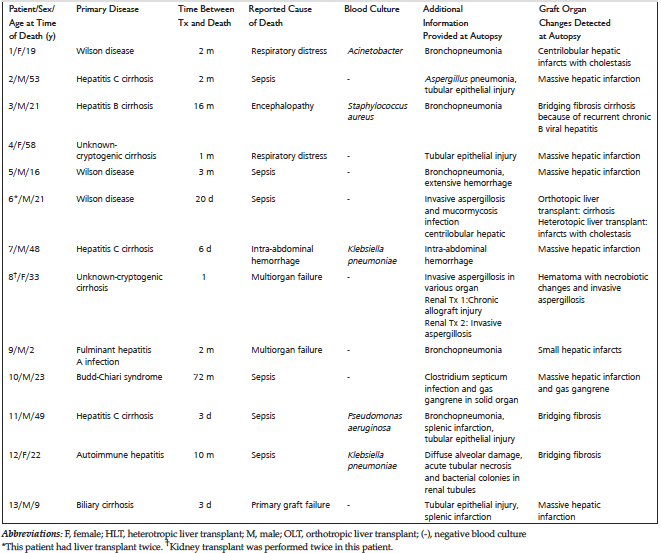
Table 1. Main Clinicopathologic Findings of Liver Transplant Recipients Who Underwent Autopsy
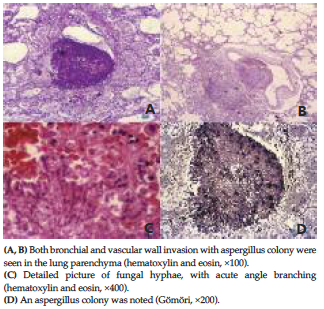
Figure 1. Invasive Aspergillosis in Sections of the Lung in Different Cases