Volume: 12 Issue: 3 June 2014
FULL TEXT
We report 2 cases of en bloc kidney transplants from young pediatric donors with successful outcomes. We underscore the underuse of this significant donor source, and discuss the factors that may be related to the reasons for reluctance in accepting these kidneys for transplant.
Key words : En bloc kidney transplant, Pediatric, Neonatal, Donor
Introduction
Kidneys from young pediatric donors (< 5 years or < 15 kg) are generally transplanted en bloc to minimize technical complications. In the United Kingdom and elsewhere, there is a general reluctance to accept kidneys from donors under 2 years old. We report 2 cases of en bloc kidney transplants from young donors (7 and 9 months old) into adult recipients with successful outcomes. One of these donors was a donation after circulatory dealth (DCD). To our knowledge, a kidney transplant from such a young donor, after brain death, or after cardiac death, has not been reported in the United Kingdom.
Case Report
Case 1
The donor was a 7.5-kg, 9-month-old healthy female infant diagnosed with
protracting pneumococcal meningitis. Multiorgan retrieval entailed the heart,
the liver, and the kidneys en bloc. University of Wisconsin solution was used
for in situ hypothermic perfusion and storage. The recipient was 20-year-old,
50-kg woman, who was on haemodialysis due to end-stage renal failure (ESRF)
secondary to glomerulonephritis. She had been on transplant waiting list for 15
months. Human leukocyte antigen mismatch of the donor was 1,2,0.
Retrieval injuries to the renal vein and arteries were repaired at the back table using 7-0 Prolene. The infrarenal aorta and the inferior vena cava of the en bloc graft were switched to suprarenal position, with suture closure of the lower end, as previously described in the Newcastle technique.1 Implantation was done extraperitoneally in the right iliac fossa. The donor’s inferior vena cava was anastomosed to the recipient’s right common iliac vein. An arterial anastomosis was performed between the donor’s aortic conduit and the recipient’s right common iliac artery. The ureters were implanted separately onto the dome of urinary bladder using an onlay technique over a pigtail stent using 5-0 polydioxanone sutures. Implantation time was 22 minutes, and the cold ischemic time was 14 hours 44 minutes.
The recipient was 20-year-old, 50-kg woman, who was on haemodialysis due to end-stage renal failure (ESRF) secondary to glomerulonephritis. Her 1-month and 1-year creatinine and estimated glomerular filtration rates were 110 and 56, and 65 and 116.
Case 2
The donor was 7-month-old, 7-kg female infant. She was a Maastricht category 3
DCD donor who had died after neurosurgery for primary intracranial tumors. Her
kidneys were retrieved en bloc, after in situ hypothermic perfusion with
University of Wisconsin solution. The warm ischemia time in the donor was 12
minutes. The recipient was a 54-year-old, 39-kg woman with end-stage renal
failure secondary to lupus nephritis. She was placed on hemodialysis, and had
been on transplant waiting list for 3 years.
Before implantation, the aorta and inferior vena cava were switched from the infrarenal position to the suprarenal position as described previously. Implantation was done en bloc, into the right iliac fossa using the Newcastle technique with vascular anastomosis to the external iliac vessels. Cold ischemia time was 12 hours 23 minutes, and the second warm ischemia and time (implantation time) was 40 minutes.
The graft had delayed function for 1 week requiring dialysis support. The patient had unremarkable recovery. Her 1-month and 1-year creatinine and MDRD eGFR were 117 µmol/L and 44 mL/min/1.73 m2, and 67 µmol/L and 56 mL/min/1.73 m2 respectively.
Discussion
The first kidney transplant from a pediatric donor was described in 1964. Historically, kidneys from young pediatric donors were discarded owing to reports of reduced graft survival, especially when using donors younger than 2 years. Reports of increased organ discard rates, technical complications, decreased functional nephron reserve, and claims of suboptimal patient and graft survival all have contributed to the reluctance to transplant kidneys from young donors.2-4 In a comprehensive analysis of 203 transplants from donors younger than 5 years from The North American Pediatric Renal Trials and Collaborative Studies database, it was demonstrated that the risk of graft loss when using a neonatal donor was 2.7 times that of an ideal donor (age range, 20-25 years)5 with 9.9% of grafts lost because of vascular thrombosis.
There are several reasons for inferior results including increased vascular and urinary complications, increased incidence of cellular rejection, and higher rates of acute tubular necrosis associated with delayed graft function.2 Concerns about transplanting insufficient nephron mass from such kidneys in adult recipients leading to hyperfiltration injury3,4 also exists. Hyperfiltration theory was first described in 1985 by Brenner6 when it was tested and proven in several studies on rats.7 According to this theory, a large patient receiving a small kidney may develop compensatory changes leading to progressive injury to the transplanted kidney. Conversely, there is evidence that young donor kidneys exhibit better adaptive capacity, enabling them to increase their glomerular filtration, caused by a suggested reserve capacity for growth and compensatory hypertrophy.8
Another assumed reason for the reluctance is the uncertainty about the donor kidneys being dysplastic. From the ninth week of gestation until the 36th week, nephrons continue to increase in number,9 and at maturation range from 0.3 to 1.4 million10 in each kidney correlating with body weight at birth. After birth, any increase in functional demand is met by hypertrophy. The incidence of renal dysplasia remains low. In children, 7.4 per million begin renal replacement treatment every year; approximately 40% of these are because of a congenital anomaly of the kidney and urinary tract. Half of these are because of renal dysplasia and another half are caused by obstructive uropathy, mostly in boys.11 Most renal dysplasia will be picked up in early postnatal period, with a minority presenting in late childhood and adolescence. With the risk of dysplasia being small, one can argue that continuing to use these donors would be taking the natural risk of implanting dysplastic kidneys into a recipient (1.5 in a million).
En bloc implantation of small pediatric kidneys was developed to address some of these concerns: using the aorta and inferior vena cava as a vascular conduit to avoid or minimize vascular complications, and transplanting both kidneys together to offset the problem of hyperfiltration.12 The Newcastle en bloc technique developed by Talbot and associates1 is a safe way of implanting a pediatric kidney en bloc. In this technique, the infrarenal aorta and inferior vena cava of the en bloc graft are switched to suprarenal position (Figure 1). This allows one to lower the kidneys into the iliac fossa and implant them with shorter ureters (Figure 2).
Data from the Scientific Registry of Transplant Recipients has confirmed that the risk for graft loss was 78% higher in single kidney grafts compared with en block grafts.13 Another study comparing en bloc kidneys from small pediatric donors weighing less than 15 kg with adult living-donor kidney transplant, demonstrated significantly higher eGFR (in the former group even up to 8 years after transplant. However, there was no difference in 5-year graft survival between the 2 groups).11
A limited number of relatively small series of pediatric donor kidneys report a significantly better long-term outcome for en bloc transplanted pediatric kidneys once they survive the early postoperative course with 5-year survival rates of 76% to 82%.14,15
Despite encouraging results, there are a few studies that have evaluated the outcomes of kidneys from young pediatric donors. While the results of the en bloc transplants using kidneys from donors between 2 and 5 years of age were similar to solitary transplants from standard criteria donors, worse outcomes have been reported when using similar techniques with kidneys from donors younger than 2 years of age.15 In the United Kingdom, kidneys from pediatric donors up to 5 years old, or up to 15 kg in weight, are offered en bloc for transplant, usually to an adult recipient. In most instances, allocation of these kidneys to recipient is left to the center’s discretion.
We have previously described the first United Kingdom use of an en bloc pediatric kidney into a pediatric recipient.16 While the lower age limit of pediatric donor is not specified in the United Kingdom donor allocation policy, there seems to be general reluctance against accepting kidneys from donors younger than 2 years of age. From January 2001, to December 2010, thirty-four infant pediatric donors (< 2 years) were referred for donation, 26 donation after brain death and 8 donation after circulatory death. Of these, 27 proceeded to donation. Of the 27 pairs of kidneys retrieved, 14 pairs (including the 2 pairs described in this paper and another pair previously reported from our center) were transplanted and 13 pairs (26 kidneys were discarded) (personal communication, with National Health Service Blood and Transplant [NHSBT], United Kingdom unpublished data, December 2012).
The cases reported exemplify our attempt at increasing the donor pool by carefully selecting implanting kidneys, which would be discarded otherwise. These are the first reported cases of en bloc kidney transplant from donor younger than 2 years in the United Kingdom.
These small en bloc pediatric kidneys achieved results comparable to standard criteria adult kidneys in adult recipients. One year graft functions are similar to, or superior to, those of living-donor kidney transplant. We suggest that these grafts be used with careful donor and recipient scrutiny. Though the numbers in this series are small, these grafts are best suited for an adult of small-to-medium build without peripheral vascular disease.
References:
- El-Sheikh MF, Gok MA, Buckley PE, et al. En bloc pediatric into adult
recipients: the Newcastle experience. Transplant Proc. 2003;35(2):786-788.
CrossRef - PubMed - Smith AY, Van Buren CT, Lewis RM, Kerman RH, Kahan BD. Short-term and
long-term function of cadaveric kidneys from pediatric donors in recipients
treated with cyclosporine. Transplantation. 1988;45(2):360-367.
CrossRef - PubMed - Arbus GS, Rochon J, Thompson D. Survival of cadaveric renal transplant
grafts from young donors and in young recipients. Pediatr Nephrol.
1991;5(1):152-157.
CrossRef - PubMed - Creagh TA, McLean PA, Spencer S, et al. Transplantation of kidneys from
pediatric cadaver donors to adult recipients. J Urol. 1991;146(4):951-952.
PubMed - Harmon WE, Alexander SR, Tejani A, Stablein D. The effect of donor age
on graft survival in pediatric cadaver renal transplant recipients--a report
of the North American Pediatric Renal Transplant Cooperative Study.
Transplantation. 1992;54(2):232-237.
CrossRef - PubMed - Brenner BM. Nephron adaptation to renal injury or ablation. Am J
Physiol. 1985;249(3 Pt 2):F324-F337.
PubMed - Hostetter TH, Olson JL, Rennke HG, Venkatachalam MA, Brenner BM.
Hyperfiltration in remnant nephrons: a potentially adverse response to renal
ablation. Am J Physiol. 1981;241(1):F85-F93.
PubMed - Feltran Lde S, Nogueira PC, Bocaletti AP, Christofalo DM, Ajzen SA,
Pacheco-Silva A. Assessment of factors determining graft size in transplant
of cadaver kidneys from child donors. Transplantation.
2005;79(12):1731-1736.
CrossRef - PubMed - Woolf AS, Price KL, Scambler PJ, Winyard PJ. Evolving concepts in human
renal dysplasia. J Am Soc Nephrol. 2004;15(4):998-1007.
CrossRef - PubMed - Douglas-Denton RN, McNamara BJ, Hoy WE, Hughson MD, Bertram JF. Does
nephron number matter in the development of kidney disease? Ethn Dis.
2006;16(2 suppl 2):S2-S40-S45.
PubMed - Nyengaard JR, Bendtsen TF. Glomerular number and size in relation to
age, kidney weight, and body surface in normal man. Anat Rec.
1992;232(2):194-201.
CrossRef - PubMed - Andersen OS, Jonasson O, Merkel FK. En bloc transplantation of pediatric
kidneys into adult patients. Arch Surg. 1974;108(1):35-37.
CrossRef - PubMed - Pelletier SJ, Guidinger MK, Merion RM, et al. Recovery and utilization
of deceased donor kidneys from small pediatric donors. Am J Transplant.
2006;6(7):1646-1652.
CrossRef - PubMed - Sureshkumar KK, Reddy CS, Nghiem DD, Sandroni SE, Carpenter BJ.
Superiority of pediatric en bloc renal allografts over living donor kidneys:
a long-term functional study. Transplantation. 2006;82(3):348-353.
CrossRef - PubMed - Sánchez-Fructuoso AI, Prats D, Pérez-Contín MJ, et al. Increasing the
donor pool using en bloc pediatric kidneys for transplant. Transplantation.
2003;76(8):1180-1184.
CrossRef - PubMed - Farid SG, Goldsmith PJ, Fisher J, et al. Successful outcome of
paediatric en bloc kidney transplantation from the youngest
donation-after-cardiac-death donor in the United Kingdom. Transpl Int.
2009;22(7):761-762.
CrossRef - PubMed

Volume : 12
Issue : 3
Pages : 261 - 264
DOI : 10.6002/ect.2013.0062
From the 1Department of Transplantation, Division of Surgery; and
the 2Department of Transplant Nephrology, St James’s University
Hospital NHS Trust, Leeds, United Kingdom
Acknowledgements: None of the authors has any conflicts of interest to
declare, and there was no funding for the study.
Corresponding author: Mr Niaz Ahmad, MD, FRCS, Consultant Surgeon, St
James’s University Hospital NHS Trust, Beckett Street, Leeds LS9 7TF, United
Kingdom
Phone: +44 113 206 5175
Fax: +44 113 244 8182
E-mail:
niaz.ahmad@leedsth.nhs.uk
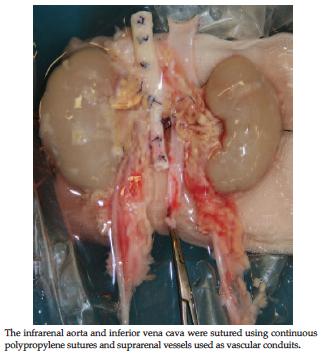
Figure 1. En Bloc Kidneys at Back Bench Preparation
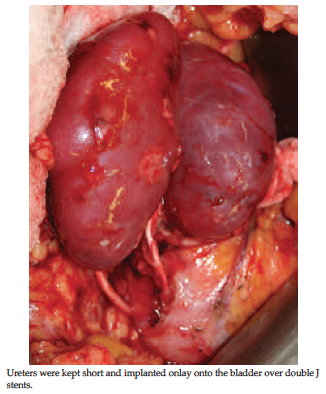
Figure 2. En bloc kidneys after implantation