Volume: 9 Issue: 4 August 2011
FULL TEXT
Ten-year Follow-up of Basiliximab Induction Therapy for Live-donor Kidney Transplant: A Prospective Randomized Controlled Study
Objectives: The effect of basiliximab induction therapy on long-term patient and graft survival is not clear. We sought to evaluate if there is any advantage to routine basiliximab induction on the long-term outcome of living-related donor kidney transplants.
Materials and Methods: One hundred adult recipients with their first kidney allograft were randomized into 2 treatment groups; 1 group received basiliximab, and the second served as a control. All patients received a maintenance triple immunosuppressive therapy (steroids, cyclosporine, microemulsion, and azathioprine). We followed them for 10 years.
Results: Basiliximab reduced the proportion of patients who experienced an acute rejection in the first year (18/50) when compared with the control group (31/50) (P = .009), and in 10 years (28/50) when compared with controls (37/50) (P = .059). The cumulative steroid dosage used throughout the study was significantly lower in the basiliximab group. The overall incidence of posttransplant complications was comparable among the 2 groups. There was no significant difference in patient and graft survival; 10-year patient and graft survival were 92% and 76% for basiliximab and 90% and 68% for the control group.
Conclusions: Routine basiliximab induction significantly reduces the incidence of acute rejection without any noticeable effects on the long-term renal transplant outcome.
Key words : Basiliximab, IL2 receptor antagonists, Renal transplant
Introduction
Minimizing acute rejection after renal transplant remains a clinical priority in view of its prognostic implications for subsequent graft loss.1, 2 Induction therapy is a common practice in many transplant centers to prevent occurrence of acute rejection after kidney transplant. It has been reported that interleukin-2 receptor antagonists (IL-2RAs) may provide selective immunosuppression without augmented morbidity and/or over-immunosuppression.3-5
In adult recipients, a series of multicenter, randomized trials in the late 1990s consistently demonstrated a 30% to 40% reduction in the incidence of biopsy-proven acute rejection with addition of IL-2RA induction to a regimen of cyclosporine and steroids, with or without azathioprine.6-9
We previously reported that the use of routine basiliximab induction in live-donor renal transplant significantly reduced the incidence of acute rejection in the first year but without beneficial effects on patient and graft survival up to 7 years after transplant.10-12 To the best of our knowledge, this is the first study that evaluates long-term consequences of routine basiliximab induction therapy in live-donor renal transplant after 10 years’ follow-up.
Patients and Methods
This study was a prospective, randomized study where 100 adult patients who had received their first live-donor renal transplant in our institution between June 1998 and June 1999 entered the study after obtaining informed consent. The study protocol was approved by our local institutional ethics committee and conforms with the ethical guidelines of the 1975 Helsinki Declaration.
Immunologic workup
Before transplant, all patients and their live donors had an immunologic workup
including the cross-match and tissue typing for human leucocyte antigen (HLA)
class I with standard lymphocyte microtoxicity test. Whereas HLADRB*1 allele
typing was done by INNO-LiPA (Innogenetics Biologicals, Gent, Belgium) through 3
steps: (1) DNA extraction by Generation Capture Column Kit (GENTRA CORP,
Houston, TX, USA); (2) polymerase chain reaction amplification; and (3)
detection of HLADRB*1 where the LiPA HLA typing is a line probe assay based on
the reverse hybridization principle.13
Study design
Patients were randomly assigned to 1 of the 2 treatment groups. The participant
physicians were necessarily aware of the randomized treatment in all cases. One
group received basiliximab, the second served as a control. Basiliximab was
given intravenously in 2 doses (20 mg each); the first was given 2 hours
preoperatively and the second on day 4 after transplant. All patients in both
groups received triple immunosuppressive therapy (steroids, cyclosporine
microemulsion, and azathioprine).
A rising serum creatinine of 17.68 µmol/L above the baseline was an indication for a graft biopsy to determine the probable histopathologic diagnosis of either rejection, cyclosporine nephrotoxicity, or other diseases. We assessed the histopathologic findings using Banff Schema, 1997.14 Acute rejection episodes were treated by intravenous steroids.
Endpoints of evaluation
The observation period was a minimum of 120 months; graft and patient survival
were determined; the number of biopsy-proven rejection episodes was noted;
cumulative steroid dosage was calculated; incidence and type of possible adverse
effects secondary to basiliximab therapy were observed; and graft function was
assessed by serial estimation of serum creatinine and creatinine clearance.
Statistical analyses
To compare continuous data, the t test was used. The chi-square test was used to
compare simple proportions. Patient and graft survival were computed using
Kaplan-Meier technique. Differences in survival were calculated by the log-rank
test. Values for P less than .05 were considered statistically significant.
Results
The demographic characteristics of both groups are summarized in Table 1. There was a statistically significant reduction in the incidence as well as in the severity of acute rejection among the basiliximab-treated patients during the first year of follow-up.
At the end of the 10th year of follow-up, there was a trend toward a lower incidence of acute rejection in the basiliximab group. Furthermore, the basiliximab-treated group had a significantly less-severe acute rejection. The cumulative steroid dosage required during the first year and/or the 10-year period was higher among the control group. However, at the end of the follow-up, there was no significant difference in the prevalence of chronic allograft nephropathy in both groups (Table 2).
The majority of acute rejection episodes in both groups responded to methyl prednisolone therapy; however, we used antithymocyte globulin to treat steroid-resistant severe rejection (grade 2 and grade 3) for 2 patients in the basiliximab group and 4 patients in the control group. Moreover, 1 patient in the control group did not respond to antithymocyte globulin and returned back to hemodialysis.
After 10 years, 4 patients died in each group owing either to cardiovascular-related, or severe pneumonia and respiratory failure. There was no difference in the incidence or distribution of late medical complications among the 2 groups (Table 3). Histopathologic diagnoses rather than rejection are summarized in Table 3.
There was no significant difference between both groups regarding graft function (as determined by estimation of serum creatinine and creatinine clearance). Also, we did not find a difference between either group regarding cyclosporine level (Table 4).
Figures 1 and 2 illustrate the actuarial graft and patient survival of the 2 groups. There was no significant difference in patient and graft survival; 10-year patient and graft survival were 92% and 76% for basiliximab and 90% and 68% for control group.
Discussion
Since their introduction as induction therapeutic agents in the field of clinical transplantation, interleukin-2 receptor antagonists, basiliximab, and daclizumab continue to prove effective in preventing acute rejection episodes as well as being well-tolerated drugs.15, 16
Although, the additive immunosuppressive effect of basiliximab is short-lived to cover the critical period immediately after renal transplant, we sought to explore if the addition of basiliximab to the triple immunosuppressive regimen including steroids, cyclosporine microemulsion, and azathioprine will improve the long-term outcome of renal transplant.
Nevertheless, Baudouin and associates reported the occurrence of anaphylactic shock caused by immunoglobulin E sensitization after retreatment with basiliximab17; none of our patients experienced such a complication.
Many published reports comparing basiliximab to antithymocyte globulin as induction therapy failed to prove superiority of the latter to the former in view of better patient and graft survival rates18-20 or incidence of acute rejection20 and without the hemodynamic and pulmonary adverse effects encountered with antithymocyte globulin.19
Almetuzumab has not been shown to be better than basiliximab regarding long-term patient and graft survival rates.21 Moreover, alemtuzumab induction therapy was comparable to basiliximab in a prednisone-free maintenance immunosuppressive protocol for ethnically diverse population of kidney transplant recipients.22
Basiliximab therapy may be considered an economic savings during the first year after transplant owing to a reduction in the cost of hospitalization, graft biopsy, and treating acute rejection especially steroid resistant episodes.23, 24
Our results show that the 10-year graft survival was 76% and 68% for basiliximab and control group. This difference is not necessarily irrelevant. Just because a difference is not statistically significant does not mean there is no difference. With larger patient numbers, such a difference might become statistically significant. In conclusion, basiliximab induction is safe, and significantly reduces the incidence and severity of acute rejection in the first year after renal transplant; however, this was not translated to improve patient and graft survival in the long term.
References:
- Hariharan S, Johnson CP, Bresnahan BA, Taranto SE, McIntosh MJ, Stablein D. Improved graft survival after renal transplantation in the United States, 1988 to 1996. N Engl J Med. 2000;342(9):605-612.
- Joosten SA, Sijpkens YW, van Kooten C, Paul LC. Chronic renal allograft rejection: pathophysiologic considerations. Kidney Int. 2005;68(1):1-13.
- Olyaei AJ, Thi K, Le M, Mattas A, Bennett WM. Use of basiliximab and daclizumab in kidney transplantation. Prog Transplant. 2001:33-37.
- Di Filippo S. Anti-IL-2 receptor antibody vs. polyclonal anti-lymphocyte antibody as induction therapy in pediatric transplantation. Pediatr Transplant. 2005;9(3):373-380.
- Nashan B, Moore R, Amlot P, Schmidt AG, Abeywickrama K, Soulillou JP. Randomised trial of basiliximab versus placebo for control of acute cellular rejection in renal allograft recipients. CHIB 201 International Study Group. Lancet. 1997;350(9086):1193-1198. Erratum in: Lancet 1997;350(9089):1484.
- Vincenti F, Kirkman R, Light S, et al. Interleukin-2-receptor blockade with daclizumab to prevent acute rejection in renal transplantation. Daclizumab Triple Therapy Study Group. N Engl J Med. 1998;338(3):161-165.
- Nashan B, Light S, Hardie IR, Lin A, Johnson JR. Reduction of acute renal allograft rejection by daclizumab. Daclizumab Double Therapy Study Group. Transplantation. 1999;67(1):110-115.
- Kahan BD, Rajagopalan PR, Hall M. Reduction of the occurrence of acute cellular rejection among renal allograft recipients treated with basiliximab, a chimeric anti-interleukin-2-receptor monoclonal antibody. United States Simulect Renal Study Group. Transplantation. 1999;67(2):276-284.
- Ponticelli C, Yussim A, Cambi V, et al. A randomized, double-blind trial of basiliximab immunoprophylaxis plus triple therapy in kidney transplant recipients. Transplantation. 2001;72(7):1261-1267.
- Sheashaa HA, Bakr MA, Ismail AM, Sobh MA, Ghoneim MA. Basiliximab reduces the incidence of acute cellular rejection in live-related-donor kidney transplantation: a three-year prospective randomized trial. J Nephrol. 2003;16(3):393-398.
- Sheashaa HA, Bakr MA, Ismail AM, et al. Long-term evaluation of basiliximab induction therapy in live donor kidney transplantation: a five-year prospective randomized study. Am J Nephrol. 2005;25(3):221-225.
- Sheashaa HA, Bakr MA, Ismail AM, Mahmoud KM, Sobh MA, Ghoneim MA. Basiliximab induction therapy for live donor kidney transplantation: a long-term follow-up of prospective randomized controlled study. Clin Exp Nephrol. 2008;12(5):376-381.
- Buyse I, Decorte R, Baens M, et al. Rapid DNA typing of class II HLA antigens using the polymerase chain reaction and reverse dot blot hybridization. Tissue Antigens. 1993;41(1):1-14.
- Racusen LC, Solez K, Colvin RB, et al. The Banff 97 working classification of renal allograft pathology. Kidney Int. 1999;55(2):713-723.
- Ciancio G, Burke GW, Suzart K, et al. Daclizumab induction, tacrolimus, mycophenolate mofetil and steroids as an immunosuppression regimen for primary kidney transplant recipients. Transplantation. 2002;73(7):1100-1106.
- Ahsan N, Holman MJ, Jarowenko MV, Razzaque MS, Yang HC. Limited dose monoclonal IL-2R antibody induction protocol after primary kidney transplantation. Am J Transplant. 2002;2(6):568-573.
- Baudouin V, Crusiaux A, Haddad E, et al. Anaphylactic shock caused by immunoglobulin E sensitization after retreatment with the chimeric anti-interleukin-2 receptor monoclonal antibody basiliximab. Transplantation. 2003;76(3):459-463.
- Brennan DC, Daller JA, Lake KD, Cibrik D, Del Castillo D. Thymoglobulin Induction Study Group. Rabbit antithymocyte globulin versus basiliximab in renal transplantation. N Engl J Med. 2006;355(19):1967-1977.
- Kyllönen LE, Eklund BH, Pesonen EJ, Salmela KT. Single bolus antithymocyte globulin versus basiliximab induction in kidney transplantation with cyclosporine triple immunosuppression: efficacy and safety. Transplantation. 2007;84(1):75-82.
- Lebranchu Y, Bridoux F, Büchler M, et al. Immunoprophylaxis with basiliximab compared with antithymocyte globulin in renal transplant patients receiving MMF-containing triple therapy. Am J Transplant. 2002;2(1):48-56.
- Sampaio MS, Kadiyala A, Gill J, Bunnapradist S. Alemtuzumab versus interleukin-2 receptor antibodies induction in living donor kidney transplantation. Transplantation. 2009;88(7):904-910.
- Kaufman DB, Leventhal JR, Axelrod D, Gallon LG, Parker MA, Stuart FP. Alemtuzumab induction and prednisone-free maintenance immunotherapy in kidney transplantation: comparison with basiliximab induction--long-term results. Am J Transplant. 2005;5(10):2539-2548.
- Keown PA, Balshaw R, Krueger H, Baladi JF. Economic analysis of basiliximab in renal transplantation. Transplantation. 2001;71(11):1573-1579.
- Polsky D, Weinfurt KP, Kaplan B, Kim J, Fastenau J, Schulman KA. An economic and quality-of-life assessment of basiliximab vs antithymocyte globulin immunoprophylaxis in renal transplantation. Nephrol Dial Transplant. 2001;16(5):1028-1033.
Volume : 9
Issue : 4
Pages : 247 - 251
From the Urology & Nephrology Center, Mansoura University, Mansoura, Egypt.
Address reprint requests to: Hussein Sheashaa MD, Assistant Professor of
Internal Medicine and Nephrology, Urology & Nephrology Center, Mansoura
University, Mansoura, Egypt
Phone: +20502262222
Fax: +20502263717
E-mail:
drhattia@yahoo.com
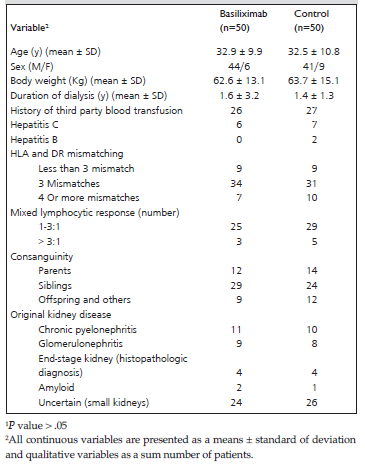
Table 1. Demographic characteristics of both groups1.
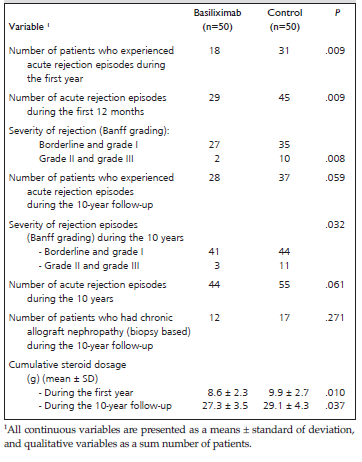
Table 2. Rejection episodes, Banff grading, and cumulative steroid therapy.
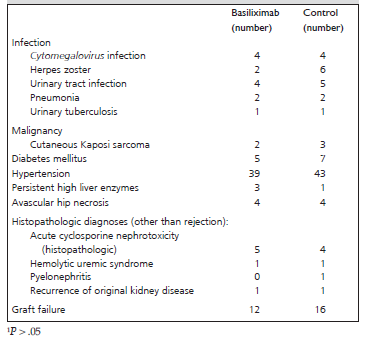
Table 3. Medical complications during 10 years follow up1.
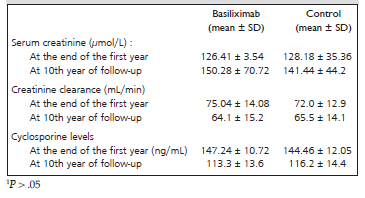
Table 4. Graft function and cyclosporine levels11.
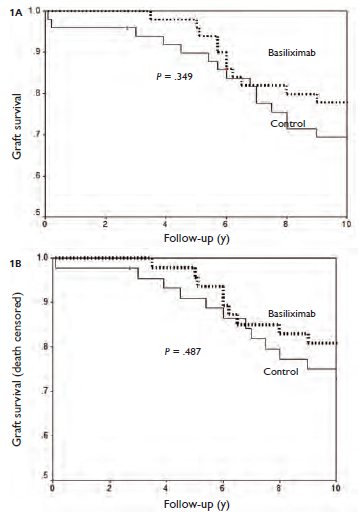
Figure 1. Graft survival.
1A. Actuarial graft survival.
1B. Death censored graft survival.
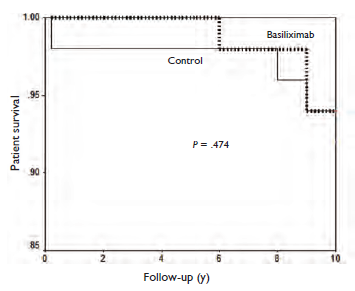
Figure 2. Actuarial patient survival.