Volume: 24 Issue: 7 July 2026
FULL TEXT
Outcomes After Liver Transplant Using Normothermic Machine Perfusion of Donor Allografts
Objectives: Normothermic machine perfusion in liver transplants has emerged as a technique to preserve donor allografts, potentially improving graft quality and increasing organ availability. However, a need exists to evaluate long-term recipient and graft survival using normothermic machine perfusion. We evaluated graft survival and outcomes after liver transplant using normothermic machine perfusion.
Materials and Methods: From the United Network for Organ Sharing database, we identified adult recipients (≥18 years old) of liver transplants that occurred between January 1, 2016, and December 31, 2024. The primary outcome was graft loss (retransplant or recipient death). We used Cox regression to identify graft loss predictors in the normothermic machine perfusion group versus static cold storage.
Results: Among 67 447 transplants, 4385 transplant (6.5%) utilized normothermic machine perfusion. The normothermic machine perfusion donors were older, had higher body mass index (measured as kilograms body mass per meter squared), had diabetes more commonly, and were more often donors after circulatory death. After multivariable adjustment, normothermic machine perfusion showed graft survival rates comparable with static cold storage (hazard ratio, 1.019; 95% CI, 0.989-1.051; P = .218). Subgroup analysis showed that donor body mass index, donor diabetes, donor hepatitis C infection, and donation after circulatory death predicted graft loss in static cold storage recipients but not normothermic machine perfusion recipients, suggesting that normothermic machine perfusion may mitigate high-risk donor characteristics.
Conclusions: Despite higher-risk donor profiles, normothermic machine perfusion liver transplants achieved graft survival rates comparable with static cold storage liver transplants. Normothermic machine perfusion may safely expand the donor pool by enabling use of marginal allografts. Prospective studies with longer follow-up are needed to optimize normothermic machine perfusion.
Key words : Graft survival, Liver transplantation, Marginal donor, Organ preservation
Introduction
Liver transplant offers the only chance of cure for patients with end-stage liver disease such as cirrhosis and acute liver failure and for selected patients with liver cancer. Liver transplant has achieved excellent outcomes in recent years with 1-year survival now >90%, and 5-year survival of >80%.1 Organ shortage, however, remains a major challenge in the ability to offer this life-saving operation to candidates on the liver transplant wait list.2 Concerted efforts have been made in the past decade to increase the donor organ pool by greater use of organs from marginal/extended criteria donors (ECD), such as older donors, donors with fatty livers, and donors with hepatitis C, as well as more donors after circulatory death (DCD) and living donors. There is greater risk with these ECD allografts, including higher risks of graft loss, allograft rejection, biliary complications, early allograft dysfunction (EAD), and patient mortality. Machine perfusion of donor organs promises a solution by reduction of organ discard rates, increase of preservation times, and reduction of some of the risks associated with ECD donors.3
Traditionally, donor organs have been preserved by static cold storage (SCS), which is simple, effective, inexpensive, and widely available; however, SCS has some limitations.4 With SCS, there is inevitable tissue damage from ischemia-reperfusion injury, and the organs can only be preserved for a limited period.
Machine perfusion of donor organs is not a new concept, but it has recently gained attention due to availability in the past few years for devices appro-ved by the US Food and Drug Administration. Machine perfusion has several benefits, including the ability to preserve organs for longer periods, to facilitate assessment of organ viability in real time, and to provide reduced risk of ischemia-reperfusion injury and allograft dysfunction, all of which have resulted in overall improved outcomes and greater utilization of organs.5,6 There are 2 main types of these machine perfusion devices: (1) hypothermic oxygenated perfusion (known as HOPE), for which a cold oxygenated perfusion solution is circulated through the organ, and (2) normothermic machine perfusion (NMP), for which blood is oxygenated and circulated through the device at 37 °C.
Both perfusion concepts have been evaluated in various observational studies with an overall benefit versus SCS.7,8 Results of randomized controlled trials have also become available, which have shown lower rates of EAD and major complications, reduced rates of graft loss, and lower biliary complication rates.
Data on NMP are limited, although evidence has suggested a benefit of the technique in terms of higher rates of organ utilization, longer preservation times, real-time monitoring, and better short-term outcomes. However, limited information remains regarding long-term outcomes. For NMP to become the next standard of care for transplant patients, we need to understand the long-term outcomes and specific complications associated with these modalities. We hypothesize that patients who receive organs on NMP have lower risks of graft loss, recipient mortality, and biliary complications versus patients for whom SCS was employed. The aim of our study was to investigate posttransplant complications and rates of graft loss and mortality in patients who received liver allografts with NMP and compare these details versus patients who received liver allografts with conventional SCS.
Materials and Methods
We studied data for adult (≥18 years old) recipients of deceased donor livers in the United Network for Organ Sharing database who received transplants from January 1, 2016, to December 31, 2024. We excluded pediatric cases, multiorgan and retransplant recipients, and hypothermic machine perfusion cases.
The primary outcome was graft loss, defined as retransplant or death from any cause. We used descriptive statistics to compare baseline charac-teristics and graft loss. We compared normally distributed continuous variables using the Student t test and categorical variables using the chi-square test. We reported normally distributed continuous variables as mean values (with SD), nonnormally distributed continuous variables as median values (with IQR), and categorical variables as frequencies (with percentage). We used time-to-event analysis to assess graft loss. We visualized recipient survival using Kaplan-Meier curves. We used Cox regression to compare recipient survival and graft loss after transplant, adjusting for variables based on clinical relevance and prior literature. These variables included donor characteristics of age, body mass index (BMI, measured as kilograms body mass per meter squared), heavy alcohol use, macrosteatosis on biopsy, hepatitis C infection, and DCD status; recipient characteristics included age and Model for End-Stage Liver Disease (MELD) score at transplant. We used SPSS software (version 30.0; IBM) for all statistical analyses.
This study was deemed exempt by the University of Maryland Institutional Review Board.
Results
Of the 67 447 deceased donors with liver procu-rement since January 2016, 4385 cases (6.5%) utilized NMP. Donors of NMP grafts were older (mean age 47 years for NMP vs 42 years for non-NMP; P < .001) and had a higher mean BMI (29.7 for NMP vs 28.2 for non-NMP; P < .001; Table 1). Donors of NMP grafts also were more likely to have diabetes (18.7% for NMP vs 13% for non-NMP; P < .001), more likely to have heavy alcohol use (20.3% for NMP vs 16.4% for non-NMP; P < .001), less likely to have a positive result for the hepatitis C nucleic acid test (2.7% for NMP vs 4.9% for non-NMP; P < .001), and more likely to be DCD (57% for NMP vs 10% for non-NMP; P < .001).
Recipients of NMP grafts were older (median age 56 years for NMP vs 54 years for non-NMP; P < .031). Recipients of NMP grafts had lower MELD score at transplant (median MELD score 21 for NMP vs 23 for non-NMP; P < .001) and were less likely to have had dialysis at the time of transplant (7.2% for NMP vs 12.3% for non-NMP; P < .001).
Figure 1 illustrates unadjusted Kaplan-Meier graft survival curves for liver transplants with NMP and liver transplants without NMP in the United States since 2016. On unadjusted analysis, recipients of NMP grafts had a slightly higher risk of graft loss versus recipients of non-NMP grafts (hazard ratio [HR], 1.02; 95% CI, 1.0-1.05; P = .051) (Figure 1).
Estimated HR values for graft survival were calculated using univariable Cox regression analysis, and results are shown in Table 2. Assessment of risk factors for graft loss for each variable independently demonstrated that donor age (HR, 1.006; 95% CI, 1.005-1.007; P < .001), donor BMI (HR, 1.004; 95% CI, 1.001-1.007; P = .010), donor hepatitis C virus (HR, 1.147; 95% CI, 1.018-1.293; P = 0.024), donor diabetes (HR, 1.348; 95% CI, 1.221-1.488; P < .001), DCD donors (HR, 1.210; 95% CI, 1.139-1.286; P < .001) and recipient MELD score >35 (HR, 1.110; 95% CI, 1.057-1.165; P < .001) were independently associated with graft loss. The variable of NMP showed a trend toward an association with graft loss (HR, 1.022; 95% CI, 1.000-1.045; P = .051) (Table 2).
An analysis of estimated HR values for graft loss was performed using a multivariable Cox regression model to assess which of the factors were indepen-dently associated with graft loss, and results are shown in Table 3. Donor age, donor diabetes, DCD status, recipient age, and recipient MELD score were again found to be associated with the risk of graft loss; however, NMP (P = .218) was found to be not significantly associated with graft loss in this model.
A sensitivity analysis of graft loss between the NMP group and the group without NMP was performed using multivariable Cox regression, and the results are shown in Table 4. Donor BMI (P = .015), donor hepatitis C (P = .025), donor diabetes (P < .001), and DCD status (P < .001) were found to be significantly associated with graft loss in the group without NMP; however, the association became nonsignificant in the NMP group.
Discussion
This retrospective cohort study examined liver transplant outcomes and trends in the United States since 2016, focusing on deceased donor allografts preserved using NMP versus traditional SCS. Our analysis, drawn from the United Network for Organ Sharing database, provides valuable insights into donor characteristics, graft survival, and risk factors associated with graft loss in the context of machine perfusion. Based on our findings, patients who received NMP-preserved grafts did not have significantly better graft survival than patients who received grafts preserved with SCS.
The NMP method has gained attention in recent years after the US Food and Drug Administration approved 2 NMP devices, that is, the OrganOx metra perfusion system and the TransMedics OCS Liver portable extracorporeal liver perfusion and monitoring system. The NMP method mimics physiological conditions and has demonstrated potential benefits, including extended preservation time, viability assessment, reduced ischemia-reperfusion injury, and improved organ utilization.
The overall percentage of deceased donor liver transplants utilizing NMP since 2016 is only 6.5%; however, the rates of NMP utilization have increased rapidly since 2021. By 2022, 12.1% of all livers procured for transplant underwent NMP preservation, constituting 37.2% of DCD livers and 6.7% of livers from donors after brain death; and by the end of 2023, 15.5% of all liver transplants utilized machine perfusion including 50% of DCD livers.9
Interestingly, NMP was more frequently used in higher-risk donor profiles. Compared with SCS, donors in the NMP group were older, more had diabetes and history of heavy alcohol use, and were more often DCD donors, which is a group tradi-tionally associated with inferior graft outcomes due to prolonged warm ischemia time. The increased use of NMP in these donors suggests a selective application of this technology to mitigate the risk posed by marginal or ECD organs. According to Ceresa and colleagues,10 normothermic machine perfusion techniques can improve the quality of marginal livers, extend the time for which these organs can be preserved, and enable an objective assessment of the quality and viability of these organs, thus avoiding organ discardment. In 2018, Nasralla and colleagues published the first randomized trial for NMR, in which 270 livers were randomized to either NMP or SCS; their results showed that 50% more livers were utilized with NMP.6 Hann and colleagues specifically looked at grafts that were considered high risk and declined by other centers; these organs were from older donors (51 years old) and showed greater steatosis (65%), and the results showed that NMP was associated with a lower incidence of reperfusion injury.11
Despite these higher-risk donor characteristics, in our present study the rates of graft loss in the NMP group were not significantly different from the SCS group after adjustment for covariates. Although the unadjusted HR value for graft loss was slightly higher in the NMP group (HR, 1.02; 95% CI 1.00-1.05; P = .051), this association did not persist in multi-variable analysis. This finding implies that NMP, when applied to higher-risk grafts, may reduce the harmful effects of specific donor factors, effectively leveling the playing field versus lower-risk grafts preserved via SCS.
Organ shortage necessitates utilization of mar-ginal grafts; however, such organs carry an increased risk of graft-associated complications, such as primary nonfunction, delayed graft function, and biliary complications. Therefore, reliable assessment of graft viability before use is essential for successful outcomes, and NMP can offer this and thus allow the pool of usable livers to dramatically increase and improve outcomes for recipients.12 In a review article published by Graham and Guarrera in 2014,13 the authors used the term “resuscitation” of marginal allografts with NMP, and they noted that marginal livers carry the risk of EAD and primary nonfunction. However, NMP may hold the promise for expanded access to liver transplant and improved outcomes.13
Further support for this interpretation comes from our stratified analysis. In the SCS group, the donor characteristics of diabetes, heavy alcohol use, hepatitis C infection, and DCD status were inde-pendent predictors of graft loss. In contrast, these same risk factors were not independently associated with graft loss in the NMP group. This suggests that NMP may neutralize or at least reduce the effect of known adverse donor characteristics, thereby impro-ving the usability of ECD organs.
Nguyen and colleagues14 have published a single-center, retrospective observational cohort study that included all consecutive adult liver transplants (n = 1086) performed from January 2019 to December 2023 at the Mayo Clinic in Arizona, to study outcomes between NMP cases and SCS cases. In that study, compared with SCS, the NMP group had a 78% overall reduction in graft failure (HR, 0.22; 95% CI, 0.10-0.49; P < .001). For those patients who received DCD allografts, the risk reduction was even more pronounced, with an 87% decrease in graft failure (HR, 0.13; 95% CI, 0.05-0.33; P < .001).14
In 2025, Li and colleagues15 published a single-center study that included 68 adult DCD transplants performed for the period 2019 through 2023 for which the organs were exposed to >30 minutes of warm ischemia time, which is sufficiently longer than the warm ischemia time limit that most centers prefer (and which typically leads to a decision by these centers to decline these grafts). Despite longer ischemia times, the NMP group in the study by Li and col-leagues experienced significantly lower rates of EAD (4.5% vs 66.7%; P < .01) and ischemic cholangiopathy (2.3% vs 29.2%; P < .01) versus the SCS group.15
Another interesting observation in our present study was that recipients of NMP grafts had lower median MELD scores at the time of transplant. A similar observational study by Wisel and colleagues16 from 2024 looked at transplant recipients and found that the median MELD score for recipients of livers from donors after brain death was 22 for NMP livers versus a median MELD score of 24 for SCS livers. Likewise, DCD livers were transplanted into reci-pients with lower MELD scores after NMP (median MELD score 18) versus SCS (median MELD score 19; P = .038).16 This suggests that NMP may allow for the use of marginal or higher-risk donor livers that might otherwise be refused by centers for transplant due to concerns about outcomes.
The present use of more marginal allografts with NMP may also reflect appropriate donor-recipient matching that facilitates access to transplants for patients with lower MELD scores, especially for those candidates who have been waiting long periods for an acceptable graft. Patients with severe illness (MELD ≥20) benefit most from transplant but may have worse outcomes with higher-risk grafts. Mortality while awaiting a donor organ remains a concern, and transplant surgeons must carefully balance risks and benefits.9 This approach has been further supported by graft and patient outcomes, with equivalent outcomes for livers from donors after brain death and superior graft survival for DCD livers undergoing NMP preservation.
Our study had several limitations. First, the retrospective nature and reliance on registry data introduced the possibility of selection bias and unmeasured confounding. The reasons for choosing NMP in individual cases were not captured in the database, nor were individual perfusion parameters (eg, temperature, duration, flow rates) or intraope-rative/postoperative management details. Second, information regarding long-term follow-up beyond graft survival, such as patient quality of life, cost-effectiveness, or biliary complications, especially relevant in DCD grafts, was not available in this dataset.
Nonetheless, our findings provide a real-world assessment of the clinical utility of NMP. Although NMP has not yet demonstrated superiority in graft survival, its role to facilitate transplants of higher-risk donor organs without excess graft loss is promising. Importantly, our study underscores the potential of NMP to expand the donor pool safely and reduce the discard rate of marginal grafts.
Conclusions
Normothermic machine perfusion was used more frequently in higher-risk deceased donors, such as older donors, donors with diabetes, or DCD donors. Despite these adverse donor characteristics, graft survival outcomes in the NMP group were com-parable with graft survival outcomes in the SCS group after adjustment, suggesting that NMP may help mitigate some of the negative effects of donor risk factors. These findings support the continued integration and broader use of NMP technology, particularly as a tool to improve organ utilization and outcomes of ECD organs. Further prospective studies with detailed perfusion metrics and longer follow-up are needed to fully define the role of NMP in liver transplantation and potentially establish NMP as a new standard of care.
References:
- Kwong A, Kim WR, Lake JR, et al. OPTN/SRTR 2018 Annual Data Report: liver. Am J Transplant. 2020;20(Suppl S1):193-299. doi:10.1111/ajt.15674
CrossRef - PubMed - Torabi J, Todd R, van Leeuwen LL, et al. A decade of liver transplantation in the United States: drivers of discard and underutilization. Transplant Direct. 2024;10(6):e1605. doi:10.1097/TXD.0000000000001605
CrossRef - PubMed - Viana P, Castillo-Flores S, Mora MMR, et al. Normothermic machine perfusion vs. static cold storage in liver transplantation: a systematic review and meta-analysis. Artif Organs. 2025 Jun;49(6):945-954. doi:10.1111/aor.14960
CrossRef - PubMed - Liu WP, Humphries AL, Russell R, Stoddard LD, Moretz WH, Moretz WH. 48-hour storage of canine kidneys after brief perfusion with Collins’ solution. Ann Surg. 1971;173:748-757. doi:10.1097/00000658-197105000-00014
CrossRef - PubMed - Ghinolfi D, Rreka E, De Tata V, et al. Pilot, open, randomized, prospective trial for normothermic machine perfusion evaluation in liver transplantation from older donors. Liver Transpl. 2019;25(3):436-449. doi:10.1002/lt.25362
CrossRef - PubMed - Nasralla D, Coussios CC, Mergental H, et al.; Consortium for Organ Preservation in Europe. A randomized trial of normothermic preservation in liver transplantation. Nature. 2018;557(7703):50-56. doi:10.1038/s41586-018-0047-9
CrossRef - PubMed - Jakubauskas, Matas, et al. Machine perfusion in liver transplantation: a systematic review and meta-analysis. Visc Med. 2022;38(4):243-254. doi:10.1159/000519788
CrossRef - PubMed - Parente A, Tirotta F, Pini A, et al. Machine perfusion techniques for liver transplantation: a meta-analysis of the first seven randomized-controlled trials. J Hepatol. 2023;79(5):1201-1213. doi:10.1016/j.jhep.2023.05.027
CrossRef - PubMed - Zhou AL, Akbar AF, Ruck JM, et al. Use of ex situ machine perfusion for liver transplantation: the national experience. Transplantation. 2025 Jun 1;109(6):967-975. doi:10.1097/TP.0000000000005290
CrossRef - PubMed - Ceresa CDL, Nasralla D, Pollok JM, Friend PJ. Machine perfusion of the liver: applications in transplantation and beyond. Nat Rev Gastroenterol Hepatol. 2022;19(3):199-209. doi:10.1038/s41575-021-00557-8
CrossRef - PubMed - Hann A, Lembach H, Carvalheiro A, et al. Normothermic machine perfusion of marginal liver allografts are associated with a low incidence of post reperfusion syndrome in high-risk recipients. Transplantation. 2020;104(S3):S60-S60. doi:10.1097/01.tp.0000698552.38741.a1
CrossRef - PubMed - Sousa Da Silva RX, Weber A, Dutkowski P, Clavien PA. Machine perfusion in liver transplantation. Hepatology. 2022;76(5):1531-1549. doi:10.1002/hep.32546
CrossRef - PubMed - Graham JA, Guarrera JV. “Resuscitation” of marginal liver allografts for transplantation with machine perfusion technology. J Hepatol. 2014;61(2):418-431. doi:10.1016/j.jhep.2014.04.019
CrossRef - PubMed - Nguyen MC, Zhang C, Chang YH, et al. Improved outcomes and resource use with normothermic machine perfusion in liver transplantation. JAMA Surg. 2025;160(3):322-330. doi:10.1001/jamasurg.2024.6520
CrossRef - PubMed - Li X, Chang YH, Ohara SY, et al. Normothermic machine perfusion improves outcomes for donation after cardiac death allografts with extended donor warm ischemia time. Clin Transplant. 2025;39(3):e70133. doi:10.1111/ctr.70133
CrossRef - PubMed - Wisel SA, Steggerda JA, Kim IK. Use of machine perfusion in the United States increases organ utilization and improves DCD graft survival in liver transplantation. Transplant Direct. 2024;10(12):e1726. doi:10.1097/TXD.0000000000001726
CrossRef - PubMed

Volume : 24
Issue : 7
Pages : 547 - 552
DOI : 10.6002/ect.2026.0120
From the 1Division of Transplant Surgery, Department of Surgery, University of Maryland School of Medicine, Baltimore, Maryland; and the 2Department of Internal Medicine, Indiana University School of Medicine, Indianapolis, Indiana, USA
Acknowledgements: The authors have not received any funding or grants in support of the presented research or for the preparation of this work and have no declarations of potential conflicts of interest.
Corresponding author: Saad A. Malik, Division of Transplant Surgery, Department of Surgery, University of Maryland School of Medicine. 29 S. Greene Street, Suite 200, Baltimore, MD 21201, USA
Phone: +1 667 333 1111
E-mail: samalik@som.umaryland.edu.
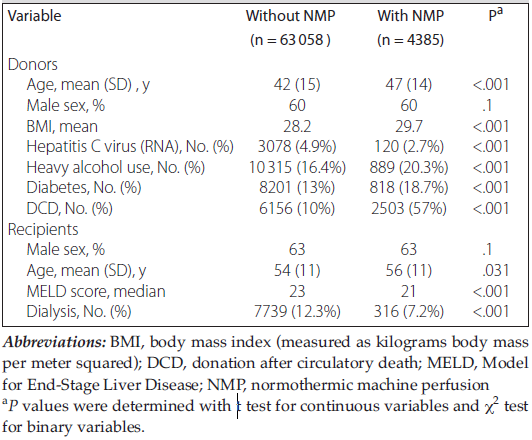
Table 1. Baseline Donor, Recipient, and Transplant Characteristics Between Liver Transplants With and Without Normothermic Machine Perfusion
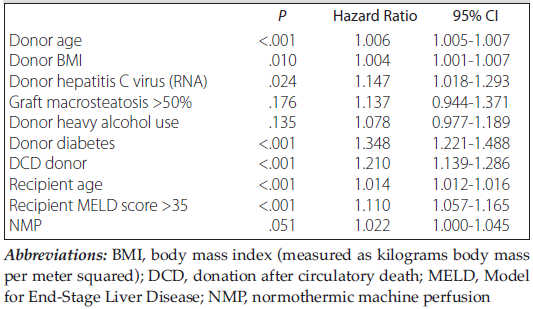
Table 2. Estimated Hazard Ratios for Graft Loss Using Univariable Cox Regression
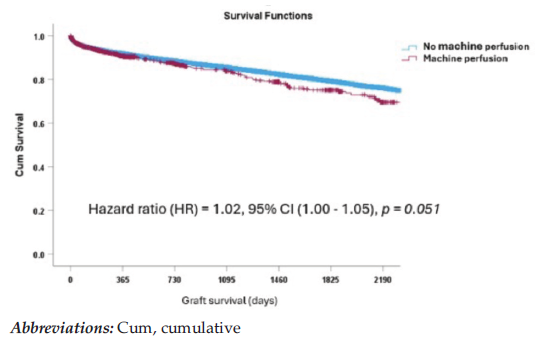
Figure 1. Unadjusted Kaplan-Meier Graft Survival Curves for Liver Transplants With and Without Normothermic Machine Perfusion, United States, 2016-2024
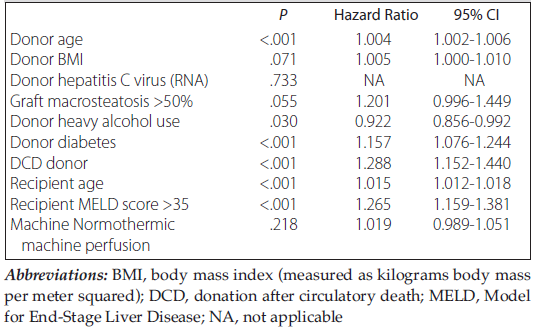
Table 3. Estimated Hazard Ratios for Graft Loss Using Multivariable Cox Regression
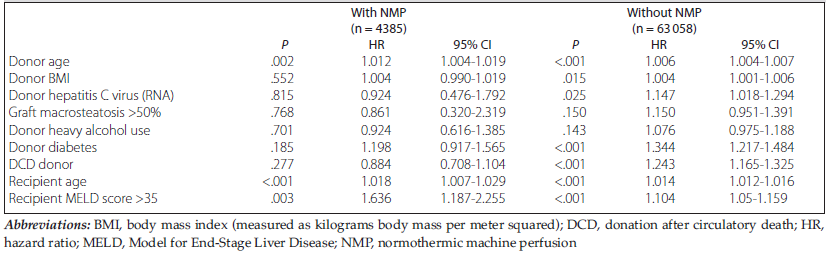
Table 4. Estimated Hazard Ratios for Graft Loss Using Multivariable Cox Regression Model Between the Group With Normothermic Machine Perfusion and the Group Without Normothermic Machine Perfusion