Volume: 24 Issue: 2 February 2026
FULL TEXT
Intravenous Immunoglobulin-Associated Heart Block in a Kidney Transplant Recipient: A Rare Cardiac Complication
Dear Editor:
Intravenous immunoglobulin (IVIG) is extensively used in kidney transplant for desensitization, antibody-mediated rejection, and select viral or autoimmune complications.1 Although generally safe, adverse effects such as renal dysfunction, thrombo-embolism, hemolysis, and aseptic meningitis have been reported.2,3 Cardiovascular reactions, including hypotension, arrhythmias, and atrioventricular (AV) block, are rare but clinically significant.2-5 Proposed mechanisms include hyperviscosity, autonomic imba-lance, electrolyte shifts, or direct myocardial effects of immunoglobulin aggregates.2,3 Transplant recipients, because of comorbidities and multiple medications, are at high risk of such complications. Here, we report a renal-allograft recipient who developed reversible AV block temporally related to IVIG given for BK virus-associated nephropathy. The patient provided informed consent.
The patient, a 46-year-old man with end-stage kidney disease on maintenance hemodialysis via right internal jugular permcath, underwent a deceased-donor kidney transplant (ABO-compatible, A type Rh-positive). Comorbidities included treated disseminated tuberculosis, seizure disorder, and hepatitis C (sustained virologic response achieved). Induction therapy comprised antithymocyte globulin (150 mg) and mycophenolate sodium (1.5 g), follo-wed by tacrolimus, mycophenolate mofetil, and prednisolone. Postoperative recovery was uneventful, with nadir creatinine of 0.97 mg/dL and tacrolimus trough levels of 7 to 8 ng/mL.
At 3 months posttransplant, creatinine rose to 1.66 mg/dL. Laboratory findings were unremarkable except BK virus polymerase chain reaction showed 2.29 × 10⁵ copies/mL; cytomegalovirus DNA was negative. Allograft biopsy revealed BK virus-asso-ciated nephropathy with acute tubular injury. Tacrolimus was reduced (from 3.75 mg to 3 mg twice daily), and mycophenolate mofetil was halved and later stopped. Despite minimized immunosuppres-sion, BK viremia rebounded (1.6 × 10⁵ copies/mL) with mild creatinine elevation (1.8 mg/dL).
Intravenous immunoglobulin was initiated for refractory BK virus-associated nephropathy. During IVIG infusion, the patient developed symptomatic bradycardia with AV block (Figure 1 and Figure 2). Intravenous immunoglobulin was immediately discontinued, and supportive care was provided. The rhythm normalized without residual conduction defects (Figure 3). Immunosuppression remained minimized, and graft function stabilized (creatinine level of 1.5 mg/dL) on follow-up. This temporal relationship and prompt recovery after drug cessation strongly implicated an IVIG-induced AV block. Conti-nuous cardiac monitoring and early recognition were crucial for a favorable outcome.
Intravenous immunoglobulin is widely used in kidney transplantation for desensitization, antibody-mediated rejection, and selected viral or autoimmune complications. Although generally safe, IVIG can rarely precipitate cardiovascular events such as hypo-tension, arrhythmias, and conduction abnormalities. This case describes a renal allograft recipient who developed transient AV block during IVIG infusion, emphasizing the importance of vigilance during therapy. Cardiac adverse effects of IVIG are uncommon and have been mostly reported as isolated case reports. Documented manifestations include bradycardia, supraventricular tachycardia, and transient complete heart block. The mechanisms are not fully understood but may involve hyperviscosity, autonomic imbalance, electrolyte shifts, or direct myocardial effects of immunoglobulin aggregates. Patients with cardiovascular disease, auto-nomic dysfunction, or concurrent nephrotoxic or cardiotoxic drugs are more susceptible.2,3 Concomitant tacrolimus therapy may further predispose to conduction distur-bances through synergistic effects on cardiac conduction or vasospasm.6
The close temporal relation between IVIG infusion and onset of AV block, with complete recovery after discontinuation, supports a causal association. Previous reports have described similar reversibility, suggesting an idiosyncratic and transient mechanism.4,5 Continuous cardiac monitoring, slower infusion rates, preinfusion cardiac assessment, and electrolyte optimization are recommended preventive measures. This case highlights IVIG-induced AV block as a rare but important complication in posttransplant patients. Awareness and early recognition enable prompt intervention, preventing unnecessary inves-tigations and ensuring favorable outcomes.
References:
- Orange JS, Hossny EM, Weiler CR, et al. Use of intravenous immunoglobulin in human disease: a review of evidence. J Allergy Clin Immunol. 2006;117(4 Suppl):S525-S553. doi:10.1016/j.jaci.2006.01.015
CrossRef - PubMed - Stiehm ER. Adverse effects of human immunoglobulin therapy. Transfus Med Rev. 2013;27(3):171-178. doi:10.1016/j.tmrv.2013.05.004
CrossRef - PubMed - Katz U, Achiron A, Sherer Y, Shoenfeld Y. Safety of intravenous immunoglobulin (IVIG) therapy. Autoimmun Rev. 2007;6(4):257-259. doi:10.1016/j.autrev.2006.08.011
CrossRef - PubMed - Douedi S, Alshami A, Ashforth GF, Maludum O, Carson MP. Severe symptomatic bradycardia after intravenous immunoglobulin infusion: a rare manifestation. J Cardiol Cardiovasc Sci. 2020;4(1):14-17. doi:10.29245/2578-3025/2020/1.1185
CrossRef - PubMed:
- Raheja H, Kumar V, Hollander G, Shani J, Greenberg Y. Intravenous immunoglobulin-induced profound bradycardia in a patient with idiopathic thrombocytopenic purpura. Am J Ther. 2018;25(5):e572-e574. doi:10.1097/MJT.0000000000000654
CrossRef - PubMed - Dantal J, Pohanka E. Malignancies in renal transplantation: an unmet medical need. Transplant Int. 2007;20(6):514-522. doi:10.1093/ndt/gfm085
CrossRef - PubMed

Volume : 24
Issue : 2
Pages : 197 - 198
DOI : 10.6002/ect.2025.0276
From the Department of Nephrology, Institute of Liver and Biliary Sciences, Vasant Kunj, New Delhi, India
Acknowledgements: The authors have not received any funding or grants in support of the presented research or for the preparation of this work and have no declarations of potential conflicts of interest..
Corresponding author: Saurabh Puri, Institute of Liver and Biliary Sciences, Vasant Kunj, New Delhi, India 110070
E-mail: saurabhpuri119@gmail.com
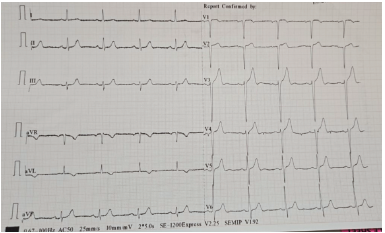
Figure 1. Electrocardiogram on Admission Before Intravenous Immunoglobulin Infusion Showing Normal Sinus Rhythm With a Heart Rate of 60 Beats/min
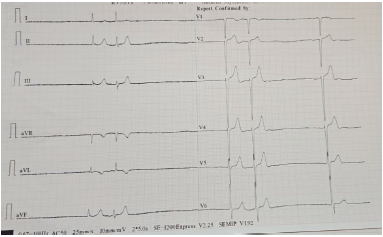
Figure 2. Electrocardiogram After Intravenous Immunoglobulin Infusion Showing Bradycardia With Arteriovenous Block
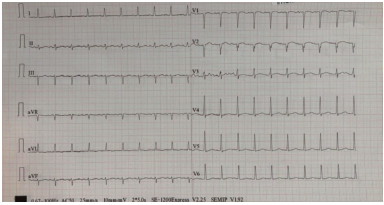
Figure 3. Electrocardiogram After Discontinuing Intravenous Immunoglobulin Infusion Showing Normal Sinus Rhythm