Volume: 24 Issue: 2 February 2026
FULL TEXT
Comparison of Radiation Dose Between Low-Dose Postoperative and Standard-Dose Preoperative Abdominal Computed Tomography in Living Liver Donors
Objectives: Although contrast-enhanced abdominal computed tomography is frequently used to detect possible postoperative complications in living liver donors, radiation exposure remains a major concern. For this reason, we used low-dose postoperative computed tomography scans. We compared radiation doses of low-dose postoperative computed tomog-raphy with those of standard-dose preoperative computed tomography in living liver donors.
Materials and Methods: This retrospective study included 80 living liver donors (median age of 28.0 years; 40 male participants) who underwent standard-dose preoperative and low-dose postoperative abdo-minal computed tomography scans between 2023 and 2024. Scanning parameters of tube voltage peak, effective tube current, and rotation time were, respectively, 100 kVp, 200 mA·s, and 0.5 s for preoperative computed tomography and 100 kVp, 40 mA·s, and 0.5 s for low-dose postoperative computed tomography. We compared radiation doses, including dose length product and effective dose, for preoperative versus postoperative portal venous phase abdominal computed tomography scans with paired Wilcoxon signed-rank tests. We assessed correlations between the radiation dose and body mass index with the Spearman correlation coefficient.
Results: The median dose length product and effective dose with low-dose postoperative computed tomog-raphy were significantly lower than with standard-dose preoperative computed tomography (72.6 vs 371.0 mGy·cm and 1.1 vs 5.6 mSv, respectively; all P < .001). The dose length product and effective dose of preoperative and postoperative computed tomography scans showed very strong positive correlations with body mass index (ρ = 0.919 and 0.909, respectively; all P < .001). In all subgroups based on body mass index, the median dose length product and effective dose of postoperative computed tomog-raphy were significantly lower versus preope-rative computed tomography (all P < .001).
Conclusions: Low-dose postoperative computed to-mography scans can significantly reduce radiation dose in living liver donors.
Key words : Computed tomography scanning parameters, Low-dose radiation exposure, Postoperative complications
Introduction
Liver transplant (LT) is a well-established life-saving procedure for patients with end-stage liver disease.1 Due to the shortage of deceased organ donors, living donor LT (LDLT) is frequently performed.2 The primary clinical concern with LDLT is the potential risk to living donors who are healthy prior to undergoing LT.3,4 To minimize the risks associated with LDLT and ensure donor safety, meticulous preoperative evaluations of the hepatic parenchyma and vascular anatomy are essential to establish an appropriate surgical plan.5,6 In addition, early detec-tion of postoperative complications is critical to ensure timely intervention, and careful clinical and radiological evaluations during the early posto-perative period are mandatory.7
Presently, contrast-enhanced computed tomog-raphy (CT) is a widely used imaging modality for both preoperative and postoperative evaluation of living liver donors.5,7,8 However, the cumulative radiation dose from multiple CT examinations remains a serious concern, particularly in young donors. Young adults are more sensitive to the stochastic effects of ionizing radiation, and their relatively long remaining lifespan may increase the potential risk of radiation-induced cancer.9,10 Therefore, reducing the radiation dose delivered to living liver donors is an important concern. In this regard, our institution has implemented a low-dose postoperative CT protocol for living liver donors. This study aimed to compare the radiation doses of low-dose postoperative CT versus standard-dose preoperative CT in living liver donors.
Materials and Methods
This retrospective study was approved by the insti-tutional review board of Asan Medical Center, and the requirement to obtain informed consent was waived.
Study population
A retrospective search of the database at Asan Medical Center was conducted to identify living liver donors who underwent standard-dose preoperative abdominal CT and low-dose postoperative abdo-minal CT between January 2023 and December 2024. Preoperative CT was performed as part of the predonation evaluation to assess hepatic parenchyma, identify vascular anatomical variations, and estimate liver volume. Postoperative CT was conducted to detect potential complications follo-wing liver donation. The body mass index (BMI; calculated as weight in kilograms divided by height in meters squared) of living liver donors was classified as follows: <20, 20-25, 25-30, or >30. We identified 10 male and 10 female donors with a BMI >30. Donors with BMI <20, 20-25, or 25-30 were then matched to the aforementioned donors with a BMI >30 in a 1:1:1:1 ratio based on sex and the nearest age. This study ultimately included 80 living liver donors (20 with BMI <20, 20 with BMI of 20-25, 20 with BMI of 25-30, and 20 with BMI >30). All living donors in this study were either a relative of the recipient (up to the fourth degree) or the spouse of the recipient and were ≥18 years of age.
Computed tomography acquisition
Preoperative and postoperative abdominal CT scans were performed using 128-slice multidetector scan-ners (SOMATOM series; Siemens). For preoperative imaging, unenhanced CT scans were acquired for quantitative assessment of hepatic steatosis, followed by biphasic (hepatic arterial and portal venous phases) contrast-enhanced CT scans for anatomical mapping of the hepatic vasculature and CT volumetry.
The scan range for the unenhanced and hepatic arterial phase images extended from the diaphragm to the lower margin of the liver, whereas the scan range for the portal venous phase images extended from the diaphragm to the symphysis pubis. For postoperative imaging, portal venous phase contrast-enhanced CT was obtained on postoperative day 5 to detect possible complications. The scan range for the postoperative portal venous phase images was identical to scan range for the preoperative portal venous phase images.
The CT acquisition parameters were as follows: standard-dose preoperative CT (tube voltage peak 100 kVp, effective tube current 200 mA·s, and rotation time 0.5 s) applied to all 3 phases (unenhanced, hepatic arterial, and portal venous phases); low-dose postope-rative CT (tube voltage peak 100 kVp, effective tube current 40 mA·s, and rotation time 0.5 s) applied to portal venous phase (Table 1). The effective dose (in mSv) was calculated as the dose length product (DLP) multiplied by a conversion factor (k), which is defined as the region-specific normalized effective dose.11
Data collection
Demographic data, including age, sex, and anthro-pometric measurements (body weight and height), were collected for each donor. The BMI data were calculated as body weight in kilograms divided by the square of height in meters.
Statistical analyses
Continuous variables are presented as medians (with IQR). We compared radiation doses, including DLP and effective dose, for preoperative versus posto-perative portal venous phase CT scans using paired Wilcoxon signed-rank test, which is a nonparametric test for paired continuous variables. Correlations between the radiation dose and BMI were assessed with the Spearman correlation coefficient. Statistical significance was set at P < .05. We used SPSS software version 23.0 (IBM) for all statistical analyses.
Results
Characteristics of the study population
The analysis included 80 living liver donors (median age of 28.0 years; 40 male and 40 female participants). The characteristics of the study population are summarized in Table 2. The median BMI was 25.5 (IQR, 20.7-30.0).
Comparison of radiation dose between preope-rative and postoperative computed tomography
The median DLP for low-dose postoperative CT (72.6 mGy·cm) was significantly lower versus standard-dose preoperative portal venous phase CT (371.0 mGy·cm) (P < .001). The median effective dose for postoperative CT (1.1 mSv) was significantly lower versus preoperative CT (5.6 mSv) (P < .001).
Correlation between body mass index and radiation dose
The DLP and effective dose of preoperative and postoperative portal venous phase CT showed very strong positive correlations with BMI (ρ = 0.919 and 0.909, respectively; all P < .001) (Table 3).
Radiation dose by body mass index subgroup
In all BMI subgroups (BMI <20, 20-25, 25-30, or >30), the median DLP and effective dose of postoperative portal venous phase CT were significantly lower versus preoperative portal venous phase CT (all P < .001) (Table 3).
Discussion
In this study, the radiation dose, including DLP and effective dose, of low-dose postoperative CT was significantly lower than shown with standard-dose preoperative CT. This reduction was consistently observed across all BMI subgroups, including donors with BMI >30.
Justification for medical imaging requires that the potential benefits should outweigh the associated risks of radiation exposure.12 In the context of LDLT, CT is used for both preoperative and postoperative evaluations, as the clinical benefits of accurate preo-perative anatomical assessment and early detection of postoperative complications are considered to outweigh the radiation detriment. The decision to perform CT imaging is based on the clinicians’ judgment for justification, whereas radiologists are responsible for optimization. Radiologists must optimize imaging protocols to reduce potential risks from ionizing radiation while maintaining the ability to obtain imaging that answers clinicians’ questions,13 in accordance with the ALARA principle (literally, “as low as reasonably achievable”).12 In line with this principle, our institution implemented a low-dose postoperative CT protocol that used reduced effective tube current for living liver donors while ensuring adequate image quality for the detection of potential postoperative complications following liver donation.
Diagnostic reference levels (DRLs) have been established as an effective tool to support dose optimization in medical imaging for diagnostic procedures.14 Importantly, DRLs help identify radiation doses that are either too high or too low, both of which may require optimization; therefore, DRLs should always be considered in conjunction with image quality.15 In this study, postoperative CT for living liver donors was performed using a low-dose protocol guided by the ALARA principle, with the primary aim of minimizing radiation exposure while maintaining sufficient diagnostic image quality.
Radiation-induced carcinogenesis is generally considered a stochastic process, with the probability of its occurrence increasing with cumulative radiation dose received.12 Young adults are more susceptible to the stochastic effects of ionizing radiation due to rapid cell division.10 Moreover, their longer life expectancy provides sufficient time for potential radiation-induced effects to manifest.10 Because living liver donors are typically young and otherwise healthy, minimizing radiation dose is particularly important in this population. The low-dose postoperative CT protocol implemented at our institution reduced the effective dose by appro-ximately 5-fold compared with the standard-dose preoperative portal venous phase CT.
Considering that CT examinations in healthy living donors are performed for donor safety, it may not be appropriate to classify such imaging strictly as medical exposure of patients. Likewise, application of recommended radiation dose limits intended for public exposure may not be suitable in this context. If the application of dose limits for occupational exposure in planned exposure situations is adopted as a reference (namely, an effective dose of 20 mSv per year, averaged over defined 5-year periods, ie, 100 mSv per 5-year period), then the implementation of a low-dose postoperative CT protocol could help ensure that cu-mulative radiation dose in living donors remains well within this threshold, including donors with BMI >30.
This study had several limitations. First, this was a retrospective single-center study, which may have introduced selection bias and limit the generalizability of the findings. Second, the effective dose was estimated by using a DLP-based method. However, a recent study has shown that DLP-based effective dose estimates may significantly differ from organ dose-based effective dose estimates and may not be accurate compared with organ dose-based effective dose estimates.16 Therefore, further prospective studies using organ dose-based effective dose estimates are warranted to validate and refine our findings.
In conclusion, low-dose postoperative CT scans can significantly reduce radiation dose in living liver donors.
References:
- European Association for the Study of the Liver. EASL Clinical Practice Guidelines on liver transplantation. J Hepatol. 2024;81(6):1040-1086. doi:10.1016/j.jhep.2024.07.032
CrossRef - PubMed - Lee SG. A complete treatment of adult living donor liver transplantation: a review of surgical technique and current challenges to expand indication of patients. Am J Transplant. 2015;15(1):17-38. doi:10.1111/ajt.12907
CrossRef - PubMed - Hur BY, Lee JM, Joo I, et al. Liver computed tomography with low tube voltage and model-based iterative reconstruction algorithm for hepatic vessel evaluation in living liver donor candidates. J Comput Assist Tomogr. 2014;38(3):367-375. doi:10.1097/RCT.0b013e3182ab6cc0
CrossRef - PubMed - Lee MW, Lee JM, Lee JY, et al. Preoperative evaluation of the hepatic vascular anatomy in living liver donors: comparison of CT angiography and MR angiography. J Magn Reson Imaging. 2006;24(5):1081-1087. doi:10.1002/jmri.20726
CrossRef - PubMed - Schroeder T, Malagó M, Debatin JF, Goyen M, Nadalin S, Ruehm SG. “All-in-one” imaging protocols for the evaluation of potential living liver donors: comparison of magnetic resonance imaging and multidetector computed tomography. Liver Transpl. 2005;11(7):776-787. doi:10.1002/lt.20429
CrossRef - PubMed - Schroeder T, Radtke A, Kuehl H, Debatin JF, Malagó M, Ruehm SG. Evaluation of living liver donors with an all-inclusive 3D multi-detector row CT protocol. Radiology. 2006;238(3):900-910. doi:10.1148/radiol.2382050133
CrossRef - PubMed - Kwon HJ, Kim KW, Park JY, et al. Complications in living liver donors after partial liver procurement: an illustrative radiologic review. AJR Am J Roentgenol. 2007;189(6):W338-343. doi:10.2214/AJR.07.2586
CrossRef - PubMed - Law JH, Kow AW. Prediction and management of small-for-size syndrome in living donor liver transplantation. Clin Mol Hepatol. 2025;31(Suppl):S301-s326. doi:10.3350/cmh.2024.0870
CrossRef - PubMed - Mathews JD, Forsythe AV, Brady Z, et al. Cancer risk in 680000 people exposed to computed tomography scans in childhood or adolescence: data linkage study of 11 million Australians. BMJ. 2013;346:f2360. doi:10.1136/bmj.f2360
CrossRef - PubMed - Nagayama Y, Oda S, Nakaura T, et al. Radiation dose reduction at pediatric CT: use of low tube voltage and iterative reconstruction. Radiographics. 2018;38(5):1421-1440. doi:10.1148/rg.2018180041
CrossRef - PubMed - Huda W, Magill D, He W. CT effective dose per dose length product using ICRP 103 weighting factors. Med Phys. 2011;38(3):1261-1265. doi:10.1118/1.3544350
CrossRef - PubMed - The 2007 Recommendations of the International Commission on Radiological Protection. ICRP publication 103. Ann ICRP. 2007;37(2-4):1-332. doi:10.1016/j.icrp.2007.10.003
CrossRef - PubMed - Kalra MK, Sodickson AD, Mayo-Smith WW. CT radiation: key concepts for gentle and wise use. Radiographics. 2015;35(6):1706-1721. doi:10.1148/rg.2015150118
CrossRef - PubMed - Vañó E, Miller DL, Martin CJ, et al. ICRP Publication 135: diagnostic reference levels in medical imaging. Ann ICRP. 2017;46(1):1-144. doi:10.1177/0146645317717209
CrossRef - PubMed - Vassileva J, Rehani M. Diagnostic reference levels. AJR Am J Roentgenol. 2015;204(1):W1-3. doi:10.2214/AJR.14.12794
CrossRef - PubMed - Fu W, Ria F, Segars WP, et al. Patient-informed organ dose estimation in clinical CT: implementation and effective dose assessment in 1048 clinical patients. AJR Am J Roentgenol. 2021;216(3):824-834. doi:10.2214/AJR.19.2248
CrossRef - PubMed

Volume : 24
Issue : 2
Pages : 144 - 148
DOI : 10.6002/ect.2025.0277
From the 1Department of Radiology and Research Institute of Radiological Science, Severance Hospital, Yonsei University College of Medicine; the 2Department of Radiology and Research Institute of Radiology, Asan Medical Center, University of Ulsan College of Medicine; the 3Department of Radiology, Kangbuk Samsung Hospital, Sungkyunkwan University School of Medicine; and the 4Department of Surgery, Asan Medical Center, University of Ulsan College of Medicine, Seoul, Republic of Korea
Acknowledgements: This research was supported by the Basic Science Research Program through the National Research Foundation of Korea, funded by the Ministry of Science, Information and Communications Technology, and Future Planning (No. 2017R1E1A1A03070961), and the Basic Science Research Program through the National Research Foundation of Korea funded by the Ministry of Education (No. RS-2023-00244520). Other than described, the authors have not received any funding or grants in support of the presented research or for the preparation of this work and have no declarations of potential conflicts of interest.
Corresponding author: Kyoung Won Kim, Department of Radiology and Research Institute of Radiology, Asan Medical Center, University of Ulsan College of Medicine, 88 Olympic-ro 43-gil, Songpa-gu, Seoul 05505, Republic of Korea
Phone: +82 2 3010 4400 E-mail: kimkw@amc.seoul.kr
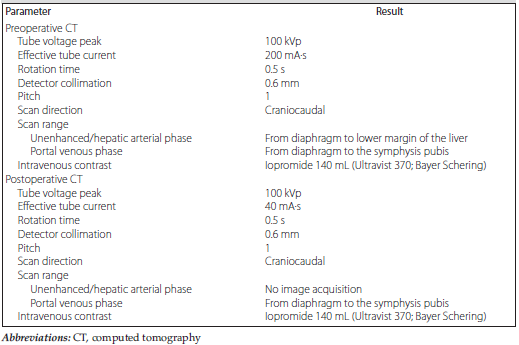
Table 1. Computed Tomography Scan Parameters
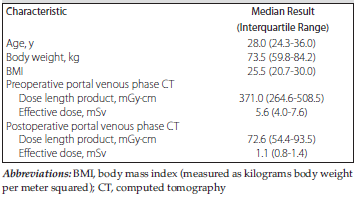
Table 2. Characteristics of the Study Population (n = 80; 40 Male and 40 Female Participants)
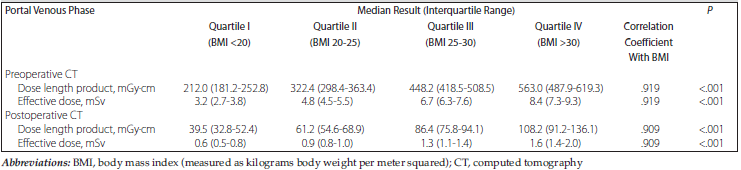
Table 3. Radiation Dose of Preoperative and Postoperative Portal Venous Phase Computed Tomography According To Body Mass Index Subgroups and Correlation With Body Mass Index