Volume: 24 Issue: 2 February 2026
FULL TEXT
Management and Outcomes of Pregnancy After Kidney Transplant: A Single-Center Retrospective Study from Azerbaijan
Objectives: Kidney transplant restores fertility in female recipients with end-stage renal disease; however, pregnancy in this population is classified as a high-risk condition. Data regarding pregnancy outcomes in kidney transplant recipients within the Azerbaijani population remain limited.
Materials and Methods: A retrospective analysis was conducted on female living donor kidney transplant recipients at the State Security Service Military Hospital in Baku, Azerbaijan, from 2017 to 2024. The study evaluated demographics, immunosuppression adjust-ments, renal function, and obstetric compli-cations.
Results: Among 208 transplant cases, 13 pregnancies were identified in 10 recipients. The median age at conception was 28.3 years, with a median post-transplant interval of 32.7 months. All patients discontinued mycophenolate mofetil at 6 weeks prior to conception. Renal function remained stable, with no significant differences in serum creatinine levels between pre-pregnancy (1.05 mg/dL) and 3 months postpartum (1.07 mg/dL), and no acute rejection episodes occurred. Maternal complications included gestational hypertension (30.8%), urinary tract infections (23.1%), and physiological hydronephrosis (23.1%). The live birth rate was 92.3% (12 of 13 births). All deliveries were via cesarean section; 38.5% were premature (<37 weeks). Neonatal outcomes were positive, with no major congenital anomalies.
Conclusions: Pregnancy after kidney transplant is feasible and safe for both mother and graft under a strict multidisciplinary follow-up regimen. Despite risks of prematurity and hypertension, vigilant monitoring ensures high live birth rates without compromising graft stability.
Key words : Fertility, Immunosuppression, Kidney transplantation, Maternal complications
Introduction
End-stage renal disease (ESRD) significantly impairs fertility in female patients of childbearing age.1 However, kidney transplant (KT) successfully restores reproductive function and offers the possibility of conception.2 Although pregnancy is not contra-indicated in transplant recipients, pregnancy is classified as high-risk and requires multidisciplinary management. Successful outcomes depend heavily on preconception counseling, strict medical monitoring, and the adjustment of immunosuppressive therapy.3
Maternal and fetal complications are more frequent in transplant recipients compared with the general population.4 Common maternal risks include hypertension, preeclampsia, and urinary tract infection (UTI).5, 6 For the fetus, there are increased risks of premature delivery, low birth weight, and intrauterine growth restriction.7 Furthermore, the effect of pregnancy on long-term graft function remains a subject of debate in the recent literature.8-10
A critical aspect of managing these pregnancies is the modulation of immunosuppressive medications to prevent fetal toxicity while maintaining graft integrity. Certain agents, such as mycophenolate mofetil (MMF), are teratogenic and must be discon-tinued prior to conception.1 Conversely, calcineurin inhibitors, including tacrolimus, are generally considered safe for use during pregnancy, although these may require dose adjustments to maintain therapeutic blood levels.11
Despite the growing body of international literature, data on pregnancy outcomes in KT recipients in specific geographical regions remain limited. The aim of our present study was to present a retrospective analysis of pregnancy cases after KT in the Azerbaijani population. We report our single-center experience regarding demographic characteristics, immunosuppression management, and maternal and fetal outcomes.
Materials and Methods
Study design and population
This retrospective, single-center study was con-ducted at the Department of Kidney Diseases and Organ Transplantation, State Security Service Military Hospital, Baku, Azerbaijan. We reviewed the medical records of living donor KT recipients followed at our institution from January 2017 to 2024. The study population included female KT recipients who conceived during the posttransplant period. Inclusion criteria were defined as a confirmed pregnancy occurring after KT with available follow-up data on maternal and fetal outcomes. Patients with incomplete medical records or those lost to follow-up during the gestational period were excluded. A total cohort of 208 KT cases were reviewed during this period, from which 13 pregnancies were identified and included in this study.
Donor characteristics
All KTs included in this study were performed from living related donors or spousal donors, in accordance with national regulations and institutional ethical standards. No living unrelated donors were involved. Donors were relatives of the recipients within the first degree to fourth degree (including parents, siblings, aunts/uncles, and cousins) or legally married spouses. All donors were ≥18 years old at the time of donation.
Ethical considerations
The study protocol was approved by the Institutional Ethics Committee of the State Security Service Military Hospital. Because of the retrospective nature of the study and the anonymization of patient data, the requirement for informed consent was waived by the committee. The study was conducted in ac-cordance with the ethical standards of the 1964 Declaration of Helsinki and its later amendments.
Clinical management and immunosuppression protocol
All pregnant recipients were enrolled in a specialized, multidisciplinary follow-up program managed jointly by nephrology and obstetrics specialists. Precon-ception counseling was provided to female patients of childbearing age to optimize graft function and medication regimens prior to fertilization. Regarding immunosuppression management, the standard protocol at our center involved the modification of drug regimens to minimize teratogenic risks. Any MMF treatment was discontinued in all patients 6 weeks prior to planned conception or immediately upon confirmation of unplanned pregnancy. Maintenance immunosuppression was continued using tacrolimus and prednisolone. Tacrolimus dosages were adjusted based on therapeutic drug monitoring to maintain target trough blood levels, with a general target range of 3.5 to 4.5 ng/mL during gestation to account for pregnancy-induced changes in pharmacokinetics.
Data collection
Clinical and demographic data were extracted from hospital electronic medical records, including maternal age at conception and the interval between KT and conception. Renal function was evaluated from serum creatinine levels measured before pregnancy, during pregnancy, and 3 months after delivery. Obstetric and fetal outcomes included mode of delivery, gestational age at birth, pre-maturity defined as delivery before 37 weeks, and live birth rates. Maternal complications such as UTI, hydronephrosis, hypertension, clinically sig-nificant proteinuria, and acute allograft rejection were recorded; hydronephrosis was assessed by ultrasonography, and urinary infections were confirmed by laboratory culture.
Statistical analyses
We used SPSS software version 27 (IBM) for data analyses. We presented categorical variables as frequencies and percentages and continuous variables as medians with ranges or means ± SD, as appropriate. We compared nonparametric continuous variables in related groups with the Wilcoxon signed-rank test.
Results
Baseline characteristics
Among the 208 living donor KT cases identified during the study period, 13 pregnancies were identified in 10 female KT recipients. The median age of patients at the time of conception was 28.3 years (range, 20-36 years). The median interval from KT to conception was 32.7 months (range, 20-48 months). The primary causes of ESRD included chronic glomerulonephritis (n = 6), pyelonephritis (n = 2), and congenital anomalies (n = 2). No patient had a history of acute rejection episodes in the year preceding conception.
Immunosuppression and graft function manage-ment
Any MMF treatment was successfully discontinued in all patients 6 weeks prior to conception. Main-tenance immunosuppression during pregnancy consisted of tacrolimus and prednisolone. Tacrolimus trough blood levels were maintained at a mean level of 3.78 ± 0.5 ng/mL throughout the gestational period. The median serum creatinine level prior to pregnancy was 1.05 mg/dL (range, 0.7-1.3 mg/dL). At 3 months postpartum, the median serum creatinine was recorded as 1.07 mg/dL (range, 0.8-1.4 mg/dL), indicating no significant deteriora-tion in renal function associated with pregnancy (P = .071; Figure 1). No episodes of acute allograft rejection were observed during pregnancy or in the immediate postpartum period.
Maternal complications
Clinically significant UTIs were observed in 3 cases (23.1%) occurring at 22 weeks, 24 weeks, and 28 weeks of gestation. These cases were successfully treated with appropriate, culture-sensitive antibiotic therapy without progression to pyelonephritis. Grade 2 hydronephrosis was identified in 3 pregnant participants (23.1%); however, this was determined to be physiological hydronephrosis of pregnancy and did not result in obstructive uropathy or require intervention. Gestational hypertension occurred in 4 patients (30.8%), whereas no cases of preeclampsia or clinically significant proteinuria were observed. No cases of gestational diabetes or thromboembolic events were shown in this cohort.
Obstetric and neonatal outcomes
Of the 13 recorded pregnancies, 12 (92.3%) resulted in live births; however, 1 pregnancy resulted in a spontaneous abortion in the first trimester. In accordance with our center’s protocol for high-risk pregnancies and previous abdominal surgery, all live births were delivered via cesarean section. Premature delivery (<37 weeks of gestation) occurred in 5 participants (38.5%), and the remaining 7 deliveries were full-term. The mean gestational age at delivery was 36.5 weeks. The mean birth weight of the neonates was 2650 g (range, 2100-3400 g). All neonates had satisfactory Apgar scores (>7 at 1 minute and 5 minutes), and no major congenital anomalies were observed. Neonatal intensive care unit admission was required for 2 premature infants for transient respi-ratory support, but both infants were subsequently discharged without long-term sequelae.
Discussion
This retrospective study represents the first single-center analysis of pregnancy outcomes in KT reci-pients in Azerbaijan. Our findings showed that, with careful multidisciplinary management, pregnancy after KT can result in high live birth rates and stable maternal graft function, despite the inherent risks associated with this population. These results align with the growing body of international literature, suggesting that fertility restoration is a significant benefit of transplant and that successful posttransplant pregnancy is achievable.2,3
The restoration of fertility is a well-documented outcome of successful KT, which contrasts sharply with the low fertility rates observed in female patients with ESRD. In our cohort, the median interval between transplant and conception was 32.7 months. This finding is consistent with clinical guidelines and literature that recommend a delay of 1 to 2 years after transplant to ensure stable graft function and lower immunosuppression doses.1 The wait for this stabilization period is critical, because pregnancies conceived within the first posttransplant year have been associated with a higher risk of allograft failure and graft loss.9
A primary concern regarding pregnancy in transplant recipients is the potential effect of hyper-filtration and physiological stress on the renal allograft.10 In our study, we observed no significant deterioration in serum creatinine levels from the prepregnancy period to 3 months postpartum, and no episodes of acute rejection occurred. These findings corroborate reports by Claes and colleagues8 and Dębska-Ślizień and colleagues,4 which suggested that pregnancy does not negatively affect long-term graft survival in female recipients with preserved renal function at conception. Similarly, in a study by Başaran and colleagues,12 pregnancies in transplant recipients were evaluated, and pregnancy had no negative effect on renal function during a 2-year follow-up in patients with good baseline graft function and no severe proteinuria. This supports our observation that stable pre-pregnancy renal function can facilitate graft integrity. However, ongoing research is needed because some studies have indicated that patients with lower baseline glomerular filtration rates or preexisting hypertension may have higher risk of graft dysfunction.5,10
The management of immunosuppression poses a delicate balance between prevention of rejection and avoidance of fetal toxicity. In accordance with international consensus, our protocol mandated the discontinuation of MMF at 6 weeks prior to concep-tion due to the known association of MMF with high rates of spontaneous abortion and congenital malformations.1 We maintained patients on a regimen of tacrolimus and prednisolone. Tacrolimus is gene-rally considered safe for use during pregnancy, although its pharmacokinetics are altered by gesta-tional physiological changes. Consistent with the findings of Aktürk and colleagues,11 who emphasized the need for increased dosages to maintain therapeutic levels, we performed rigorous therapeutic drug monitoring. This proactive adjustment likely contri-buted to the absence of rejection episodes in our cohort, supporting the safety of calcineurin inhibitor-based regimens during pregnancy when carefully monitored.13
Despite favorable graft outcomes, maternal complications remain a significant challenge. We observed gestational hypertension in 30.8% of our patients. This is consistent with studies that report hypertension rates between 52% and 73% in transplant recipients.1,6 Interestingly, we did not observe any cases of preeclampsia, whereas the literature suggests an incidence rate of approximately one-third in this population.14 The absence of preeclampsia in our small cohort may be attributed to strict patient selection and the exclusion of patients with severe preexisting allograft dysfunction, or this may simply reflect the limited sample size. We observed UTIs in 23.1% of our cases, and UTI is a common complication attributed to immunosup-pression and pregnancy-related anatomical changes.1
Regarding fetal and obstetric outcomes, our study recorded a live birth rate of 92.3%, which is comparable with, or slightly higher than, rates reported in other registry analyses.4,7 Premature birth remains a persistent concern for pregnancy in a transplant recipient; 38.5% of our patients delivered before 37 weeks. This rate is elevated compared with the general population but remains consistent with other transplant cohorts for which preterm delivery rates often exceed 40% to 50%.6 Data from neighboring regions further contextualize these findings. In a large multicenter study involving 5 Middle Eastern countries, Al Duraihimh and colleagues15 reported a preterm delivery rate of 40.8% and a stillbirth rate of 7.3%. They noted that, although most pregnancies had good outcomes, there was an increased incidence of preeclampsia and low birth weight, highlighting the universal challenges of managing these high-risk pregnancies across different populations. Notably, 100% of deliveries in our study were performed via cesarean section. Although the literature reports high rates of cesarean delivery in transplant recipients, often ranging from 60% to 80%,6,10 our universal applica-tion of this mode of delivery reflects a center-specific protocol aimed to prioritize the safety of the high-risk mother and the allograft, particularly in patients with a history of previous abdominal surgery. Importantly, despite the high rate of premature deliveries, neonatal outcomes were generally good, with satisfactory Apgar scores and no major congenital anomalies, supporting the view that successful pregnancy is a realistic goal for these patients.16
Our study had several limitations. First, the retrospective design and small sample size limited the statistical power and the generalizability of the findings. Second, the absence of a control group of pregnant participants who had not received a transplant or nonpregnant transplant recipients restricted our ability to draw direct comparative conclusions regarding graft decline. Finally, as a single-center study, these outcomes may reflect specific institutional protocols that differ from other regions. Despite these limitations, our study provides valuable data on the Azerbaijani population, an underrepresented group in the global transplant literature.
Conclusions
Our single-center experience confirmed that preg-nancy after KT is feasible and safe for both mother and graft when managed by a multidisciplinary team. Preconception counseling, timely modification of immunosuppression, and vigilant monitoring of graft function are essential components of care. Although the risks of prematurity and maternal hypertension persist, the high rate of successful live births reinforces the importance of supporting reproductive autonomy in female kidney transplant recipients. Future multi-center studies with larger cohorts are needed to further refine management strategies and improve long-term outcomes in this specific demographic group.
References:
- Chittka D, Hutchinson JA. Pregnancy after renal transplantation. Transplantation. 2017;101(4):675-678. doi:10.1097/TP.0000000000001649
CrossRef - PubMed - Kleinclauss F, Timsit MO, Thuret R. Sexuality, fertility and pregnancy after kidney transplantation. Prog Urol. 2016;26(15):1122-1131. doi:10.1016/j.purol.2016.08.014
CrossRef - PubMed - McKay DB, Josephson MA. Pregnancy after kidney transplantation. Clin J Am Soc Nephrol. 2008;3 Suppl 2(Suppl 2):S117-S1125. doi:10.2215/CJN.02980707
CrossRef - PubMed - Dębska-Ślizień A, Gałgowska J, Chamienia A, et al. Pregnancy after kidney transplantation: a single-center experience and review of the literature. Transplant Proc. 2014;46(8):2668-2672. doi:10.1016/j.transproceed.2014.08.015
CrossRef - PubMed - Kovač D, Kovač L, Mertelj T, Steblovnik L. Pregnancy after kidney transplantation. Transplant Proc. 2021;53(3):1080-1084. doi:10.1016/j.transproceed.2020.11.003
CrossRef - PubMed - Mariano S, Guida JPS, Sousa MV, et al. Pregnancy among women with kidney transplantation: a 20-years single-center registry. Rev Bras Ginecol Obstet. 2019;41(7):419-424. doi:10.1055/s-0039-1688834
CrossRef - PubMed - Devresse A, Jassogne C, Hubinont C, et al. Pregnancy outcomes after kidney transplantation and long-term evolution of children: a single center experience. Transplant Proc. 2022;54(3):652-657. doi:10.1016/j.transproceed.2022.01.019
CrossRef - PubMed - Claes KJ. Pregnancy after kidney transplantation and its impact on graft function: some answers but several questions still remain. Transplantation. 2022;106(6):1109-1110. doi:10.1097/TP.0000000000003933
CrossRef - PubMed - Rose C, Gill J, Zalunardo N, Johnston O, Mehrotra A, Gill JS. Timing of pregnancy after kidney transplantation and risk of allograft failure. Am J Transplant. 2016;16(8):2360-2367. doi:10.1111/ajt.13773
CrossRef - PubMed - Schwarz A, Schmitt R, Einecke G, et al. Graft function and pregnancy outcomes after kidney transplantation. BMC Nephrol. 2022;23(1):27. doi:10.1186/s12882-022-02665-2
CrossRef - PubMed - Aktürk S, Çelebi ZK, Erdoğmuş Ş, et al. Pregnancy after kidney transplantation: outcomes, tacrolimus doses, and trough levels. Transplant Proc. 2015;47(5):1442-1444. doi:10.1016/j.transproceed.2015.04.041
CrossRef - PubMed - Başaran O, Emiroğlu R, Seçme S, Moray G, Haberal M. Pregnancy and renal transplantation. Transplant Proc. 2004;36(1):122-124. doi:10.1016/j.transproceed.2003.11.011
CrossRef - PubMed - Al-Otaibi T, Gheith OA, Nagib AM, et al. Pregnancy after renal transplant: single center experience from the middle east in patients using different calcineurin inhibitors. Exp Clin Transplant. 2019;17(Suppl 1):99-104. doi:10.6002/ect.MESOT2018.O42
CrossRef - PubMed - Radaelli E, Meinerz G, Jacobina LP, et al. Pregnancy after kidney transplantation: 40 years single-center experience. J Bras Nefrol. 2024;46(2):e20230061. doi:10.1590/2175-8239-JBN-2023-0061en
CrossRef - PubMed - Al Duraihimh H, Ghamdi G, Moussa D, et al. Outcome of 234 pregnancies in 140 renal transplant recipients from five Middle Eastern countries. Transplantation. 2008;85(6):840-843. doi:10.1097/TP.0b013e318166ac45
CrossRef - PubMed - Dębska-Ślizień A, Gałgowska J, Bułło-Piontecka B, et al. Pregnancy after kidney transplantation with maternal and pediatric outcomes: a single-center experience. Transplant Proc. 2020;52(8):2430-2435. doi:10.1016/j.transproceed.2020.01.122
CrossRef - PubMed

Volume : 24
Issue : 2
Pages : 129 - 133
DOI : 10.6002/ect.2025.0303
From the 1Scientific Research Center, State Security Service Military Hospital; 2Scientific Research Center, Azerbaijan Medical University; the 3Karayev Institute of Physiology, Minister of Science and Education; the 4Department of Kidney Diseases and Organ Transplantation, State Security Service Military Hospital; and the 5Department of Radiology, Azerbaijan Medical University, Baku, Azerbaijan
Acknowledgements: The authors have not received any funding or grants in support of the presented research or for the preparation of this work and have no declarations of potential conflicts of interest.
Corresponding author: Rashad Sholan, Scientific Research Center, State Security Service Military Hospital, Badamdar, Mektebli Street, Baku City, Azerbaijan AZ1000
Phone: +994 50 210 4720 E-mail: sholanrashad@gmail.com
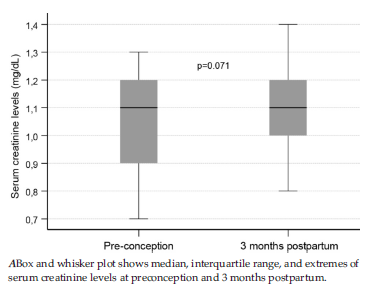
Figure 1. Serum Creatinine Levels at Preconception and 3 Months Postpartum