Volume: 24 Issue: 1 January 2026
FULL TEXT
An Unusual Case of Persistent Vitelline Vein in a Pediatric Liver Transplant Recipient: A Case Report
The portal vein is crucial for supplying the liver, and its embryonic development is complex. Variations in portal vein formation can lead to significant surgical challenges, particularly in liver transplantation. Here, we report a unique case of a persistent left portal vein in a 2-year-old patient with Alagille syndrome. During the recipient hepatectomy, the portal vein was found to have an unusual course, traversing behind the pancreas with a more caudal confluence than typical. Although no adverse outcomes occurred during transplant, this variation required a longer and more angular anastomosis, potentially increasing the risk of tension, torsion, and angulation. These variations may contribute to complications, such as anastomosis failure or increased vascular injury. Although no vascular complications arose in this case, the persistence of the left portal vein underscores the importance of surgeons recognizing embryological variations. Preoperative radiological assessment is crucial for anticipating potential challenges, ensuring a safer surgical procedure, and improving patient outcomes.
Key words : Embryogenesis, Liver transplantation, Portal vein, Portal venous anatomy
Introduction
The portal vein (PV) represents the main vascular conduit supplying the liver with nutrient-rich lood from the gastrointestinal tract and spleen. Embryologic development of the PV occurs between week 4 and week 12 of gestation through a complex remodeling of the paired vitelline and umbilical venous systems. During this process, cranio-caudal, ventral, and dorsal anastomoses undergo selective regression, ultimately leading to persistence of the right vitelline vein as the definitive PV. The left vitelline vein regresses, maintaining a transient con-nection with the ductus venosus before disappearing at birth. Given the intricacy of this developmental sequence, variations or anomalies in portal venous anatomy may arise, many of which have important implications for diagnostic evaluation, preoperative planning, and the conduct of hepatobiliary and transplant surgery.1,2 Here, we present a case of a persistent left vitelline vein in a 2-year-old patient, which has not been previously reported in the literature. However, this persistence did not result in any adversity. We also discuss PV embryogenesis.
The study was conducted in accordance with the Declaration of Helsinki criteria and Declaration of Istanbul criteria. Because this study was a retros-pective study with anonymized data analyses, ethical committee approval was not required. Written informed consent was obtained from the patient’s legal guardians for publication and can be provided if requested on a reasonable term.
Case Report
A 2-year-old girl was referred to our organ transplant center because of increased pruritus, jaundice, and growth retardation. Because of the patient’s phe-notype and clinical treatment, although not supported by genetic tests, the patient was diagnosed with Alagille syndrome and received the left lateral section from her father after volumetric studies. During the preoperative radiological assessment, a PV was noticed to have a longer course and altered entry into the liver pedicle. The PV traversed behind the body of the pancreas with a more caudal confluence than usual and had more medialized entry to the portal hilus (Figure 1). The graft’s PV was anastomosed by using 6/0 Prolene sutures to the recipient’s PV. Doppler ultrasonography performed perioperatively revealed patent anastomosis with adequate flow. During the postoperative period, no complications were shown regarding PV anastomosis. However, on day 12 after the procedure, the patient developed acute abdomen symptoms and became septic.
A diagnostic laparotomy was performed, and a small perforation was seen in the small intestine.The perforated area was primarily repaired, and the patient was transferred to the pediatric intensive care unit. However, the patient had upper gastrointestinal bleeding, and sepsis became exacerbated. The patient died from respiratory failure and sepsis on day 18 posttransplant (on day 5 after the second operation).
Discussion
The PV constitutes the primary vascular supply of
the liver, arising through a highly regulated sequence
of embryologic events. Development proceeds in 3 phases, beginning with paired umbilical and vitelline veins interconnected by cranio-caudal, caudo-ventral, and dorsal anastomoses. Subsequent regression of caudo-ventral channels produces 2 portal trunks. Ultimately, the right vitelline vein persists to form the definitive PV, whereas the left regresses after transiently connecting with the ductus venosus.2
Although literature regarding PV anastomosis failure is scarce, Lee and colleagues showed that arterial wall hypoxia increases with increased anastomosis tension in New Zealand White rabbits.3 In this case, the left vitelline vein persisted in establishing the left PV and the right PV regressed. Persistence of the left vitelline vein required further dissection within the posterior of the pancreas, leading to longer and stretched anastomosis with more angular twisting than usual. This occurrence could lead to increased injury risk to pancreatic structures and increased anastomosis failure, possibility from angulation, tension, and length. In living donor liver transplant, the presence of a variant recipient PV combined with a graft possessing a short PV can result in excessive tension at the anastomotic site, thereby increasing the technical difficulty and risk of vascular complications.
In the literature, the most common PV anomaly is trifurcation, with a prevalence from 8% to 10% in the general population.4,5 However, published data are limited regarding the prevalence of persistent vitelline veins. Such anomalies have been reported in case studies, particularly in the fields of pediatric surgery, liver transplantation, and anatomy. Variations in PV anatomy can have substantial implications for surgical procedures, often requiring alterations to conventional approaches. Li and colleagues reported a case in which an anastomosis was created between the inferior mesenteric vein and the graft PV in the absence of a recipient PV, utilizing the recipient’s great saphenous vein as an interposition graft. Although the anastomosis itself was successful, the patient suc-cumbed to respiratory complications.6 The use of the great saphenous vein as a graft, while providing immediate solutions, may increase the risk of long-term venous complications, such as thrombosis.
Another PV anomaly was described by Fuji and colleagues, in which the recipient’s PV formed a circular ring between the right PV branches and the left main PV. The group successfully addressed this anomaly by ligating the right PV branches and creating an anastomosis between the graft hepatic vein and the recipient’s left PV.7 These additional surgical steps may have increased the risk of bleeding and heightened the susceptibility to PV thrombosis.
Maetani and colleagues presented an unreported PV anomaly in which the ligamentum teres were abnormally positioned more laterally, lying over the gallbladder and branching toward the right hepatic lobe.8 This variation could potentially result in intraoperative bleeding during donor cholecystectomy and hilar dissection. Institutional experience and collaborative multidisciplinary teamwork play critical roles in minimizing complications during liver transplant.
Yılmaz and colleagues reported that the Malatya approach, in which the surgical team used a funnel-shaped interposition graft made from the saphenous vein conduit, was associated with a substantially lower incidence of PV thrombosis and improved survival rates.9
The success of liver transplant in patients with PV anomalies is intricately linked to the surgical team’s expertise in preoperative assessment and vascular reconstruction, influencing the outcomes of these complex procedures. In our case, the proximal and distal ends of the portal anastomosis showed an atypical torque; however, no vascular complications were seen. To avoid such complications in cases of variations, surgeons should also consider the embryology of the portal-venous system and carefully inspect the vasculature of the liver by radiological studies.
Conclusions
The PV can have different shapes and sizes as a result of embryological variations, making surgery more difficult and increasing the risk of complications. In our case, the persistence of the left PV could have led to problems like anastomosis failure, bleeding, or damage to anatomical structure. To reduce these risks, transplant teams should use thorough preoperative imaging and radiological tests to spot unusual vein structures. These steps can help surgeons plan better and improve patient outcomes by avoiding complications.
References:
- Ober EA, Lemaigre FP. Development of the liver: insights into organ and tissue morphogenesis. J Hepatol. 2018;68(5):1049-1062. doi:10.1016/j.jhep.2018.01.005
CrossRef - PubMed - Hikspoors J, Peeters M, Mekonen HK, et al. The fate of the vitelline and umbilical veins during the development of the human liver. J Anat. 2017;231(5):718-735. doi:10.1111/joa.12671
CrossRef - PubMed - Lee ES, Bauer GE, Caldwell MP, Santilli SM. Association of artery wall hypoxia and cellular proliferation at a vascular anastomosis. J Surg Res. 2000;91(1):32-37. doi:10.1006/jsre.2000.5891
CrossRef - PubMed4. Valenzuela-Fuenzalida JJ, Rodríguez-Osorio B, Salgado-Torres C, et al. A systematic review and meta-analysis: prevalence and clinical implications of anatomical variants of the hepatic portal vein. Sci Rep. 2024;14(1):30002. doi:10.1038/s41598-024-81543-3. Published correction appears in Sci Rep. 2025;15(1):4418.
CrossRef - PubMed - Kulkarni NM, Griffin MO Jr, O’Connor SD, Sudakoff G. Sonographic appearances of portal vein abnormalities. Ultrasound Q. 2019;35(4):316-324. doi:10.1097/RUQ.0000000000000421
CrossRef - PubMed - Li P, Hidaka M, Hamada T, et al. Living donor liver transplantation for congenital absence of portal vein in portal venous reconstruction with a great saphenous vein graft. Surg Case Rep. 2020;6(1):153. doi:10.1186/s40792-020-00916-8
CrossRef - PubMed - Fujii TY, Amer K, Mirghany M, Kobayashi H, Hatata Y, Tanaka K. A successful liver transplantation from a living donor with a special type of portal vein anomaly:“the circle of portal vein.” J Liver Transplant. 2022;5:100065. doi:10.1016/j.liver.2021.100065
CrossRef - PubMed:
- Maetani Y, Itoh K, Kojima N, et al. Portal vein anomaly associated with deviation of the ligamentum teres to the right and malposition of the gallbladder. Radiology. 1998;207(3):723-728. doi:10.1148/radiology.207.3.9609896
CrossRef - PubMed - Yilmaz S, Kayaalp C, Isik B, et al. Reconstruction of anomalous portal venous branching in right lobe living donor liver transplantation: Malatya approach. Liver Transpl. 2017;23(6):751-761. doi:10.1002/lt.24753
CrossRef - PubMed

Volume : 24
Issue : 1
Pages : 83 - 85
DOI : 10.6002/ect.2025.0179
From the 1Department of General Surgery, Faculty of Medicine, İstanbul University, Istanbul, Turkey; and the 2Liver Transplantation Center, Koç University Hospital, Koç University, Istanbul, Turkey
Acknowledgements: The authors have not received any funding or grants in support of the presented research or for the preparation of this work and have no declarations of potential conflicts of interest.
Corresponding author: Oğuzhan Şal, Department of General Surgery, Faculty of Medicine, İstanbul University, Istanbul, Turkey
Phone: +90 539 945 37 39 E-mail: osal13@ku.edu.tr
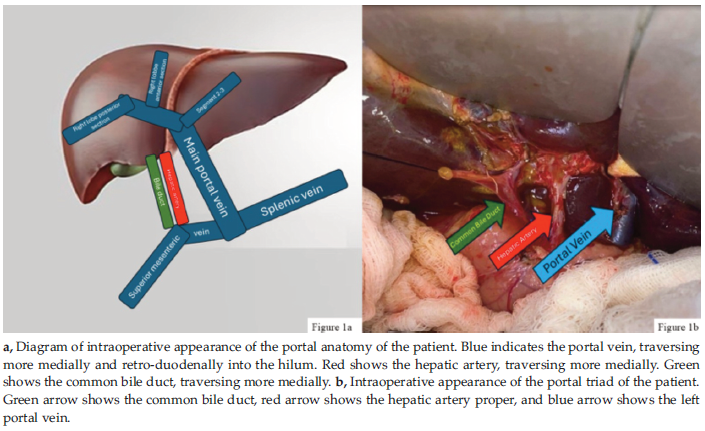
Figure 1. Intraoperative Visualization of Variated Portal Triad Anatomy