Volume: 24 Issue: 1 January 2026
FULL TEXT
Umbilical Fissure Vein Anatomy and Its Importance in Monosegment 3 Graft Procurement for Liver Transplant: A Missed Variable
Liver transplant in infants weighing less than 6 kg presents substantial technical challenges, prompting various innovations to enhance outcomes. To mitigate the risk of “large-for-size syndrome,” initial left lateral segment transplant techniques have evolved, including use of monosegment grafts procured along anatomical planes. Thorough understanding of segmental liver anatomy on radiological imaging is crucial for planning of monosegment grafts. Failure to identify anatomical variations preoperatively can lead to unexpected surgical findings and potentially affect outcomes. Here, we report a living donor liver transplant in which a segment 3 graft was used in a 5.5-kg infant with biliary atresia. We highlight 2 novel surgical issues encountered: (1) an unusual drainage pattern of the umbilical fissure vein in the donor and (2) the innovative application of a Contegra bovine jugular vein graft to reconstruct the atretic portal vein in the recipient. With adequate awareness and meticulous planning, successful outcomes can be achieved in most instances. Furthermore, the use of bovine jugular vein conduits represents an innovative approach in liver transplant. In situations where deceased donor grafts are not available, this option could potentially offer advantages over synthetic expanded polytetrafluoroethylene grafts. Our patient was discharged on postoperative day 16 with normal liver function tests and continues to have normal liver Doppler and function test results at 3 years after liver transplant.
Key words : Biliary atresia, Infant, Large-for-size syndrome
Introduction
Liver transplant in infants weighing less than 6 kg presents substantial technical challenges, prompting various innovations to enhance outcomes. To mitigate the risk of “large-for-size syndrome,” initial left lateral segment (LLS) transplant techniques have evolved to include reduced, hyperreduced, anatomical segment 3 (S3), and anatomical segment 2 (S2) grafts.
Although monosegment grafts procured along anatomical planes appear promising, their widespread adoption remains limited. Limitations may be attri-buted to difficulties in accurately assessing intrahepatic segmental pedicles by both radiologists and surgeons, variations in vascular anatomy, and concerns about potential injury to the graft pedicle.
Thorough understanding of segmental liver anatomy on radiological imaging is crucial for planning of monosegment grafts. Failure to identify anatomical variations preoperatively can lead to unexpected surgical findings and potentially affect outcomes.
In this report, we present a case of living donor liver transplant in which an S3 graft was used in a 5.5-kg infant with biliary atresia. We highlight 2 novel surgical issues encountered: (1) an unusual drainage pattern of the umbilical fissure vein (UFV) in the donor and (2) the innovative application of a Contegra bovine jugular vein graft to reconstruct the atretic portal vein in the recipient. To the best of our knowledge, this combination of findings and surgical technique has not been previously documented. This study received approval from our institution’s review board and ethics committee.
Case Report
An 11-month-old female infant presented with biliary atresia and Caroli disease at our center. She had previously undergone a Kasai portoenterostomy at 2 months of age. However, because of failure of this operation, indicated by increasing jaundice and recurrent cholangitis, liver transplant had been recommended.
Initial evaluation showed bilirubin level of 11.9 mg/dL, albumin level of 2.0 mg/dL, and inter-national normalized ratio of 1.4. A computed tomography (CT) scan revealed features consistent with liver cirrhosis and portal hypertension, along with an atretic portal vein above the confluence of the superior mesenteric and splenic veins (Figure 1a). Despite receiving nutritional support in the weeks leading up to the surgery, she presented with severe malnourishment, weighing 5.5 kg and measuring 67 cm in height, which is a weight-for-height ratio below -3 standard deviations according to World Health Organization standards.
The infant’s 36-year-old mother was assessed as a potential living liver donor. Computed tomography volumetry (Synapse 3d version 5.2, Fujifilm) indi-cated that the LLS with a predicted volume of 305 g was likely too large for the recipient, resulting in an estimated graft-to-recipient weight ratio (GRWR) of 5.54%. The estimated volumes of the individual segments were 95 g for S2 and 210 g for S3.
Although the segmental arterial and portal vein anatomy were standard, a notable anatomical variation was identified: a large UFV draining approximately 23% of S3 into the middle hepatic vein (MHV) (Figure 1b). Despite this variation, an S3 graft was selected over an S2 graft because of its more favorable estimated GRWR.
Donor surgery
The donor surgery was conducted in accordance with standard principles, including hilar dissection and suprahepatic looping of the left hepatic vein (LHV). Liver parenchymal transection was performed, maintaining a 5-mm margin to the right of the falciform ligament.
During the cephalad part of the LLS parenchymal transection, a 5-mm UFV was encountered that drained into the MHV. As anticipated based on the CT images, the UFV’s location and course were as predicted. The UFV was subsequently divided and secured.
The surgical plan was started next, which involved resecting S2 from the LLS to enable the procurement of the remaining S3 graft. Dissection within the umbilical fissure allowed for the isolation and clamping of the S2 pedicle. This step delineated the separation line between S2 and S3 (Figure 2a).
After the initial transection, the course of the LHV within S3 was confirmed by Doppler ultrasonog-raphy before the parenchymal transection between S2 and S3 was completed (Figure 2b). The resected S2 segment weighed 88 g and was discarded.
The S3 graft was then procured and flushed with University of Wisconsin preservation solution. The final weight of the S3 graft was 221 g, resulting in a GRWR of 4.01%.
Recipient surgery
During the recipient hepatectomy, we utilized the standard “vena cava preservation technique.” Given the lack of available vein grafts from deceased donors, we opted for a Contegra bovine internal jugular vein graft (12 mm diameter) to replace the entire suprapancreatic section of the atretic portal vein (Figure 2c).
The proximal anastomosis was successfully performed just distal to the confluence of the splenic and superior mesenteric veins. The S3 graft was implanted with use of a standard technique analo-gous to LLS implantation.
Upon reperfusion, we observed an area of congestion on the liver surface, affecting appro-ximately 23% near the falciform ligament, which corresponds to the UFV drainage area (Figure 2d). Considering the good GRWR, we decided to accept this partial congestion and intentionally avoided a potentially complex reconstruction of the UFV. Doppler ultrasonography after reperfusion confir-med good inflow and triphasic outflow in the main LHV, effectively draining the majority of the S3 graft.
After completion of graft implantation and biliary anastomosis (hepaticojejunostomy), a tension-free abdominal closure was achieved. The postoperative period progressed without complications, and a CT angiogram on posttransplant day 10 showed normal findings (Figure 2e). The infant was discharged on postoperative day 16 with normal liver function tests.
At the most recent hospital follow-up, 3 years after liver transplant, the patient is doing well, with normal liver Doppler and function test results.
Discussion
Large-for-size grafts in liver transplantation for neonates and small infants receiving an LLS from adult donors present a substantial challenge asso-ciated with various complications. These grafts are typically defined as having a GRWR exceeding 4%. Studies, such as the one by Kiuchi and colleagues, have indicated a higher incidence of vascular complications and acute rejection in recipients of large-for-size grafts.1 In addition, insufficient blood flow to the revascularized liver and the limited size of the infant’s abdominal cavity can further compromise tissue oxygenation due to graft compression.2,3 The necessity for synthetic mesh and delayed abdominal wall closure can also elevate the risk of abdominal wall infections.
To address this critical issue, several specialized approaches have been developed for these small infants, including the use of reduced or hyperre-duced grafts, as well as monosegment grafts. When the GRWR exceeds 4%, reduction of the graft size to that of a monosegment or hyperreduced graft beco-mes essential. Both types of grafts can potentially mitigate the problems associated with large-for-size grafts by simply decreasing the volume of the LLS graft.
Direct comparative data on the outcomes of monosegment and hyperreduced grafts to inform the optimal graft choice for very small infants are presently scarce. The advantage of using a reduced LLS graft lies in the technical simplicity of the procedure and the shorter operative time required, making this a viable option when the LLS GRWR is between 4% and 5%. However, this approach has limitations, including non-anatomical resection and difficulty in substantially reducing both the graft volume and thickness. Consequently, the resulting reduced graft volume may sometimes be insufficient, and achieving primary abdominal closure can be challenging, potentially leading to graft compression.4 In contrast, S2 or S3 mono-segment grafts, typically used when the LLS GRWR is greater than 5%, are technically more demanding but offer a more anatomical resection, potentially reducing the likelihood of bile leaks. A thorough understanding of the segmental pedicles at the umbilical fissure is crucial for successful outcomes with these grafts.
In small infants, monosegment grafts are generally preferred over LLS grafts to address the size disparity between graft volumes and recipient weights. Between S2 and S3, S2 may be favored when there is a need to reduce the anteroposterior thickness of the graft. However, when S2 is small (as in our case) and unable to provide a GRWR greater than 2%, an S3 graft is often considered more suitable.
A particular anatomical consideration in our case was the unusual drainage of the UFV into the MHV. Although the UFV typically drains into the LHV in most cases (87.2%), drainage into the MHV is less frequent (7.3%).5 When the UFV drains into the MHV, drainage traverses the parenchyma of segment 4 and is encountered during transection along the plane of the LLS. According to one study, the UFV drains only about 18.5% of the area of S3, with the main trunk of the LHV draining the larger portion.6 In our case, a CT scan estimated the weight of S3 to be around 221 g, with a UFV drainage territory of 23%. We carefully secured and divided the UFV and proceeded with the LLS transection, ultimately retrieving the S3 graft after discarding S2. Our decision not to reconstruct the UFV outflow was primarily based on 2 factors: (1) even after excluding the volume of the liver parenchyma drained by the UFV (~23%), the calculated functional liver volume was about 170.1 g (77% of 221 g), providing an estimated functional GRWR of 3.09%, and (2) the UFV ran parallel to the LHV and opened relatively far from the LHV on the cut surface, suggesting that reconstructing it into a common orifice might create a pull or kink, potentially compromising LHV outflow as well. This uncommon variation of UFV drainage is rarely emphasized in the published literature concerning LLS and monosegment grafts.
It is important to note that the decision to not reconstruct the UFV should not be considered standard practice. In cases with a functional GRWR below 2% or a large UFV drainage area (greater than 25% to 30%), reconstruction and implantation of the vein into the inferior vena cava may be necessary.
A crucial caution is that an extremely rare anomaly has been reported where the entire S3 segment drains into the MHV, with only S2 draining into the main LHV. Such a vein should not be mistaken for the UFV, and reconstruction would be mandatory for both S3 and small LLS grafts.7
Another challenge in our case was atresia of the portal vein, compounded by the limited availability of vein grafts from deceased donors in our region. Given the higher thrombogenic potential of synthetic polytetrafluoroethylene grafts and the expectation of long-term survival in infants, we opted to use a Contegra bovine jugular vein graft. Contegra is a glutaraldehyde-crosslinked, heterologous bovine jugular vein graft that has been well-studied for its use and clinical performance in pediatric cardiac patients.8,9
Published studies in pediatric cardiac patients have indicated a lower risk of reintervention and replacement over a 5- to 10-year period with Con-tegra conduits compared with homografts, with comparable complication rates.8-10 Of note, throm-bosis of the Contegra conduit has not been a commonly reported finding in our literature review.11
To the best of our knowledge, the use of a bovine jugular vein for portal vein reconstruction has not been previously documented in liver transplantation.
Conclusions
Segment 3 liver grafts present a valuable alternative to S2 grafts, especially when S2 does not yield sufficient GRWR. However, awareness is needed of a less commonly considered anatomical variation that can diminish the functional liver mass in both S3 and LLS grafts. This reduction in functional volume may lead to a clinical picture resembling small-for-size syndrome.
Therefore, careful consideration of this potential volume loss is crucial during the pretransplant planning phase. With adequate awareness and meticulous planning, successful outcomes can be achieved in most instances.
Furthermore, the use of bovine jugular vein conduits represents an innovative approach in liver transplantation. In situations where grafts from deceased donors are not available, this option could potentially offer advantages over synthetic expanded polytetrafluoroethylene grafts.
References:
- Kiuchi T, Kasahara M, Uryuhara K, et al. Impact of graft size mismatching on graft prognosis in liver transplantation from living donors. Transplantation. 1999;67(2):321-327. doi:10.1097/00007890-199901270-00024
CrossRef - PubMed - Kasahara M, Kaihara S, Oike F, et al. Living-donor liver transplantation with monosegments. Transplantation. 2003;76(4):694-696. doi:10.1097/01.TP.0000079446.94204.F9
CrossRef - PubMed - Kasahara M, Uryuhara K, Kaihara S, et al. Monosegmental living donor liver transplantation. Transplant Proc. 2003;35:1425-1426. doi:10.1016/s0041-1345(03)00445-7
CrossRef - PubMed - Yamada N, Sanada Y, Hirata Y, et al. Selection of living donor liver grafts for patients weighing 6kg or less. Liver Transpl. 2015;21(2):233-238. doi:10.1002/lt.24048
CrossRef - PubMed - Shindoh J, Kokudo N, Satou S, Sugawara Y, Makuuchi M. Volumetric analyses of venous variations in the left liver using 3D-CT venography. Hepatogastroenterology. 2006;53(72):831-835.
CrossRef:
PubMed - Tani K, Shindoh J, Akamatsu N, et al. Venous drainage map of the liver for complex hepatobiliary surgery and liver transplantation. HPB (Oxford). 2016;18(12):1031-1038. doi:10.1016/j.hpb.2016.08.007
CrossRef - PubMed - Dar FS, Faraj W, Heaton ND, Rela M. Variation in the venous drainage of left lateral segment liver graft requiring reconstruction of segment III vein with donor iliac artery. Liver Transpl. 2008;14(4):576-579. doi:10.1002/lt.21391
CrossRef - PubMed - Sandica E, Boethig D, Blanz U, et al. Bovine jugular veins versus homografts in the pulmonary position: an analysis across two centers and 711 patients-conventional comparisons and time status graphs as a new approach. Thorac Cardiovasc Surg. 2016;64(1):25-35. doi:10.1055/s-0035-1554962.
CrossRef - PubMed - Sarikouch S, Horke A, Tudorache I, et al. Decellularized fresh homografts for pulmonary valve replacement: a decade of clinical experience. Eur J Cardiothorac Surg. 2016;50(2):281-290. doi:10.1093/ejcts/ezw050
CrossRef - PubMed - Yong MS, Yim D, d’Udekem Y, et al. Medium-term outcomes of bovine jugular vein graft and homograft conduits in children. ANZ J Surg. 2015;85(5):381-385. doi:10.1111/ans.13018
CrossRef - PubMed - Bilal MS, Avsar MK, Yildirim O, et al. Double switch procedure and surgical alternatives for the treatment of congenitally corrected transposition of the great arteries. J Card Surg. 2016;31(4):231-236. doi:10.1111/jocs.12728
CrossRef - PubMed

Volume : 24
Issue : 1
Pages : 78 - 82
DOI : 10.6002/ect.2025.139
From the 1Department of Minimal Access HPB Surgery & Liver Transplantation, Artemis Hospital, Gurgaon, Haryana, India; and the 2Department of HPB Surgery and Liver Transplantation, Apollo Gleneagles Hospital, Kolkata, India
Acknowledgements: The authors have not received any funding or grants in support of the presented research or for the preparation of this work and have no declarations of potential conflicts of interest.
Corresponding author: Giriraj Bora, Surgical Gastroenterology, Department of Minimal Access HPB Surgery & Liver Transplantation, Artemis Hospital, Gurgaon, Haryana, India
Phone: +91 987 370 8979 E-mail: girirajbora2@gmail.com
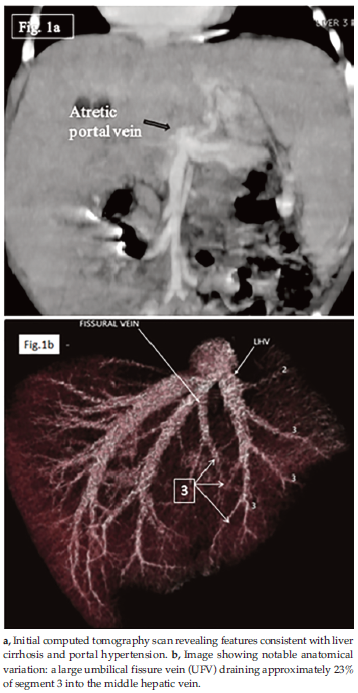
Figure 1. Atretic Portal Vein in an Infant With Cirrhosis and Donor Umbilical Fissure Vein Variant
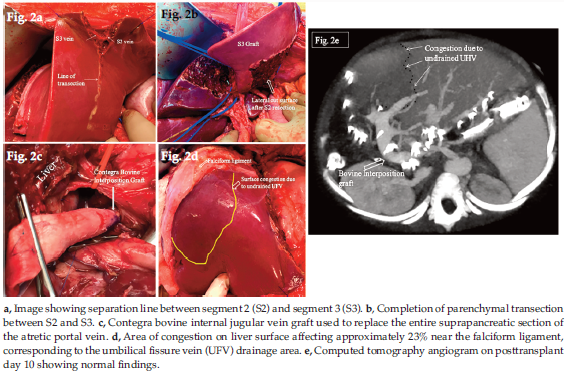
Figure 2. Donor Segment 3 Graft Harvest, Contegra Portal Vein Reconstruction, Umbilical Fissure Vein Congestion, and Posttransplant Computed Tomography Angiography