Volume: 24 Issue: 1 January 2026
FULL TEXT
No Association of Sex or Racial Factors With Outcomes in Adult Intestine-Only Transplant: A United Network for Organ Sharing Database Analysis
Objectives: Adult intestine-only transplant is an uncommon procedure for intestinal failure. We assessed demographic factors associated with recipient mortality and graft failure rates in adult intestine-only transplant recipients.
Materials and Methods: Data for cases of adult intestine-only transplants diagnosed for the period 2004-2024 were collected from the United Network for Organ Sharing database. Demographic characteristics of recipients, mortality, and graft survival were evaluated among racial groups.
Results: A total of 896 transplants were included. Most were White (75.2%) and were female (56.3%). There were no differences in graft failure or recipient mortality by race/ethnicity or sex. Race/ethnicity was not associated with graft survival for adult intestine-only transplant. Recipient mortality was greater with older recipients (hazard ratio = 1.022; P = .007). Basiliximab/daclizumab was associated with a higher mortality rate (hazard ratio = 1.001; P < .001). There were no racial disparities and no differences in regimens for induction immunosuppression or maintenance immunosuppression with regard to recipient mortality or graft failure.
Conclusions: Recipient age and basiliximab/daclizumab may significantly influence adult intestine-only transplant recipient survival but not graft outcomes.
Key words : Adult intestine-only transplantation, Graft failure, Racial disparity, Recipient survival
Introduction
The rate of adult intestine-only transplant (ITx) in the United States has been relatively consistent in recent years with around 85 performed annually.1 In adults, the most common cause of intestinal failure requiring ITx is short-bowel syndrome, which typically ma-nifests after extensive bowel resections secondary to mesenteric ischemia, inflammatory bowel disease, or small-bowel tumors and desmoid tumors.2-4 For solid-organ transplant, the rates of mortality, graft survival, and infection collectively contribute to improved outcomes due to improvement in surgical techniques, advances in immunosuppression, and enhanced antimicrobial prophylaxis.5,6 However, ITx mortality and graft failure rates are worse than those of other solid-organ transplants.1
Many clinical factors influence ITx outcomes, including recipient etiology, perioperative immuno-suppression, donor cause of death, and graft selection regarding size and immunologic compatibility with the recipient.1 However, the effects of recipient demographics on ITx outcomes are poorly understood. For pediatric ITx, a multicenter analysis published in 2014 demonstrated that racial disparities affect both the likelihood to receive ITx and the likelihood of mortality.7 In adult ITx, however, the disparities of sex, age, and ethnicity and race are less studied versus adult transplants of other organs. Demographic variables may be implicated in ITx outcomes, but further exploration of possible disparities is warranted. Therefore, we assessed the effects of sex, age, and race and ethnicity on ITx mortality and graft survival using the United Network for Organ Sharing (UNOS) database.
Materials and Methods
Data and data sources
A retrospective cohort analysis of adult intestine-only adult transplants in the UNOS database from January 1, 2004, to January 1, 2024, was performed. Separate UNOS data files with follow-up and demographic information were merged with files containing information on transplant outcomes such as graft failure and mortality.
Population and variables
Recipients of ITx were selected, and rates of graft failure and recipient mortality were collected. Cases with recipients who were <18 years old were excluded. Recipient covariates included sex, age, race/ethnicity, retransplant status, wait list duration, and body
mass index. Donor covariates included sex, age, race/ethnicity, body mass index, hypertension or diabetes, and donor after circulatory death status and expanded criteria donor (ECD) status. Additional organ-related or transplant-related variables were human leukocyte antigen mismatch, geographic region of organ sharing status (local, regional, or national), etiology necessitating ITx, and cause of
graft failure. Induction immunosuppression regimens included antithymocyte globulin (ATG), alemtu-zumab, basiliximab/daclizumab, and ATG + ritu-ximab. Maintenance immunosuppression therapy included calcineurin inhibitors (CNI) and mycop-henolate mofetil (MMF) with or without steroids.
Statistical analyses
We used the Kruskal-Wallis test, the Pearson X2 test, and the Fisher exact test to compare recipient, donor, and transplant characteristics. For survival analyses, the endpoint was reached when the event of interest occurred. Participants who did not experience the endpoint or participants with unknown graft or mortality outcomes were censored on the date of last follow-up or the last date of inclusion (January 1, 2024). Log-rank tests and Kaplan-Meier survival curves were created for sex, age, and race/ethnicity comparisons for duration of recipient and graft survival. Cox proportional hazard regression analyses were performed to assess outcomes of graft failure and mortality. We used STATA (version 8; StataCorp) for statistical analyses, and statistical significance was defined as alpha ≤ .05.
Results
Our study included 896 ITx recipients. Recipients were most frequently within the range of 40 to 59 years old (n = 425/896, 47.4%). Most participants were White (n = 674/896, 75.2%), followed by Black (n = 117/896, 13.0%) and Hispanic (n = 80/896, 8.9%). Most participants were female (n = 504/896, 56.3%). Female participants were more likely to be White (n = 393/574, 77.98%) and less likely to be Hispanic (n = 36/80, 45.0%) and were less likely to have had a prior transplant (n = 29/74, 39.2%). Female sex was associated with an increased risk of chronic rejection (P = .040). Complete descriptive statistics and results are shown in (Table 1) and (Table 2).
Graft failure
Log-rank tests concluded no differences in graft failure by race and ethnicity or sex. On Cox regression, race was not associated with graft survival for ITx. For ITx, graft failure rates were greater with retransplant status (hazard ratio [HR] = 1.591; P < .001) and use of organs from ECD (HR = 10.280; P < .001).
Mortality
Log-rank tests demonstrated no differences in mortality by race and ethnicity or sex. For ITx, mortality was greater with older recipients
(HR = 1.023; P < .001), retransplant status (HR = 1.999; P < .001), and wait time (HR = 1.001; P = .005).
Induction immunosuppression
In the induction immunosuppression subgroup, a total of 741 ITx recipients were included. Most participants were White (n = 561/741, 75.7%), followed by Black (n = 93/741, 12.6%) and Hispanic (n = 66/741, 8.9%). Most participants were female (n = 423/741, 57.1%) and aged 40 to 59 years old (n = 347/741, 46.8%). The most common induction agent was ATG (n = 178/741, 24.0%), followed by alemtuzumab (n = 170/741, 36.1%), basiliximab/-daclizumab (n = 90/741, 12.1%), and ATG + rituximab (n = 59/741, 8.0%). White recipients (n = 148/561, 26.4%) and female recipients (n = 116/423, 27.4%) were more likely to receive alemtuzumab versus other groups (P = .001 and P < .001, respectively). Complete descriptive statistics and results for induction immunosuppression are displayed in (Table 3) and (Table 4).
Log-rank tests demonstrated no differences in graft failure or mortality by type of induction immunosuppression. On Cox regression, basi-liximab/daclizumab was associated with worse mortality versus ATG (HR = 1.001; P < .001).
Maintenance immunosuppression
A total of 221 ITx recipients were in the maintenance immunosuppression subgroup. Most participants were White (n = 157/221, 71.0%), followed by Black (n = 30/221, 13.6%) and Hispanic (n = 23/221, 10.4%). Most participants were female (n = 124/221, 56.1%) and aged 40 to 59 years old (n = 102/221, 46.1%). Most participants in the maintenance immunosuppression subgroup received a com-bination of CNI + MMF + steroids for maintenance immunosuppression therapy (n = 159/221, 71.9%). Complete descriptive statistics and results for maintenance immunosuppression are displayed in (Table 5) and (Table 6).
Log-rank tests demonstrated no differences in graft survival and mortality for the CNI + MMF group versus the CNI + MMF + steroids group. On Cox regression, maintenance immunosuppression was not associated with graft survival or mortality for ITx. Complete Cox regression results are in (Table 7) and (Table 8).
Discussion
Our study represents one of the most extensive analyses of ITx to date and provides insights into demographic and clinical factors that influence
ITx recipient mortality and graft survival. There was a 2.3% increase in mortality associated with each additional year of age and a 99.9% increase in mortality associated with retransplant status. Additionally, basiliximab/daclizumab was asso-ciated with 0.1% worse mortality versus ATG. For graft failure, retransplant status and ECD status were associated with 59.1% and 92.8% increased risk, respectively. Finally, each additional day on the wait list was associated with 0.1% increased risk of mortality and graft failure. Our results highlight a number of risk factors associated with increased mortality and graft failure.
Race and ethnicity
Race or ethnicity was not associated with outcomes, which is consistent with prior research. Brown and colleagues have concluded in a previously published study that mortality is not associated with race in ITx.8 Sasaki and colleagues used the UNOS database and failed to demonstrate an association between ethnicity and ITx outcomes.9 These adult-only results differ from pediatric ITx recipients for whom racial differences were reported.7 This discrepancy may be attributed to variations in the primary indication for transplant and simplified categorizations of race such as evaluating only White versus non-White recipients. Despite our inability to confirm the existence of an association between race and ITx outcomes, the low rate of adult ITx and potential conflicting data warrant ongoing evaluation of the possibility that recipient race may affect outcomes.
Sex/gender
We noted a gap in transplant between male and female recipients, with women comprising only 27.6% of all solid-organ transplant recipients.10 Although female recipients are associated with lower graft loss than in other solid-organ transplants,11 sex was not associated with graft failure or mortality in our investigation. Other researchers also have failed to demonstrate any association between sex and ITx outcomes.9 Recent reports in the literature have concluded that body size is a factor that contributes to disparities between males and females in organ transplants, as female recipients are less likely to be appropriately allocated larger organs.12 In addition to body size, other factors such as hormonal dif-ferences were proposed as potential explanations for sex-related disparities in transplantation, especially with aging.13 However, robust data remain sparse on the manner in which these factors specifically affect outcomes in ITx, and further research is required.
There is a lack of evaluation in the literature with regard to the association between differences in induction immunosuppression regimens and dif-ferences in race and ethnicity. Our results also display an increased rate of alemtuzumab use in female recipients, which suggests possible disparity in drug prescription. Pharmacokinetics of immuno-suppressive drugs are influenced by sex, as female recipients often experience higher clearance of these drugs.14 This higher clearance of immunosup-pressive drugs suggests that female recipients may require different dosing strategies to achieve therapeutic drug levels for induction immunosup-pression, thus potentially affecting graft survival and rejection rates.14 The observation that alemtuzumab is used more frequently in female recipients also implies that there may be sex-specific therapy trends that are not fully understood. Lack of understanding could be due to underrepresentation of female recipients in research trials testing immunosuppressive drugs and surgical interventions.15 Further investiga-tion into possible sex-specific treatments, particularly for immunosuppression therapy, is warranted.
Age
Older age was associated with a 2.3% increased risk of mortality with each successive year of age, and this is an established risk factor for worse outcomes for ITx.8,16 Although there are no stratifications on graft survival based on lifespan,17 Brown and colleagues identified the greatest survival was achieved in recipients who were 18 to 34 years old.8 Di Cocco and colleagues used UNOS data for ITx to assess the Karnofsky performance status as a predictor of outcomes and also confirmed that older patients are associated with worse survival.16 Other researchers have attributed higher rates of comorbid conditions in older recipients as a contributing factor to higher rates of mortality and graft loss.18 However, the present literature lacks robust analyses of ITx outcomes to determine the cause of the association between older recipients and increased complications.19 These results stress the importance of determining a tailored approach to optimize treatment for older adult ITx recipients.
Induction and maintenance immunosuppression therapy
Basiliximab/daclizumab was associated with increa-sed mortality versus ATG. Basiliximab enhances immunosuppression without increasing the risk of infectious complications, greatly reducing the risk of acute rejection.16 Others researchers have agreed that basiliximab is an effective option for prevention of rejection in unsensitized patients while minimizing the negative side effects linked to more aggressive depleting therapies.20 However, a consensus on the optimal protocol for immunosuppression induction has yet to be defined.20,21 Some studies have indicated no significant differences in chronic rejection rates across different regimens for immunosuppression induction.22-24 Other studies have concluded that ATG is the safest induction agent due to its asso-ciation with lower rejection rates.25 Meanwhile, some studies have shown that a triple therapy, including induction with ATG, tacrolimus, and MMF, is the gold standard in immunosuppressive protocols.26 Establishment of a single definitive regimen for immunosuppression induction should be the primary goal of future ITx investigations.
Analysis of maintenance immunosuppression therapies demonstrated no significant associations between the maintenance therapy and graft or recipient survival. Although corticosteroids are effective, the prolonged use of corticosteroids is associated with higher infection rates and lower graft survival,27 which was observed in this analysis, albeit not in a significant manner.
It is paramount to identify and investigate the sources of disparities in ITx outcomes as such studies remain sparse. Research on other solid-organ transplants suggests that factors such as treatment center characteristics, disease severity, comorbidities, referral rates, and socioeconomic status may all contribute to disparities in transplantation.28,29 There is growing recognition in the transplant research community of the importance of recipient demog-raphics and the need to prevent inequity based upon recipient characteristics.15 Investigations into these factors will improve the understanding of demog-raphic factors on ITx outcomes.
Limitations
This analysis had several limitations. As a retros-pective analysis, this investigation is susceptible to selection bias and data reporting errors. We did not evaluate loss to follow-up, but minimal loss was noted in recipient mortality and graft failure within the UNOS database. Although our study is a database analysis, the overall sample size is low due to the uncommon nature of the procedure. The sample size reduction from 896 participants overall to 741 participants for induction immunosuppression and 221 participants for maintenance immuno-suppression is due to incomplete records, and this dearth of information is likely caused by variations in case reporting protocols and variability in transplant center practices across hospitals nationwide. As a result, we separated the regimens for induction immunosuppression and maintenance immunosup-pression to retain the larger number of observations for induction immunosuppression. Future research should analyze prospective designs and stan-dardization of data collection practices across transplant centers. Despite these limitations, our comprehensive analysis provides important insights into factors that may affect ITx outcomes.
Conclusions
Older recipient age was associated with a 2.3% increased recipient mortality, which suggests that age-specific management strategies should be considered to improve survival rates. There were no disparities in sex or race/ethnicity for mortality or graft failure. There was an increase in rates of alemtuzumab in White recipients and female recipients, and basiliximab/daclizumab was associated with worse mortality versus ATG. The absence of disparities with regard to male/female patient and race in outcomes should not discourage efforts to ensure equitable access to ITx. Future research should continue to investigate the influence of age, sex, and race on ITx outcomes along other nonclinical factors such as socioeconomic status. Identification of disparities in ITx is the first step toward ensuring equitable access and outcomes for all patients.
References:
- Organ Procurement and Transplantation Network (OPTN) and Scientific Registry of Transplant Recipients (SRTR). OPTN/SRTR Annual Data Reports. US Department of Health and Human Services, Health Resources and Services Administration; 2025. Accessed August 27, 2024. https://srtr.transplant.hrsa.gov/annualdatareports
CrossRef - PubMed - Matsumoto CS, Subramanian S, Fishbein TM. Adult intestinal transplantation. Gastroenterol Clin North Am. 2018;47(2):341-354. doi:10.1016/j.gtc.2018.01.011
CrossRef - PubMed - Troppmann C, Gruessner RWG. Intestinal transplantation. In: Holzheimer RG, Mannick JA, eds. Surgical Treatment: Evidence-Based and Problem-Oriented. Zuckschwerdt; 2001. Accessed August 26, 2024. https://www.ncbi.nlm.nih.gov/books/NBK6902/
CrossRef - PubMed - Todo S, Tzakis A, Abu-Elmagd K, Reyes J, Starzl TE. Current status of intestinal transplantation. Adv Surg. 1994;27:295-316.
CrossRef - PubMed - Farmer DG, McDiarmid SV, Yersiz H, et al. Outcome after intestinal transplantation: results from one center’s 9-year experience. Arch Surg. 2001;136(9):1027-1032. doi:10.1001/archsurg.136.9.1027
CrossRef - PubMed - Farmer DG, McDiarmid SV, Edelstein S, et al. Improved outcome after intestinal transplantation at a single institution over 12 years. Transplant Proc. 2004;36(2):303-304. doi:10.1016/j.transproceed.2004.01.098
CrossRef - PubMed - Squires RH, Balint J, Horslen S, et al; Pediatric Intestinal Failure Consortium. Race affects outcome among infants with intestinal failure. J Pediatr Gastroenterol Nutr. 2014;59(4):537-43. doi:10.1097/MPG.0000000000000456
CrossRef - PubMed - Brown RS, Rush SH, Rosen HR, et al. Liver and intestine transplantation. Am J Transplant. 2004;4(Suppl 9):81-92. doi:10.1111/j.1600-6135.2004.00400.x
CrossRef - PubMed - Sasaki T. An analysis of intestinal transplant in the United States. Clin Transpl. 2012:83-93.
CrossRef - PubMed - Chauhan S, Ramesh V, Pal C. Nationwide data on gender disparity in solid organ transplantation for India in the pre-pandemic and pandemic era. Transplantation. 2022;106(Suppl 9):S230. doi:10.1097/01.tp.0000886556.63498.d9
CrossRef - PubMed - Salas MAP, Chua E, Rossi A, et al. Sex and gender disparity in kidney transplantation: Historical and future perspectives. Clin Transplant. 2022;36(12):e14814. doi:10.1111/ctr.14814
CrossRef - PubMed - Tanaka T, Ross-Driscoll K, Pancholia S, Axelrod D. Body size remains the major source of sex disparity despite updated liver transplant allocation policies. Transplantation. 2024;108(12):e396-e403. doi:10.1097/TP.0000000000005142
CrossRef - PubMed - Martin F, Xiao Y, Welten V, et al. The combinatorial effect of age and biological sex on alloimmunity and transplantation outcome. Front Transplant. 2024;2:1325232. doi:10.3389/frtra.2023.1325232
CrossRef - PubMed - Xiao Y, Schroeter A, Martin F, et al. Sex as a biological variable: mechanistic insights and clinical relevance in solid organ transplantation. Am J Transplant. 2023;23(11):1661-1672. doi:10.1016/j.ajt.2023.07.022
CrossRef - PubMed - Bellini MI, Balleste C, Martins PN, Ulasi I, Valantine H, Potena L. Diversity, equity, and inclusion in transplantation. Transpl Int. 2024;37:13832. doi:10.3389/ti.2024.13832
CrossRef - PubMed - Di Cocco P, Martinino A, Bencini G, et al. Clinical outcomes of intestinal transplant recipients receiving maintenance basiliximab, sublingual tacrolimus and prednisone: a case series. Hum Immunol. 2024;85(3):110787. doi:10.1016/j.humimm.2024.110787
CrossRef - PubMed - Boateng S, Ameyaw P, Gyabaah S, Adjepong Y, Njei B. Recipient functional status impacts on short and long-term intestinal transplant outcomes in United States adults. World J Transplant. 2024;14(3):93561. doi:10.5500/wjt.v14.i3.93561
CrossRef - PubMed - Sogawa H, Costa G, Armanyous S, et al. Twenty years of gut transplantation for chronic intestinal pseudo-obstruction: technical innovation, long-term outcome, quality of life, and disease recurrence. Ann Surg. 2021;273(2):325-333. doi:10.1097/SLA.0000000000003265
CrossRef - PubMed - Smith JM, Skeans MA, Horslen SP, et al. OPTN/SRTR 2015 annual data report: intestine. Am J Transplant. 2017;17 Suppl 1:252-285. doi:10.1111/ajt.14127
CrossRef - PubMed - Elsabbagh AM, Hawksworth J, Khan KM, et al. Long-term survival in visceral transplant recipients in the new era: a single-center experience. Am J Transplant. 2019;19(7):2077-2091. doi:10.1111/ajt.15269
CrossRef - PubMed - Weiner J, Llore N, Ormsby D, et al. The first collective examination of immunosuppressive practices among American intestinal transplant centers. Transplant Direct. 2023;9(9):e1512. doi:10.1097/TXD.0000000000001512
CrossRef - PubMed - Gondolesi GE. Induction in intestinal transplantation. Transplantation. 2020;104(10):1999-2000. doi:10.1097/TP.0000000000003081
CrossRef - PubMed - Gentilini MV, Perez-Illidge L, Pedraza N, et al. Induction versus maintenance immunosuppression after intestinal transplant: determining which treatment most impacts long-term patient and graft survival. Exp Clin Transplant. 2022;20(12):1105-1113. doi:10.6002/ect.2022.0359
CrossRef - PubMed - Lauro A, Zanfi C, Bagni A, et al. Induction therapy in adult intestinal transplantation: reduced incidence of rejection with “2-dose” alemtuzumab protocol. Clin Transplant. 2013;27(4):567-570. doi:10.1111/ctr.12166
CrossRef - PubMed - Merola J, Shamim A, Weiner J. Update on immunosuppressive strategies in intestinal transplantation. Curr Opin Organ Transplant. 2022;27(2):119-125. doi:10.1097/MOT.0000000000000958
CrossRef - PubMed - Ferreira MA, Ouverney LFF, Figueiredo MC, David AI. Immunosuppression protocols in intestinal and multivisceral transplantation: a literature review. Transplant Proc. 2023;55(6):1431-1436. doi:10.1016/j.transproceed.2023.03.006
CrossRef - PubMed - Dazzi A, Lauro A, Zanfi C, et al. Steroids in intestinal transplantation. Clin Transplant. 2007;21(2):265-268. doi:10.1111/j.1399-0012.2006.00637.x
CrossRef - PubMed - Keeling SS, McDonald MF, Anand A, et al. Significant improvements, but consistent disparities in survival for African Americans after liver transplantation. Clin Transplant. 2022;36(6):e14646. doi:10.1111/ctr.14646
CrossRef - PubMed - Raghu VK, Zhang X, Squires JE, et al. Impact of early immunosuppression on pediatric liver transplant outcomes within 1 year. J Pediatr Gastroenterol Nutr. 2024;78(2):328-338. doi:10.1002/jpn3.12112
CrossRef - PubMed

Volume : 24
Issue : 1
Pages : 7 - 15
DOI : 10.6002/ect.2025.0267
From the 1Creighton University School of Medicine, Phoenix Regional Campus, Phoenix, Arizona; the 2Department of Orthopedic Surgery, Hofstra/Northwell Zucker School of Medicine, New Hyde Park, New York; the 3Division of Nephrology, Department of Medicine, Albany Medical Center, Albany, New York; the 4George Mason University, Fairfax, Virginia; and the 5Department of Surgery, Garnet Health Medical Center, Middletown, New York, USA
Acknowledgements: The authors have not received any funding or grants in support of the presented research or for the preparation of this work and have no declarations of potential conflicts of interest.
Corresponding author: Laura M. Cogua, Creighton University School of Medicine, 3100 N Central Ave., Phoenix AZ 85012, USA
Phone: +1 402 590 4328
E-mail: lauracogua@creighton.edu
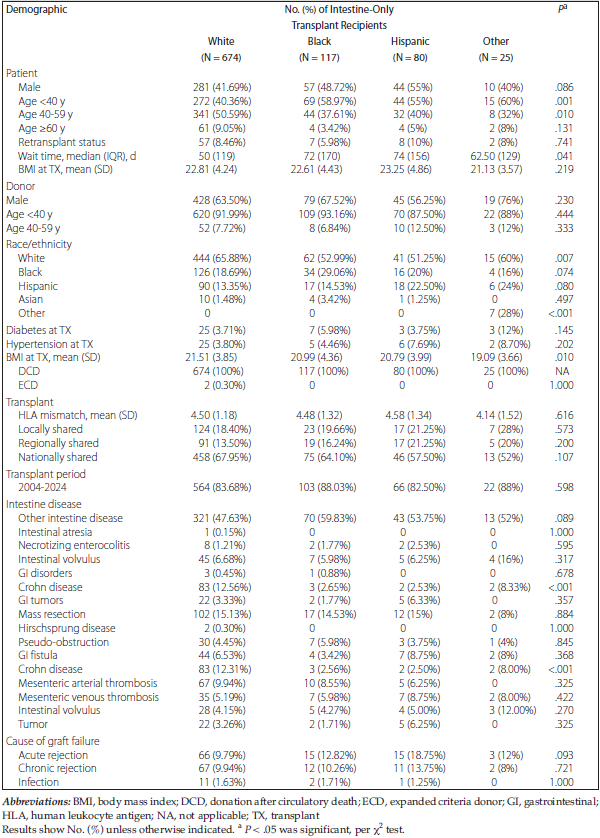
Table 1.Complete Patient Demographics and Association According to Racial and Ethnic Group

Table 2.Complete Patient Demographics and Association According to Sex
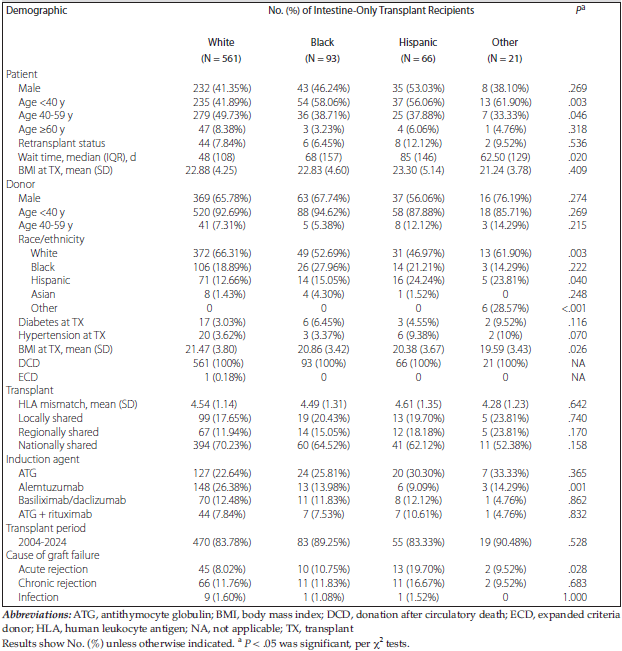
Table 3.Complete Patient Demographics in Induction Immunosuppression Subgroup and Association According to Race/Ethnicity

Table 4.Complete Patient Demographics in Induction Immunosuppression Subgroup and Association According to Sex
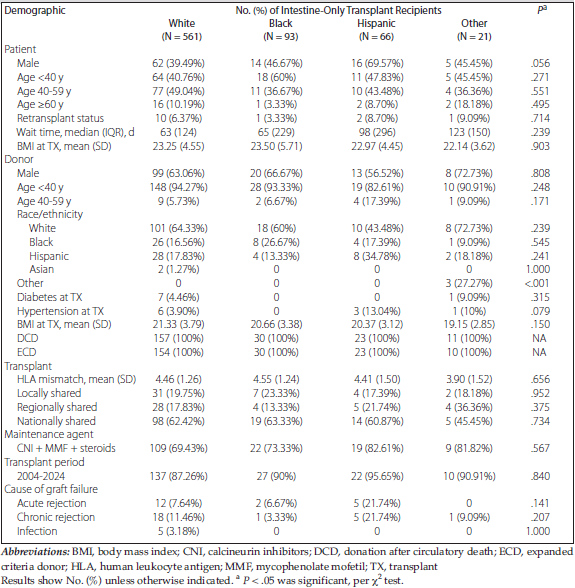
Table 5.Complete Patient Demographics in Maintenance Immunosuppression Subgroup and Association According to Race/Ethnicity

Table 6.Complete Patient Demographics in Maintenance Immunosuppression Subgroup and Association According to Sex

Table 7.Cox Regression on Mortality and Graft Survival Based on Race/Ethnicity

Table 8.Cox Regression on Mortality and Graft Survival Using Induction Immunosuppression Subgroup Based on Race/Ethnicity