Volume: 24 Issue: 1 January 2026
FULL TEXT
Thyroid Cancer in Solid-Organ Transplant Recipients
Objectives: One of the best treatment methods for end-stage organ failure is solid-organ transplant. Experi-ences gained in the postoperative treatment and follow-up of transplant recipients continue to guide the morbidity and mortality rates of patients. Eva-luations regarding the increased risk of thyroid cancer after solid-organ transplant are still controversial. In this study, we aimed to examine the incidence of thyroid cancer development in solid-organ transplants cross-sectionally.
Materials and Methods: We conducted a retrospective cross-sectional study at a single center, which included 23 patients who had undergone liver and kidney transplant and were diagnosed with thyroid cancer after transplant. Among the included patients, 21 had undergone kidney transplant and 2 had undergone liver transplant. The patients’ thyroid cancer types, postoperative thyroglobulin and anti-thyroglobulin levels, and whether they received radioactive iodine therapy after surgery were examined. We also investigated whether the deceased patients died primarily from thyroid cancer.
Results: Among 1191 transplants were performed at our clinic, 851 were kidney transplants and 340 were liver transplants. Thyroid malignancy was detected in 23 (1.93%) of these cases. The mean age was 54.48 ± 11.41 years, ranging from 38 to 76 years. Fine needle aspiration biopsy results showed suspicious findings for malignancy in 1 case (4.35%), atypia of uncertain significance in 1 case (4.35%), and findings consistent with papillary carcinoma in 21 cases (91.30%). Seventeen patients (73.91%) had papillary carcinoma, whereas others had papillary microcarcinoma. Four patients (17.39%) in the study died, and retrospective review of the records for the primary causes of death showed that all were from causes unrelated to the thyroid.
Conclusions: This study showed that the incidence of thyroid cancer has increased in solid-organ transplants, but mortality rates from thyroid cancer have not been affected.
Key words : Kidney transplantation, Liver transplantation, Solid-organ transplantation
Introduction
Solid-organ transplant is an effective method that increases life expectancy and quality of life in the treatment of end-stage organ failure.1 However, in these patients, the risk of infection and malignancy increases due to long-term immunosuppression therapy.2,3 The literature reports that the incidence of cancer in organ transplant recipients is 2 to 4 times higher than in the general population.4 Studies have reported that the age-adjusted cancer incidence in kidney transplant recipients is higher than in the general population. In this context, the most common malignancies in transplant recipients, after cardio-vascular disease, infection, and liver failure, which are the leading causes of death, are skin cancers and posttransplant lymphoproliferative disorders.5,6
Data on thyroid cancer after organ transplant are more limited in the literature.6 In these patients, thyroid cancer is usually of the differentiated type (papillary or follicular), and the prognosis is gene-rally favorable. However, both the diagnostic process and the course of the disease may differ in transplant recipients due to immunosuppression and additional comorbidities.7,8
Another reason for the high incidence of thyroid cancer after transplant is thought to be the close follow-up of nodules incidentally detected during regular thyroid ultrasonography examinations before and after transplant, unlike other cancers.9 The frequency of screening and evaluation for thyroid nodules during the posttransplant follow-up period may also affect the diagnosis rates.
Immunosuppression therapy in transplant pati-ents may be a contributing factor to malignant transformation by exerting an influence on thyroid cell proliferation. Research has indicated that this risk is increased by cyclosporine and azathioprine.10 Moreover, extant research demonstrates an elevated risk of thyroid cancer, particularly in kidney transplant patients. The findings of these studies suggest that, in the final stage of renal failure, carcinogens may accumulate in the human body due to impaired DNA repair, reduced antioxidant capacity, and decreased kidney function, thereby affecting the formation and development of thyroid cancer.11
A further reason for the incidence of thyroid cancer in transplant recipients may be the close monitoring of incidentally detected nodules during regular thyroid ultrasonography examinations performed before and after transplant, in contrast to management of other cancers. The frequency of screening and evaluation for thyroid nodules during the posttransplant follow-up process may also affect diagnosis rates.
In this study, the clinical, radiological, and patho-logical characteristics of thyroid cancer diagnoses in patients who underwent liver and/or kidney transplant were retrospectively evaluated to inves-tigate the possible relationship between the transp-lant process and the development of thyroid cancer. The null hypothesis of this study was “The incidence of thyroid cancer in individuals who have undergone kidney and liver transplant is not affected by the transplant procedure.”
Materials and Methods
In this retrospective cross-sectional study, we exa-mined the patient files of 1191 patients aged 18 years and older, including 851 kidney and 340 liver transplant patients, seen at Baskent University Ankara Hospital from January 2011 to September 2025. Thirteen patients had been diagnosed with thyroid cancer after transplant. Ten patients had been diagnosed from examinations performed immediately before transplant. Patients who had been diagnosed with thyroid cancer but were on the transplant wait list and had not undergone transplant were excluded from the study. Demographic data, type of transplant (kidney or liver), year of transplant, underlying primary disease, thyroid function tests (thyroid-stimulating hormone, free thyroxine, and free triiodothyronine), thyroid ultrasonography findings, number and results of fine needle aspiration biopsy (FNAB) if performed, and histopathology diagnoses were obtained from the electronic patient record system. Postoperative thyroglobulin (TG) and anti-thyroglobulin (anti-TG) levels and whether the patients received postoperative radioactive iodine (RAI) therapy were examined. In addition, we investigated whether these patients died primarily due to thyroid cancer.
This study was approved by the Baskent University Medical and Health Sciences Research Board (project No. KA24/407; approval date November 21, 2024). The research was conducted in accordance with the principles of the Declaration of Helsinki. All data were anonymized for analysis.
Statistical analyses
We used SPSS software (version 25.0; IBM) to analyze the data. Descriptive statistics are presented accor-ding to the distributional characteristics of the variables. Continuous variables are presented as mean values ± SD or median values (with minimum-maximum), and categorical variables are presented as frequency (with percentage). P < .05 was conside-red statistically significant.
Results
Of 1191 patients, 851 had kidney transplants and 340 had liver transplants; thyroid malignancy was present in 23 (1.93%) of these patients. The youngest patient with thyroid malignancy was 38 years old and the oldest was 76 years old, with a mean age of 54.48 ± 11.41 years and a median age of 53 years (38-76 years). The sex distribution consisted of 10 female participants (43.48%) and 13 male participants (56.52%). The most frequently transplanted organ was the kidney (n = 21; 91.30%); liver transplant was present in 2 cases (8.70%).
When the distribution of primary diseases treated by transplant was examined, the rate of patients with more than 1 primary disease was 21.74% (n = 5). Among the other patients, the 2 most common causes were hypertension and nephrolithiasis, each obser-ved in 17.39% (n = 4) of cases, followed by glomeru-lonephritis in 13.05% (n = 3) and diabetic nephropathy in 8.70% (n = 2). Less common diagnoses included congenital hepatic insufficiency in 4.35% (n = 1) of cases, autoimmune hepatitis 4.35% (n = 1), polycystic kidney disease 4.35% (n = 1), systemic lupus erythe-matosus 4.35% (n = 1), and vesicoureteral reflux 4.35% (n = 1).
The average duration of dialysis was 5.67 ± 4.08 years, with a median of 6 years (1-10 years). Thyroid parameters were thyroid-stimulating hormone 1.13 ± 0.78 mIU/mL (median 1.15 mIU/mL; 0-2.87 mIU/mL), sT4 1.23 ± 0.52 ng/dL (median 1.08 ng/dL; 0.8-2.68 ng/dL), and sT3 2.53 ± 1.18 ng/dL (median 2.39 ng/dL; 0.9-6.75 ng/dL).
The Thyroid Imaging Reporting and Data System (TI-RADS) is a standardized method for classification of thyroid nodules based on ultrasonography featu-res to assess cancer risk. In our study, according to the TI-RADS classification, 1 case (4.35%) was classified as stage 3 (probable benign), 18 (78.26%) as stage 4A (intermediate), and 4 (17.39%) as stage 4B (suspicious). No cases were classified as stage 1 (no nodule) or stage 2 (benign), and no cases were classified as stage 5 (consistent with malignancy) or stage 6 (malignant).
When ultrasonography findings were examined, multinodular goiter was detected in most of the cases, with a rate of 91.30% (n = 21); uninodular goiter was observed in only 2 cases (8.70%).
Regarding thyroid FNAB, a single biopsy was performed in 20 cases (86.96%), 2 biopsies in 2 cases (8.70%), and 3 biopsies in 1 case (4.35%). According to the TNM staging system (a diagnostic tool based on the tumor size/spread, involvement of lymph nodes, and metastasis components), 82.61% of cases were stage 1 (n = 19), 13.04% (n = 3) were stage 2, and 4.35% (n = 1) were stage 3; no stage 4 cases were encountered.12 In the FNAB pathology results, a suspicious finding for malignancy was reported in 1 case (4.35%), atypia of uncertain significance was reported in 1 case (4.35%), and findings consistent with papillary carcinoma were detected in 21 cases (91.30%) (Table 1). When tumor types were examined, most cases consisted of papillary carcinoma (73.91%; n = 17).
Papillary microcarcinoma was detected in 6 cases (26.09%). According to the treatment information, RAI therapy was not administered in 7 cases (30.43%), whereas RAI was administered in 16 cases(69.57%). When biochemical parameters were examined, the average level of serum TG was 3.29 ± 4.47 ng/mL, with a median value of 1.01 ng/mL (0-17.41 ng/mL), and the average level of anti-TG was 17.46 ± 23.41 ng/mL, with a median value of 20 ng/mL (0-116 ng/mL).
We observed rejection of the transplanted organ in 6 cases (26.09%) independently of thyroid surgery, and no rejection was detected in 17 cases (73.91%).
According to survival status, 19 patients (82.61%) survived, whereas 4 patients (17.39%) were recorded as deceased. The primary causes of death in deceased patients were retrospectively examined from the records, and all were found to be due to causes unrelated to the thyroid (Table 2).
Discussion
The risk of malignancy in patients who have undergone solid-organ transplant increases due to immunosuppression therapy. The most common malignancies in this patient group are generally related to the skin and lymphoid system, although there have been reports of an increase in thyroid cancer incidence in recent years.13
In our study, a retrospective review of patients who underwent liver and/or kidney transplant from 2011 to 2025 revealed that 13 patients developed thyroid cancer after transplant. This rate is consistent with rates reported in the literature but indicates a noteworthy frequency. Papillary thyroid carcinoma was observed in most patients, and no significant deterioration was detected in thyroid function tests. In addition, some of the patients received RAI therapy after surgery, and postoperative TG and anti-TG levels were used in clinical follow-up.
Another noteworthy finding of our study isthat none of the patients diagnosed with thyroid cancer died due to thyroid cancer. This shows that thyroid cancer can be controlled with appropriate diagnosis and treatment, even in transplant recipients.
Veroux and colleagues14 reported a higher pre-valence of thyroid diseases in patients who undergone kidney transplant and found the incidence of thyroid cancer to be 2.3% in their study. Similarly, Chan and colleagues15 noted that thyroid nodules are com-monly detected in individuals who have undergone liver transplant, but the rate of malignancy is low. In our study, 1.93% of 1191 patients had malignancy. However, unlike the general population, the male-to-female ratio was close. The incidence of thyroid cancer worldwide is increasing, especially in women.16 In our study, the thyroid cancer rate was 43.48% in female participants and 56.52% in male participants.
Karamchandani and colleagues17 reported that most patients who developed thyroid cancer after transplant were diagnosed with papillary thyroid carcinoma and that these patients generally belonged to the low-risk group, thus having a good prognosis. However, some studies have suggested that the type and duration of immunosuppression therapy may be effective in the development of thyroid cancer.3
Because of the limited number of patients and the variety of treatments, we were not able to determine the effect of immunosuppression therapy given in solid-organ transplant on the development of thyroid cancer, which is a limitation of our study.
Studies in the literature generally have limited sample sizes. Our study also provided the oppor-tunity to evaluate the incidence of thyroid cancer development after transplant at a single center. In this context, the importance of screening for thyroid nodules in solid-organ transplant recipients and keeping suspicious cases under close follow-up should be emphasized.
Conclusions
Our study has shown that the incidence of thyroid cancer has increased in solid-organ transplants, but mortality rates due to thyroid cancer have not been affected. Regular ultrasonography follow-up and early diagnosis positively affect the prognosis in this patient group. However, more research with larger patient groups is needed in this area.
References:
- Haberal M, Boyvat F, Akdur A, Kirnap M, Özçelik Ü, Yarbuğ Karakayali F. Surgical complications after kidney transplantation. Exp Clin Transplant. 2016;14(6):587-595.
CrossRef:
PubMed - Kasiske BL, Snyder JJ, Gilbertson DT, Wang C. Cancer after kidney transplantation in the United States. Am J Transplant. 2004;4(6):905-913. doi:10.1111/j.1600-6143.2004.00450.x
CrossRef - PubMed - Engels EA, Pfeiffer RM, Fraumeni JF Jr, et al. Spectrum of cancer risk among US solid organ transplant recipients. JAMA. 2011;306(17):1891-1901. doi:10.1001/jama.2011.1592
CrossRef - PubMed - Villeneuve PJ, Schaubel DE, Fenton SS, Shepherd FA, Jiang Y. Cancer incidence among Canadian kidney transplant recipients. Am J Transplant. 2007;7(4):941-948. doi:10.1111/j.1600-6143.2007.01736.x
CrossRef - PubMed - Yildirim Y, Ozyilkan O, Emiroglu R, Demirhan B, Karakayali H, Haberal M. Early diagnosis of cancer in renal transplant patients: a single center experience. Asian Pac J Cancer Prev. 2006;7(2):336-339.
CrossRef:
PubMed - Dantal J, Pohanka E. Malignancies in renal transplantation: an unmet medical need. Nephrol Dial Transplant. 2007;22 Suppl 1:i4-10. doi:10.1093/ndt/gfm085
CrossRef - PubMed - Haugen BR, Alexander EK, Bible KC, et al. 2015 American Thyroid Association Management Guidelines for Adult Patients with Thyroid Nodules and Differentiated Thyroid Cancer: The American Thyroid Association Guidelines Task Force on Thyroid Nodules and Differentiated Thyroid Cancer. Thyroid. 2016;26(1):1-133. doi:10.1089/thy.2015.0020
CrossRef - PubMed - Vajdic CM, McDonald SP, McCredie MR, et al. Cancer incidence before and after kidney transplantation. JAMA. 2006;296(23):2823-2831. doi:10.1001/jama.296.23.2823
CrossRef - PubMed - Euvrard S, Kanitakis J, Claudy A. Skin cancers after organ transplantation. N Engl J Med. 2003;348(17):1681-1691. doi:10.1056/NEJMra022137
CrossRef - PubMed - Zwart ES, Yüksel E, Pannekoek A, de Vries R, Mebius RE, Kazemier G. De novo carcinoma after solid organ transplantation to give insight into carcinogenesis in general: a systematic review and meta-analysis. Cancers (Basel). 2021;13(5):1122. doi:10.3390/cancers13051122
CrossRef - PubMed
- Hu L, Wu Y, Ju F, Zhang Y, Wang W. Effects of solid organ transplantation on the risk of developing thyroid cancer: a systematic review and meta-analysis. Gland Surg. 2022;11(4):710-719. doi:10.21037/gs-22-137
CrossRef - PubMed - Aydın C, Çuhacı Seyrek NF. Differentiated thyroid cancer postoperative risk stratification: treatment approach based on risk stratification In: Cakir B, Ersoy R, Aydin C, Ozdemir E, eds. Thyroid Cancer: Current Approach. Turkish Endocrinology and Metabolism Association, 2020;188-189.
CrossRef:
PubMed:
- Kitahara CM, Yanik EL, Ladenson PW, et al. Risk of thyroid cancer among solid organ transplant recipients. Am J Transplant. 2017;17(11):2911-2921. doi:10.1111/ajt.14310
CrossRef - PubMed - Veroux M, Giuffrida G, Lo Bianco S, et al. Thyroid disease and cancer in kidney transplantation: a single-center analysis. BMC Surg. 2019;18(Suppl 1):80. doi:10.1186/s12893-018-0408-1
CrossRef - PubMed - Chan YC, Chen CL, Lin CC, Yong CC, Wu YJ, Chi SY, Chou FF. Impact of thyroid incidentaloma on liver transplant: a study of 1010 recipients at a single center. Ann Transplant. 2022;27:e934988. doi:10.12659/AOT.934988
CrossRef - PubMed - Polat SB, Cakal E. Epidemiology of thyroid cancer. In: Cakir B, Ersoy R, Aydin C, Ozdemir E, eds. Thyroid Cancer: Current Approach. Turkish Endocrinology and Metabolism Association, 2020;9-15.
CrossRef:
PubMed:
- Karamchandani, D., Arias-Amaya, R., Donaldson, N., Gilbert, J., & Schulte, K. (2010). Thyroid cancer and renal transplantation: a meta-analysis. Endocrine-Related Cancer. 2025;17(1):159-167. doi:10.1677/ERC-09-0191
CrossRef - PubMed

Volume : 24
Issue : 1
Pages : 69 - 73
DOI : 10.6002/ect.2025.0240
From the 1Department of Family Medicine; the 2Department of Endocrinology and Metabolism, the 3Department of Biostatistics, and the 4Department of General Surgery Division of Transplantation, Baskent University School of Medicine, Ankara, Türkiye
Acknowledgements: The authors have not received any funding or grants in support of the presented research or for the preparation of this work and have no declarations of potential conflicts of interest.
Author contributions: All authors contributed to the study conception and design. The following contributions are stated according to the Contributor Roles Taxonomy (CRediT) standard. FS: writing (original draft). FS, AK, and OTI: conceptualization, investigation, and methodology. AK and OTI: project administration. MYC: formal analysis. AK, OTI, and MH: writing (review and editing), supervision. All authors read and approved the final manuscript.
Corresponding author: Funda Salgur, Department of Family Medicine, Baskent University Faculty of Medicine, Mutlukent Mah. 1963. Sok. No: 17, Ankara, Türkiye
Phone: +90 542 642 93 91 E-mail: drfundasalgur@gmail.com
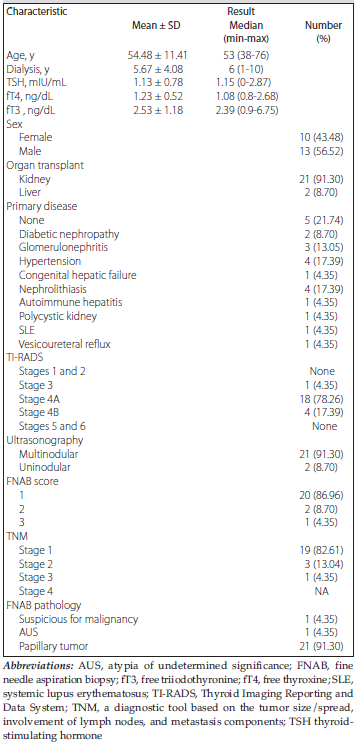
Table 1. Characteristics of Patients Diagnosed With Thyroid Cancer
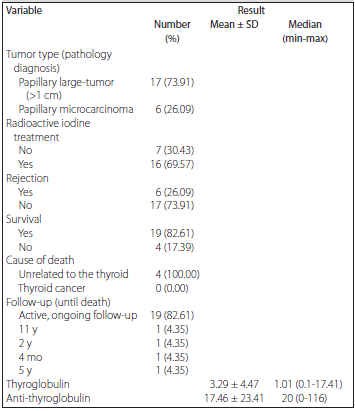
Table 2. Tumor Stages and Follow-Ups of Transplant Patients Diagnosed With Thyroid Cancer