Volume: 24 Issue: 1 January 2026
FULL TEXT
Objectives: Normothermic regional perfusion is an emerging technique used to reduce warm ischemic injury during organ recovery in donation after circulatory death. The use of normothermic regional perfusion has become increasingly common as a method to improve the viability and function of organs, particularly for liver, kidney, heart, and lung transplantation. In this study, we performed a bib-liometric analysis of normothermic regional perfusion-related research to understand publication trends, key topics, and areas of focus in the field.
Materials and Methods: On July 8, 2025, we conducted a comprehensive search using the Web of Science database to identify relevant studies on normothermic regional perfusion. The analysis included 372 studies published between 2014 and 2025. We used VOSviewer and Microsoft Excel to analyze annual trends, countries, institutions, journals, co-occurring key words, and articles. We performed manual screening to refine data on authors and institutions with significant publication and citation frequencies.
Results: Analyses of the 372 studies revealed a 22.35% annual growth rate in publication volume and a cumulative citation count of 7552. The United States led in publication output with 146 total documents, and the United Kingdom recorded the highest citation count at 2914 citations. The top 5 key words were “outcomes” (79 occurrences), “donors” (63 occurrences), “pre-servation” (56 occurrences), “liver transplantation” (55 occurrences), and “experience” (51 occurrences). Recent discussions focused on “outcomes,” “experience,” and “heart transplantation,” and earlier research emphasized “kidney transplantation,” “delayed graft function,” and “biliary complications.”
Conclusions: The present bibliometric analysis emphasized the growing interest in normothermic regional perfusion, highlighting its evolving focus from kidney and liver related complications to heart transplantation, offering valuable insights for optimi-zing future organ transplant practices.
Key words : Bibliographic analyses, Donation after circu-latory death, Heart transplantation, Kidney transplantation, Liver transplantation
Introduction
Normothermic regional perfusion (NRP) has emer-ged as a novel technique designed to minimize adverse consequences of warm ischemic injury following circulatory arrest during organ recovery in donation after circulatory death (DCD).1-3 Normothermic regio-nal perfusion facilitates the restoration of oxygenated blood circulation to the organs through the application of an extracorporeal membrane oxygenation circuit.1 The technique enables the evaluation of organ function and restores ATP levels, thereby enhancing organ quality for transplant.4 Normothermic regional perfu-sion is currently being used widely for the recovery of chest and abdominal solid organs, including the kidneys, liver, heart, and lungs.3,5 Cases of the pan-creas being recovered have also been reported.2,3,5-8
In recent years, interest in NRP has increased as preliminary studies have shown its potential to markedly improve outcomes for DCD organs.4 Compared with the conventional rapid recovery method, which involves the rapid procurement and cold storage of organs after circulatory arrest, NRP works by reducing warm ischemic injury.2,4 This process has resulted in a substantial rise in the use of DCD organs for transplantation, accompanied by enhanced graft survival and thereby diminished complications.2,6 Increased evidence supporting NRP has encouraged institutions to conduct research focused on enhancing the technique and broadening its application in transplant practice.
In this study, we conducted a bibliometric analysis of the research output associated with NRP, with the aim to improve understanding of the development of this technique and clinical significance. Our analysis aimed to provide valuable insights into future advancements by analyzing publication trends and institutional and international collaborations and by identifying the most productive authors and journals.
Materials and Methods
Data collection and retrieval methods
The Web of Science database was searched on July 8, 2025, to identify research pertaining to NRP. We only included articles or reviews and did not include other document types, such as meeting abstracts, letters, notes, editorials, short surveys, book chapters, and errata. In the query of the Web of Science database query to extract articles published on NRP, we used “normothermic regional perfusion” as a search term restricted to titles. This bibliometric study was exempt from institutional review board approval as the study did not include human subjects.
Data analysis
We used VOSviewer version 1.6.20 and Microsoft Excel to analyze annual trends, countries, institutions, journals, co-occurring key words, and articles and to generate tables and figures.
To address inconsistencies arising from variations in author and institutional nomenclature, we also performed a manual screening protocol in which efforts were made to consolidate data concerning authors and institutions demonstrating substantial publication and citation frequency. The most frequently occurring key words were studied by limiting them to a minimum of five occurrences. Moreover, we manually excluded key words relevant to the study’s design and subject such as “NRP,” “normothermic regional perfusion,” “donation,” and so forth. Unnecessary words such as “male,” “female,” and “human,” were also removed.
We used VOSviewer 1.6.20, a software tool deve-loped by 2 software researchers at Leiden University (Ludo Waltman and Ness Jan Van Eck, revolu-tionaries in the scientometrics field), to generate figures and network illustrations. The tool produced bibliometric networks by organizing interlinked items into clusters; each color in the network repre-sented a cluster, and the lines between clusters anditems represented the links identified between them.
Results
Included studies
The analyses included 372 studies published bet-ween 2014 and 2025 (260 primary studies and 112 review articles). Of these, 365 were published in English, 3 in French, 3 in Spanish, and 1 in Russian. The yearly growth rate of publications was 22.35%. In total, the documents included an average of 20.3 citations per document and were an average age of 2.83 years. Furthermore, 21.51% of the documents had international co-authorships. The articles garnered a total of 7552 citations, with 4496 citations excluding self-citations (Table 1).
Annual trends
The number of publications and citations related to NRP generally demonstrated an upward trajectory between 2014 and 2025, with some fluctuations. The output remained relatively consistent from 2014 to 2017, with an average of 3 articles per year. In 2018, 13 papers were published, marking an initial notable peak. In 2020, the number of publications doubled to 32, resulting in another substantial peak. In 2023, there was a third surge, with 62 papers discussing NRP. The year 2024 was the most notable, with 87 documents and nearly 1890 citations at the time of data extraction (Figure 1).
Top countries
The United Kingdom had the highest citation count, totaling 2914 across 66 documents, whereas the United States followed with 2245 citations from 146 docu-ments. Spain, the United Kingdom, and France were early contributors to research activity, whereas the United States experienced a significant increase in research output beginning in 2022, becoming more engaged in NRP-related studies (Figure 2 and Table 2).
Top cited authors
The top 5 cited authors contributing to literature were Simon Messer with 719 citations, Christopher J. E. Watson with 716 citations, Beatriz Dominguez-Gill with 651 citations, and Gabriel C. Oniscu and Andrew J. Butler, each with 595 citations (Table 3).
Institutions
The top 5 organizations were University of Cambridge (United Kingdom) with 1239 citations, Royal Infirmary of Edinburgh NHS Trust (United Kingdom) with 858 citations, University of Cantabria (Spain) with 627 citations, University of Edinburgh (United Kingdom) with 524 citations, and University of Barcelona (Spain) with 519 citations (Table 4).
Top journals
The top 5 contributing journals were American Journal of Transplantation with 1494 citations and 34 documents, followed by Journal of Heart and Lung Transplantation with 1175 citations and 20 documents, Transplantation with 871 citations and 36 documents, Transplant International with 537 citations and 17 documents, and Liver Transplantation with 458 citations and 14 documents (Table 5).
Top frequent key words
In the analysis of the most frequently discussed key words in NRP research, “outcomes” was the most frequent key word, mentioned 79 times, followed by “donors” at 63 times, “preservation” at 56 times, “liver transplantation” at 55 times, and “experience” at 51 times. The terms “ischemic cholangiopathy” and “early allograft dysfunction” were referenced 24 and 15 times, respectively (Figure 3 and Table 6). Figure 4 shows the chronological sequence of these prominent key words, indicating that recent discus-sions focused on “outcomes,” “experience,” and “heart transplantation,” whereas prior investigations highlighted “kidney transp-lantation,” “delayed graft function,” and “biliary complications.”
Top cited articles
The top 3 cited articles were the article titled “In situ normothermic regional perfusion for controlled donation after circulatory death: the United Kingdom experience” by Gabriel Oniscu, published in American Journal of Transplantation in 2014 with 237 citations (Table 7). Next was the article “Outcome after heart transplantation from donation after circulatory-determined death donors” by Simon Messer, published by Journal of Heart and Lung Transplantation in 2017 with 231 citations. The third article was “In situ normothermic perfusion of livers in controlled circulatory death donation may prevent ischemic cholangiopathy and improve graft survival” by Christopher J. Watson published in American Journal of Transplantation in 2019 with 206 citations.
Discussion
This study offers an in-depth review of recent scientific literature on NRP, highlighting its growing adoption within the transplant community. The increasing implementation of NRP is driven by the necessity to optimize outcomes and enhance the use of solid organs from DCD donors. Multiple factors have influenced this trend, such as the widening disparity between organ availability and transplant demand, a rising number of DCD cases, the necessity for enhanced graft monitoring and usability as-sessment (especially for extended criteria donors), and efforts to optimize organ reconditioning before transplantation.9-12 The surge in research output over the past decade reflects the growing interest in NRP, with a notable increase in studies addressing outcomes and the ongoing debates surrounding this technique. The increased interest has been reflected in the research output, where studies addressing outcomes and the ongoing debates surrounding NRP have been increasing in number over the past 10 years.
Bibliometric studies serve a vital role in the medical field as they analyze trends, impact, and dissemination of research across different fields.13-15 These studies have facilitated the identification of key papers, prominent authors, and leading institutions, offering insights into the development of scientific knowledge.16,17 Bibliometric studies have facilitated the identification of publication trends and research scope, thereby directing future research trajectories.17-19 Within the framework of NRP, bibliometric analysis could facilitate tracking of the increasing interest and research output associated with this technique, highlighting areas of ongoing debate and progress.
Normothermic regional perfusion was initially developed in Spain as a strategy to alleviate the detrimental consequences of warm ischemic injury subsequent to circulatory death. Initially, NRP expe-rienced extensive use in Europe, subsequently attracting growing interest in the United States. In 2020, Vanderbilt University and New York University were the first US institutions to implement NRP for DCD heart donors.20 Normothermic regional perfusion is uniformly applied at a rate of 100% in France, Italy, and Switzerland, in contrast to its selective implementation in other nations, where rates vary from below 10% to 50%.21
The use of NRP yields more transplanted organs per donor compared with super-rapid recovery method. Oniscu and colleagues showed an increased number of organs transplanted from donors when NRP was used during the procurement of a cont-rolled DCD in the UK, with a mean of 3.3 organs with NRP versus 2.6 organs without NRP.22 Similar data were also noted in the United States, with usage of NRP in DCD donors being associated with increased rates of liver use of 70.6% versus 39.0%.23
Numerous studies have been conducted to assess the outcomes of NRP across different organs. In kidney transplantation, NRP has been shown to reduce the incidence of delayed graft function and ischemic-reperfusion injury.24 For liver transplantation, the technique has proven crucial in increasing the use of DCD organs, significantly improving graft viability, and reducing compli-cations such as ischemic cholangiopathy.22,24 In heart transplantation, NRP has demonstrated success in reconditioning DCD hearts by reducing myocardial injury, leading to similar 1-year outcomes compared with non-NRP DCD cases.25-27 Although lung transplantation has been the subject of fewer studies, preliminary findings have indicated that the implementation of strategies to prevent pulmonary edema can lead to satisfactory outcomes after lung transplantation, making it an attractive field for future research.6,28 Similarly, although use of NPR in pancreas transplantation is so far limited, NRP has been shown to enhance the use and outcomes of DCD pancreas transplants, with several studies suggesting that the results are comparable to more conventional methods.23,29 Together, these studies affirm NRP’s transformative effect on organ transplantation across multiple organ systems.
Our study indicated that the United States dominated in research output, generating the largest number of publications with 146 papers. The United Kingdom, however, excelled in research impact, recording the highest citation count at 2914. This further emphasizes the United Kingdom’s funda-mental role and continuous impact in the deve-lopment and implementation of NRP.
In our analysis of the most frequently discussed key words in NRP research, “outcomes” was the dominant topic, highlighting the principal aim of NRP studies: to assess posttransplant success and long-term graft survival. Researchers aimed to demonstrate how NRP improved the viability of organs from DCD donors, leading to enhanced transplantation outcomes across various organs, including liver, heart, and kidney. The focus on outcomes signifies the growing interest in assessing the clinical benefits of NRP in minimizing comp-lications, enhancing graft function, and improving patient survival rates.
The occurrence of “ischemic cholangiopathy” and “delayed graft function” among the most common key words emphasized the considerable focus of these posttransplant complications in NRP research. Ischemic cholangiopathy, especially in DCD liver transplants, is a major issue due to warm ischemic injury, with NRP being investigated as an approach for restoring blood flow and mitigating the risk of biliary complications. Similarly, delayed graft function, especially in DCD kidney transplants, is frequently investigated as researchers work to minimize ischemic-reperfusion injury. These findings highlighted the ongoing focus in NRP research to address these specific challenges.
Our analysis revealed a chronological pattern in the discourse surrounding key topics. Earlier studies, particularly between 2018 and 2019, concentrated on kidney transplantation, with repeated discussions on delayed graft function and ischemia-reperfusion injury. Moving forward, around 2021, preservation, perfusion, liver transplantation, and the use of normothermic and hypothermic perfusion machines became more prevalent in research output. From 2022 onward, focus was on outcomes and experiences, indicating a transition toward assessing clinical outco-mes and procedural expertise in NRP. One of the consistent topics of discussion during this period was the effect of NRP on the graft biliary system and its complications. Figure 4 illustrates that biliary complications were a prominent key word in earlier publications, whereas ischemic cholangiopathy emer-ged as a particularly significant topic of discourse from 2022 onward, underscoring persistent concerns on graft health and long-term outcomes.
Among the most frequently discussed organs in NRP research, the liver received the most attention, with 55 publications. This was followed by the heart, which was the focus of 40 documents, and kidney transplantation, which was the topic of 18 articles. Research on the lung was with 27 documents, whereas pancreas transplantation was the least addressed, featuring only 6 articles. This distribution underscores the crucial function of NRP in enhancing liver transplantation outcomes, especially regarding the use of DCD organs, where NRP has demonstrated a substantial improvement in graft survival and posttransplant outcome.
Finally, our study revealed that ethical consi-derations have become a central focus in discussions surrounding NRP, with a noticeable peak in attention around 2021. The ethical debate is particularly prominent in thoracoabdominal-NRP, where con-cerns have been raised, especially by the American College of Physicians, regarding the potential reversal of circulatory death through extracorporeal membrane oxygenation and the induction of brain death via limited cerebral perfusion. Controversy has emerged concerning NRP, particularly regarding the unintentional perfusion of the brain via collateral circulation. Nonetheless, the data did not support this. However, neurophysiological studies of both abdominal and thoracoabdominal-NRP donors showed no evidence of cerebral perfusion.30-33 Several studies, including those by Wall and colleagues, revealed that thoracoabdominal-NRP does not resuscitate the donor, as death is determined based on circulatory criteria before initiation of NRP.30 Both NRP and non-NRP DCD donors entail the reinitiation of cardiac activity for organ evaluation, yet neither reinstates autonomous circulatory function.30,33 Legal issues pertaining to brain perfusion are mitigated by clamping arch vessels to eliminate ambiguity concerning brain death.33 The American Society of Transplant Sur-geons subsequently endorsed NRP, asserting that it is ethically justifiable because of improved organ use and recipient outcomes and is consistent with US legal death definitions.31
A key limitation of our study was the reliance on bibliometric analysis, which primarily focused on quantifying research output rather than evaluating the quality or clinical relevance of the studies. Although key word frequency and publication trends offer valuable insights into research priorities, they do not fully capture the depth or outcomes of individual studies. In addition, only a single database was used for analysis, which, although well-known for its extensive range of papers, may have resulted in the exclusion of relevant studies from other databases. This limitation could have led to the omission of important research, particularly from institutions or regions that predominantly publish on different platforms. Moreover, our analysis may be limited by the inclusion of only published and indexed literature, potentially overlooking unpublished data or ongoing trials that could further shape the understanding of NRP. Variations in terminology across different regi-ons and institutions may also have influenced our key word analysis, leading to potential underrepre-sentation of certain topics. Finally, the relatively recent adoption of NRP means that longer-term outcomes and trends may not yet be fully represented in the current body of research.
Conclusions
This bibliometric analysis provided a comprehensive overview of the scientific literature on NRP. The results illustrated a substantial growth in research output, highlighting the increasing interest in optimizing organ utilization and improving outcomes in DCD transplants. The United Kingdom and the United States emerged as key contributors in terms of citations, whereas the United States led in publication count. The analysis identified 5 predominant topics—outcome, preservation, liver transplantation, experience, and perfusion—illust-rating the evolving priorities within the NRP field. These insights reflect the progression and expanding influence of NRP on transplant practices globally.
References:
- Richards JA, Gaurav R, Butler AJ, Watson CJE. The 6 C’s of normothermic regional perfusion. Prog Transplant. 2022;32(2):192-193. doi:10.1177/15269248221087430
CrossRef - PubMed - Brubaker AL, Sellers MT, Abt PL, et al. US liver transplant outcomes after normothermic regional perfusion vs standard super rapid recovery. JAMA Surg. 2024;159(6):677-685. doi:10.1001/jamasurg.2024.0520
CrossRef - PubMed - Wall A, Rosenzweig M, McKenna GJ, Ma TW, Asrani SK, Testa G. Six-month abdominal transplant recipient outcomes from donation after circulatory death heart donors: a retrospective analysis by procurement technique. Am J Transplant. 2023;23(7):987-995. doi:10.1016/j.ajt.2023.04.021
CrossRef - PubMed - Hessheimer AJ, Coll E, Torres F, et al. Normothermic regional perfusion vs. super-rapid recovery in controlled donation after circulatory death liver transplantation. J Hepatol. 2019;70(4):658-665. doi:10.1016/j.jhep.2018.12.013
CrossRef - PubMed
- Malas J, Chen Q, Thomas J, et al. The impact of thoracoabdominal normothermic regional perfusion on early outcomes in donation after circulatory death lung transplantation. J Heart Lung Transplant. 2023;42(8):1040-1044. doi:10.1016/j.healun.2023.04.009
CrossRef - PubMed - Pasrija C, Tipograf Y, Shah AS, Trahanas JM. Normothermic regional perfusion for donation after circulatory death donors. Curr Opin Organ Transplant. 2023;28(2):71-75. doi:10.1097/MOT.0000000000001038
CrossRef - PubMed - Gomez-Duenas G, Duran M, Calleja-Lozano R, et al. Normothermic regional perfusion in controlled donation after circulatory determination of death simultaneous pancreas - kidney transplantation. Transplant Proc. 2023;55(10):2259-2261. doi:10.1016/j.transproceed.2023.09.007
CrossRef - PubMed - O’Neill S, Srinivasa S, Callaghan CJ, et al. Novel organ perfusion and preservation strategies in transplantation - where are we going in the United Kingdom? Transplantation. 2020;104(9):1813-1824. doi:10.1097/TP.0000000000003106
CrossRef - PubMed - Saidi RF, Hejazii Kenari SK. Challenges of organ shortage for transplantation: solutions and opportunities. Int J Organ Transplant Med. 2014;5(3):87-96.
CrossRef:
PubMed - Israni AK, Zaun D, Gauntt K, Schaffhausen C, McKinney W, Snyder JJ. OPTN/SRTR 2020 Annual Data Report: DOD. Am J Transplant. 2022;22(Suppl 2):519-552. doi:10.1111/ajt.16976
CrossRef - PubMed - Hashimoto K. Liver graft from donation after circulatory death donor: real practice to improve graft viability. Clin Mol Hepatol. 2020;26(4):401-410. doi:10.3350/cmh.2020.0072
CrossRef - PubMed - Schlegel A, Kalisvaart M, Scalera I, et al. The UK DCD Risk Score: a new proposal to define futility in donation-after-circulatory-death liver transplantation. J Hepatol. 2018;68(3):456-464. doi: 10.1016/j.jhep.2017.10.034
CrossRef - PubMed - Rawashdeh B. Insights and limitations of bibliometric analysis in solid organ transplantation. Prog Transplant. 2024;34(3):67-69. doi:10.1177/15269248241275431
CrossRef - PubMed - Rawashdeh B, AlRyalat SA, Abuassi M, et al. Impact of COVID-19 on abdominal organ transplantation: a bibliometric analysis. Transplant Infect Dis. 2023;25(3):e14027. doi:10.1111/tid.14027
CrossRef - PubMed - Rawashdeh B, Kim J, Prasad R, Cooper M. A global overview on the evolution, debate, and research output on liver transplant perfusion machines. Exp Clin Transplant. 2024;22(1):35-42. doi:10.6002/ect.2023.0180
CrossRef - PubMed - Rawashdeh B, Arpali E, Al Abdallat H, Cooper M, Dunn T. Four decades of research productivity and hot spots in pancreas transplantation. Prog Transplant. 2024;34(3):119-129. doi:10.1177/15269248241268719
CrossRef - PubMed - Rawashdeh B, AlRyalat SA, Rawshdeh A, Abuassi M, Al-mansour Z, El-Hinnawi A. Global research productivity of post-transplant lymphoproliferative disorder: a bibliometric study. Ann Med Surg (Lond). 2024;86(3):1522-1530. doi:10.1097/MS9.0000000000001771
CrossRef - PubMed - Rawashdeh B, AbuAssi M, Al-Adwan Y, El-Hinnawi A. A bibliometric analysis of the most cited journal articles in kidney transplantation. Cureus. 2023;15(4):e38104. doi:10.7759/cureus.38104
CrossRef - PubMed - Rawashdeh B, AlRyalat SA, Abuassi M, Prasad R, Cooper M. Unveiling transplantation research productivity of United States: a bibliometric analysis. World J Transplant. 2023;13(6):391-402. doi:10.5500/wjt.v13.i6.391
CrossRef - PubMed - Hoffman JR, McMaster WG, Rali AS, et al. Early US experience with cardiac donation after circulatory death (DCD) using normothermic regional perfusion. J Heart Lung Transplant. 2021;40(11):1408-1418. doi:10.1016/j.healun.2021.06.022
CrossRef - PubMed - Eden J, Sousa Da Silva R, Cortes-Cerisuelo M, et al. Utilization of livers donated after circulatory death for transplantation - an international comparison. J Hepatol. 2023;78(5):1007-1016. doi:10.1016/j.jhep.2023.01.025
CrossRef - PubMed - Oniscu GC, Mehew J, Butler AJ, et al. Improved organ utilization and better transplant outcomes with in situ normothermic regional perfusion in controlled donation after circulatory death. Transplantation. 2023;107(2):438-448. doi:10.1097/TP.0000000000004280
CrossRef - PubMed - Bekki Y, Croome KP, Myers B, Sasaki K, Tomiyama K. Normothermic regional perfusion can improve both utilization and outcomes in DCD liver, kidney, and pancreas transplantation. Transplant Direct. 2023;9(3):e1450. doi:10.1097/TXD.0000000000001450
CrossRef - PubMed - De Beule J, Vandendriessche K, Pengel LH, et al. A systematic review and meta-analyses of regional perfusion in donation after circulatory death solid organ transplantation. Transpl Int. 2021;34(11):2046-2060. doi:10.1111/tri.14121
CrossRef - PubMed - Minambres E, Royo-Villanova M, Perez-Redondo M, et al. Spanish experience with heart transplants from controlled donation after the circulatory determination of death using thoraco-abdominal normothermic regional perfusion and cold storage. Am J Transplant. 2021;21(4):1597-1602. doi:10.1111/ajt.16446
CrossRef - PubMed - Ran G, Wall AE, Narang N, Khush K, Hoffman J, Parker W. Post-transplant survival in heart transplantation using normothermic regional perfusion (NRP) vs. direct procurement and perfusion (DPP) in donation after circulatory determination of death. J Heart Lung Transplant. 2024;43(4):S158-S159. doi:10.1016/j.healun.2024.02.320
CrossRef - PubMed:
- Bashian EJ, Gardner GB, Ambrosio M, et al. Outcomes of DCD heart transplant: NRP and OCS. J Heart Lung Transplant. 2024;43(4):S31. doi:10.1016/j.healun.2024.02.060
CrossRef - PubMed:
- Boelhouwer C, Vandendriessche K, Van Raemdonck D, et al. Lung transplantation following donation after thoraco-abdominal normothermic regional perfusion (TA-NRP): a feasibility case study. J Heart Lung Transplant. 2022;41(12):1864-1867. doi:10.1016/j.healun.2022.09.011
CrossRef - PubMed - Oniscu G, Butler A, Hunt F, Mehew J, Taylor R, Watson C. Improved kidney and simultaneous pancreas kidney transplant outcomes from cDCD donors using normothermic regional perfusion (NRP). Transpl Int. 2019;32:117-118.
CrossRef:
PubMed:
- Wall AE, Fiedler A, Karp S, Shah A, Testa G. Applying the ethical framework for donation after circulatory death to thoracic normothermic regional perfusion procedures. Am J Transplant. 2022;22(5):1311-1315. doi:10.1111/ajt.16959
CrossRef - PubMed - Wall AE, Adams BL, Brubaker A, et al. The American Society of Transplant Surgeons consensus statement on normothermic regional perfusion. Transplantation. 2024;108(2):312-318. doi:10.1097/TP.0000000000004894
CrossRef - PubMed - Dudzinski DM, Pal JD, Kirkpatrick JN. Ethical and equity guidance for transplant programs considering thoracoabdominal normothermic regional perfusion (TA-NRP) for procurement of hearts. Am J Bioethics. 2024;24(6):16-26. doi:10.1080/15265161.2024.2337393
CrossRef - PubMed - Nguyen BM. Ethical issues in organ procurement: donation after normothermic regional perfusion in liver transplantation. Curr Opin Organ Transplant. 2024;29(6):400-404. doi:10.1097/MOT.0000000000001174
CrossRef - PubMed

Volume : 24
Issue : 1
Pages : 59 - 68
DOI : 10.6002/ect.2025.0181
From the 1Division of Transplant Surgery, Medical College of Wisconsin, Milwaukee, Wisconsin, USA; the 2School of Medicine, The University of Jordan, Amman, Jordan; the 3Medical College of Wisconsin, Milwaukee, Wisconsin, USA; and the 4Faculty of Medicine, Al-Balqa' Applied University, Salt, Jordan
Acknowledgements: The authors have not received any funding or grants in support of the presented research or for the preparation of this work and have no declarations of potential conflicts of interest.
Corresponding author: Noor Haj Mohammad, School of Medicine, The University of Jordan, Queen Rania Street, Amman, Jordan 11942
Phone: + 962 7777 68787 E-mail: noorashraf267@gmail.com
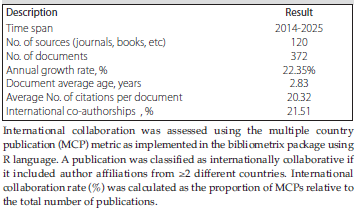
Table 1. Main Information About Documents Related to Normothermic Regional Perfusion
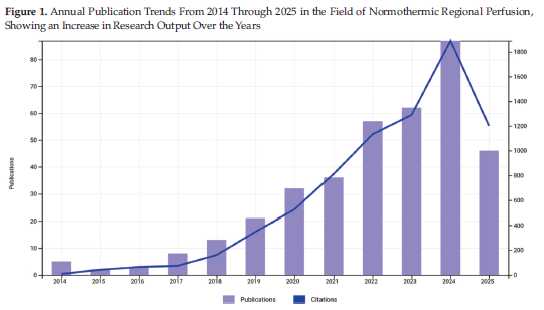
Figure 1. Annual Publication Trends From 2014 Through 2025 in the Field of Normothermic Regional Perfusion, Showing an Increase in Research Output Over the Years
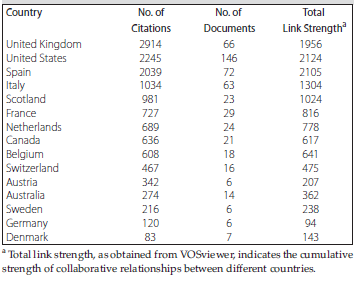
Table 2. Top Contributing Countries in Research on Normothermic Regional Perfusion According to Total Citations, Document Numbers, and Total Link Strength
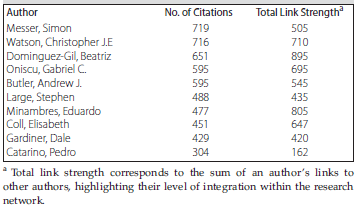
Table 3. Top Contributing Authors on Normothermic Regional Perfusion According to Citations and Number of Publications
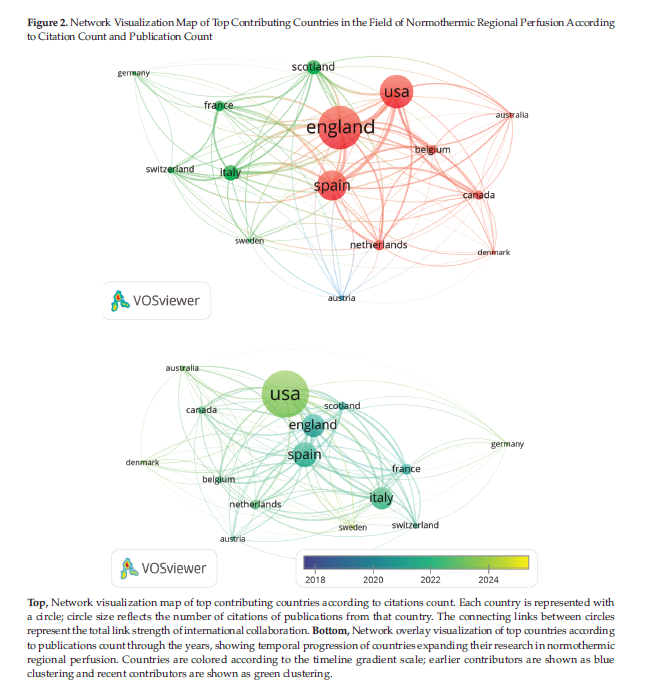
Figure 2. Network Visualization Map of Top Contributing Countries in the Field of Normothermic Regional Perfusion According to Citation Count and Publication Count
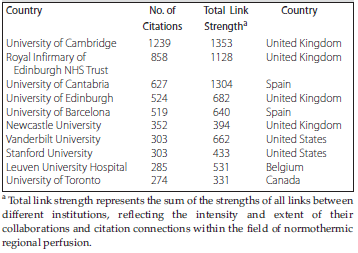
Table 4. Top 15 Leading Institutions on Normothermic Regional Perfusion Based on Number of Citations, Documents Count, Total Link Strength, and Their Corresponding Countries
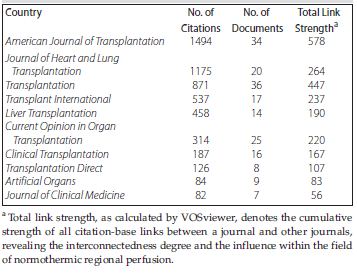
Table 5. Top 10 Journals Publishing on Normothermic Regional Perfusion-Related Research, According to Citation Count, Documents Count, and Total Link Strength
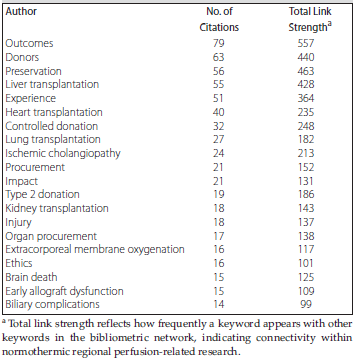
Table 6. Top Frequent Key Words in Normothermic Regional Perfusion-Related Literature
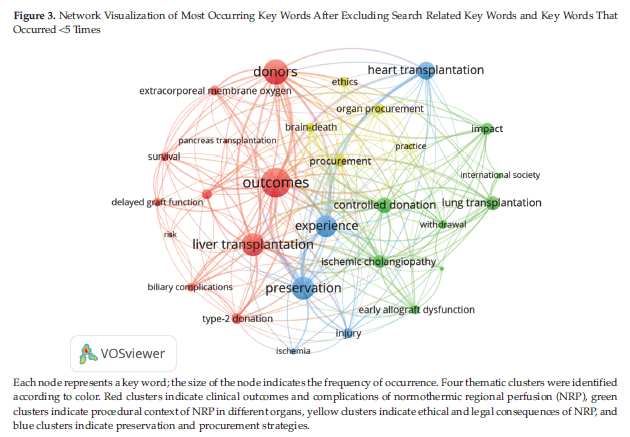
Figure 3. Network Visualization of Most Occurring Key Words After Excluding Search Related Key Words and Key Words That Occurred <5 Times
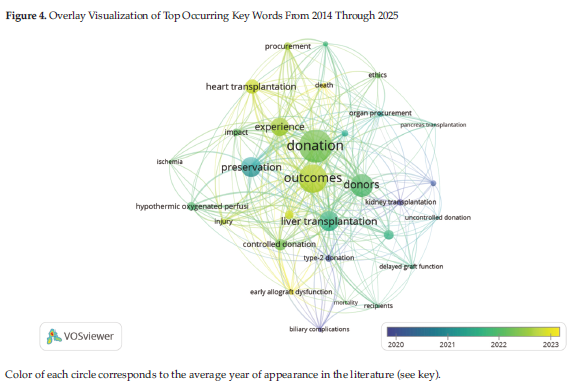
Figure 4. Overlay Visualization of Top Occurring Key Words From 2014 Through 2025
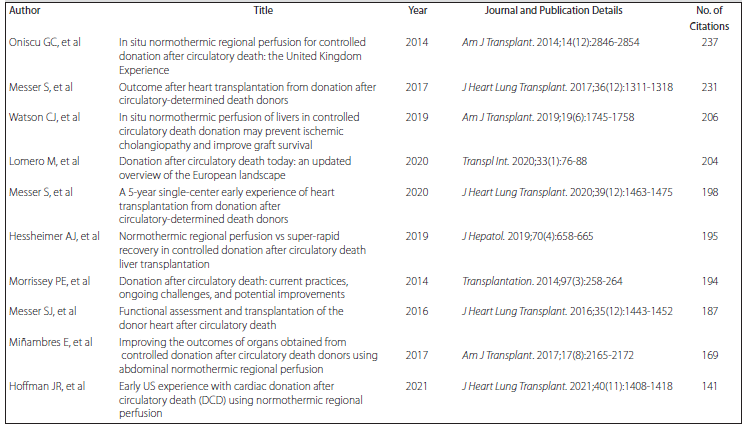
Table 7. Top-Cited Articles in the Field of Normothermic Regional Perfusion