Volume: 23 Issue: 5 May 2025
FULL TEXT
Kidney transplantation offers superior outcomes compared with dialysis but requires alternative approaches in complex cases. We present a 24-year-old male patient with end-stage renal disease, neurogenic bladder, and iliac vessel thrombosis who underwent orthotopic kidney transplant with concurrent native nephrectomy. Despite challenges, including postopera-tive double J stent migration requiring reexploration, the patient achieved stable graft function at 14-month follow-up. This case highlights the feasibility of orthotopic transplant in high-risk patients when performed at experienced centers. Successful outcomes depend on meticulous surgical technique and multidisciplinary management.
Key words : End-stage renal disease, Nephrectomy, Renal transplantation
Introduction
Compared with dialysis, kidney transplantation is superior in terms of life expectancy and improves the quality of life in patients with end-stage renal disease.1 Conventionally, the graft is placed in an extraperitoneal place in the lower abdomen. However, in certain situations, conventional methods cannot be used for cases with diseased iliac vessels, the presence of a Mitrofanoff channel, or a history of previous surgeries. In such cases, grafts can be placed in an orthotopic position with concurrent or staged native nephrectomy. This technique is challenging, and only high-volume centers are practicing this technique. We present a case of a 24-year-old male patient with diseased iliac vessels and previous history of augmentation ileo-cystoplasty who under-went an orthotopic graft placement with concurrent native nephrectomy.
Case Report
A 24-year-old male patient, with known end-stage renal disease and on maintenance hemodialysis twice weekly via left radiocephalic arteriovenous fistula for the past 6 months, presented to our clinic in March 2023 for renal transplant workup.
Patient history
The patient had a history of augmentation ileo-cystoplasty, Mitrofanoff procedure, and V-quad-rilateral-Z plasty in February 2021 for neurogenic bladder dysfunction. The patient’s average urine output ranged between 300 and 500 mL. He was unable to void per urethra and performed clean intermittent self-catheterization via Mitrofanoff 3 times a day. The patient had no history of hypertension and never had a renal biopsy. His history also included repeated femoral catheter insertion for hemodialysis.
Pretransplant workup
In pretransplant assessment, an ultrasonography showed bilateral small kidneys. An echocardio-graphy showed normal left ventricle size and systolic function with an ejection fraction of 63%. Chest radiography showed no abnormality.
The lower extremity venography revealed complete stenosis at the level of the right femoral vein and partial thrombus in the left common iliac vein with collaterals (Figure 1). On cystoscopy, the urethra was normal in its entire length, and bladder capacity under general anesthesia was 1000 mL.
The patient’s younger brother was selected as the donor, and HLA typing showed 1 haplotype, 3 antigen match. The donor’s computed tomography pyelog-raphy revealed double right renal arteries and renal veins. On the left side, the donor had a single renal artery with early division and a single left renal vein. A decision was made to procure the donor’s left kidney.
In the recipient, because the right iliac fossa was occupied and iliac vessels on the left side were diseased, a decision was made to perform an orthotopic left kidney transplant with peritransplant native nephrectomy in October 2023.
Operative details
After aseptic measures, a left flank supracostal approach above the eleventh rib was used. Subcutaneous fat and muscles were incised in the line of incision. The pleura and peritoneum were saved. The left native kidney, renal artery, and vein were mobilized. The aorta was also mobilized with the intention of anastomosing the graft artery with the aorta.
Graft findings
The graft was procured via an incision using a supracostal approach above the eleventh rib, and bench dissection was performed. The graft had a single renal artery, vein, and ureter (Figure 2). Left native nephrectomy was performed. The graft renal vein was anastomosed with a native renal vein in an end-to-end manner via 6-0 Prolene. The vein anastomosis time was 19 minutes and 40 seconds. The graft renal artery was anastomosed directly with the native left renal artery stump in an end-to end manner using Prolene 6-0 (Figure 3). The arterial anastomosis time was 13 minutes and 4 seconds. On removal of the clamps, prompt urine formation was started. A uretero-ureterostomy was made over a 6F double J stent. The warm ischemia time was 1 minute and 35 seconds, and the cold ischemia time was 84 minutes and 55 seconds. Total ischemia time was 85 minutes and 20 seconds. A suction drain was placed, and the wound was closed in a reverse manner. The patient’s extubation procedure was uneventful, and the patient was moved to the intensive care unit. The renal arterial resistive index was 0.6.
Postoperative course
The patient had an uneventful postoperative recovery. The patient received a triple therapy (low-dose cyclosporine, azathioprine, prednisone) immunosup-pression regimen, and prophylaxis with isoniazid plus trimethoprim-sulfamethoxazole was started from day 1. The patient’s serum creatinine improved from 3.5 to 1.8 mg/dL in the first 24 hours.
On postoperative day 10, the patient showed good recovery, and removal of the double J stent was planned. Intraoperatively, the double J stent was not found in the augmented bladder and was seen in the ureter on fluoroscopic images. Multiple attempts were made to negotiate the ureter via ureteroscopy but failed. Thus, a decision was made to explore and remove the double J stent at a later date.
On postoperative day 21, the patient was reexplored. A left-sided Gibson incision was made, and the retroperitoneal cavity was reached. The ureter with distal loop of the double J stent was identified. The ureter was cut open, and the stent was removed. The ureter was reimplanted in the augmented bladder over a splint that was taken out through the Mitrofanoff channel. After 10 days, the splint was removed, and the patient was discharged from the hospital.
Follow-up
During a follow-up period of 14 months, the patient was admitted twice with febrile urinary tract infection, with the causative agent being Escherichia coli. In August 2024, the patient was admitted with fever, graft dysfunction, and a raised serum creatinine level of 2.9 mg/dL. A graft biopsy was performed as the culture did not grow any microorganisms. On histopathology, moderate tubular atrophy associated with interstitial fibrosis and dense infiltrate was seen. Many tubules contained tubular micro-abscesses in the lumen. However, the patient responded well to meropenem and achieved nadir creatinine level over 1 week. The patient has maintained regular follow-up and maintained normal graft function, with posttransplant serum creatinine levels ranging between 1.4 and 1.7 mg/dL.
Discussion
Orthotopic kidney transplant in patients with augmented bladders and diseased iliac vessels presents surgical challenges. Despite the challenges, such cases can be managed with an expert surgical team and a multidisciplinary approach. This case highlights the complexity, postoperative compli-cations, and successful outcome of such a procedure in a young male patient with a history of neurogenic bladder dysfunction who had required augmentation ileo-cystoplasty and multiple prior interventions.
The presence of a neurogenic bladder in our patient had necessitated augmentation ileo-cystop-lasty and the Mitrofanoff procedure, complicating subsequent renal transplant because of altered urinary tract anatomy and function. The patient’s inability to void per urethra and reliance on clean intermittent self-catheterization also put him at risk of graft pyelonephritis and recurrent urinary tract infection.2
Given our patient’s thrombosed common iliac vessels and occupied right iliac fossa because of the presence of a Mitrofanoff channel, the decision to perform an orthotopic kidney transplant was critical, ensuring adequate vascular supply of graft. A peritransplant native nephrectomy further added to the potential surgery and anesthesia complications, but a transplant can be performed safely when needed.3,4
In our case, the graft renal vein was anastomosed with the native renal vein while the graft renal artery was anastomosed with the native renal artery stump, ensuring adequate blood supply of the graft. Different options have been previously described in the literature, including splenic vessels and portal system.5,6 Gil-Vernet and colleagues were the first to perform an anastomosis of the renal vessels to the splenic vessels; procedures included end-to-end anastomoses, and short gastric vessels maintained the viability of the spleen.7 Although such cases present a challenge for the surgeon, our study high-lighted that, in cases where alternative options have failed, direct aortic anastomosis is a viable option.
Among such cases, commonly encountered com-plications include delayed graft function, vascular complications with arterial stenosis, and vascular thrombosis.8 In addition, urinary fistula and obstruction are 2 frequent types of urinary comp-lications.9 In our patient, the migration of the double J stent into the ureter is a rare complication, and the failure of endoscopic removal led to increased morbidity and prolonged hospital stay.
As reported in the literature, graft survival after orthotopic kidney transplant is comparable to conventional heterotopic kidney transplant.10 Good graft function at 1-year follow-up in our patient supports the previous literature.
Conclusions
Orthotopic kidney transplant in patients with augmented bladders and diseased iliac vessels is a complex but feasible procedure with successful outcomes when performed by experienced teams. This case demonstrated that, with careful surgical planning, patients with challenging anatomical and vascular issues can achieve good graft function. Despite posto-perative complications, the patient has maintained stable renal function at 1-year follow-up, reinforcing the viability of orthotopic kidney transplant as an alternative when conventional methods are not possible.
References:
- Wolfe RA, Ashby VB, Milford EL, et al. Comparison of mortality in all patients on dialysis, patients on dialysis awaiting transplantation, and recipients of a first cadaveric transplant. N Engl J Med. 1999;341(23):1725-1730. doi:10.1056/NEJM199912023412303
CrossRef - PubMed - Lopez Pereira P, Ortiz Rodriguez R, Fernandez Camblor C, et al. Renal transplant outcome in children with an augmented bladder. Front Pediatr. 2013;1:42. doi:10.3389/fped.2013.00042
CrossRef - PubMed - Veroux M, Zerbo D, Basile G, et al. Simultaneous native nephrectomy and kidney transplantation in patients with autosomal dominant polycystic kidney disease. PLoS One. 2016;11(6):e0155481. doi:10.1371/journal.pone.0155481
CrossRef - PubMed - Gadelkareem RA, Abdelgawad AM, Mohammed N. Simultaneous kidney transplantation and ipsilateral native nephrectomy in patients with autosomal dominant polycystic kidney disease. World J Transplant. 2022;12(9):310-312. doi:10.5500/wjt.v12.i9.310
CrossRef - PubMed - Khan MF, Subramanya AM, Siddini V, Dubey D, Lochan R, Ballal S. A case of orthotopic renal transplant in a patient with diffuse atherosclerosis. Indian J Transplant. 2023;17(4):457-460. doi:10.4103/ijot.ijot_40_23
CrossRef - PubMed
- Aguirrezabalaga J, Novas S, Veiga F, et al. Renal transplantation with venous drainage through the superior mesenteric vein in cases of thrombosis of the inferior vena cava. Transplantation. 2002;74(3):413-415. doi:10.1097/00007890-200208150-00022
CrossRef - PubMed - Gil-Vernet JM, Gil-Vernet A, Caralps A, et al. Orthotopic renal transplant and results in 139 consecutive cases. J Urol. 1989;142(2 Pt 1):248-252. doi:10.1016/s0022-5347(17)38721-9
CrossRef - PubMed - Fananapazir G, Troppmann C. Vascular complications in kidney transplant recipients. Abdom Radiol (NY). 2018;43(10):2546-2554. doi:10.1007/s00261-018-1529-9
CrossRef - PubMed - Hernández Garcia E, Ruiz Fuentes MC, Gracia Guindo MC, Lopez Gonzalez Gila JD, Ruiz Fuentes N, Osuna Ortega A. Development of ureteral stenosis/obstruction in kidney transplant. Transplant Proc. 2020;52(2):527-529. doi:10.1016/j.transproceed.2019.11.047
CrossRef - PubMed - Artiles Medina A, Gómez Dos Santos V, Díez Nicolás V, et al. Kidney autotransplantation and orthotopic kidney transplantation: two different approaches for complex cases. Adv Urol. 2022;2022:9299397. doi:10.1155/2022/9299397
CrossRef - PubMed

Volume : 23
Issue : 5
Pages : 379 - 382
DOI : 10.6002/ect.2025.0075
From the 1Department of Urology and the 2Department of Nephrology, Sindh Institute of Urology and Transplantation, Karachi, Pakistan
Acknowledgements: The authors have not received any funding or grants in support of the presented research or for the preparation of this work and have no declarations of potential conflicts of interest.
Corresponding author: Hamza Bashir, Department of Urology, Sindh Institute of Urology and Transplantation, Karachi, Pakistan
Phone: +92 3083415441
E-mail: Hamzabashir961@gmail.com
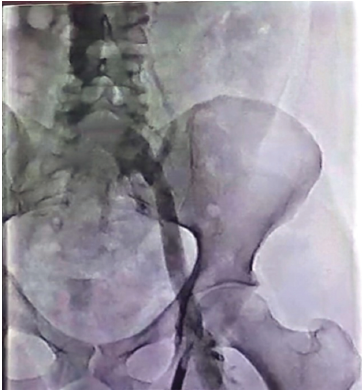
Figure 1. Partial Thrombus in Left Common Iliac Vein
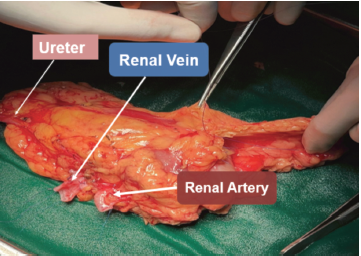
Figure 2. Graft Bench Dissection Showing a Single Renal Artery, a Single Renal Vein, and a Single Ureter
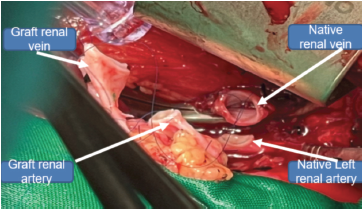
Figure 3. Vascular Anastomosis Between Graft and Native Vessels