Volume: 23 Issue: 11 November 2025
FULL TEXT
Objectives: Organ transplant recipients have a higher risk of developing cancer than the general population because of prolonged posttransplant survival and immunosuppressive therapy. Cancer is an important health problem for transplant centers. In this study, we evaluated cancer incidence in patients who underwent organ transplant at our center.
Materials and Methods: In this retrospective, single-center study, we analyzed patients who received organ transplants at Başkent University Faculty of Medicine Hospital (Türkiye) between 2000 and 2023. We included kidney, liver, and heart transplant recipients aged ≥18 years old and examined patients diagnosed with cancer during posttransplant follow-up in detail. A total of 1047 of 1271 kidney, 204 of 512 liver, and 70 of 117 heart transplant recipients met the inclusion criteria.
Results: Cancer developed in 63 kidney (6.0%), 16 liver (7.8%), and 3 heart (4.3%) transplant recipients. Of 1321 transplant recipients who met inclusion criteria, 82 (6.2%) developed cancer (62 males [75.6%] and 20 females [24.4%]). Among this group, 23 patients (28%) had deceased donors and 59 (72%) had living donors. One kidney transplant recipient developed squamous cell carcinoma, followed by basal cell carcinoma approximately 1 year later. Among patients diagnosed with cancer, 33 (40.3%) developed basal or squamous cell skin cancers, 13 (15.9%) developed posttransplant lymphoproliferative disorder/lymphoma, 6 (7.3%) developed Kaposi sarcoma, and 6 (7.3%) developed papillary thyroid carcinoma. At the time of study, 60 patients (73.2%) were alive.
Conclusions: Posttransplant malignancy is a sub-stantial health issue. However, early detection through close monitoring allows for timely intervention, improving prognosis. Detection of disease at an early stage enables treatment with surgical resection in most patients. Early diagnosis is needed in this patient group with a high risk of malignancy.
Key words : Cancer, Solid-organ transplant
Introduction
Organ transplant is a life-saving treatment option for patients with end-stage organ failure. Chronic immunosuppressive treatments are used to prevent graft rejection in these patients. Although these treat-ments prolong transplant success and posttransplant survival, they can cause some morbidities.1 An important morbidity is cancer.2 The risk of developing cancer in organ transplant patients is higher than the risk in the general population.3 Prolonged overall survival among patients after transplant makes this issue important. The risk of cancer increases in transplant patients because of immunosuppression and oncogenic viral infections.1 Immunosuppressive drugs greatly increase the posttransplant risk of malignancy by weakening the immune response against cancer and facilitating the action of oncogenic viruses.4 The risk of all types of skin cancers is in-creased but especially nonmelanoma skin cancer.1,5-8 In addition, risk of malignancies caused by viral infections is also higher among transplant recipients, including non-Hodgkin lymphoma and Hodgkin lymphoma (both due to Epstein-Barr virus), Kaposi sarcoma (from human herpesvirus 8 [HHV8]), anogenital cancers (from human papillomavirus), and liver cancer (from hepatitis C and B viruses).1
In this study, we aimed to evaluate the frequency of cancer developing during the follow-up of organ transplant recipients in our center.
Materials and Methods
In this single-center retrospective study, we eva-luated patients who underwent organ transplant at Başkent University Faculty of Medicine Hospital (Türkiye) between January 2000 and December 2023. Included patients were those who underwent kidney, liver, and heart transplant and who were aged ≥18 years of age. We examined medical records of patients diagnosed with cancer during post-transplant follow-up. During our study period, we reviewed 1900 medical records of transplant recipients (1271 kidney transplants, 512 liver transplants, and 117 heart transplants); 1321 transplant recipients (1047 kidney, 204 liver, and 70 heart) met the inclusion criteria (the remaining recipients were aged <18 years). The follow-up period was from the date of transplant to December 31, 2023 (the last day on which we reviewed study data) or the date of death, whichever came first.
Results
Cancer developed in 82 of the 1321 transplant recipients (6.2%) included in our study (among 1047 kidney transplants, 204 liver transplants, and 70 heart transplants). Of the 82 patients diagnosed with cancer, 63 patients (76.8%) received kidney transplants, 16 (19.5%) received liver transplants, and 3 (3.7%) received heart transplants. Sixty-two patients were male (75.6%) and 20 (24.4%) were female. Median age at transplant was 46 years (range, 18-68 y). Among 82 patients, 23 (28%) had deceased donors transplants and 59 (72%) had living donor transplants.
The mean time between transplant and diagnosis of de novo malignancy was 49.8 months (range, 0.4-219.1 months). The most frequent cancers were basal and squamous skin cancers in 33 patients (40.3%) and posttransplant lymphoproliferative disorder (PTLD)/lymphoma in 13 patients (15.9%) (Figure 1). In addition, 6 patients (7.3%) developed Kaposi sarcoma and 6 patients (7.3%) developed papillary thyroid carcinoma. Sixty patients (73.2%) diagnosed with cancer were alive at the time of our analysis.
Discussion
Cancer is more commonly seen in patients who have undergone transplant compared with the general population. In the most comprehensive study, in which >175 000 patients were evaluated in a large cohort study, risk of cancer increased approximately 2 times compared with the general population.1 Cancer development is an important cause of morbidity and mortality for transplant patients. Therefore, during follow-up of transplant patients, screening and early diagnosis, along with selection of appropriate immunosuppressive treatment regimens, can enable these patients to have increased lifespans and better quality of life.
In our study, we retrospectively examined the data of 1321 adult kidney, liver, and heart transplant recipients. In our center, the overall cancer incidence among total kidney, liver, and heart transplant recipients was 6.2%. In a cohort study from Engels and colleagues that examined 175 732 transplant recipients, 10 656 transplant recipients were diag-nosed with malignancy (ie, approximately 6%).1 In a previous study that evaluated posttransplant malignancy in patients who underwent renal and liver transplant at our center, the incidence of cancer was found to be 4.2%.9
More than half of the patients diagnosed with cancer were diagnosed with nonmelanoma skin cancer and PTLD. The most common cancer observed was basal cell and squamous cell carcinoma. Skin cancers represent approximately 40% to 50% of all cancers diagnosed after a transplant.10 In our study, we also found that 40.3% of our patients developed skin cancer. The most important factor in the pathogenesis of skin carcinoma in transplant patients is exposure to ultraviolet radiation.11 Therefore, all patients should avoid direct exposure to the sun and be informed to choose appropriate clothing for outdoor activities and to use sunscreens with a high sun protection factor.11
The incidence of PTLD in transplant patients varies between transplant centers, possibly because of different patient populations, allograft types, and immunosuppressive treatment regimens. The most important risk factors for PTLD are the degree of immunosuppression in the organ transplant recipient and the serological status of Epstein-Barr virus. In addition, the organ that is transplanted, the time elapsed after the transplant, and the age of the recipient are other determining risk factors. The incidence of PTLD in transplant patients can go up to 20% in different series, depending mostly on the transplanted organ.12 Intestinal and multiorgan transplant recipients (12%-17%) have the highest risk, followed by lung (6%-10%), heart (3%-5%), liver (2%-3%), and kidney (1.5%-2.5%) transplant recipients.13 In the present study, we found that PTLD developed in 13 of our patients (15.9%). Of patients diagnosed with PTLD, 4 (4.8%) had liver transplants and 9 (10.9%) had kidney transplant, which is compatible with the literature. The ages of these patients in our study at the time of diagnosis ranged from 22 to 55 years, and the average age at the time of diagnosis was 40 years. When we compared the PTLD rate in our study with the study of Opelz and Döhler, which included 200 000 transplant patients, the PTLD rate in our study was approximately 3 times higher.13 This may be because our number of patients represented a smaller population; therefore, age differences of the patients included in the study may have led to this result.
The risk of kidney cancer increases in liver and heart transplant recipients, but the highest risk is seen in renal transplant patients.1 In our study, 5 patients were diagnosed with renal cell carcinoma, and 8 patients were diagnosed with nonrenal cell carcinoma genitourinary cancers. All of our patients who were diagnosed with renal cell carcinoma were kidney transplant recipients. Among patients diag-nosed with genitourinary cancer other than kidney cancer, 6 received kidney transplants and 2 received liver transplants. Thus, 11 of 13 genitourinary cancer patients in our study were renal transplant recipients. When we only examined the 1047 renal transplant recipients in our study, we found that 5 of these patients (0.5%) developed renal cell carcinoma and 6 (0.5%) developed nonrenal cell carcinoma genitourinary cancer (0.5%). In the large cohort study from Engels and colleagues, the incidence of renal cell carcinoma was approximately 0.4% and the incidence of bladder and prostate cancer was approximately 0.7%.1 In a study recently published in our country of Türkiye that included only renal transplant patients, the incidence of posttransplant renal cell carcinoma was 0.6% and the incidence of bladder and prostate cancer was 0.6% in renal transplant patients.14
Kaposi sarcoma is a multicentric neoplasm originating from lymphatic endothelium-derived cells that are infected with Kaposi HHV8. The prevalence of Kaposi sarcoma following organ transplant can vary substantially, largely contingent on the prevalence of HHV8 infection within the general population. The prevalence of posttransplant Kaposi sarcoma parallels the prevalence of HHV8 infection.15 For this reason, different rates are observed between study centers. In our study, 6 patients (7.3%) were diagnosed with Kaposi sarcoma. All of these patients were kidney transplant recipients.
In addition, 6 patients were diagnosed with papillary thyroid carcinoma, with 1 being a liver transplant recipient and 5 being kidney transplant recipients. In addition, 3 patients who underwent heart transplant were diagnosed with other types of cancer. These patients were diagnosed with squamous cell carcinoma, signet ring cell gastric cancer, and lung neuroendocrine tumor.
Conclusions
Posttransplant malignancy is an important health problem. Early diagnosis is important in this patient group with a high risk of malignancy. With close monitoring of these patients, our center detected most patients in the early stages, providing a favorable prognosis. Detection of the disease at an early stage allows for the possibility of treatment with surgical resection in most patients. Other treatment options such as chemotherapy and radiotherapy and immunotherapies (their use is still a major concern for posttransplant patient groups) should be carefully reviewed, and aggressive treatments should be applied to selected patients. However, the relationship between immunosuppression and malignancy should be taken into consideration, and attention is needed regarding the selection and follow-up of immunosuppressive treatment.
A better understanding of cancer risk in organ transplant recipients will help clarify the role of the immune system, infections, and other factors in the development of malignancy and may identify opportunities to improve transplant safety.
References:
- Engels EA, Pfeiffer RM, Fraumeni JF, Jr, et al. Spectrum of cancer risk among US solid organ transplant recipients. JAMA. 2011;306(17):1891-901. doi:10.1001/jama.2011.1592
CrossRef - PubMed - Vajdic CM, van Leeuwen MT. Cancer incidence and risk factors after solid organ transplantation. Int J Cancer. 2009;125(8):1747-1754. doi:10.1002/ijc.24439
CrossRef - PubMed - Rossi AP, Klein CL. Posttransplant malignancy. Surg Clin North Am. 2019;99(1):49-64. doi:10.1016/j.suc.2018.09.004
CrossRef - PubMed - Gutierrez-Dalmau A, Campistol JM. Immunosuppressive therapy and malignancy in organ transplant recipients: a systematic review. Drugs. 2007;67(8):1167-1198. doi:10.2165/00003495-200767080-00006
CrossRef - PubMed - Collett D, Mumford L, Banner NR, Neuberger J, Watson C. Comparison of the incidence of malignancy in recipients of different types of organ: a UK Registry audit. Am J Transplant. 2010;10(8):1889-1896. doi:10.1111/j.1600-6143.2010.03181.x
CrossRef - PubMed - Laing ME, Moloney FJ, Comber H, Conlon P, Murphy GM. Malignant melanoma in renal transplant recipients. Br J Dermatol. 2006;155(4):857. doi:10.1111/j.1365-2133.2006.07395.x
CrossRef - PubMed - Sampaio MS, Cho YW, Qazi Y, Bunnapradist S, Hutchinson IV, Shah T. Posttransplant malignancies in solid organ adult recipients: an analysis of the U.S. National Transplant Database. Transplantation. 2012;94(10):990-998. doi:10.1097/TP.0b013e318270bc7b
CrossRef - PubMed - Vajdic CM, McDonald SP, McCredie MR, et al. Cancer incidence before and after kidney transplantation. JAMA. 2006;296(23):2823-2831. doi:10.1001/jama.296.23.2823
CrossRef - PubMed - Rahatli S, Altundag O, Ayvazoglu Soy E, Moray G, Haberal M. Posttransplant malignancies in adult renal and hepatic transplant patients. Exp Clin Transplant. 2020;18(4):470-473. doi:10.6002/ect.2018.0177
CrossRef - PubMed - Mittal A, Colegio OR. Skin cancers in organ transplant recipients. Am J Transplant. 2017;17(10):2509-2530. doi:10.1111/ajt.14382
CrossRef - PubMed - Euvrard S, Kanitakis J, Claudy A. Skin cancers after organ transplantation. N Engl J Med. 2003;348(17):1681-1691. doi:10.1056/NEJMra022137
CrossRef - PubMed - Dharnidharka VR, Webster AC, Martinez OM, Preiksaitis JK, Leblond V, Choquet S. Post-transplant lymphoproliferative disorders. Nat Rev Dis Primers. 2016;2:15088. doi:10.1038/nrdp.2015.88
CrossRef - PubMed - Opelz G, Döhler B. Lymphomas after solid organ transplantation: a collaborative transplant study report. Am J Transplant. 2004;4(2):222-230. doi:10.1046/j.1600-6143.2003.00325.x.
CrossRef - PubMed - Karatas M, Okut G, Simsek C, et al. Genitourinary cancers following kidney transplant: Our 20 years of experience with mechanistic target of rapamycin inhibitors. Exp Clin Transplant. 2022;20(Suppl 1):145-148. doi:10.6002/ect.MESOT2021.P72
CrossRef - PubMed - Lebbé C, Legendre C, Francès C. Kaposi sarcoma in transplantation. Transplant Rev (Orlando). 2008;22(4):252-261. doi:10.1016/j.trre.2008.05.004
CrossRef - PubMed

Volume : 23
Issue : 11
Pages : 730 - 733
DOI : 10.6002/ect.2025.0081
From the 1Department of Medical Oncology, the 2Department of General Surgery and Transplantation, and the 3Department of Cardiovascular Surgery, Başkent University Faculty of Medicine, Ankara, Türkiye
Acknowledgements: The authors have not received any funding or grants in support of the presented research or for the preparation of this work and have no declarations of potential conflicts of interest.
Corresponding author: Mehmet Nezir Ramazanoğlu, Yukarı bahçelievler Mahallesi, Mareşal Fevzi Çakmak Caddesi, 10. Sokak, No:45, 06490 Bahçelievler/Çankaya/Ankara, Türkiye
Phone: +90 506 621 23 02
E-mail: mnezir72@gmail.com
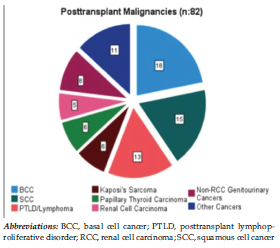
Figure 1. Posttransplant Malignancies in Our Study Patients (N = 82)