Volume: 23 Issue: 9 September 2025
FULL TEXT
Objectives: Clinical findings support the critical importance of cervical screening and the management of abnormal cervical cytology results in female organ transplant recipients. We evaluated the incidence and prognosis of atypical cervical lesions in women who are kidney and liver transplant recipients at our organ transplant center.
Materials and Methods: We performed a retrospective cohort study of patients at Başkent University, Ankara, Türkiye, from March 2003 to January 2023. We included women who underwent at least 1 cervical cytology after kidney or liver transplant. The Bethesda System was used to classify cervical cytology results. We analyzed follow-up data by using descriptive statistics.
Results: Our study included 124 patients, with 98 (79%) being kidney transplant recipients and 26 (21%) being liver transplant recipients. The median age was 37.5 years. Atypical cervical cytology was detected in 34 patients (27.4%). The distribution of cervical cytology results was 90 with normal cytology (72.6%), 10 with atypical squamous cells of undetermined significance (8.1%), 23 with low-grade squamous intraepithelial lesion (18.5%), and 1 with high-grade squamous intraepithelial lesion (0.8%). Among these, 42 patients (33.9%) underwent colposcopy, revealing abnormal results in 10 patients (23.8%), including 1 (2.38%) with cervical cancer.
Conclusions: The findings underline the significant prevalence of atypical cervical lesions among solid-organ recipient patients, highlighting the need for proactive cervical screening and management strategies in this high-risk population.
Key words : Abnormal cervical cytology, Cervical dysplasia, Immunosuppression, Liver transplant, Renal transplant
Introduction
Cervical cancer is the most prevalent gynecological cancer globally.1 Human papillomavirus (HPV) is the leading cause of abnormal cervical cytology and cervical cancer. Cervical cytology is a critical screening tool for the detection of atypical cervical lesions before progression to cervical cancer, leading to better outcomes and improved management.2
Generally, most HPV infections in the normal population do not require intervention.3 Within 2 years, more than 90% of all HPV infections resolve spontaneously.4 According to the American Society for Colposcopy and Cervical Pathology (ASCCP), follow-up care for low-risk patients, including cytology results indicating low-grade lesions, the absence of HPV 16 or 18 infection, and normal colposcopy, is considered adequate.3
Immunosuppression is associated with persistent HPV infections and an increased risk of cervical dysplasia.5 Female organ transplant recipients repre-sent one of the largest subsets of the immuno-compromised population.6 The prevalence of HPV and its perpetuation in immunocompromised individuals poses a substantial risk to organ transplant recipients.7 Among these patients, there is a tendency for resistant HPV infections and an elevated risk of cervical dysplasia because of long-term immunosuppressive therapy.5,8 In addition, immunosuppressive agents such as azathioprine and cyclosporine have carcino-genic properties.9
After organ transplant, the incidence of cervical intraepithelial lesions can increase up to 16-fold, and the incidence of cervical and vulvovaginal tumors can rise to 5-fold compared with their immuno-competent counterparts.10,11 These factors emphasize the critical importance of cervical screening and the management of abnormal cervical cytology results in organ transplant recipients. Therefore, we aimed to evaluate the incidence and prognosis of atypical cervical lesions in women who are kidney and liver transplant recipients at our organ transplant center.
Materials and Methods
This retrospective cohort study was conducted at the Department of Obstetrics and Gynecology of Başkent University, Ankara, Türkiye, between March 2003 and January 2023.
The Başkent University Institutional Review Board approved the study protocol, and we upheld ethical standards throughout the research process. We performed the study in accordance with the ethical standards in the 1964 Helsinki Declaration.
We included female kidney or liver organ transplant recipients who had undergone at least 1 cervical cytology screening after transplant. Participants were screened with the use of either conventional PAP smears or liquid-based cytology over the defined study period. We obtained the following data from hospital medical records and patient files: age, PAP smear results, interventions, biopsy results, follow-up care, and survival outcomes.
Cervical cytology followed the Bethesda System for Reporting Cervical Cytology.12 Abnormal cyto-logy reports included atypical squamous cells of undetermined significance (ASC-US), atypical squamous cells “cannot rule out” high-grade squamous intraepithelial lesion (ASC-H), low-grade squamous intraepithelial lesion (LSIL), high-grade squamous intraepithelial lesion (HSIL), atypical glandular cells-not otherwise specified (AGC-NOS), adenocarcinoma in situ (AIS), and atypical glandular cells-suspicious for adenocarcinoma in situ or cancer neoplastic (AGC-neoplastic). Patients who had an abnormal cervical cytology and/or postcoital bleeding underwent colposcopy. Management of abnormal cervical cytology was based on the most current ASCCP guideline.3
During the study period, 124 female kidney or liver transplant recipients underwent routine cervical cytology screening. Patients who had no prior sexual intercourse history were excluded. We used descriptive statistics to characterize the variables. We presented categorical variables as frequencies and proportions. We used the χ2 test was for categorical variables. P < .05 was considered statistically signi-ficant. We used SPSS version 30.0 for statistical analyses.
Results
Among 124 patients included in the study, 98 patients (79%) were kidney transplant recipients and 26 patients (21%) were liver transplant recipients. The median age of the patients at the first screening was 37.5 years (range, 17.3-67.1 y). The median follow-up time was 169.5 months (range, 13.0-251.0 mo). Atypical cervical cytology was detected in 34 patients (27.4%). Patient characteristics are presented in Table 1.
Abnormal cervical cytology was reported in 34 patients (27.4%), and 42 patients (33.9) underwent colposcopy. Abnormal cervical cytology results were shown as follows: 23 with LSIL (18.5%), 10 with ASC-US (8.1%), and 1 with HSIL (0.8%). Cervical cytology was performed conventionally in 19 patients (15.3%) and with liquid-based methods in 105 patients (84.7%). Although conventional cytology revealed 10.5% of abnormal cytology results, 31.4% of abnormal cytology results were observed in liquid-based cytology (P = .094).
Of 42 patients who underwent colposcopy, colposcopy-directed biopsies revealed abnormal results in 10 patients (23.8%). In addition, 1 patient with normal previous cervical cytology reports showed a cervical mass 6 years after renal transplant. A cervical biopsy revealed a squamous cell carcinoma of the cervix. Results of cervical cytology, colposcopy-directed biopsies, and subsequent management after biopsy results are detailed in Table 2. Table 3 summarizes the biopsy and follow-up results of patients.
Discussion
This study highlights the incidence and prognosis
of atypical cervical lesions in kidney and liver transplant recipients, thus contributing to the growing body of literature that underscores the increased risk of cervical dysplasia in immuno-compromised patients. These findings are crucial because they contribute to understanding the unique risks faced by this group. The findings indicated that more than 25% of the participants exhibited abnormal cervical cytology, which is a significant concern given the well-documented link between HPV persistence and cervical cancer progression.
The results align with previous research indica-ting that organ transplant recipients face a substantially higher risk of developing cervical lesions, including malignancies, because of the prolonged immunosup-pressive therapy necessary after transplant.13 In a study of Mexican renal transplant recipients, abnormal cervical cytology was reported in 17.7% of cases.14
In another study of patients evaluated before kidney transplant, 27.5% showed abnormal cytology.15 In contrast, a recent study identified abnormal cervical cytology in less than 5% of the general population.16 In a population-based study from Turkey, the prevalence of abnormal cytology was 19.1% among high-risk HPV-positive patients.17 The observed prevalence of abnormal cytology in our study cohort was consistent with findings that suggested cervical intraepithelial neoplasia incidence increases 3-fold to 5-fold among immunocompromised individuals and show similarity to data in high-risk HPV-positive patients in the general population.6,17,18 The detection of atypical cervical cytology in nearly one-third of the participants underscore the essential need for rigorous cervical screening protocols in this vulnerable population.
Moreover, the 23.8% rate of abnormal findings in colposcopy-directed biopsy results highlights the potential underreporting of lesions in initial cytological assessments. In addition, we detected cervical cancer in 1 patient who had normal findings in all prior cervical cytology results. This finding further emphasizes the importance of comprehensive follow-up procedures, such as pelvic examination and colposcopy, to ensure that patients receive timely interventions. Our findings reinforce the ASCCP recommendations for enhanced surveillance and management of cervical dysplasia, particularly in patients with abnormal cytology results.3
This study’s findings also reflect the literature discussing complications associated with immuno-suppressive agents, such as azathioprine and cy-closporine, which may enhance oncogenic potential in the presence of HPV.19 Therefore, health care providers should maintain vigilance in monitoring the cervical health of transplant recipients and consider integrating HPV vaccination into pre-transplant care when appropriate, as it may provide some protection against persistent infections leading to dysplasia and cancer.
A key strength of our study lies in its focus on a specific population of kidney and liver transplant recipients, offering targeted insight into the cervical health of this population. The retrospective design allowed the collection of long-term data, providing a comprehensive view of cervical cytology outcomes over a significant period. Furthermore, adherence to the ASCCP guidelines ensured that the management of abnormal results was clinically relevant and up-to-date.
However, this study had some limitations. The retrospective nature may have introduced selection bias, as only patients with routine screening were included, possibly overlooking those with more severe or symptomatic cases. In addition, our study lacked the HPV results from study patients. The relatively small sample size limited the gener-alizability of the findings to a broader population of organ transplant recipients.
Although our study presented valuable insights, it also highlights the need for larger, multicenter studies to further stratify the risk factors associated with abnormal cervical cytology in solid-organ transplant recipients. Future research should explore the role of combined screening methods and potential adjunct therapies that could improve outcomes in this high-risk population.
References:
- Bray F, Laversanne M, Sung H, et al. Global cancer statistics 2022: GLOBOCAN estimates of incidence and mortality worldwide for 36 cancers in 185 countries. CA Cancer J Clin. 2024;74(3):229-263. doi:10.3322/caac.21834
CrossRef - PubMed - Bedell SL, Goldstein LS, Goldstein AR, Goldstein AT. Cervical cancer screening: past, present, and future. Sex Med Rev. 2020;8(1):28-37. doi:10.1016/j.sxmr.2019.09.005
CrossRef - PubMed - Perkins RB, Guido RS, Castle PE, et al. 2019 ASCCP risk-based management consensus guidelines for abnormal cervical cancer screening tests and cancer precursors. J Low Genit Tract Dis. 2020;24(2):102-131. doi:10.1097/LGT.0000000000000525
CrossRef - PubMed - Ho GY, Bierman R, Beardsley L, Chang CJ, Burk RD. Natural history of cervicovaginal papillomavirus infection in young women. N Engl J Med. 1998;338(7):423-428. doi:10.1056/NEJM199802123380703
CrossRef - PubMed - Smith RA, Andrews KS, Brooks D, et al. Cancer screening in the United States, 2019: a review of current American Cancer Society guidelines and current issues in cancer screening. CA Cancer J Clin. 2019;69(3):184-210. doi:10.3322/caac.21557
CrossRef - PubMed - Nguyen ML, Flowers L. Cervical cancer screening in immunocompromised women. Obstet Gynecol Clin North Am. 2013;40(2):339-357. doi:10.1016/j.ogc.2013.02.005
CrossRef - PubMed - Papastamelos C, Linder M. Human papillomavirus anogenital screening in solid organ transplant recipients: a narrative review. Arch Gynecol Obstet. 2023;307(4):1277-1283. doi:10.1007/s00404-022-06577-2
CrossRef - PubMed - Ok Atilgan A, Tepeoglu M, Haberal AN, Durukan E, Kuscu E, Haberal M. Papanicolaou smear findings in solid-organ transplant recipients compared with normal subjects according to the Bethesda 2001 system. Exp Clin Transplant. 2015;13(Suppl 1):219-222.
CrossRef - PubMed - Jensen P, Hansen S, Moller B, Leivestad T, Pfeffer P, Fauchald P. Are renal transplant recipients on CsA-based immunosuppressive regimens more likely to develop skin cancer than those on azathioprine and prednisolone? Transplant Proc. 1999;31(1-2):1120. doi:10.1016/s0041-1345(98)01928-9
CrossRef - PubMed - Vajdic CM, McDonald SP, McCredie MR, et al. Cancer incidence before and after kidney transplantation. JAMA. 2006;296(23):2823-28231. doi:10.1001/jama.296.23.2823
CrossRef - PubMed - Kasiske BL, Snyder JJ, Gilbertson DT, Wang C. Cancer after kidney transplantation in the United States. Am J Transplant. 2004;4(6):905-913. doi:10.1111/j.1600-6143.2004.00450.x
CrossRef - PubMed - Solomon D, Nayar R. The Bethesda System for Reporting Cervical Cytology: Definitions, Criteria, and Explanatory Notes. 3rd ed. Springer; 2015.
CrossRef - PubMed - Park ST, Song MJ, Park JS, Hur SY, Lee CW. Incidence and clinicopathologic behavior of uterine cervical carcinoma in renal transplant recipients. World J Surg Oncol. 2011;9:72. doi:10.1186/1477-7819-9-72
CrossRef - PubMed - Parra-Avila I, Jimenez-Santana ML, Barron-Sanchez RE, et al. Incidence of cervical intraepithelial lesions and human papilloma virus infection in female renal transplant recipients. Transpl Infect Dis. 2021;23(4):e13622. doi:10.1111/tid.13622
CrossRef - PubMed - Chaung KV, Zheng Y, Martella AT, et al. Risk factors for abnormal cervical cytology in women undergoing kidney transplant evaluation. Exp Clin Transplant. 2019;17(1):31-36. doi:10.6002/ect.2017.0064
CrossRef - PubMed - Arslan E, Gokdagli F, Bozdag H, Vatansever D, Karsy M. Abnormal Pap smear frequency and comparison of repeat cytological follow-up with colposcopy during patient management: the importance of pathologist’s guidance in the management. North Clin Istanb. 2019;6(1):69-74. doi:10.14744/nci.2018.93270
CrossRef - PubMed - Gultekin M, Zayifoglu Karaca M, Kucukyildiz I, et al. Initial results of population based cervical cancer screening program using HPV testing in one million Turkish women. Int J Cancer. 2018;142(9):1952-1958. doi:10.1002/ijc.31212
CrossRef - PubMed - Long ME, Chantigian PDM, Weaver AL. Cervical cytology and histology after solid organ transplant: a longitudinal cohort study. J Low Genit Tract Dis. 2018;22(4):362-366. doi:10.1097/LGT.0000000000000414
CrossRef - PubMed - Madeleine MM, Finch JL, Lynch CF, Goodman MT, Engels EA. HPV-related cancers after solid organ transplantation in the United States. Am J Transplant. 2013;13(12):3202-3209. doi:10.1111/ajt.12472
CrossRef - PubMed

Volume : 23
Issue : 9
Pages : 583 - 586
DOI : 10.6002/ect.2025.0009
From the 1Department of Gynecology and Obstetrics, Başkent University School of Medicine, the 2Başkent University School of Medicine, the 3Department of Pathology, Başkent University School of Medicine, and the 4Department of General Surgery, Başkent University School of Medicine, Ankara, Türkiye
Acknowledgements: The authors have not received any funding or grants in support of the presented research or for the preparation of this work and have no declarations of potential conflicts of interest.
Corresponding author: Mehmet Tunç, Başkent University, School of Medicine, Department of Obstetrics and Gynecology, Şehit Temel Kuğuoğlu Cd. No: 34/A, 06490, Bahçelievler, Ankara, Türkiye
Phone: +90 532 064 66 77
E-mail: mhmttunc@gmail.com
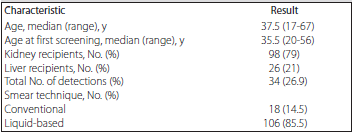
Table 1. Characteristics of Study Patients
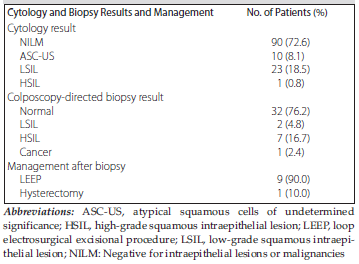
Table 2. Cytology and Colposcopic Biopsy Results and Management After Biopsy
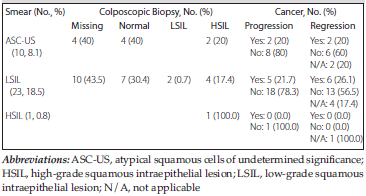
Table 3. Smear, Colposcopic Biopsy, and Follow-up Results of Study Patients