Volume: 23 Issue: 3 March 2025
FULL TEXT
Objectives: Liver transplant is the standard treatment for end-stage liver disease in children, although it carries inherent risks, including complications like bowel perforation. In this retrospective study, we assessed the frequency of bowel perforation in pediatric liver transplant recipients and identified potential risk factors associated with this complication. Our comparison involved pediatric liver transplant recipients who experienced bowel perforation after transplant versus those who did not develop bowel perforation after transplant.
Materials and Methods: Our retrospective cross-sectional study analyzed 317 children who underwent liver transplant at Shiraz Organ Transplant Center between 2012 and 2020. We reviewed patient records for demographics, surgical history, and perioperative details. We categorized the study population into 2 groups: those with bowel perforation posttransplant and those without bowel perforation posttransplant. We used analyses to identify significant differences between the groups.
Results: Among the 317 patients, 16 (5%) developed bowel perforation. Risk factors, including previous surgery, young age, low weight, and Epstein-Barr virus infection, were associated with bowel perforation. Seven patients with reperforation had a 50% survival rate, and mortality was directly linked to perforation.
Conclusions: Bowel perforation after pediatric liver transplant is influenced by several risk factors, including previous surgery, young age, low weight, and Epstein-Barr virus infection. Early identification of these risk factors is crucial for timely intervention. Further studies are needed to delve into preventive measures and enhance patient outcomes.
Key words : Children, Infection, Intestinal perforation
Introduction
Liver transplant has emerged as the gold standard treatment of end-stage liver disease and acute liver failure among pediatric patients. Advancements in surgical techniques, immunosuppressive medications, and postoperative care have substantially enhanced the quality of life for pediatric transplant recipients.1 Despite these advances, certain challenges and potential issues persist.2 Bowel perforation, a complication with an incidence ranging from 8.3% to 14% in children undergoing liver transplant, poses a large threat, especially considering the difficulties in detecting a perforated intestine in this age group.3 Pediatric patients undergoing liver transplant are more prone to developing bowel perforation compared with their adult counterparts.3-5 In a previous study involving 72 pediatric liver transplant recipients, incidence of bowel perforation was 6.9%, underscoring its significance in this demographic.2
Children with biliary atresia undergoing liver transplant exhibited a heightened incidence of bowel perforation of 15.9%, likely attributed to the formation of tight adhesions during the Kasai operation pre-ceding liver transplant.6 Challenges in early diagnosis are compounded by the effects of large doses of steroids and immunosuppressive medications, which may mask typical clinical signs, such as fever, abdominal discomfort, tenderness, and leukocytosis.7 Immunosuppressive medications, implicated in intestinal wall necrosis, rupture, and perforation, can greatly contribute to fatalities associated with bowel perforation following liver transplant.3 Diagnostic modalities, including abdominal computed tomog-raphy, play a crucial role in the identification of signs, such as intraperitoneal drainage fluid and substantial fluid buildup, leading to the diagnosis of intestinal perforation.7
Risk factors, such as previous abdominal surgery, intraperitoneal adhesions, long-term corticosteroid usage, and high-dosage immunosuppressive medi-cation, have been identified to be associated with intestinal perforation after liver transplant.2,7 Although liver transplant undoubtedly saves lives, the heightened vulnerability of pediatric recipients to bowel perforation necessitates a nuanced exploration of contributing factors. In this retrospective study, we evaluated the frequency of bowel perforation in children after liver transplant to identify potential risk factors. By comparing patients who experienced bowel perforation after liver transplant with those who did not develop bowel perforation after liver transplant, we aimed to provide insights that can inform preventive strategies and optimize care for pediatric liver transplant recipients in Iran.
Materials and Methods
In this retrospective cross-sectional study, we initially considered 327 children aged less than 18 years who underwent liver transplant at Shiraz Organ Transplant Center affiliated with Shiraz University of Medical Sciences from March 2012 to March 2020. Exclusion criteria involved patients with unavailable medical records or insufficient records for comprehensive analysis. In addition, we excluded patients with preexisting conditions that could affect the risk of bowel perforation to ensure a more homogeneous study population and reliable comparisons.
After application of inclusion and exclusion criteria, 317 patients were deemed eligible for inclusion. We categorized patients into 2 groups: with and without bowel perforation. We examined medical records of all 317 patients for various demographic, clinical, and perioperative variables. We performed statistical analyses to determine significant differences between groups with and without bowel perforation. From medical records, we collected age at transplant, sex, underlying diseases, surgical history before transplant, paraclinical data, radiologic findings, and Pediatric End-Stage Liver Disease (PELD), Model for End-Stage Liver Disease (MELD), and Child-Turcotte-Pugh scores. We collected perioperative data, including cold and warm ischemia time, surgical approach, operative time, blood transfusion, and length of hospital stay. We collected immunosup-pressant and other drugs used after transplant, postoperative follow-up, details of the perforation and clinical presentations, and methods of repair and outcomes.
We used Shapiro-Wilk and Kolmogorov-Smirnov tests to evaluate normality of parameters. We compared parameters between the 2 groups with normal distribution with the t test and nonnormal distribution with the Mann-Whitney test. We used the χ2 test for univariate analysis and logistic regression for multivariate analysis. P < .05 was considered significant.
Shiraz University of Medical Sciences provided ethical approval; information of individuals and their outcomes was kept confidential (IR.SUMS.MED.REC.1399.350).
Results
The cohort of 317 pediatric liver transplant recipients seen at our center from 2012 to 2020 included 172 boys (54.3%) and 145 girls (45.7%). Mean age was 6.7 ± 4.9 years (range, 6 months to 17 years), with a mean weight of 23.3 ± 16.2 kg (range, 3.5-83 kg). Among the patients, 16 (5%) experienced bowel perforation after liver transplant, including 9 males (56.3%) and 7 females (43.8%). Four patients experienced reperforation: 3 experienced perforation twice and 1 experience perforation 4 times. Mean age and weight of these patients were 2.8 years and 11.5 kg, respectively. Age and weight were signi-ficantly different between groups with and without bowel perforation (P < .001). Distribution of male and female patients was not significantly different between the 2 groups (Table 1).
Indications for liver transplant
The most frequent indications for liver transplant, in order of occurrence, were biliary atresia (n = 6), progressive familial intrahepatic cholestasis (n = 4), Crigler-Najjar syndrome (n = 3), idiopathic neonatal hepatitis (n = 1), tyrosinemia (n = 1), and choledochal cyst (n = 1).
Surgical and donor characteristics
Among included patients, 43.8% had undergone previous surgery, with significant difference between groups with and without bowel perforation (P = .018).
Mean PELD/MELD score was 16.8 (range, 6-23). Twelve patients received grafts from living donors, and 4 patients received grafts from deceased donors. Surgical procedures included partial left lobe grafts, whole organ grafts, and split grafts. Various methods of cava anastomosis and biliary anastomosis were performed in patients.
Surgical factors
The average operation time was 273 minutes, ranging from 200 to 420 minutes. Portal vein clamping time averaged 49.5 minutes, ranging from 37 to 63 minutes. Five patients required blood transfusion after liver transplant.
Surgical complications and outcomes
Patients showed several complications after liver transplant, including early vascular complications, infections, internal bleeding, convulsions, biliary complications, and cardiopulmonary problems. Incidences of biliary complications, Epstein-Barr virus (EBV) infection, fistula, and cardiopulmonary problems were significantly different between the 2 groups (P < .05).
Time course and clinical manifestations
Median time between bowel perforation diagnosis and liver transplant was 12 days, with some late presentations. Clinical manifestations varied and included abdominal hernia, obstruction simulta-neously, and peritonitis.
Laboratory and imaging findings
Most patients had significant leukocytosis, with varying degrees of abdominal free fluid detected through ultrasonography. Positive cultures of abdominal free fluid were observed in patients who presented with peritonitis.
Perforation sites and repair
Perforation sites were repaired by resection, end-to-end anastomosis in 2 patients, and simple repair in another. All 4 patients (25%) who developed reper-foration underwent exploratory laparotomy in the interval between liver transplant and bowel perforation for reasons such as adhesion band as a result of obstruction or portal vein thrombosis (PVT), internal bleeding, and PVT. The method of repair in this group was enterorrhaphy.
Mortality
Despite all necessary treatment measures, 7 patients (43.7%) died, but sepsis was the cause of only 1 death, which was directly related to perforation from peritonitis with disseminated intravascular coagu-lation, septic shock, and multiorgan failure. Among the 7 deaths, 2 of 4 patients who developed reperforation died (survival rate of 50%), and mortality from sepsis in the 4 patients in the reperforation group was 25% (1 of 4 patients).
Discussion
In the present analysis of 317 pediatric liver transplant recipients with and without bowel perforations, we noted several key findings. Our primary finding revealed bowel perforations in 5% of the studied population, a rate lower than the reported incidence of 6.4% to 20% in similar studies. This disparity prompted further investigation into the multifactorial nature of posttransplant bowel perforation.2,6,9-11,13,14 Liver transplant is a standard treatment for patients with life-threatening liver disorders.1,2,10,12 Despite many advances in liver transplant procedures, complications can still happen. Bowel perforation is an infrequent complication that can cause morbidity and a high mortality rate with late diagnosis.1,3 We identified the following risk factors associated with bowel perforation: previous surgery, low age, low weight, and EBV infection. Our study provided valuable insights into the risk factors specific to the pediatric population undergoing liver transplant. The prevalence of bowel perforation in children, coupled with the associated mortality rates, underscores the need for a nuanced understanding of contributing factors and early detection strategies.
Previous surgery, especially abdominal, has been mentioned in studies as a contributory factor of bowel perforations1,2,3,6,11 because of severe adhesion that can form around the abdominal cavity; time is needed to release adhesion, making surgery more difficult. In addition, electrocautery leads to thermal injury of the bowel wall,6 especially Kasai surgery, in patients who had biliary atresia as an underlying disease before liver transplant, which is a potential risk factor of bowel perforation because of the tight adhesion.3,6 In our study, 7 patients had previous surgery in the right upper quadrant of the abdomen and 6 had undergone the Kasai procedure. Bowel perforation has been shown to be more prevalent in patients with biliary atresia.10,12 This is because these patients had lower weight and age and had undergone more previous surgery owing to more adhesion.12 In our study, biliary atresia was the most common primary disease in all patients and in those with bowel perforations.
In contrast, Sanada and colleagues believed that neither biliary atresia nor previous surgery was a risk factor for bowel perforation.10 Young age has been suggested to be one of the risk factors, and incidence of bowel perforation is higher in children than in adults.3,8,9 We found that mean age of patients with bowel perforation was significantly lower than those without bowel perforation; however, Yanagi and colleagues6 noted rates of bowel perforation after liver transplant were higher in adults. Low weight was a potential risk factor in our study. Similarly, Aslan and colleagues12 reported that low weight and young age were risk factors but just in patients whose biliary atresia was a primary disease.
The role of steroids as a risk factor for bowel perforation after liver transplant is controversial. By increasing gastric acid and pepsin production and reducing gastric mucus secretion,3 steroids increase wound healing time and risk of gastric ulceration, bleeding, and perforation.3,8,13 However, the steroid can cause colonic dysmotility and thus participate in perforation. These findings are in contrast to our study because no perforation occurred in the stomach or colon; in addition, in our center, the pediatric protocol for receiving steroids is similar to the protocol in adults on a per-weight basis.
Viral infections, especially cytomegalovirus, have been considered contributory factors.1,9,11,13 We noted a possible role of EBV in bowel perforations but not for CMV. The time of bowel perforation diagnosis ranged from 7 to 186 days after liver transplant,3 which ranged from 2 to 623 days in our study. Mortality rate after bowel perforation has been reported in up to 30% to 50% and in 50% due to sepsis.12 In our study, 43.7% died and 6.2% died from sepsis. Another study reported a mortality rate in liver transplant recipients with reperforation of 78%,13 which was 50% in our study.
Use of immunosuppression can make diagnosis difficult, and patients may have had nonspecific and vague symptoms. Thus, clinicians should maintain a high index of suspicion of bowel perforation and conduct faster exploration if patients have symptoms like nausea, vomiting, fever, abdominal pain, abdominal distention, and other general sign and symptoms. Daily ultrasonography is helpful because many patients have free fluid in the abdominal cavity, which is a safe procedure. Culture of abdominal fluid and daily white blood cell count are beneficial for diagnosis of peritonitis; as a result, detection of bowel perforation may be faster.
Our study had some limitations. The reliance on historical medical records may have introduced biases, and the retrospective design limited our ability to establish causation. In addition, the single-center design raises questions about the genera-lizability of our results to broader populations. To address these limitations, future research endeavors should prioritize multicenter prospective studies with standardized protocols to enhance the robustness and generalizability of findings.
Conclusions
In light of the identified risk factors for bowel perforation in pediatric liver transplant recipients, several recommendations emerge. Clinicians should exercise heightened vigilance in monitoring younger patients, especially those with a history of biliary atresia and previous abdominal surgery. Incorporating routine screening for viral infections, particularly EBV, may aid in early detection and intervention. Furthermore, the role of steroids as a potential risk factor necessitates careful consideration in the pediatric transplant protocol. As we navigate the complexities of posttransplant complications in children, further research is needed to unravel the specific mechanisms underlying bowel perforation. Prospective studies should delve into the interplay of immunosuppression, viral infections, and prior surgical interventions to inform targeted preventive strategies.
Our study showed that bowel perforation after pediatric liver transplant is influenced by several risk factors, including previous surgery, low age, low weight, and EBV infection. Early identification of these risk factors is crucial for timely intervention. This study provided valuable insights into the frequency and risk factors of bowel perforation in pediatric liver transplant recipients. However, it is crucial to interpret the findings within the confines of the study's limitations. The establishment of causation and the generalizability of results require careful consideration. Moving forward, collaborative efforts across multiple centers and disciplines are imperative to deepen our understanding of this complication and refine strategies for optimizing outcomes in pediatric liver transplant recipients. Further research, particularly controlled prospective studies with specific variables likely to be risk factors, is needed to elucidate the exact determinants of bowel perforations.
References:
- Rawal N, Yazigi N. Pediatric liver transplantation. Pediatr Clin North Am. 2017;64(3):677-684. doi:10.1016/j.pcl.2017.02.003
CrossRef - Dehghani SM, Nikeghbalian S, Kazemi K, et al. The outcome of bowel perforation after pediatric liver transplantation. Pediatr Transplant. 2008;12(2):146-149. doi:10.1111/j.1399-3046.2007.00829.x
CrossRef - Yilmaz M, Akbulut S, Yilmaz S. Gastrointestinal perforation after liver transplant: a single center experience. Exp Clin Transplant. 2017;15(2). doi:10.6002/ect.2012.0061
CrossRef - Weledji EP. An overview of gastroduodenal perforation. Front Surg. 2020;7:573901. doi:10.3389/fsurg.2020.573901
CrossRef - Takano S, Fukasawa M, Shindo H, et al. Risk factors for perforation during endoscopic retrograde cholangiopancreatography in post-reconstruction intestinal tract. World J Clin Cases. 2019;7(1):10-18. doi:10.12998/wjcc.v7.i1.10
CrossRef - Yanagi Y, Matsuura T, Hayashida M, et al. Bowel perforation after liver transplantation for biliary atresia: a retrospective study of care in the transition from children to adulthood. Pediatr Surg Int. 2017;33(2):155-163. doi:10.1007/s00383-016-4008-9
CrossRef - Lin J, Wang J, Yue P, et al. Treatment and outcome of intestinal perforation after liver transplant surgery in adults: a single-center experience. Ther Clin Risk Manag. 2017;13:675-678. doi:10.2147/TCRM.S137161
CrossRef - Sun C, Song Z, Dong C, et al. The diagnosis and management of intestinal obstruction after pediatric liver transplantation. Pediatr Transplant. 2022;26(1):e14123. doi:10.1111/petr.14123
CrossRef - Sanada Y, Mizuta K, Wakiya T, et al. Bowel perforation after pediatric living donor liver transplantation. Pediatr Surg Int. 2011;27(1):23-27. doi:10.1007/s00383-010-2722-2
CrossRef - Guo CB, Pu CL, Li YC, et al. Thirty-five consecutive pediatric living donor liver transplantation: experiences and lessons learned from a single center. Hepatogastroenterology. 2014;61(130):391-397.
- Aslan S, Akış Yıldız Z, Yazar Ş, et al. Gastrointestinal perforations and associated risk factors in children after liver transplantation. Pediatr Transplant. 2021;25(3):e13911. doi:10.1111/petr.13911
CrossRef - Kumbhari V, Sinha A, Reddy A, et al. Algorithm for the management of ERCP-related perforations. Gastrointest Endosc. 2016;83(5):934-943. doi:10.1016/j.gie.2015.09.039
CrossRef - Barut B, Akbulut S, Kutluturk K, et al. Determination of risk factors affecting mortality in patients with gastrointestinal perforation after pediatric liver transplantation. Pediatr Transplant. 2019;23(4):e13415. doi:10.1111/petr.13415
CrossRef

Volume : 23
Issue : 3
Pages : 202 - 206
DOI : 10.6002/ect.2025.0022
From the 1Shiraz Transplant Research Center, Shiraz University of Medical Science, Shiraz, Iran; the 2Pediatric Gastroenterology and Hepatology Research Center, Zabol University of Medical Sciences, Zabol, Iran; the 3Department of Surgery, School of Medicine Abu Ali Sina for Medicine and Organ Transplant Shiraz University of Medical Sciences; and the 4Department of Pediatrics, School of Medicine, Namazi Teaching Hospital, Abu Ali Sina for Medicine & Organ Transplant, Shiraz University of Medical Sciences, Shiraz, Iran
Acknowledgements: The authors have not received any funding or grants in support of the presented research or for the preparation of this work and have no declarations of potential conflicts of interest.
Corresponding author: Gholam Reza Sivandzadeh, Department of Internal Medicine, School of Medicine, Gastroenterohepatology Research Center, Internal Medicine Research Institute, Shiraz University of Medical Sciences, Shiraz, Iran
E-mail: sivandghreza@gmail.com
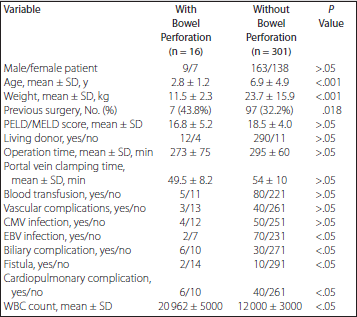
Table 1. Demographic and Clinical Characteristics of Pediatric Liver Transplant Recipients