Volume: 23 Issue: 10 October 2025
FULL TEXT
Objectives: Allogeneic stem cell transplant is the only curative strategy for a variety of pediatric malignant/nonmalignant diseases. The introduction of posttransplant cyclophosphamide therapy as prophylaxis for graft-versus-host disease in haploi-dentical bone marrow transplant setting has been a game changer and is also being investigated for its benefits in matched hematopoietic stem cell transplants. The effect of posttransplant cyclophosphamide therapy for prophylaxis of graft-versus-host disease for fully matched hematopoietic stem cell transplants remains unclear for pediatric patients. As a part of conditioning regimen, antithymocyte globulin allows in vivo T-cell depletion for graft-versus-host disease prophylaxis and is known to reduce graft-versus-host disease incidence without increasing relapse. We investigated whether posttransplant cyclophosphamide therapy has an additive effect with antithymocyte globulin to reduce acute graft-versus-host disease and chronic graft-versus-host disease in pediatric cases of peripheral blood stem cell transplant.
Materials and Methods: We conducted a retrospective clinical study of 110 pediatric patients who underwent pediatric blood stem cell transplant from matched unrelated donors. Fifty randomly selected patients received 50 mg/kg/d cyclophosphamide on post-transplant days 3 and 4 (group 1); the remaining 60 patients (group 2) did not receive cyclophosphamide. All patients were given a regimen of standard immunosuppression as graft-versus-host disease prophylaxis.
Results: Patients were followed for a median of 2 years. The incidence of grade 2-4 and grade 3-4 acute graft-versus-host disease was 28% and 18%, respectively, in group 2, and 20% and 10%, respectively, in group 1. The incidence of chronic graft-versus-host disease was 8.3% in group 2 and 4% in group 1. Differences between groups were not significant.
Conclusions: Our findings suggested no effect of post-transplant cyclophosphamide therapy for pediatric patients undergoing blood stem cell transplant with matched unrelated donors. Larger studies are needed to investigate the reasons for differences between pediatric and adult patients.
Key words : Allogeneic hematopoietic stem cell transplantation, Posttransplant cyclophosphamide therapy
Introduction
Despite the progress in the field of hematopoietic stem cell transplant (HSCT), graft-versus-host disease (GVHD) is still a relatively common comp-lication, and the incidence rate is 35% to 55%.1 The risk of GVHD is related to several factors, such as donor-recipient compatibility, stem cell source, and existing tissue damage in the recipient. Therefore, preventive measures are needed to mitigate the risk of GVHD, and different combinations of conditioning regimens and immunosuppression treatments have been used. Bolanos-Meade and colleagues2 in 2012 showed that haploidentical donors could be used in transplants to treat nonmalignant diseases using antithymocyte globulin (ATG), fludarabine, cyclophosphamide, and total body irradiation-based conditioning along with the triple combination of posttransplant cyclophosphamide therapy (PCT) with tacrolimus and mycophenolate mofetil for GVHD prophylaxis. Also, in adult malignant hematology populations, PCT on posttransplant days 3 and 4 following HSCT may be effective to reduce the rates of acute GVHD (aGVHD) in various settings including matched, mismatched, and haploidentical HSCT, with minimal negative effects on engraftment, leukemia-free survival, and nonrelapse mortality.
In 2023, Sheikh and colleagues3 published results of successful use of PCT following human leukocyte antigen (HLA)-matched related and unrelated HSCT in relapsed refractory 3 pediatric patients with acute myeloid leukemia. The use of PCT has been shown to suppress rapidly proliferating, alloreactive T cells, with no similar effect on memory or regulatory T cells.4 Thus, the benefit of PCT is 2-fold, that is, GVHD prevention, allowing immune restructuring, and development of immune tolerance. However, evidence is scarce concerning the use of PCT in pediatric patients with different primary diagnosis undergoing stem cell transplant with matched related or unrelated donors.
In this retrospective study, we investigated a large group of pediatric patients with heterogeneous diagnostics who had undergone fully matched, unrelated peripheral blood stem cell transplant and had received ATG as GVHD prophylaxis. Our aim was to confirm or refute any additive gains on GVHD with PCT and to compare patients who received or did not receive PCT in terms of the incidence and type (acute vs chronic) of GVHD and other measures of outcome (100-day survival and overall survival).
Materials and Methods
Study design
This was a retrospective cohort study. We divided patients into 2 groups, based on PCT treatment (50 mg/kg/d) on the third and fourth day after transplant. Those who received cyclophosphamide were designated as group 1, and those who did not receive cyclophosphamide were designated as group 2. Patients in group 1 were randomly selected regardless of the primary diagnosis and other factors that can affect GVHD incidence. We aimed to compare the 2 groups in terms of incidence and severity of GVHD, to identify the types of GVHD (acute vs chronic), and to evaluate the following outcomes: event-free survival, survival at 100 days posttransplant, and overall survival. All patients provided written informed consent before enrollment, in accordance with the Declaration of Helsinki.
Patient characteristics
Patients were all younger than 18 years of age and had received a peripheral blood stem cell transplant from 10 of 10 and 9 of 10 matched unrelated donors (MUD) at Altinbas University Medical Park, Bahcelievler Hospital, between June 2017 and September 2020. All patients were followed up until September 2022, with a median 2-year follow-up period (minimum 9 months and maximum 4 years).
Conditioning regimens and supportive care
The conditioning regimen was individualized, based on the underlying disease, age, and clinical conditions of the patients. Before 2019, patients with acute lymphoblastic leukemia (n = 15) received fludarabine, treosulfan, and thiotepa, whereas patients with acute lymphoblastic leukemia after 2019 (n = 12) received total body irradiation and etoposide regimen. All hemoglobinopathy patients were conditioned with fludarabine-treosulfan-thiotepa and cyclophosphamide. Immunocompromi-sed patients received fludarabine-treosulfan, and patients with acquired aplastic anemias received fludarabine-cyclophosphamide-melphalan. Busul-fan-containing preparation regimens were preferred in patients who received transplants to treat acute myeloid leukemia and myeloproliferative disease and mucopolysaccharidosis. Supportive care measu-res were administered according to institutional protocols and included prophylaxis against Pneumocystis pneumonia, herpes zoster, herpes simplex, and fungal infections. All blood products were irradiated, and all necessary physical barrier precautions were taken at the transplant unit.
Graft-versus-host disease prophylaxis
Rabbit-derived ATG was given to all patients at doses ranging from 5 to 15 mg/kg/d for the final 3 days of the conditioning regimen as a major form of GVHD prophylaxis. Cyclosporine alone (starting 1 day before transplant), cyclosporine-methotrexate (posttransplant days 1, 3, and 6 for methotrexate), or cyclosporine-mycophenolate mofetil combinations were used for immunosuppression. In addition, group 1 received cyclophosphamide at 50 mg/kg/d on posttransplant days 3 and 4. The clinical aim was to achieve a cyclosporine concentration in the range of 150 to 200 ng/mL.
Engraftment and donor chimerism
Neutrophil engraftment was defined as the first 3 consecutive days with an absolute neutrophil count greater than 0.5 × 10⁹ cells/L, and platelet engraftment was defined as platelet counts greater than 20 × 109 cells/L without receiving a platelet transfusion in the preceding 7 days. Donor chimerism was assessed on posttransplant days 28 and 100 and then every 3 months until the end of the second posttransplant year.
Diagnosis of graft-versus-host disease
Clinically suspected aGVHD was confirmed by histopathology in gut and skin biopsies; clinical assessment was performed for liver aGVHD, with biopsy only undertaken if necessary to minimize complication risk. Classically, aGVHD occurs before posttransplant day 100, and the aGVHD stage was assessed according to the percentage of body surface area with rash, total bilirubin elevation, and volume of diarrhea.5 Late aGVHD occurs after posttransplant day 100 and was defined as signs and symptoms of aGVHD without chronic GVHD (cGVHD).4 Chronic GVHD was diagnosed according to the criteria defined by the National Institutes of Health, including skin, mouth, gastrointestinal (GI) tract, lung, fascia, and genitalia manifestations, sufficient to establish the diagnosis of cGVHD. Acute GVHD was graded according to the criteria defined by the International Bone Marrow Transplant Registry.6 Grade 1 (A) aGVHD was characterized as mild disease, grade 2 (B) as moderate, grade 3 (C) as severe, and grade 4 (D) as life-threatening.7 Chronic GVHD was graded as mild/moderate and severe according to the National Institutes of Health criteria.8
Statistical methods
Data were analyzed using SPSS software (version 23). The Pearson chi-square test was used to compare categorical variables according to diagnoses. We used the Pearson chi-square test, the Yates correction, and the Fisher exact test to compare categorical variables between group 1 and group 2. We presented results as frequency (percentage). Significance level was P < .05.
Results
In total, 110 patients were included. The median age was 4.0 years (range, 0.17-17.0 y), and 73 patients (66.4%) were male. Patients were followed up for a median of 2 years (range, 0.75-4.0 y). The median number of CD34+ cells infused was 5.9 (3.5-7.8) × 106 cells/kg body weight, unmanipulated. Fifty patients showed 10 of 10 matches; PCT was given to 25 patients (50%) and assigned as group 1; the other 25 patients were assigned as group 2. The remaining 60 patients had 9 of 10 matches. Of these 60 patients, 25 (41.6%) received PCT, (group 1), and 35 (58.3%) did not receive PCT (group 2). Group 1 patients (receivers of PCT) were randomly selected. Demographic information, diagnoses, GVHD prophylaxis, and PCT use are listed in Table 1.
Our results showed that the rate of grade 3-4 aGVHD was 14.5%. The rate of grade 2-4 aGVHD was 20% (n = 10) in group 1 and 28% (n = 17) in group 2. Results between groups were not significantly different (P = .66 and P = .07, respectively). Isolated skin, GI tract, and liver aGVHD cases in group 2 (7 of 19) were fewer than in group 1 (13 of 17), whereas the incidence of multisite aGVHD (skin + GI, or skin + GI + liver) was higher in group 2 (12 of 19 patients) compared with group 1 (only 4 patients), but these differences were not significant (P = .12; Table 2). When closeness of match was assessed (9 of 10 vs 10 of 10 matches), no differences between the 2 groups were shown in terms of presence, grade, or site of involvement of aGVHD (P > .050; Table 3).
The incidence of aGVHD was evaluated in terms of combined PCT and HLA match. Acute GVHD developed in 28% of patients in group 1 with 10 of 10 compatible transplants compared with 33% in group 2 with 9 of 10 compatible transplants (P = .69).
The overall rate of chronic cGVHD was 6.4% and was graded as mild in 33.3%, moderate in 55.6%, and severe in 11.1% of patients. The rate of cGVHD was 8.3% in group 2 and 4% in group 1, but this difference was not significant (P = .45; Table 4). Only 1 of 25 patients in group 1 with 9 of 10 compatible transplants developed cGVHD, and it was mild; 11.4% (n = 4) of group 2 developed cGVHD (P = .39). Of the 7 patients who developed cGVHD, 3 survived and 4 died. Among the 4 patients who died, 1 patient had a relapse of the primary disease, and the other 3 died from complications of immunosuppressive therapy, 1 of whom died due to Pneumocystis pneumonia. No statistically significant differences were found related to HLA disparity and cGVHD rates and grades (Table 5). The survival rate for the whole cohort after the first 100 days was 87.3%, and at the end of the study the overall survival rate was 78.1%.
The occurrence of aGVHD by diagnosis groups was investigated. Patients with acute myeloid leukemia, acute lymphoblastic leukemia, chronic myeloid leukemia, myelodysplastic syndrome, and juvenile myelomonocytic leukemia were grouped as malignant. All patients in complete remission before transplant, as well as remaining patients, were considered in their single disease subgroups. The rate of aGVHD was 34% in the malignant subgroup, whereas the rate of aGVHD was 21.4% for the aplastic anemia subgroup, 34.6% for the primary immunodeficiency subgroup, and 31.5% for hemog-lobinopathy subgroup (P = .80). There was no signifi-cant difference in the rate of aGVHD or cGVHD in patients in the malignant subgroup in either group 1 or group 2 (P = .64). Furthermore, differences were significant in 100-day or overall survival rates for group 1 versus group 2 (Table 4).
Discussion
To date, GVHD remains a major cause of morbidity and mortality after allogeneic HSCT. Donor T cells are an absolute requirement for the development of both aGVHD and cGVHD. Thus, not surprisingly, pharmacological inhibition of T-cell function forms the cornerstone of therapy for both forms of GVHD, but preservation of the appropriate balance between cytopathic and regulatory T-cell subsets is also critical. There has also long been speculation about the potential role of B cells in cGVHD.9 Standard prophylaxis regimens for GVHD comprise combi-nations of calcineurin inhibitors, such as cyclosporine or tacrolimus, together with either methotrexate or mycophenolate mofetil.9,10 Despite immunosup-pressive prophylaxis, nearly one-half of transplant patients still experience some degree of GVHD. Furthermore, a continuous immunosuppression regimen can delay immune reconstitution, which may result in opportunistic and potentially life-threatening infections and may diminish the desired graft-versus-tumor effect. Cyclophosphamide treat-ment on posttransplant days 3 and 4 is considered to act mainly on alloreactive T cells and may help prevent GVHD. Several confirmative studies have been published, not only for haploidentical transplants but also for MUD allogeneic transplants of adults.10-12 Treatment with ATG can deplete donor and recipient T cells and thus reduce the risk of graft rejection and GVHD.
Treatment with ATG has been widely used for GVHD prophylaxis. It is important to highlight that studies have found that ATG plus the PCT strategy as dual T-cell depletion for GVHD prophylaxis in haploidentical peripheral blood stem cell transplant has resulted in a low incidence of GVHD, with reasonable outcomes in both children with malig-nancies and adult patients.13-15 However, despite these efforts, no permanent solution has yet been found. The aim of the present study was to contribute to the search for a permanent solution by evaluating the effect of the ATG-plus-PCT strategy on MUD peripheral blood stem cell transplant in pediatric cases.
Despite the encouraging results that have been previously reported for haploidentical transplants, our present study did not show any significant difference in the incidence of aGVHD or cGVHD in group 1 versus group 2, and addition of PCT to ATG did not improve findings in terms of the grade of GVHD. However, our results indicate that, in some patients who receive PCT, aGVHD may be improved from grade 3-4 to less severe grades, and cGVHD incidence may be reduced. The main limitation of this work is the heterogeneity of the primary diagnosis of patients so their immune system and comorbidities, which can affect GVHD results.
Treatment with ATG has been reported to significantly hamper the alloreactive T-cell depletion effect of PCT, because ATG significantly interferes with the required early activation and subsequent proliferation of alloreactive donor-derived T cells.16 Thus, ATG may deplete the cells targeted by the cyclophosphamide effect, which could explain our nonsignificant results. Nevertheless, it may be more effective to postpone concurrent until posttransplant day 5 and so after PCT on posttransplant days 3 and 4.
Conclusions
Further studies are needed on the additive effects or superiority of PCT to ATG in MUD transplants. Combined ATG and PCT will contribute to donor availability and lessen the need for oral immuno-suppressive therapy but can increase the risk for prolonged immunosuppression. Viral reactivations have been reported, including cytomegalovirus and Epstein-Barr virus.17 In a previous study from our center, the use of PCT in the posttransplant period further increased the risk of BK virus-related hemorrhagic cystitis in pediatric patients, regardless of dose.18 Viral reactivations should be monitored closely and treated promptly. Finally, future pros-pective multicenter clinical trials of large cohorts of patients are needed to validate the results and optimize the PCT effect.
References:
- Gatza E, Reddy P, Choi SW. Prevention and treatment of acute graft-versus-host disease in children, adolescents, and young adults. Biol Blood Marrow Transplant. 2020;26(5):e101-e112. doi:10.1016/j.bbmt.2020.01.004
CrossRef - PubMed - Bolaños-Meade J, Hamadani M, Wu J, et al; BMT CTN 1703 Investigators. Post-transplantation cyclophosphamide-based graft-versus-host disease prophylaxis. N Engl J Med. 2023;388(25):2338-2348. doi:10.1056/NEJMoa2215943
CrossRef - PubMed - Sheikh IN, Alqahtani S, Ragoonanan D, et al. Post-transplant cyclophosphamide after matched sibling and unrelated donor hematopoietic stem cell transplantation in pediatric patients with acute myeloid leukemia. Int J Mol Sci. 2022;23(15):8748. doi:10.3390/ijms23158748
CrossRef - PubMed - Luznik L, O’Donnell PV, Fuchs EJ. Post-transplantation cyclophosphamide for tolerance induction in HLA-haploidentical bone marrow transplantation. Semin Oncol. 2012;39(6):683-693. doi:10.1053/j.seminoncol.2012.09.005
CrossRef - PubMed - Rowlings PA, Przepiorka D, Klein JP, et al. IBMTR Severity Index for grading acute graft-versus-host disease: retrospective comparison with Glucksberg grade. Br J Haematol. 1997;97(4):855-864. doi:10.1046/j.1365-2141.1997.1112925.x
CrossRef - PubMed - Lee SJ. Classification systems for chronic graft-versus-host disease. Blood. 2017;129(1):30-37. doi:10.1182/blood-2016-07-686642
CrossRef - PubMed - Cahn JY, Klein JP, Lee SJ, et al; Société Française de Greffe de Moëlle et Thérapie Cellulaire; Dana Farber Cancer Institute; International Bone Marrow Transplant Registry. Prospective evaluation of 2 acute graft-versus-host (GVHD) grading systems: a joint Société Française de Greffe de Moëlle et Thérapie Cellulaire (SFGM-TC), Dana Farber Cancer Institute (DFCI), and International Bone Marrow Transplant Registry (IBMTR) prospective study. Blood. 2005;106(4):1495-1500. doi:10.1182/blood-2004-11-4557
CrossRef - PubMed - Filipovich AH, Weisdorf D, Pavletic S, et al. National Institutes of Health consensus development project on criteria for clinical trials in chronic graft-versus-host disease: I. Diagnosis and staging working group report. Biol Blood Marrow Transplant. 2005;11(12):945-956. doi:10.1016/j.bbmt.2005.09.004
CrossRef - PubMed - Toubai T, Sun Y, Reddy P. GVHD pathophysiology: is acute different from chronic? Best Pract Res Clin Haematol. 2008;21(2):101-117. doi:10.1016/j.beha.2008.02.005
CrossRef - PubMed - Oostenbrink LVE, Pool ES, Jol-van der Zijde CM, et al. Successful mismatched hematopoietic stem cell transplantation for pediatric hemoglobinopathy by using ATG and post-transplant cyclophosphamide. Bone Marrow Transplant. 2021;56(9):2203-2211. doi:10.1038/s41409-021-01302-0
CrossRef - PubMed - El Fakih R, Hashmi SK, Ciurea SO, Luznik L, Gale RP, Aljurf M. Post-transplant cyclophosphamide use in matched HLA donors: a review of literature and future application. Bone Marrow Transplant. 2020;55(1):40-47. doi:10.1038/s41409-019-0547-8
CrossRef - PubMed - Gooptu M, Bolaños-Meade J, Koreth J. Expanding post-transplant cyclophosphamide to matched unrelated donor transplants and beyond. Blood Rev. 2023;62:101053. doi:10.1016/j.blre.2023.101053
CrossRef - PubMed - Mielcarek M, Furlong T, O’Donnell PV, et al. Posttransplantation cyclophosphamide for prevention of graft-versus-host disease after HLA-matched mobilized blood cell transplantation. Blood. 2016;127(11):1502-1508. doi:10.1182/blood-2015-10-672071
CrossRef - PubMed - Wu KH, Weng TF, Li JP, Chao YH. Antithymocyte globulin plus post-transplant cyclophosphamide combination as an effective strategy for graft-versus-host disease prevention in haploidentical peripheral blood stem cell transplantation for children with high-risk malignancies. Pharmaceuticals (Basel). 2022;15(11):1423. doi:10.3390/ph15111423
CrossRef - PubMed - DeZern AE, Brodsky RA. Combining PTCy and ATG for GvHD prophylaxis in non-malignant diseases. Blood Rev. 2023;62:101016. doi:10.1016/j.blre.2022.101016
CrossRef - PubMed - El-Cheikh J, Devillier R, Dulery R, e al. Impact of adding antithymocyte globulin to posttransplantation cyclophosphamide in haploidentical stem-cell transplantation. Clin Lymphoma Myeloma Leuk. 2020;20(9):617-623. doi:10.1016/j.clml.2020.04.003
CrossRef - PubMed - Holtick U, Chemnitz JM, Shimabukuro-Vornhagen A, et al. OCTET-CY: a phase II study to investigate the efficacy of post-transplant cyclophosphamide as sole graft-versus-host prophylaxis after allogeneic peripheral blood stem cell transplantation. Eur J Haematol. 2016;96(1):27-35. doi:10.1111/ejh.12541
CrossRef - PubMed - Ersoy GZ, Bozkurt C, Aksoy BA, et al. Evaluation of the risk factors for BK virus-associated hemorrhagic cystitis in pediatric bone marrow transplantation patients: Does post-transplantation cyclophosphamide increase the frequency? Pediatr Transplant. 2023;27(1):e14364. doi:10.1111/petr.14364
CrossRef - PubMed

Volume : 23
Issue : 10
Pages : 665 - 670
DOI : 10.6002/ect.2024.0322
From the 1Altinbas University, Bahcelievler Medical Park Hospital, Department of Pediatric Hematology-Oncology and Stem Cell Transplant Unit; the 2Umraniye Research and Training Hospital, Department of Pediatric Hematology-Oncology and Stem Cell Transplant Unit; the 3Basaksehir Cam and Sakura City Hospital, Hematology-Oncology and Stem Cell Transplant Unit; the 4Istanbul Aydin University, Florya Medical Park Hospital, Department of Pediatric Hematology-Oncology; and the 5Istinye University, Bahcelievler Medical Park Hospital, Department of Pediatric Hematology-Oncology and Transplantation Unit, Istanbul, Turkey
Acknowledgements: We thank Sevil Özhan for data management, the nursing team for care of patients, and the pediatric intensive care unit for support. The authors have not received any funding or grants in support of the presented research or for the preparation of this work and have no declarations of potential conflicts of interest.
Corresponding author: Başak Adakli Aksoy, Altinbas University, Bahcelievler Medical Park Hospital, Department of Pediatric Hematology-Oncology and Transplantation Unit, Kultur sok. No: 2, Istanbul, Turkey
Phone: +90 212 484 1676
E-mail: basak.aksoy@altinbas.edu.tr
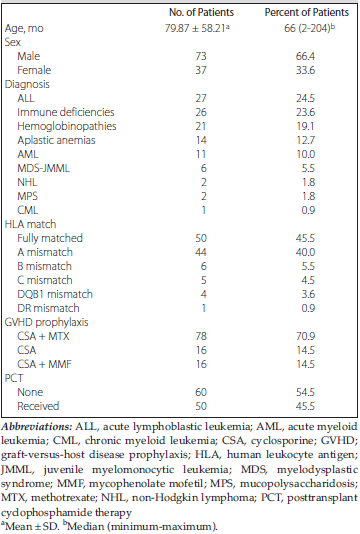
Table 1. Demographic Information, Diagnoses, Human Leukocyte Antigen Matches, Graft-Versus-Host Disease Prophylaxis, and Posttransplant Cyclophosphamide Therapy
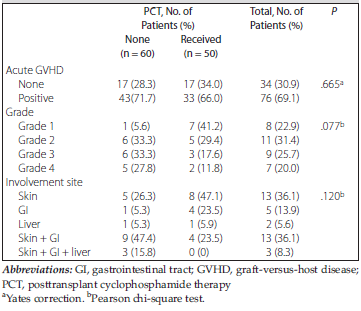
Table 2. Comparison of Acute Graft-Versus-Host Disease Prophylaxis Diagnosis, Grade, and Involvement Site According to Posttransplant Cyclophosphamide Therapy
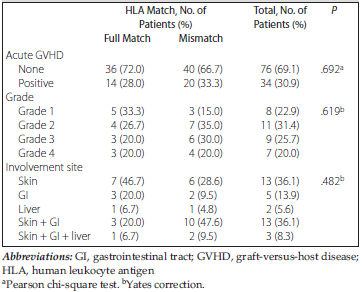
Table 3. Comparison Between Presence, Grade, and Involvement Site of Acute Graft-Versus-Host Disease Prophylaxis According To Human Leukocyte Antigen Match
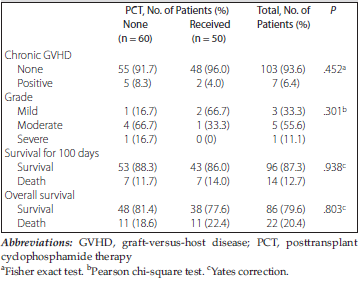
Table 4. Comparison of Receivers Versus Nonreceivers of Chronic Graft-Versus-Host Disease Prophylaxis and Survival
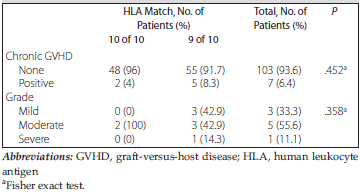
Table 5. Human Leukocyte Antigen Disparity and Chronic Graft-Versus-Host Disease