Volume: 23 Issue: 10 October 2025
FULL TEXT
Assessment of Bladder Dysfunction in Male Patients with End-Stage Renal Disease Awaiting Kidney Transplant: Role of Bladder Diary and Standard Questionnaires
Objectives: Lower urinary tract symptoms in patients with end-stage renal disease awaiting kidney transplant present unique challenges to clinicians due to altered urinary patterns and reduced bladder function. Here, we examined demographic characteristics, lower urinary tract symptoms questionnaires, and the bladder diary, focusing on evaluating lower urinary tract symptoms.
Materials and Methods: We prospectively studied 93 male patients with end-stage renal disease awaiting kidney transplant who underwent urodynamic evaluation. Patients completed validated lower urinary tract symptoms questionnaires (International Prostate Symptom Score, Overactive Bladder Symptom Score, and International Consultation on Incontinence Questionnaire) and maintained 3-day bladder diaries. We analyzed correlations among questionnaire scores, diary data, and urodynamic findings.
Results: Patients were assigned to the control group (normal bladder compliance; n = 55) or the expe-rimental group (low-compliance bladder; n = 38). Standard questionnaires showed limited discri-minatory ability between control and experimental groups, with International Prostate Symptom Scores of 6 (3-11) versus 6 (4-10), respectively (P = .602). However, bladder diaries showed significant differences for number of voids per day (3 [2-4] vs 1 [0-2]; P < .001) and maximal functional capacity (100 [50-250] mL vs 0 [3-35] mL; P < .001). The experimental group had significantly longer renal replacement therapy duration versus the control group (60.7 [31.2-86.8] vs 23.6 [16-37.3] months; P < .001). In the retrospective posttransplant outcome review of 17 patients (31%) in the control group and 10 patients (26%) in the experimental group, patients with preoperative low-compliance bladder had higher rates of febrile urinary tract infection (10.5% vs 1.8%; P = .047) and overall complications (80% vs 23%; P = .007).
Conclusions: Conventional questionnaires produced limited characterizations of bladder dysfunction in patients with end-stage renal disease. Bladder diaries demonstrated superior discriminatory ability and may serve as effective noninvasive screening tools to identify low-compliance bladder, guiding further evaluation.
Key words : Bladder compliance, Kidney transplantation, Lower urinary tract symptoms, Urodynamics
Introduction
End-stage renal disease (ESRD) affects millions of patients worldwide, with renal transplant being the appropriate treatment modality for eligible candidates.1 In patients with ESRD awaiting renal transplant, a comprehensive evaluation of lower urinary tract symptoms (LUTS), including thorough history-taking, physical examination, and abdominal imaging, is crucial to optimize transplant outcomes and prevent postoperative complications.2-4 However, assessment of LUTS in patients with ESRD presents unique challenges to clinicians due to multiple comorbidities, altered bladder function, and urological symptoms that may be masked by low urine volume or anuria following dialysis.5-7
Various questionnaires have been used to assess the severity of LUTS, including the International Prostate Symptom Score (IPSS), Overactive Bladder Symptom Score (OABSS), and International Consultation on Incontinence Questionnaire (ICIQ).8-10 Each of these screening tools has specific applications: IPSS is appropriate for general LUTS assessment, benign prostatic hyperplasia, or male patients; OABSS is designed for overactive bladder evaluation.11 These standardized questionnaires have proven effective in the general population for evaluation of LUTS severity and treatment response. However, the reliability of these screening tools and validity in ESRD populations remain uncertain because of factors such as reduced urinary output, altered bladder sensation, and bladder function, which cause difficulty in correlation with symptoms.12,13 The bladder, which functions as a urine reservoir, plays a critical role in renal transplant outcomes, because proper bladder function is essential to prevent complications such as urinary tract infections (UTIs), anastomosis leakage, and renal failure.14,15
Presently, the evaluation of bladder function in pretransplant patients primarily relies on urodynamic studies, which are invasive procedures. The nonin-vasive screening tools such as questionnaires to assess bladder function in this unique patient population would greatly benefit patients by reducing both physical discomfort and financial burden. Therefore, in this study, we evaluated the utility of standard LUTS questionnaires (IPSS, OABSS, and ICIQ) and bladder diaries in assessment of bladder function in male patients with ESRD awaiting kidney transplant and to identify the limitations and potential alternatives.
Materials and Methods
Study design and population
This prospective study was conducted at the Vejbhuree Urology Center, Thammasat University Hospital, Pathum Thani, Thailand. We reviewed male patients with ESRD on the renal transplant wait list who underwent urodynamic evaluation from April 2021 to March 2022.
Inclusion criteria were male patients aged >18 years with ESRD on renal replacement therapy, ability to complete questionnaires and bladder diaries in Thai, and agreement to participate in urodynamic evaluation. Patients who were unable to perform a urodynamic study were excluded.
The study was approved by the Human Research Ethics Committee of Thammasat University, Faculty of Medicine (April 23, 2020; approval No. MTU-EC-SU-6-043/63). All patients were informed and signed consent forms before participating in the study.
Data collection
Demographic data were collected from medical records, including age, body mass index (BMI, measu-red in kilograms body weight per meter squared), causes of ESRD, duration of renal replacement therapy (RRT), and comorbidities. All patients completed questionnaires, which were validated in Thai, including IPSS, OABSS, and ICIQ male LUTS scores, prior to urodynamic evaluation.
Patients completed 3-day bladder diaries to document voiding frequency, timing, and volumes. Urodynamic studies were performed according to International Continence Society standards, with blad-der compliance defined as the relationship between change in bladder volume and change in detrusor pressure at the bladder capacity.16 Low-compliance bladder (LCB) was defined as a <12.5 mL/cm H2O, and bladder outlet obstruction was evaluated by using the bladder outlet obstruction index >40. We also assessed combined bladder dysfunction; bladder outlet obstruction, LCB, and detrusor overactivity were classified as abnormal bladder function.
To evaluate posttransplant outcomes and compli-cations in our patient cohort, we performed a retrospective chart review of medical records from April 2022 to August 2025.
Statistical analyses
Patients were classified into 2 groups based on urodynamic findings: normal bladder compliance group and the LCB group. We presented continuous variables as mean ± SD or median (with IQR) and categorical variables as numbers and percentages.
For statistical comparisons between groups, we used the t test or the Mann-Whitney U test for continuous variables and the X2 test or the Fisher exact test for categorical variables. P < .05 was considered statistically significant. We used STATA software (version 15.0; StataCorp) for all analyses.
Results
Demographic data
Our analysis included 93 male patients with ESRD. Patients were classified into the normal bladder compliance group (n = 55; 59.1%) or the LCB group (n = 38; 40.9%) based on urodynamic findings. According to video urodynamic studies, 3 patients (7.89%) in the LCB group had vesicoureteral reflux, whereas no vesicoureteral reflux was detected in the normal bladder compliance group.
The mean age was comparable between groups (43.3 vs 39.9 years; P = .086). Patients with LCB had significantly longer RRT duration than the normal bladder compliance group (60.7 vs 23.6 months; P < .001) (Table 1). Interestingly, diabetes mellitus was more prevalent in the normal bladder compliance group (32.73% vs 7.89%; P = .005).
Most questionnaire scores showed no significant differences between groups. The IPSS scores were identical between groups in terms of bladder compliance comparison (6 vs 6; P = .602) and not signif-icantly different between normal bladder function and abnormal bladder function (P = .28), suggesting limi-ted differentiating ability. Only the OABSS (P = .012) and the ICIQ storage score (P = .033) showed signif-icant differences in bladder compliance comparison. However, the clinical relevance of these findings remains uncertain because only patients with adequate urine output can experience LUTS ((Table 2), (Table 3)).
In contrast to questionnaire results, bladder diary parameters demonstrated significant differences between groups. Patients with LCB had markedly reduced voiding frequency and functional capacity versus the normal bladder compliance group, with all parameters showing P < .001 (Table 4).
Our postoperative analysis included 27 patients who underwent kidney transplant, with 17 patients in the normal bladder compliance group and 10 patients in the LCB group. Patients with preoperative LCB had a significantly lower rate of being complication-free versus the normal bladder compli-ance group (20% vs 76.5%; P = .007). Furthermore, the incidence of febrile UTI was significantly higher in the LCB group (40% vs 5.9%; P = .047).
No significant differences were observed between the groups for other complications. The rates of delayed graft function were 10% in the LCB group versus 5.9% in the normal bladder compliance group (P = 1.0). Anastomosis leakage occurred in 20% of patients in the LCB group versus 5.9% in the normal bladder compliance group (P = .535).
One patient in the LCB group (10%) required treatment with intravesical Botox injections due to persistent incontinence and reflux of urine into the transplanted kidney. In the normal bladder compliance group, 1 patient (5.9%) died from a severe intra-abdominal infection that led to acute respiratory distress syndrome (Table 5).
Discussion
The bladder serves as an important urine reservoir, and its proper function is crucial for successful renal transplant outcomes. Previous studies have demonstrated that patients with preexisting bladder dysfunction or those who develop defunctionalized bladder due to prolonged low urine volume from ESRD may develop LCB, leading to subsequent complications.14,15,17-19 Dysfunction, particularly LCB, can lead to serious complications, including UTI, anastomosis leakage, and renal failure.18,20
Our posttransplant follow-up data provided crucial clinical validation for these concerns. In our cohort, preoperative LCB was a direct predictor of postoperative morbidity. Patients in this group had a significantly higher overall complication rate, with only 20% remaining free of complications versus 76.5% in the normal bladder compliance group (P = .007). Specifically, the incidence of febrile UTI was markedly higher in patients with LCB (40% vs 5.9%; P = .047). This is likely explained by our preoperative finding of vesicoureteral reflux, which was detected in the LCB group and is a known risk factor for infection. The clinical relevance is further underscored by the case of 1 patient in the LCB group who required intravesical Botox injections after transplant to manage persistent incontinence and reflux into the transplant kidney. These findings confirmed that LCB is not merely a urodynamic measurement but a significant risk factor for adverse posttransplant outcomes, empha-sizing the critical need for effective preoperative screening.
Our findings demonstrated that prolonged RRT duration is significantly associated with LCB. Thus, bladder assessment is needed through invasive investigations such as urodynamic studies or cystos-copy before transplant.
The concept of defunctionalized bladder encom-passes both patients with preexisting bladder dysfunction that contributed to ESRD development and patients who develop bladder problems secon-dary to prolonged low urine output.21 This condition is characterized by reduced bladder capacity, decreased compliance, and altered bladder sensation, all of which contribute to poor transplant outcomes if not properly addressed.
Given the ESRD status, many patients reported minimal or atypical symptoms, often due to reduced urine output. The questionnaires, therefore, demons-trated difficulties in reliable capture of bladder dysfunction, especially in patients with oliguria or anuria. In addition, bladder diary data were often incomplete or uninformative in patients with low or absent urinary output, which complicated the interpretation of bladder capacity and function.22
The standard LUTS questionnaires often under-estimated the severity of bladder dysfunction, especially in patients with minimal voiding due to anuria or oliguria. Many patients reported minimal or no LUTS despite abnormal urodynamic findings, which highlights the limitations of sole reliance on subjective symptom assessment in this population.
Our study revealed significant limitations in the application of standard LUTS questionnaires for assessment of bladder function in male patients with ESRD. The IPSS, OABSS, and ICIQ in male patients with LUTS, although validated and widely used in the general population, demonstrated poor ability to distinguish between patients with normal bladder compliance versus LCB in our ESRD cohort. This discordance between symptoms and objective bladder function reflects the unique pathophysiology of defunctionalized bladder syndrome in patients with ESRD.5,7
Although standard questionnaires failed to dif-ferentiate between patient groups, bladder diary data demonstrated remarkable distinguishing ability. All bladder diary parameters showed significant dif-ferences between the normal bladder compliance group and the LCB group (P < .001), suggesting that objective measures of voiding patterns are more reliable than subjective symptom reporting in this population. The maximal functional capacity showed the most significant difference; patients with normal bladder compliance reported 100 mL (50-250 mL) urine output versus 0 mL (3-35 mL) urine output in the LCB group. This objective measure reflects the true functional status of the bladder and correlates well with urodynamic findings.
Our findings suggested that bladder diaries should be considered as the primary screening tool for bladder dysfunction in patients with ESRD. The ability to identify patients with LCB through noninvasive means could potentially reduce the need for routine urodynamic studies in all patients.
Challenges remain in patients with minimal
urine production who cannot maintain meaningful bladder diaries. In such cases, urodynamic evaluation remains essential for accurate assessment. The further deve-lopment of ESRD-specific questionnaires that focus on bladder-related symptoms rather than voiding symptoms may provide additional screening value.
This study had several limitations. First, the single-center experience may limit generalizability. Second, the relatively small sample size may affect statistical power for subgroup analyses. In addition, we did not assess long-term transplant outcomes, which would provide important clinical validation of our findings.
Future research should focus on development of ESRD-specific assessment tools that account for the unique pathophysiology of this population. Pros-pective studies to evaluate the relationship between pretransplant bladder assessment and posttransplant outcomes could provide valuable clinical guidance.
Conclusions
Assessment of LUTS in male patients with ESRD is a challenge, primarily due to decreased urinary output and the limitations of conventional questionnaires. Standard LUTS questionnaires demonstrate poor differentiating ability and cannot reliably identify bladder dysfunction in this population. The bladder diary is a superior screening tool, with better differentiating ability between patients with normal bladder compliance versus patients with LCB.
References:
- Wolfe RA, Ashby VB, Milford EL, et al. Comparison of mortality in all patients on dialysis, patients on dialysis awaiting transplantation, and recipients of a first cadaveric transplant. N Engl J Med. 1999;341(23):1725-1730. doi:10.1056/NEJM199912023412303
CrossRef - PubMed - Faba OR, Boissier R, Budde K, et al. European Association of Urology Guidelines on Renal Transplantation: update 2024. Eur Urol Focus. 2024:S2405-4569(24)00217-7. 373.doi:10.1016/j.euf.2024.10.010
CrossRef - PubMed - Rude T, Nassiri N, Naser-Tavakolian A, Ginsberg D. The role of urodynamics in the pre-transplant evaluation of renal transplant. Curr Urol Rep. 2019;20(5):26. doi:10.1007/s11934-019-0887-3
CrossRef - PubMed - Power RE, Hickey DP, Little DM. Urological evaluation prior to renal transplantation. Transplant Proc. 2004;36(10):2962-2967. doi:10.1016/j.transproceed.2004.11.006
CrossRef - PubMed - Martin X, Aboutaieb R, Soliman S, el Essawy A, Dawahra M, Lefrancois N. The use of long-term defunctionalized bladder in renal transplantation: is it safe? Eur Urol. 1999;36(5):450-453. doi:10.1159/000020029
CrossRef - PubMed - Ushigome H, Sakai K, Suzuki T, et al. Kidney transplantation for patients on long-term hemodialysis. Transplant Proc. 2008;40(7):2297-2298. doi:10.1016/j.transproceed.2008.06.019
CrossRef - PubMed - Cheng SF, Jiang YH, Kuo HC. Urothelial dysfunction and chronic inflammation are associated with increased bladder sensation in patients with chronic renal insufficiency. Int Neurourol J. 2018;22(Suppl 1):S46-54. doi:10.5213/inj.1832814.407
CrossRef - PubMed - Barry MJ, Fowler FJ Jr, O’Leary MP, et al. The American Urological Association symptom index for benign prostatic hyperplasia. The Measurement Committee of the American Urological Association. J Urol. 1992;148(5):1549-1557. doi:10.1016/s0022-5347(17)36966-5
CrossRef - PubMed - Homma Y, Yoshida M, Seki N, et al. Symptom assessment tool for overactive bladder syndrome: overactive bladder symptom score. Urology. 2006;68(2):318-323. doi:10.1016/j.urology.2006.02.042
CrossRef - PubMed - Avery K, Donovan J, Peters TJ, Shaw C, Gotoh M, Abrams P. ICIQ: a brief and robust measure for evaluating the symptoms and impact of urinary incontinence. Neurourol Urodyn. 2004;23(4):322-330. doi:10.1002/nau.20041
CrossRef - PubMed - Coyne KS, Matza LS, Kopp Z, Abrams P. The validation of the patient perception of bladder condition (PPBC): a single-item global measure for patients with overactive bladder. Eur Urol. 2006;49(6):1079-1086. doi:10.1016/j.eururo.2006.01.007
CrossRef - PubMed - Mizerski A, Ostrowska Clark K, et al. Postoperative adaptation of urinary bladder to variable volume of urine in the initial period following kidney transplantation. Transplant Proc. 2003;35(6):2174-2175. doi:10.1016/s0041-1345(03)00778-4
CrossRef - PubMed - Inoue T, Satoh S, Obara T, et al. Cystometric evaluation of recovery in hypocompliant defunctionalized bladder as a result of long-term dialysis after kidney transplantation. Int J Urol. 2016;23(8):694-700. doi:10.1111/iju.13122
CrossRef - PubMed - Salman B, Hassan A, Sultan S, Tophill P, Halawa A. Renal transplant in the abnormal bladder: long-term follow-up. Exp Clin Transplant. 2018;16(1):10-15. doi:10.6002/ect.2016.0193
CrossRef - PubMed - Lempinen M, Stenman J, Kyllönen L, Salmela K. Surgical complications following 1670 consecutive adult renal transplantations: a single center study. Scand J Surg. 2015;104(4):254-259. doi:10.1177/1457496914565419
CrossRef - PubMed - Rosier PFWM, Schaefer W, Lose G, et al. International Continence Society Good Urodynamic Practices and Terms 2016: urodynamics, uroflowmetry, cystometry, and pressure-flow study. Neurourol Urodyn. 2017;36(5):1243-1260. doi:10.1002/nau.23124
CrossRef - PubMed - Turunc T, Micozkadioglu H, Dirim A, et al. Evaluation of video-urodynamic studies before renal transplantation in chronic renal failure patients. Int Urol Nephrol. 2010;42(4):903-907. doi:10.1007/s11255-010-9739-2
CrossRef - PubMed - Aufhauser DD Jr, Peng AW, Murken DR, et al. Impact of prolonged dialysis prior to renal transplantation. Clin Transplant. 2018;32(6):e13260. doi:10.1111/ctr.13260
CrossRef - PubMed - Gjertson DW. Impact of delayed graft function and acute rejection on graft survival. Transplant Proc. 2002;34(6):2432. doi:10.1016/s0041-1345(02)03167-6
CrossRef - PubMed - Tangpaitoon T, Swatesutipun V. Factors associated with low-compliance bladder in end-stage renal disease patients and development of a clinical prediction model for urodynamic evaluation: the DUDi score. Int Urol Nephrol. 2023;55(1):75-84. doi:10.1007/s11255-022-03399-8
CrossRef - PubMed - Wadie BS, El Hefnawy AS, Refaie AF. Recoverability of bladder function in patients with defunctionalized bladder and live-donor kidney transplantation. Transplant Proc. 2024;56(10):2144-2148. doi:10.1016/j.transproceed.2024.10.033
CrossRef - PubMed - Zermann DH, Löffler U, Reichelt O, Wunderlich H, Wilhelm S, Schubert J. Bladder dysfunction and end stage renal disease. Int Urol Nephrol. 2003;35(1):93-97. doi:10.1023/a:1025910025216
CrossRef - PubMed

Volume : 23
Issue : 10
Pages : 646 - 651
DOI : 10.6002/ect.2025.0169
From the Division of Urology, Faculty of Medicine, Thammasat University, Thailand
Acknowledgements: This study received funding from Thammasat University Hospital, Thammasat University. The authors have no declarations of potential conflicts of interest.
Author contributions: TT, VS, and PN conceived the study, designed the research and methodology, performed the investigation, summarized the research, and wrote and reviewed the manuscript. All authors edited the manuscript (led by PN). TT and VS analyzed the data. The formal analysis was performed by TT (lead) and PN.
Corresponding author: Patranuch Noppakulsatit, Division of Urology, Faculty of Medicine, Thammasat University, Thailand
E-mail: patranuch_n@ymail.com
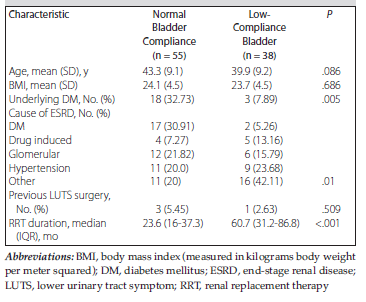
Table 1.Demographic Data
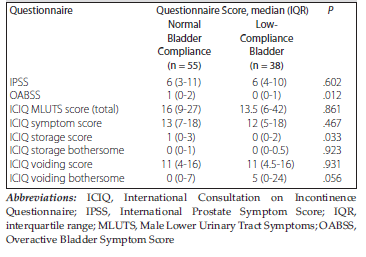
Table 2.Correlation Between Low Bladder Compliance and Questionnaire Scores
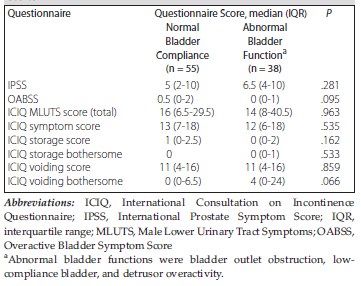
Table 3.Correlation Between Abnormal Bladder Function and Questionnaire Scores
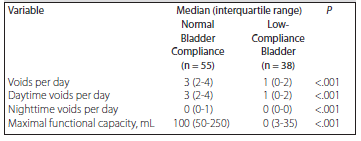
Table 4.Correlation Between Bladder Compliance and Bladder Diary Data
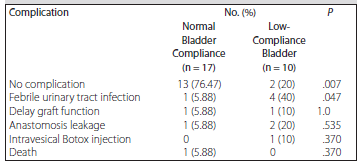
Table 5.Complication After Postoperative Kidney Transplant