Volume: 23 Issue: 10 October 2025
FULL TEXT
Simplified Double J Stent Removal: Retrograde Fluoroscopy-Guided Technique and Outcomes in Kidney Transplant Patients
Objectives: Fluoroscopy-guided retrograde removal of double J stents is gaining popularity as an alternative method in renal transplant patients. Compared with traditional cystoscopic removal, this approach offers increased patient comfort and eliminates the need for urine culture and general anesthesia. We aimed to evaluate the safety and efficacy of this procedure in renal transplant patients.
Materials and Methods: A retrospective analysis
was applied to 244 kidney transplant recipients. A fluoroscopy-guided double J stent removal procedure was performed using a simple snare technique through a transurethral vascular sheath. Rarely did this method fail; alternative methods, such as pigtail and alternative loop techniques, were used when needed. The characteristics of patients and procedures were recorded and analyzed.
Results: We enrolled 244 patients in this study (68.9% male; 31.1% female), and we performed 281 pro-cedures on 244 patients (mean age 37.68 years; range, 2-69 years). Technical success was achieved at 97.9% in procedures. There were no major complications. Ten patients had mild hematuria following the procedure, which resolved spontaneously 1 day later. Three patients had a urine infection following the procedure, which resolved after appropriate medical therapy. The mean fluoroscopy time was 11.1 minutes (range,
0.8-50.6 min). The mean radiation dose of the procedure was 13.0 Gy·cm2 (range, 1.02-51.23 Gy·cm2).
Conclusions: Fluoroscopy-guided transurethral removal of double J stents in renal transplant patients is a safe and efficient method. Conducted in the angiography suite, this procedure eliminates the need for urine culture and general anesthesia and thereby improves patient comfort and simplifies the process.
Key words : Double J stent, Renal transplantation, Snare, Transurethral
Introduction
Patients with end-stage renal disease can be saved by a kidney transplant, which also improves their quality of life and increases their chances of long-term survival. However, a urinary leak at the ureterovesicular junction and ureteral stenosis may develop, especially in the first 3 months after kidney transplant, in addition to acute graft rejection and vascular problems.1 In different transplant centers, the incidence of these ureteral complications after renal transplant varies from 2% to 20% and constitutes a significant part of the morbidity after transplant surgery.2 Urinary leak and ureteric stenosis are 2 of the most common urological problems that may occur in the early period after renal transplant. The vesicoureteral anastomosis is the source of these problems, which manifest quickly after transplant and are linked to morbidity, graft loss, and mortality. Ureteral stents implanted during transplant proce-dures could mitigate urological problems.1 Although there is not an absolute consensus on this matter, the routine use of ureteral stents in kidney transplant procedures is considered beneficial.3
Double J stents are removed when the intended function is complete or when complications arise. No consensus exists on the optimal timing for stent removal following transplant; however, various studies report durations ranging from 5 days to 3 months.1 In the literature, several techniques for double J stent removal have been discussed.4-9 The most common approach involves removal of the double J stent through a rigid cystoscope inserted through the urethra while the patient is under general anesthesia.10
Fluoroscopy-guided retrograde removal of double J stents is gaining popularity as an alternative method to manage these cases. This minimally invasive approach offers several advantages compared with traditional cystoscopic removal. The retrograde method utilizes softer, more flexible systems, which makes the procedure potentially more comfortable for patients. Additionally, it can be performed on an outpatient basis and thereby eliminates the need for hospitalization. Furthermore, unlike cystoscopy, retro-grade removal does not require a preprocedural urine culture, which streamlines the process. General anest-hesia is also typically avoided with this approach.11
We evaluated the safety and efficacy of retrograde fluoroscopy-guided double J stent removal in renal transplant patients as a viable alternative to cystoscopic removal.
Materials and Methods
Patients
This single-institution, retrospective study was approved by the Baskent University Institutional Review Board (project No. KA24/245) and was conducted under the Declaration of Helsinki. The requirement for patient consent was waived.
From August 2011 to August 2023, hospital medical records were analyzed for renal transplant patients who underwent fluoroscopy-guided retrog-rade double J stent removal. A total of 294 procedures were performed on 254 patients. Demographic infor-mation, size and number of double J stents, double J stent residence time, fluoroscopic time, and radiation dose were recorded. Patients with incomplete data were excluded from the study, and 281 procedures were analyzed on 244 patients.
The patients received sedation and analgesia (propofol, fentanyl, and midazolam) during each procedure. Antibiotic prophylaxis with 1 g of ciprofloxacin was administered before the procedure. Urine cultures were not routinely required. All procedures were carried out in the angiography suite with fluoroscopic guidance (Artis zee and Artis Q, Siemens Medical Solutions).
Technique
A vascular introducer sheath (Radiofocus Introducer II, Terumo; caliber, 7F to 11F; length, 10-25 cm) was used to catheterize the bladder with the help of a hydrophilic guidewire (Glidewire, Terumo). After placement of the 6F guiding catheter (MACH 1, Boston Scientific) into the bladder, the distal end of the double J stent was snared with a 35-mm loop snare (Amplatz Goose Neck snare, Medtronic). Then, the entire system
was removed simultaneously under fluoroscopy. This method is called the simple snare technique (Figure 1).
Different methods have also been used in cases when the simple snare technique failed or the stent became lodged in the urethra during removal. One such method involves rotating a 4F or 5F diagnostic pigtail catheter (Imager II, Boston Scientific) around the double J stent to grasp it and facilitate its removal (Figure 2).
Another method is the alternative loop snare technique, which uses a 0.014-inch-diameter wire (V-14 ControlWire guidewire, Boston Scientific). First, both ends of the wire are positioned outside the catheter. The wire is then carefully bent and advanced through the guiding catheter and into the bladder, to create loops within the bladder cavity. These loops should be roughly the same diameter as the bladder itself. Finally, the guiding catheter is advanced over the looped wire, to trap the distal end of the double J stent between the loop and the catheter (Figure 3).
Technical success was defined as the removal of the entire double J stent from the patient.
Statistical analyses
We used SPSS software (version 26.0 for Windows) for statistical analyses. Mean, standard deviation, median, minimum and maximum value, frequency, and percentage were used for descriptive statistics. We used the Kolmogorov-Smirnov test to check the distribution of variables, the Kruskal-Wallis (Mann-Whitney U) tests for quantitative data comparisons, the chi-square test for qualitative data comparisons, and the Pearson correlation for relationships among the measured variables. The statistical significance level was P < .05.
Results
The records of 254 patients between 2011 and 2023 were evaluated. Ten patients were excluded from the study due to missing data. The final evaluation included 281 double J stent removal cases for 244 patients (168 male, 76 female). The mean age of the patients was 37.68 ± 15.6 years (range, 2-69 years). Technical success was achieved at 97.9% in procedures. Six patients had unsuccessful procedures, all of whom had a single stent in place. Although the duration of stent retention in these patients was noticeably longer, the mean duration time was 8.50 months for unsuccessful procedures and 4.58 months for procedures in other patients; this difference was not significant (P = .31). Of the 275 successful procedures, the mean fluoroscopy time and the mean radiation dose for patients with a single stent were signi-ficantly less than for the patients with a double stent (P = .022 and P = .03, respectively).
The simple snare method successfully removed 270 double J stents. When this method failed, the pigtail method was used in 4 patients and the loop snare method in 1 patient. In 3 failed cases, the distal ends of the double J stents were successfully snared and brought outside, but the proximal ends were stuck in the renal pelvis due to encrustation and could not be removed even with forceful traction. The other 3 patients had hydronephrosis, and double J stents were suc-cessfully removed by nephrostomy access. In the remaining patients, double J stents could not be captured despite all attempts with the described techniques, and these patients were referred to cystoscopic surgery.
Ten cases of temporary mild hematuria resolved spontaneously within 1 day following the operations. Three patients had a urinary infection following the procedure, which resolved after appropriate medical therapy. No major complications were observed. (Table 1) summarizes the demographic and clinical characteristics of the patients.
Discussion
Complications involving the ureters are a significant contributor to morbidity and, on rare occasions, can lead to mortality in renal transplant patients.3 The double J stents are placed in case of ureteral stenosis or to mitigate potential complications following transplant surgeries. The stents assist in keeping the upper tracts open and ensuring unobstructed drainage. A ureteral stent is typically taken out within 4 to 6 weeks after the operation. However, there remains an ongoing debate regarding the ideal duration for maintaining ureteral stents in place, and no specific timeframe has been established.12
Traditionally, urologists undertake the task of retrograde stent removal, typically conducted during cystoscopy under epidural or general anesthesia. These procedures are performed with either a rigid or flexible cystoscope. However, rigid cystoscopic procedures have become less favored due to factors such as increased discomfort, lower patient compliance, and the requirement for general anesthesia.13 However, instruments designed for the removal process are more sophisticated than fluoroscopy-guided techniques and can be highly expensive, particularly if stent breakage necessitates frequent equipment renewal.14,15
Although anterograde removal of double J stents is recommended for cases where retrograde approaches fail, the risk of trauma in the renal parenchyma and the need for a wide percutaneous tract reduces the feasibility of this technique.13 In addition, the process of cystoscopic stent removal commonly occurs in the operating theatre, entailing associated costs and morbidity, as the relatively large size of the cystoscope, compared with catheters used in radiological stent removal, may contribute to patient discomfort.16
As technology advances, traditional methods are being phased out in favor of the widespread adoption of interventional radiological techniques for double J stent removal. The adoption of radiological removal presents notable advantages. The use of small catheters minimizes patient discomfort, and the procedure is characterized by swiftness, typically less than 30 minutes, with few complications beyond transient hematuria. Importantly, general anesthesia is typically unnecessary. Interventional methods enable gentler removal of double J stents through smaller access, which eliminates the need for preprocedural urinary culture since bladder irrigation is not employed, which mitigates the risk of kidney reflux.
Park and colleagues17 have described fluoroscopy-guided double J stent removal techniques. The so-called simple snare technique is similar to the method used in our institution and previously described. The so-called direct grasping technique involves intro-duction of grasping forceps or myocardial biopsy forceps into the bladder to directly grasp the stent tip for removal. As a final note, the modified snare technique involves a snare and a 0.032-inch-diameter hydrophilic guidewire, which are inserted into the bladder on either side of the distal J stent. The wire is then grasped by the snare to form a lasso, which is tightened around the distal stent, followed by the removal of the wire and snare. Greater insight regarding the factors that may influence successful retrograde double J stent removal in the bladder will aid operators to select the most appropriate removal method.
In this retrospective study, we evaluated the outcomes of renal transplant patients who underwent double J stent removal by the simple snare technique, which is one of the interventional techniques discussed in the previous paragraph. Our results demonstrate the safety of this procedure. We observed minimal complications, such as temporary hematuria, which resolved spontaneously. Importantly, no critical complications, such as bladder perforation or subs-tantial hemorrhage, were encountered. When the simple snare technique fails, alternative techniques can increase the success rate.18 These advancements, alongside conventional approaches, broaden the options for double J stent removal.
Similar studies further support our findings. Chen and colleagues19 reported a success rate of 97.44% in a case series of 312 patients undergoing double J stent removal with the simple snare technique. Similarly, McCarthy and colleagues20 achieved a technical success rate of 98.2% in their series of 114 cases.
Success with the simple snare technique requires a firm grasp of the double J stent. Failure to secure the stent can lead to its tip remaining lodged in the urethra, making resnaring difficult due to the narrow passage. In such scenarios, our experience suggests the pigtail catheter technique offers a valuable alternative, particularly when a narrow urethra hinders the snare procedure. Also, in situations where the movement of the double J stent is limited in the bladder, such as in cases of calcification or encrustation, the addition of the alternative loop technique to the snare technique can be preferred due to its ability to create a larger loop, facilitating retrieval.18
Radiation exposure is a key consideration in fluoroscopically guided double J stent removal procedures. It is well-established that the radiation doses involved in these procedures remain within acceptable levels.20 In our study, the fluoroscopy time and dose were within acceptable limits, consistent with the existing literature.11,19,20 We believe that, as operator experience increases, these doses will further decrease.
Stent indwelling time may also affect the double J stent removal procedure.19 In our study, the 6 patients whose procedures were unsuccessful had a notably longer stent indwelling time compared with the other patients; however, this did not achieve significance (P = .31). The lack of statistical significance is likely due to the small number of patients. Nonetheless, it is possible that the presence of calcification or encrustation in stents that remained in place for an extended period could have contributed to the technical failure. In addition, 1 patient in our study had a 2-year interval between renal transplant and the removal of the double J stent. During the procedure, the distal end of the stent within the bladder was captured with a snare and removal was attempted. However, the distal end of the double J stent was trapped in the urethra and escaped from the snare, and attempts to grasp it were unsuccessful. As noted in our study and previous studies, alternative methods can be beneficial in such cases.18,21 Subsequently, the pigtail and the alternative loop snare techniques were tried, but these also failed because the proximal end of the double J stent became lodged in the renal pelvis. Upon investigation, there was hydronephrosis in the kidney, and a percutaneous nephrostomy was performed. Subsequently, the proximal end of the double J stent was grasped with a snare and removed externally.
The presence of multiple double J stents often leads to prolonged fluoroscopy time and increases the risk of procedural complications. In 1 patient, during the removal of two 6F caliber double J stents, the distal ends were captured with a snare and pulled out of the urethra. However, the proximal ends of the stents became entangled in the proximal segment of the ureter. To navigate this complication, wires were passed through the double J stents, and the stents were successfully removed after being straightened. The procedure duration exceeded average time and dose durations for our study, with a fluoroscopy time of 14.5 minutes and a total dose of 33.47 Gy·cm2.
This study has several limitations. First, the retrospective design may have constrained the identification of nuanced complications. Second, the findings are based solely on a single-institution experience, without consideration for potential variations across practices. Future investigations should involve prospective randomized studies to address these limitations and provide a more comprehensive understanding of the subject.
Our study confirms that fluoroscopically guided transurethral removal of ureteral stents in renal transplant recipients is a safe, efficient method. Performed in the angiography suite with basic equipment, our method avoids the need for urine culture and general anesthesia, which thereby enhances patient comfort and streamlines the process.
References:
- Yahav D, Green H, Eliakim-Raz N, Mor E, Husain S. Early double J stent removal in renal transplant patients to prevent urinary tract infection: systematic review and meta-analysis of randomized controlled trials. Eur J Clin Microbiol Infect Dis. 2018;37(4):773-778. doi:10.1007/s10096-017-3173-7
CrossRef - PubMed - Minnee RC, Bemelman FJ, Laguna Pes PP, ten Berge IJ, Legemate DA, Idu MM. Effectiveness of a 5-day external stenting protocol on urological complications after renal transplantation. World J Surg. 2009;33(12):2722-2726. doi:10.1007/s00268-009-0224-y
CrossRef - PubMed - Kirnap M, Boyvat F, Torgay A, Moray G, Yildirim S, Haberal M. Incidence of urinary complications with double J stents in kidney transplantation. Exp Clin Transplant. 2019;17(Suppl 1):148-152. doi:10.6002/ect.MESOT2018.P14
CrossRef - PubMed - Jayakumar S, Marjan M, Wong K, Bolia A, Ninan GK. Retrieval of proximally migrated double J ureteric stents in children using goose neck snare. J Indian Assoc Pediatr Surg. 2012;17(1):6-8. doi:10.4103/0971-9261.91078
CrossRef - PubMed - Karthikeyan VS, Keshavamurthy R, Mallya A, et al. Efficacy of preprocedural diclofenac in men undergoing double J stent removal under local anesthesia: a double-blind, randomized control trial. Indian J Urol. 2017;33(1):53-57. doi:10.4103/0970-1591.194783
CrossRef - PubMed - Shin JH, Yoon H-K, Ko G-Y, et al. Percutaneous antegrade removal of double J ureteral stents via a 9-F nephrostomy route. J Vasc Interv Radiol. 2007;18(9):1156-1161. doi:10.1016/j.jvir.2007.06.016
CrossRef - PubMed - Söylemez H, Sancaktutar AA, Bozkurt Y, Atar M, Penbegül N, Yildirim K. A cheap minimally painful and widely usable alternative for retrieving ureteral stents. Urol Int. 2011;87(2):199-204. doi:10.1159/000327610
CrossRef - PubMed - O’Connell L, Broe M, Rooney D, Elhag S, Cheema I, McGuire BB. Magnetic stent removal in a nurse led clinic; a nine month experience. Ir Med J. 2018;111(2):687.
CrossRef - PubMed - Kawahara T, Ito H, Terao H, et al. Ureteral stent exchange under fluoroscopic guidance using the crochet hook technique in women. Urol Int. 2012;88(3):322-325. doi:10.1159/000336870
CrossRef - PubMed - Sundaramurthy S, Thomas RJ, Herle K, Jeyaseelan, Mathai J, Kurian JJ. Double J stent removal in paediatric patients by Vellore catheter snare technique: a randomised control trial. J Pediatr Urol. 2019;15(6):661.e1-661.e8. doi:10.1016/j.jpurol.2019.08.009
CrossRef - PubMed - Carrafiello G, Coppola A, De Marchi G, et al. Trans-urethral ureteral stent replacement technique (TRUST): 10-year experience in 1168 patients. Cardiovasc Intervent Radiol. 2018;41(4):610-617. doi:10.1007/s00270-017-1854-3
CrossRef - PubMed - Kumar A, Verma BS, Srivastava A, Bhandari M, Gupta A, Sharma R. Evaluation of the urological complications of living related renal transplantation at a single center during the last 10 years: impact of the double-J stent. J Urol. 2000;164(3 Pt 1):657-660. doi:10.1097/00005392-200009010-00010
CrossRef - PubMed - Katske FA, Celis P. Technique for removal of migrated double-J ureteral stent. Urology. 1991;37(6):579. doi:10.1016/0090-4295(91)80330-a
CrossRef - PubMed - Evans J, Ralph D. Removal of ureteric stents with a flexible cystoscope. Br J Urol. 1991;67(1):109. doi:10.1111/j.1464-410x.1991.tb15088.x
CrossRef - PubMed - Iyer S, Alston D. New flexible cystoscopic stent retriever forceps. Br J Urol. 1991;68(4):441. doi:10.1111/j.1464-410x.1991.tb15376.x
CrossRef - PubMed - Wetton C, Gedroyc W. Retrograde radiological retrieval and replacement of double-J ureteric stents. Clin Radiol. 1995;50(8):562-565. doi:10.1016/s0009-9260(05)83193-9
CrossRef - PubMed - Park SW, Cha IH, Hong SJ, et al. Fluoroscopy-guided transurethral removal and exchange of ureteral stents in female patients: technical notes. J Vasc Interv Radiol. 2007;18(2):251-256. doi:10.1016/j.jvir.2006.12.722
CrossRef - PubMed - Kim SH, Choi BG, Suk OJ, Chun HJ, Lee HG. An alternative loop snare technique with many loops using a simple guide-wire for removal of a double J stent: a case series. Iran J Radiol. 2020;17(3): e98787. doi:10.5812/iranjradiol.98787
CrossRef - PubMed - Chen C-S, Shin JH, Li H-L, et al. Analysis of the factors influencing retrograde removal of double J ureteral stents using a simple snare technique in female patients. Ann Transl Med. 2021;9(8):674. doi:10.21037/atm-21-1113
CrossRef - PubMed - McCarthy E, Kavanagh J, McKernan S, et al. Fluoroscopically guided transurethral removal and/or replacement of ureteric stents in women. Acta Radiol. 2015;56(5):635-640. doi:10.1177/0284185114533246
CrossRef - PubMed - Mallmann C, Wolf K-J, Wacker F. Retrieval of vascular foreign bodies using a self-made wire snare. Acta Radiologica. 2008;49(10):1124-1128 doi:10.1080/02841850802454741
CrossRef - PubMed

Volume : 23
Issue : 10
Pages : 639 - 645
DOI : 10.6002/ect.2025.0102
From the 1Department of Radiology, and the 2Department of General Surgery, Baskent University Faculty of Medicine, Ankara, Turkey
Acknowledgements: The authors have not received any funding or grants in support of the presented research or for the preparation of this work and have no declarations of potential conflicts of interest.
Corresponding author: Muhammet Kursat Simsek, Department of Radiology, Baskent University Faculty of Medicine, Fevzi Çakmak Caddesi 10. Sokak No: 45 06490 Bahçelievler, Ankara, Turkey
E-mail:dr.mksimsek@gmail.com
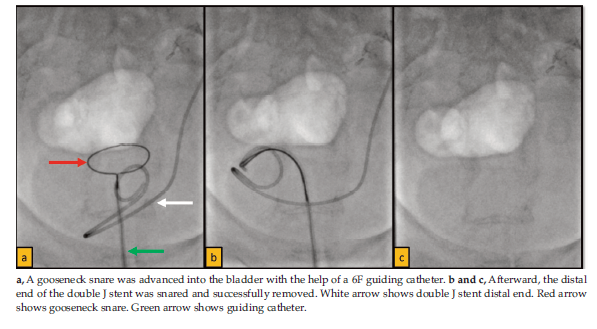
Figure 1.Simple Snare Technique
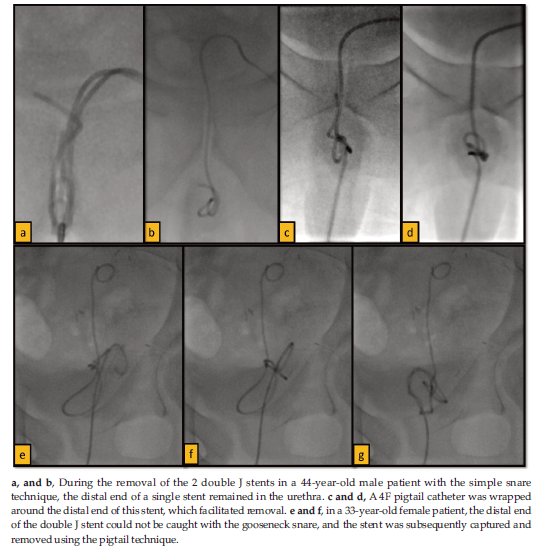
Figure 2.Pigtail Technique
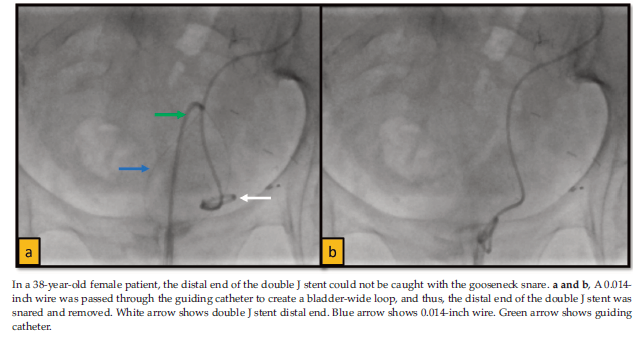
Figure 3.Alternative Loop Technique
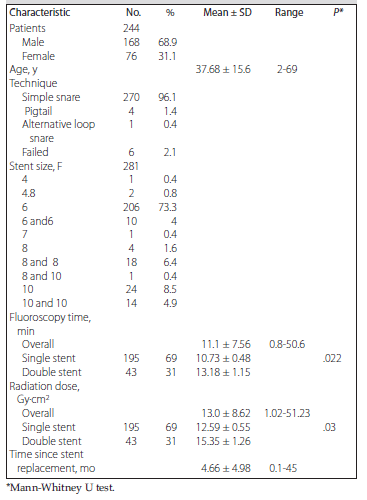
Table 1.Patient and Procedure Characteristics