Volume: 22 Issue: 7 July 2024
FULL TEXT
We report the successful reconstruction of suture exposure with the oral mucosal graft in a patient with suture exposure after transscleral-sutured posterior chamber intraocular lens implantation. The 70-year-old patient had a history of vitreoretinal surgery and transscleral-sutured posterior chamber intraocular lens implantation after complicated cataract surgery. He was referred to our department because of suture exposure. The best-corrected visual acuity was 20/2000 OD and 20/50 OS. We observed exposed PC9 sutures from both the nasal and temporal conjunctiva in the right eye. The patient showed appearance of scleromalacia in the same regions, so scleral flap surgery was not considered. Despite both tenoplasty and amniotic membrane transplant procedures, exposure could not be controlled. Instead, the patient received oral (buccal) mucosal graft transplant to the resistant exposure areas. A single layer of protective amniotic membrane was transplanted over the buccal mucosal graft. This method resulted in effective control of the exposed area. In conclusion, an oral mucosal graft can be used in many ocular pathologies that require conjunctival reconstruction because of the simplicity of tissue excision from the mucosa, allowing adequate tissue excision, durability of the obtained tissue, and ease of use. Our case report highlights that resistant transscleral-sutured posterior chamber intraocular lens suture exposure can be successfully managed with oral mucosal grafting.
Key words : Amniotic membrane transplant, Buccal mucosa, Conjunctival reconstruction, Oral mucosal graft
Introduction
Since the use of mucous membrane in an alkaline burn was first described in 1912, this tissue has been used in the repair of many ophthalmological pathologies.1 The mucous membrane has a resistant structure that supports epithelial growth over the membrane, can be easily grafted, and undergoes minimal contraction in the transplanted area.2 The main areas of oral mucosal as a graft in ophthalmology are fornix reconstruction, eyelid deformities, socket erosion restoration, and repair of exposure secondary to glaucoma drainage devices or scleral buckle.3,4
Based on this successful grafting feature, we present a case in which we applied the buccal mucosa graft for resistant suture exposure of transscleral-sutured posterior chamber intraocular lens (TSIOL).
Case Report
A 70-year-old patient, who had a history of vitreoretinal surgery and subsequent TSIOL implan-tation after complicated cataract surgery in another center, was referred to our department because of TSIOL suture exposure. The main complaint of the patient was redness, watering, and stinging in the right eye. The best-corrected visual acuity was 20/2000 OD and 20/50 OS. Bilateral pseudophakia was detected on slit-lamp examination. Intraocular pressures were in normal limits, and fundus examination revealed myopic fundus findings.
The patient had exposed PC9 sutures from both the nasal and temporal conjunctiva in the right eye, and there was a scleromalacia appearance in the same regions (Figure 1). Despite both tenoplasty and amnion membrane transplant (AMT) procedures, exposure could not be controlled (Figure 2). The patient subsequently received transplant of oral mucosal grafts from the buccal mucosa as an alternative treatment for the resistant exposed areas. One layer of protective AMT was performed over each graft, which was fixed to the episclera with a 6-0 Vicryl suture (Figure 3, A and B). With this method, the exposure was effectively controlled, and no recurrence appeared during approximately 3 months of follow-up (Figure 3, C-F).
Discussion
Transscleral-sutured posterior chamber intraocular lens is a commonly used technique for intraocular lens implantation in the absence of capsular support after complicated cataract surgery. This technique, which has the important advantage of intraocular lens implantation in the anatomical position, has a significant disadvantage, such as its fixation to the sclera with Prolene sutures and suture exposure from the conjunctiva due to the rigid nature of these sutures.5
The incidence of suture exposure has been reported to range between 6.7% and 73.0%. Suture erosions have potential complications such as foreign body sensation, granuloma formation, and increased risk of intraocular infection.6
These erosions typically require surgical inter-vention. Among various surgical techniques to prevent suture erosion, tissues such as scleral patch graft, pericardial patch graft, fascia lata, Tenon capsule, and scleral flap are preferred for postoperative repair.7,8
Scleral or pericardial patch grafts are frequently applied in patients with suture exposure. Immuno-logical effects are a risk because of the allograft nature, and there is a risk of ocular surface irregularity due to its thickness. Although pericardial grafts are relatively thinner, the risk of reexposure is greater than for scleral grafts. In addition, pericardial patch grafts have higher costs and lower biocompatibility.9
Alameri and Stone10 described the modified autologous scleral flap technique for repair of exposed sutures after fixation of the intraocular lens with transscleral suture. In this technique, a scleral flap is created posterior to the suture exit site, flipped to cover the exposed suture, and sutured with 10-0 nylon. This technique was reported to eliminate the need for external scleral or pericardial tissue, which can cause surface irregularity, immunological problems, and cosmetic problems, as mentioned above. In a report from the early 1990s, the suture area was covered with a half-thickness corneal autograft taken from excised corneal tissue in patients who underwent simultaneous TSIOL implantation and penetrating keratoplasty. Later, corneal autografts or allografts were used for patients with exposure cases, especially secondary to glaucoma drainage devices.11,12 This method is similar to scleral patch grafting and reported to provide a durable barrier by using the Descemet membrane and corneal stoma instead of scleral tissue. Another method is the cauterization technique, described by Hu and colleagues.7 In this simple outpatient procedure, the cauterized suture knot was buried under the conjunctiva. Bashshur and colleagues13 applied fascia lata for suture exposure in 5 patients. They reported that patients tolerated fascia lata well and did not develop recurrence during the 8- to 16-month follow-up period. The autologous nature of fascia lata offers superiority over donor scleral or pericardial grafts.
Oral mucosa grafting is technically easy, inexpensive, and has advantages such as having biological properties similar to the conjunctiva, as it is technically easy to obtain donor tissue, there is a low risk of complications, and there is no risk of immunological problems due to its autograft nature.1 Oral mucosa grafting was first used to repair ocular surface damage due to alkaline burns and is now used in many surface reconstructions, especially those that require high tissue resistance such as symblepharon repair, socket reconstruction, exposure of glaucoma drainage devices, and suture exposure.14,15 An oral mucosa graft can be taken in full or partial thickness from the inner cheek mucosa, the lower lip mucosa, and hard palate.15
In the present case, a full-thickness graft was preferred due to the lower risk of contracture.
The graft was taken from the buccal mucosa because it was easy to procure and provided tissue of sufficient thickness and width. Moreover, the scleral flap and cauterization for suture exposure were not preferred because of the appearance of scleromalacia. Tenoplasty and AMT were preferred as the first approach. Because of the resistant exposure to these treatments, it was decided to use a more resistant tissue as the next step, which would prevent recurrence as much as possible and prevent reoperation in the scleromalacia area. In these conditions, it was thought that the pericardial patch graft would be insufficient, and the corneal or scleral patch graft would cause surface irregularity. A reason why buccal mucosal grafting was preferred was because of our experience with buccal grafting surgery in serious ocular surface reconstructions, such as symblepharon repair. For the first time in the literature, to our knowledge, we used buccal mucosal grafting for resistant suture exposure secondary to TSIOL implantation.
Conclusions
Buccal mucosal grafting can be preferred for exposed TSIOL sutures, since tissue excision from the oral mucosa is easy in experienced hands, allows adequate tissue excision, and provides strength through the obtained tissue and ease of healing in the graft removal area after the operation.
References:
- Henderson HWA, Collin JRO. Mucous membrane grafting. Dev Ophthalmol. 2008;41:230-242. doi:10.1159/000131092
CrossRef - PubMed - Markiewicz MR, Lukose MA, Margarone JE, 3rd, Barbagli G, Miller KS, Chuang SK. The oral mucosa graft: a systematic review. J Urol. 2007;178(2):387-394. doi:10.1016/j.juro.2007.03.094
CrossRef - PubMed - Mai C, Bertelmann E. Oral mucosal grafts: old technique in new light. Ophthalmic Res. 2013;50(2):91-98. doi:10.1159/000351631
CrossRef - PubMed - Kuckelkorn R, Becker J, Reim M. [Tarsoconjunctival advancement--a surgical procedure in cicatricial entropion with marginal tarsus deformation]. Klin Monbl Augenheilkd. 1993;202(2):102-109. doi:10.1055/s-2008-1045567
CrossRef - PubMed - Wagoner MD, Cox TA, Ariyasu RG, Jacobs DS, Karp CL; American Academy of Ophthalmology. Intraocular lens implantation in the absence of capsular support: a report by the American Academy of Ophthalmology. Ophthalmology. 2003;110(4):840-859. doi:10.1016/s0161-6420(02)02000-6
CrossRef - PubMed - Solomon K, Gussler JR, Gussler C, Van Meter WS. Incidence and management of complications of transsclerally sutured posterior chamber lenses. J Cataract Refract Surg. 1993;19(4):488-493. doi:10.1016/s0886-3350(13)80612-8
CrossRef - PubMed - Hu XT, Zhang ZD, Zhou R, Pan QT. Cauterization technique for suture erosion in transscleral fixation of intraocular lenses. Int J Ophthalmol. 2013;6(6):892-894. doi:10.3980/j.issn.2222-3959.2013.06.27
CrossRef - PubMed - Kjeka O, Bohnstedt J, Meberg K, Seland JH. Implantation of scleral-fixated posterior chamber intraocular lenses in adults. Acta Ophthalmol. 2008;86(5):537-542. doi:10.1111/j.1600-0420.2007.01095.x
CrossRef - PubMed - Silva N BJ, Ferreira A, Menéres MJ, Lemij H. Donor scleral graft vs pericardial graft vs scleral flap in tube drainage covering: advantages and disadvantages. Expert Rev Ophthalmol. 2022;17(1):1-0.
CrossRef - PubMed - Alameri AH, Stone DU. Autologous scleral flap technique to repair exposed sutures after transscleral suture fixation of an intraocular lens. Middle East Afr J Ophthalmol. 2018;25(1):47-48. doi:10.4103/meajo.MEAJO_196_16
CrossRef - PubMed - Bucci FA, Jr., Holland EJ, Lindstrom RL. Corneal autografts for external knots in transsclerally sutured posterior chamber lenses. Am J Ophthalmol. 1991;112(3):353-354. doi:10.1016/s0002-9394(14)76746-7
CrossRef - PubMed - Chendran P, Meng Hsien Y, Wan Abdul Halim WH. Multifacet of cornea patch graft in anterior segment diseases. Case Rep Ophthalmol Med. 2019;2019:6862487. doi:10.1155/2019/6862487
CrossRef - PubMed - Bashshur Z, Ma'luf R, Najjar D, Noureddin B. Scleral fixation of posterior chamber intraocular lenses using fascia lata to cover the knots. Ophthalmic Surg Lasers. 2002;33(6):445-449.
CrossRef - PubMed - Rootman DB, Trope GE, Rootman DS. Glaucoma aqueous drainage device erosion repair with buccal mucous membrane grafts. J Glaucoma. 2009;18(8):618-622. doi:10.1097/IJG.0b013e318193c472
CrossRef - PubMed
- Martinez-Osorio H, Schellini SA, Marin-Munoz LS. Long-term follow up of oral mucosa autograft sutured to the sclera in severe symblepharon. Am J Ophthalmol Case Rep. 2021;23:101099. doi:10.1016/j.ajoc.2021.101099
CrossRef - PubMed

Volume : 22
Issue : 7
Pages : 576 - 578
DOI : 10.6002/ect.2023.0319
From the 1Department of Ophthalmology, Ege University Faculty of Medicine, Izmir, Turkey; and the 2Department of Ophthalmology, Dokuz Eylul University Faculty of Medicine, Izmir, Turkey
Acknowledgements: The authors have not received any funding or grants in support of the presented research or for the preparation of this work and have no declarations of potential conflicts of interest.
Corresponding author: Ozlem Barut Selver, Ege University Medical Faculty Hospital, Department of Ophthalmology, 35100 Bornova-Izmir, Turkey
E-mail: ozlembarutselver@gmail.com
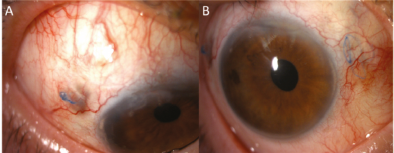
Figure 1. Temporal (a) and Nasal (B) Suture Exposure and Scleromalacia After Transscleral-Sutured Posterior Chamber Intraocular Lens Implantation
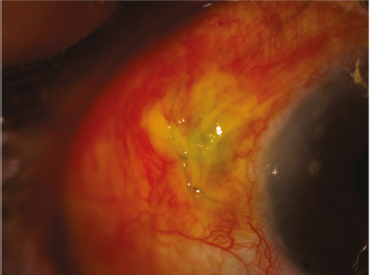
Figure 2. Anterior Segment of Exposure Area After Tenoplasty and Amnion Membrane Transplant Procedure
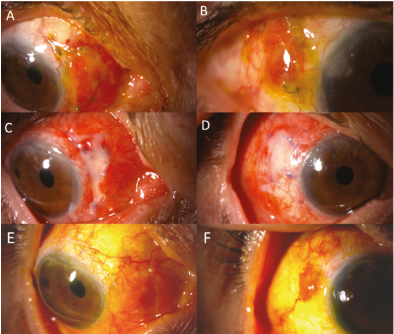
Figure 3. Anterior Segment of Exposure Areas After Oral Mucosal Grafting and Amnion Covering Procedure