Volume: 22 Issue: 12 December 2024
FULL TEXT
Dear Editor:
Composite tissue allotransplantation (CTA, which consists of tissues such as skin, muscle, and bone) has long been considered as an ideal solution for the repair of severe tissue defects. Porcine hindlimbs have been increasingly used in CTA research.1-3 Briefly, a composite tissue skeletal graft (CTSG) consisting of the distal femur, knee joint, tibia, fibula, and surrounding muscle was procured from the donor animal. A skin paddle was preserved on the medial aspect of the knee and thigh. A subcutaneous pocket was created in the anterolateral abdominal wall, and the CTSG was placed in the pocket. The femoral vessels of the donor organ were anastomosed in an end-to-end fashion to those of the recipient. A defect was made in the pocket, and the skin paddle was sutured into place, which allowed for visual and histopathological monitoring of rejection.4-8
After careful examination of the existing limb transplant protocol for a porcine hindlimb model for CTA, we have raised the following questions. First, What are the perforating pedicles of the skin paddle? It has been reported that the skin paddle is nourished by the femoral artery (FA) and/or the saphenous artery. However, related anatomic research on this topic is scarce. Second, the plane of the osteotomy exhibited great inconsistency, which raised the question, Is there a uniform standard? Third, it appears that the CTSG was both heavy and bulky, which may have caused discomfort for the recipients. Therefore, to improve this condition, Is there a possibility to miniaturize this model? Last, as a joint, the CTSG exhibited a great range of motion, which may be an additional cause of discomfort for the recipients. To ameliorate this discomfort, Could we modify this procedure by using a screw for the joint?
In this study, we attempted to explore these issues using fresh porcine hindlimbs. The external iliac artery of 20 fresh specimens of porcine hindlimbs was infused with black-colored latex. The skin paddle exhibited 2 perforating pedicles. The first perforating pedicle originated directly from the FA. The second perforating pedicle represented a number of small branches of the saphenous artery at the level of the knee and proximal to the crus (Figure 1).
The biceps femoris (BF) is a broad muscle that covers most of the lateral side of the thigh, knee, and proximal crus. Generally, most BF muscles have a very loose connection to muscles other than the semitendinosus, which facilitates ease of blunt separation. The BF exhibited 5 perforating pedicles (V1-V5), of which V1 was the thickest. The V1 pedicle also was the source of several branches into the semitendinosus, which exhibited a tight connection with BF but a loose connection with the semimembranosus. The V1 pedicle originated from the deep FA posterior to the mid-thigh (Figure 2). The V3 pedicle was very thin and originated directly from the FA and shared a common trunk with the nourishing artery of lateral femoral condyle. Retrograde anatomy revealed that the external iliac artery divided into the deep FA and the FA in the abdominal cavity, approximately 2 cm above the inguinal ligament (Figure 1).
The distal femur is known to be rich in blood vessels. The nourishing foramen in the distal femur was about 1 to 2 cm higher than the origination of the nourishing vessel of the femoral condyle. The nourishing foramen of the tibia and fibula was located at the shaft. Moreover, the nourishing foramen of the fibula was 0.5 to 1 cm lower than that of the tibia. The fibular nutrient artery ran close to the deep surface of the interosseous membrane and can be easily observed from the front (Figure 1).
Technical notes
Operative position. The animal was placed in a supine position and slightly inclined to the opposite side.
Osteotomy of the crus. A lateral crus incision along the fibula was made for longitudinal division between the peroneus longus and brevis muscles. Then, the muscles of the anterior compartment of the crus were detached from the tibia, the fibula, and the interosseous membrane and pulled forward. At this stage, the position of the nourishing foramen of the fibula was noted indirectly according to the nourishing artery. The osteotomy of the crus was conducted 1 cm distal to the nourishing foramen under direct vision (Figure 1).
Osteotomy of the thigh. The lateral crus incision was extended along the anterolateral edge of the hindlimb toward the hip to expose the anterior edge of BF. The BF was pulled back to expose the lateral femoral condyle and V3. After the V3 was cut, we carefully noted the origination of the V3, which was crucial for determination of the plane of the osteotomy of the distal femur. Thereafter, the BF was pulled back to expose V1. After the V1 was cut, the BF was pulled further back. At this stage, nearly the whole posterolateral edge of the femur could be touched directly. Periosteal dissection of the femoral shaft was performed, and we proceeded with the osteotomy of the femur at 2 to 3 cm proximal to the origination of V3 under direct vision (Figure 1).
Fixation of the knee joint. The knee was fixed in the extended position with a screw, which was inserted from the lateral femoral condyle into the medial plateau of the tibia.
Skin paddle. A skin paddle was preserved on the medial aspect of the knee and the crus, and the remaining skin was removed (Figure 1).
Cutting of the muscles and vessels. The superficial FA and vein were isolated from the inguinal ligament to the mid-thigh and cut near the inguinal ligament. The muscles of the thigh were cut according to the plane of the osteotomy of the femur, and the CTSG was successfully procured, and thereby the BF and the semitendinosus remained in situ (Figure 1).
Conclusions
The purpose of this study was to describe the miniaturization and the standardization of a porcine hindlimb model for the vascularized CTA, which was based on anatomic research. Limitations of this study included the following: possible bias due to sex, age, small sample size, and animal species, as well as surgical inexperience with the specific anatomy of nerves and veins in this animal model. A large sample size of in vivo studies could overcome these limitations.
In summary, we explored the anatomy of the hindlimb of a freshly killed pig. Based on these observations, we described the technique for the miniaturization and standardization of a porcine hindlimb model for the vascularized CTA, which showed great feasibility and repeatability.
References:
- Matar AJ, Crepeau RL, Mundinger GS, Cetrulo CL Jr, Torabi R. Large animal models of vascularized composite allotransplantation: a review of immune strategies to improve allograft outcomes. Front Immunol. 2021;12:664577. doi:10.3389/fimmu.2021.664577
CrossRef - PubMed - Lellouch AG, Andrews AR, Saviane G, et al. Tolerance of a vascularized composite allograft achieved in MHC class-I-mismatch swine via mixed chimerism. Front Immunol. 2022;13:829406. doi:10.3389/fimmu.2022.829406
CrossRef - PubMed - Fries CA, Lawson SD, Wang LC, et al. Graft-implanted, enzyme responsive, tacrolimus-eluting hydrogel enables long-term survival of orthotopic porcine limb vascularized composite allografts: a proof of concept study. PLoS One. 2019;14(1):e0210914. doi:10.1371/journal.pone.0210914
CrossRef - PubMed - Kuo YR, Chen CC, Shih HS, et al. Prolongation of composite tissue allotransplant survival by treatment with bone marrow mesenchymal stem cells is correlated with T-cell regulation in a swine hind-limb model. Plast Reconstr Surg. 2011;127(2):569-579. doi:10.1097/PRS.0b013e318200a92c
CrossRef - PubMed - Wachtman GS, Wimmers EG, Gorantla VS, et al. Biologics and donor bone marrow cells for targeted immunomodulation in vascularized composite allotransplantation: a translational trial in swine. Transplant Proc. 2011;43(9):3541-3544. doi:10.1016/j.transproceed.2011.10.010
CrossRef - PubMed - Ibrahim Z, Cooney DS, Shores JT, et al. A modified heterotopic swine hind limb transplant model for translational vascularized composite allotransplantation (VCA) research. J Vis Exp. 2013;(80):50475. doi:10.3791/50475
CrossRef - PubMed - Kuo YR, Goto S, Shih HS, et al. Mesenchymal stem cells prolong composite tissue allotransplant survival in a swine model. Transplantation. 2009;87(12):1769-1777. doi:10.1097/TP.0b013e3181a664f1
CrossRef - PubMed - Hettiaratchy S, Melendy E, Randolph MA, et al. Tolerance to composite tissue allografts across a major histocompatibility barrier in miniature swine. Transplantation. 2004;77(4):514-521. doi:10.1097/01.tp.0000113806.52063.42
CrossRef - PubMed

Volume : 22
Issue : 12
Pages : 964 - 966
DOI : 10.6002/ect.2024.0269
From the Department of Orthopedics, Sijing Hospital of Songjiang District, Shanghai, China
Acknowledgements: The author has not received any funding or grants in support of the presented research or for the preparation of this work and has no declarations of potential conflicts of interest.
Corresponding author: Yanhai Zuo, Department of Orthopedics, Sijing hospital of Songjiang District, Shanghai, China. 389 Sitong Road, Songjiang District, Shanghai 201601, China
Phone: 86 21 57610536, ext. 2411
E-mail: zuoyanhai@sina.cn
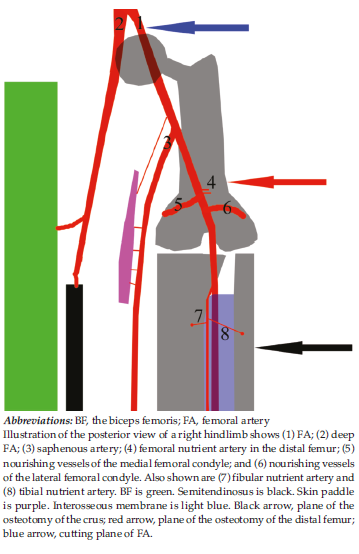
Figure 1. Illustration of the Primary Vessels and Procurement of the Composite Tissue Skeletal Graft
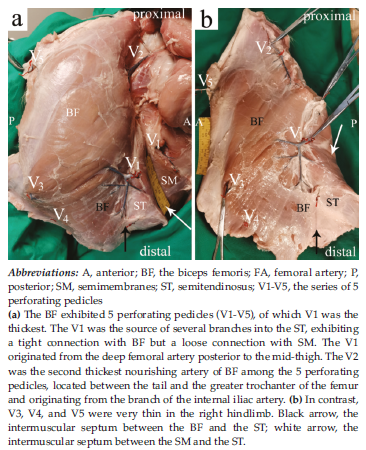
Figure 2. Blood Supply of the Biceps Femoris