Volume: 22 Issue: 1 January 2024 - Supplement - 1
FULL TEXT
Objectives: Autoimmune hepatitis is a rare indication for liver transplant in Western countries. Our goal was to identify characteristics and long-term outcomes of patients who underwent liver transplant for autoimmune hepatitis-related end-stage liver disease at our center.
Materials and Methods: Adult patients who underwent primary liver transplant from January 2007 to March 2022 at Imam Khomeini Hospital Complex, Tehran University of Medical Sciences, Tehran, Iran, were enrolled in our study.
Results: Among 1107 patients enrolled in our study, mean age was 45.94 ± 12.43 years (range, 16-73 years) and 423 (38.2%) female patients were included. Autoimmune hepatitis was the underlying cause of cirrhosis in 177 patients (experimental group); the other 930 patients did not have autoimmune hepatitis (control group). All patients were followed for a median of 60 ± 40.3 months (range, 3-187 months) after transplant. In the experimental group, patient survival rates at 1 month, 1 year, and 3 years were 87%, 81%, and 78%, which were not significantly different between the 2 groups (P = .445). Recurrence of autoimmune hepatitis was detected in 8 patients (4.5%) in the experimental group. Acute allograft rejection was more significantly detected in the patients with recurrence of autoimmune hepatitis than in patients without recurrence of autoimmune hepatitis.
Conclusions: Liver transplant in patients with autoimmune hepatitis is safe and is associated with good outcomes.
Key words : Acute allograft rejection, Cirrhosis, End-stage liver disease, Liver transplantation, Recurrence of autoimmune hepatitis
Introduction
Autoimmune hepatitis (AIH) is a chronic progressive inflammatory disease of the liver with the presence of circulating autoantibodies and plasma cell interface hepatitis.1 It is mainly treated with glucocorticoids alone or in combination with azathioprine; however, liver transplant is a lifesaving option in about 10% to 20% of patients with AIH who are in an advanced stage of the disease.2
Autoimmune hepatitis is a rare indication for liver transplant in the United States and Europe with the frequency rate of 5% and 3%, respectively.3,4 Data show that patients who undergo liver transplant for AIH-related end-stage liver disease more frequently experience acute cellular rejection during the first posttransplant year.5 However, the long-term survival rates of the patients and grafts may be comparable to those who are transplanted for other causes of end-stage liver disease.6 Given the rarity of the disease, scarce credible data (especially for single-center studies) are available on outcomes of liver transplant for AIH.
In this study, we aimed to identify the characteristics and long-term outcomes of patients who underwent liver transplant for AIH-related end-stage liver disease at our center and to compare those data to the data from patients who underwent liver transplant for other causes of end-stage liver disease.
Materials and Methods
Adult patients who underwent primary deceased donor liver transplant from January 2007 to March 2022 at Imam Khomeini Hospital Complex, Tehran University of Medical Sciences, Iran, were enrolled in our study. We excluded the following patients from our study: (1) patients who underwent secondary liver transplant; (2) patients with diagnosis of acute liver failure, acute-on-chronic liver failure, and fulminant hepatitis; and (3) pediatric patients younger than 15 years old. Our study was approved by the Ethics Committee of Tehran University of Medical Sciences. All patients were apprised of the goals and the aspects of the study, and written consent was obtained from each patient or their guardians before entering the study.
Autoimmune hepatitis was defined by the presence of autoantibodies including anti-nuclear antibody, anti-smooth muscle antibody, anti-liver-kidney microsomal type 1 antibody, or anti-liver cytosol type 1 antibody or plasma cell interface hepatitis in histopathological examination of liver. Estimated glomerular filtration rate (eGFR) was calculated according to the Cockcroft-Gault formula, CCr = ([140 – age in years] × weight in kg)/(SCr × 72) for male patients, where CCr is creatinine clearance and SCr is serum creatinine, which was multiplied by 0.85 for female patients. The Model for End-Stage Liver Disease (MELD) score was calculated using the formula 9.57 × loge (creatinine) + 3.78 × loge (total bilirubin) + 11.2 × loge (INR) + 6.43, where INR is the international normalized ratio.
Vascular anastomoses of the liver allograft were evaluated using daily Doppler ultrasonography at least for the first 3 posttransplant days. Cytomegalovirus (CMV) was screened weekly in patients by DNA polymerase chain reaction, and if the results were positive, then preemptive therapy with valganciclovir was started. Patients with an abrupt rise of serum total bilirubin and direct bilirubin in the posttransplant follow-up period were evaluated for biliary stricture using magnetic resonance cholangiopancreatography. Surgical wound infection was evaluated in the early posttransplant period by the surgeon, and the surgical site was opened and irrigated if infection was suspected. Patients with respiratory distress were evaluated for pneumonia as observed with noncontrast computed tomography (CT) chest scan, and if the CT results were positive, the patient was treated with intravenous antibiotics and immunosuppression minimization. Rejection was defined as elevation of liver enzymes, pathologically proven using percutaneous liver biopsy.
Demographic data and preoperative and postoperative data of the patients were recorded prospectively. We used SPSS statistical software (version 20.0) to analyze the data. Qualitative variables were analyzed with the chi-square test, and quantitative variables were analyzed with the independent t-test. Patient survival curves were computed according to the Kaplan-Meier method and were compared by the log-rank test. Survival rates of the patients were calculated using life tables at 1 month, 3 months, 1 year, and 2 years after transplant.
Results
During the study period, 1341 liver transplants were performed at our center. Of these, we enrolled 1107 patients with mean age of 45.94 ± 12.43 years old (range, 16-73 years) including 423 female patients (38.2%). Autoimmune hepatitis was the underlying cause of cirrhosis in 177 patients who were enrolled in the AIH group. For the other 930 patients, who comprised the non-AIH group, the main underlying causes of cirrhosis were viral hepatitis in 250 (26.88%), primary sclerosing cholangitis in 153 (16.45%), and nonalcoholic steatohepatitis in 119 patients (12.79%). Hepatocellular carcinoma was detected in 6 patients (3.4%) in the AIH group, which was significantly fewer than the 74 patients (7.9%) in the non-AIH group (P = .038).
Patients in the AIH group were significantly younger (36.51 ± 11.02 vs 47.66 ± 11.89 years old; P < .001) than patients in the non-AIH group. The AIH group included significantly more female patients (139 [78.53%] in the AIH group vs 284 [30.53%] patients in the non-AIH group; P < .001) with significantly lower values for body mass index (23.9 vs 25.7 kg/m2; P < .001) compared with the non-AIH group. Pretransplant laboratory test results are shown in Table 1.
All patients were followed for a median of 60 ± 40.3 months (range, 3-187 months) after transplant. Postoperative complications in each group are summarized in Table 2. As shown, CMV infection and pneumonia occurred significantly more often in the AIH group than in the non-AIH group.
Recurrence of AIH was detected in 8 patients (4.5%) in the AIH group. The posttransplant data of patients with or without recurrence of AIH in the AIH group are shown in Table 3. Incidence of acute allograft rejection was significantly greater in patients with recurrence of AIH compared with patients without recurrence of AIH. One of the patients with recurrence of AIH died at 10 years after liver transplant because of pulmonary sepsis, whereas the others survived for the entire duration of the study.
At the end of the study, 825 patients were alive: 131 patients (61.41%) in the AIH group and 694 patients (74.62%) in the non-AIH group. Survival rates of the patients at 1 month, 1 year, and 3 years after liver transplant were 88%, 81%, and 78%, respectively. In the AIH group, survival rates of the patients at 1 month, 1 year, and 3 years were 87%, 81%, and 78%, respectively. In the non-AIH group, survival rates of the patients at 1 month, 1 year, and 3 years were 88%, 81%, and 78%, respectively. The survival rates were not significantly different between the 2 groups (P = .445). The survival rates of patients in each group are shown in Figure 1.
Discussion
In this study, we reported the outcomes of liver transplant for 177 patients with AIH-related end-stage liver disease. To the best of our knowledge, our study is one of the largest single-center studies about liver transplant in AIH.
Autoimmune hepatitis accounts for 16% of liver transplants at our center, which is concordant with a report from another center in Iran where AIH accounted for 13% of 480 liver transplants.7 These AIH data from Iran show much greater percentages of AIH-related liver transplant populations versus the United States and European countries, which account for about 5%. This disparity between our country and the Western countries may be due to late detection of the disease and improper nonaggressive initial treatment of patients with the diagnosis of AIH, which may result in a higher rate of AIH-related end-stage liver disease.8
Similar to other studies,9 the patients with AIH in our study were significantly younger and included more female patients versus the non-AIH group, which may be the explanation for significant lower pretransplant eGFR and serum level of creatinine in this population, respectively. The MELD scores were not significantly different between the AIH and non-AIH groups. However, pretransplant INR of our patients in the AIH group was significantly higher than in the non-AIH group, although the difference of 0.2 units was negligible.
Expectedly, early posttransplant renal function of the patients calculated as eGFR was significantly better in the AIH group than in the non-AIH group, which may mainly be due to the younger age and better pretransplant eGFR of the patients in the AIH group. Serum bilirubin and transaminase levels at the first posttransplant week were significantly higher in the AIH group than in the non-AIH group. This may be because the administration of a more aggressive initial immunosuppressive regimen occurs in the early period after liver transplant for AIH compared with other causes of liver transplant.6 However, unlike the other studies, the rate of posttransplant acute cellular rejection was not higher in the AIH group than in non-AIH group in our study.10 This difference could be because of our larger study population, our use of higher doses of calcineurin inhibitors (which is possible in younger patients with satisfactory renal function), and different characteristics of our study population. At our center, the rates of posttransplant CMV infection and pneumonia were higher in the AIH group than in the non-AIH group. The explanation for these differences may be the higher doses of immunosuppressants dictated by a lower rate of normalizing of liver enzymes in AIH group in the posttransplant period compared with the other groups.
Autoimmune hepatitis reoccurred in 8 patients (4.5%) after liver transplant in our study. However, other studies reported that AIH reoccurs in 8% to 40% of patients after liver transplant.11,12 In the AIH group, patients with AIH recurrence had significant lower MELD scores but experienced significantly higher rates of posttransplant acute rejection than patients with no recurrence of AIH. In a recent study, in line with our study, the MELD scores of patients with AIH recurrence were lower versus the patients with no recurrence of AIH.13
Finally, survival rates of our patients in the AIH group were acceptable, with no significant difference versus the non-AIH group, which is compatible with other studies.14
Conclusions
Liver transplant in patients with AIH is safe and is associated with good outcomes. However, these patients may be at risk for recurrence of AIH, especially patients who experienced more episodes of acute rejection.
References:
- Mieli-Vergani G, Vergani D, Czaja AJ, et al. Autoimmune hepatitis. Nat Rev Dis Primers. 2018;4:18017. doi:10.1038/nrdp.2018.17
CrossRef - PubMed - Gleeson D, Heneghan MA, British Society of G. British Society of Gastroenterology (BSG) guidelines for management of autoimmune hepatitis. Gut. 2011;60(12):1611-1629. doi:10.1136/gut.2010.235259
CrossRef - PubMed - Adam R, Karam V, Delvart V, et al. Evolution of indications and results of liver transplantation in Europe. A report from the European Liver Transplant Registry (ELTR). J Hepatol. 2012;57(3):675-688. doi:10.1016/j.jhep.2012.04.015
CrossRef - PubMed - Manns MP, Czaja AJ, Gorham JD, et al. Diagnosis and management of autoimmune hepatitis. Hepatology. 2010;51(6):2193-2213. doi:10.1002/hep.23584
CrossRef - PubMed - Mack CL, Adams D, Assis DN, et al. Diagnosis and management of autoimmune hepatitis in adults and children: 2019 practice guidance and guidelines from the American Association for the Study of Liver Diseases. Hepatology. 2020;72(2):671-722. doi:10.1002/hep.31065
CrossRef - PubMed - Martin SR, Alvarez F, Anand R, Song C, Yin W, Group SR. Outcomes in children who underwent transplantation for autoimmune hepatitis. Liver Transpl. 2011;17(4):393-401. doi:10.1002/lt.22244
CrossRef - PubMed - Saberifiroozi M, Serati AR, Malekhosseini SA, et al. Analysis of patients listed for liver transplantation in Shiraz, Iran. Indian J Gastroenterol. 2006;25(1):11-13.
CrossRef - PubMed - Shafiei M, Alavian SM. Autoimmune hepatitis in Iran: what we know, what we don’t know and requirements for better management. Hepat Mon. 2012;12(2):73-76. doi:10.5812/hepatmon.840
CrossRef - PubMed - Krawitt EL. Clinical features and management of autoimmune hepatitis. World J Gastroenterol. 2008;14(21):3301-3305. doi:10.3748/wjg.14.3301
CrossRef - PubMed - Hayashi M, Keeffe EB, Krams SM, et al. Allograft rejection after liver transplantation for autoimmune liver diseases. Liver Transpl Surg. 1998;4(3):208-214. doi:10.1002/lt.500040313
CrossRef - PubMed - Edmunds C, Ekong UD. Autoimmune liver disease post-liver transplantation: a summary and proposed areas for future research. Transplantation. 2016;100(3):515-524. doi:10.1097/TP.0000000000000922
CrossRef - PubMed - Harputluoglu M, Caliskan AR, Akbulut S. Autoimmune hepatitis and liver transplantation: indications, and recurrent and de novo autoimmune hepatitis. World J Transplant. 2022;12(3):59-64. doi:10.5500/wjt.v12.i3.59
CrossRef - PubMed - de Quadros Onofrio F, Neong E, Adebayo D, et al. Single-center North American experience of liver transplantation in autoimmune hepatitis: infrequent indication but good outcomes for patients. J Can Assoc Gastroenterol. 2020;4(3):137-144. doi:10.1093/jcag/gwaa022
CrossRef - PubMed - Kerkar N, Yanni G. ‘De novo’ and ‘recurrent’ autoimmune hepatitis after liver transplantation: a comprehensive review. J Autoimmun. 2016;66:17-24. doi:10.1016/j.jaut.2015.08.017
CrossRef - PubMed

Volume : 22
Issue : 1
Pages : 247 - 251
DOI : 10.6002/ect.MESOT2023.P65
From the 1Liver Transplantation Research Center, Tehran University of Medical Sciences; and the 2Hepatobiliary Surgery and Liver Transplantation Division, Department of General Surgery, Imam Khomeini Hospital Complex, Tehran, Iran
Acknowledgements: The authors have not received any funding or grants in support of the presented research or for the preparation of this work and have no declarations of potential conflicts of interest.
Corresponding author: Amir Kasraianfard, Hepatobiliary and Liver Transplantation Research Center, Imam Khomeini Hospital Complex, Keshavarz Blvd., Tehran, 14197-33141, I.R. Iran
Phone: +98 21 6119 2659
E-mail: amirkasraian@gmail.com
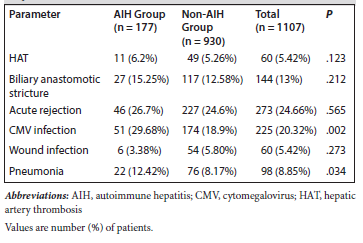
Table 2.Postoperative Complications in Patients With and Without Autoimmune Hepatitis
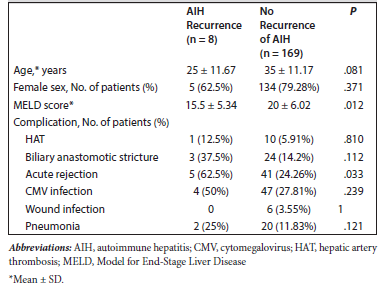
Table 3.Posttransplant Data of Patients With or Without Recurrence of Autoimmune Hepatitis in the Experimental Group
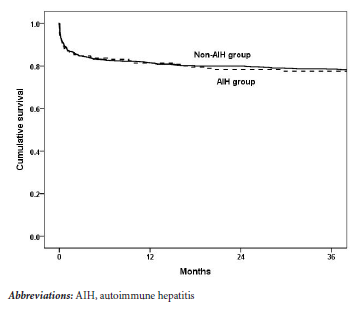
Figure 1.Kaplan-Meier Survival Graph of Patients in Each Group