Volume: 22 Issue: 1 January 2024 - Supplement - 1
FULL TEXT
Predicting Mortality of COVID-19 in Kidney Transplant Recipients With Developed Scores
Objectives: COVID-19 is a recently discovered β-subtype coronavirus infection due to SARS-CoV-2. Approximately 20% of COVID-19 patients have moderate to severe clinical manifestations and 5% progress to critical illness. Kidney transplant patients form a special group. In our study, we aimed to evaluate the success of the COVID-gram score and systemic immuno-inflammation index score in predicting the risk of mortality during hospitalization among kidney transplant patients.
Materials and Methods: Our study included 50 kidney transplant patients with positive real-time reverse transcription polymerase chain reaction COVID-19 tests between March 2020 and March 2021. Risk scores were calculated using baseline clinical data collected retrospectively from the patient cohort.
Results: The mean age was 54.3 ± 10.2. The mortality rate was 12%. When we compared the COVID-gram and systemic immuno-inflammation index scores between survivors and nonsurvivors, we did not find any difference.
Conclusions: Kidney and other solid-organ transplant patients are at greater risk of infection and mortality than other groups. Accurate risk-predicting tools are imperative for managing the COVID-19 pandemic with limited health resources.
Key words : COVID-gram, Mortality, Renal transplant, Systemic immuno-inflammation index
Introduction
COVID-19 is a recently discovered β-subtype coronavirus infection due to SARS-CoV-2.1 COVID-19 has had enormous health, economic, and social impacts, resulting in a major global public issue. In most cases of COVID-19, patients exhibit mild symptoms. However, in more severe cases, patients present with acute respiratory disease and interstitial and alveolar pneumonia, which can lead to respiratory failure requiring mechanical ventilation.2 Approximately 20% of COVID-19 patients have moderate to severe clinical manifestations and 5% progress to critical illness.3
Kidney transplant recipients (KTRs) form a special group because they are immunosuppressive and have many comorbidities; the overall clinical course of COVID-19 among KTRs is worse than that of the general population.4-6 Mortality rates in KTRs were reported to be higher than in nontransplant patient groups. Early stratification of patients with poor prognosis is extremely important, since it allows for the earlier and targeted application of appropriate therapies.7
For early stratification, various risk scoring systems have been developed, such as the COVID-gram score and the systemic immuno-inflammation index (SII) score.8,9 To our knowledge, these scoring systems have not been evaluated in KTRs who carry a high risk of developing critical illnesses.
In our study, we aimed to evaluate the success of the COVID-gram test and the SII test in predicting the risk of mortality in the hospital at the time of hospitalization of KTRs.
Materials and Methods
This study was performed in Istanbul Medeniyet University Faculty of Medicine, Istanbul, Turkey, and was approved by the Medeniyet University Ethics Committee. Written consent for the study was not required from patients due to the retrospective and observational nature of the study.
We included KTRs with positive real-time reverse transcription polymerase chain reaction COVID-19 test results between March 2020 and March 2021. We did not analyze patients who were intubated before hospitalization and needed treatment in the intensive care unit (ICU) from the beginning. After exclusion criteria were applied, 50 patients were included.
Demographic characteristics (age, sex), chronic diseases, patient complaints at the time of hospital admission, vital signs, thorax computed tomography finding at admission, discharge status, and laboratory values of patients (including hemoglobin, neutrophil count, lymphocyte count, white blood cell [WBC] count, platelet count, creatinine level, albumin, lactate dehydrogenase [LDH], alanine aminotransferase, aspartate aminotransferase, direct bilirubin, albumin, D-dimer, ferritin, C-reactive protein [CRP], and procalcitonin) were recorded.
The neutrophil-to-lymphocyte ratio (NLR) value was calculated by dividing the absolute neutrophil count by the number of lymphocytes. Risk scores were calculated using baseline clinical data collected retrospectively from patient medical records. The COVID-gram score includes 10 independent predictive factors: pathological changes typical of COVID-19 in chest radiographs, patient age, hemoptysis, dyspnea, loss of consciousness, number of comorbidities, history of malignancy, NLR, LDH value, and bilirubin concentration.
The formula for calculating the COVID-gram risk score was as follows: (radiographic abnormality × 27.1464) + (age × 0.6139) + (hemoptysis × 33.6210) + (dyspnea × 14.0569) + (unconsciousness × 34.4617) + (number of comorbidities × 10.3826) + (cancer history × 31.2211) + (NLR × 1.25) + (LDH × 0.0534) + (direct bilirubin × 3.0605) – 6.6127. The formula for calculating SII was (NXP)/L, where N, P, and L represent neutrophil counts, platelet counts, and lymphocyte counts, respectively. Discharge status was also recorded.
Statistical analyses
We used SPSS (version 15.0) for statistical analyses. Results are expressed as the mean ± SD. The distribution of the variance was analyzed with the Kolmogorov-Smirnov test. The relationship between categorical variables was determined by the chi-square test. Differences between parametric variables of the 2 groups were assessed by t-test or Mann-Whitney U test, depending on which was appropriate. We used receiver operating characteristic (ROC) curve analysis to assess the ability of parameters to discriminate between survivor and nonsurvivor patients. P < .05 was considered significant.
Results
The mean age was 54.3 ± 10.2. The mortality rate was 12%. Demographic and laboratory features of patients are listed in (Table 1). When we compared survivor and nonsurvivor patients (Table 2), nonsurvivor patients mostly had deceased donors and higher LDH and CRP levels than survivors. When we compared COVID-gram and SII scores between survivor and nonsurvivor patients, we did not find any difference.
Our ROC results demonstrated the power of the COVID-gram, SII, age, WBC, LDH, and CRP to discriminate between survivor and nonsurvivor patients. The ROC curves showed that LDH, CRP, and age had the optimal power to discriminate between survivor and nonsurvivor patients. However, SII and COVID-gram scores did not have ability to discriminate between survivor and nonsurvivor patients (Figure 1).
Discussion
In KTRs in our study, mortality rate from COVID-19 was 12%. Nonsurvivor KTRs mostly had organs from deceased donors and higher LDH and CRP levels than survivor KTRs. When we compared the COVID-gram and SII scores between survivor and nonsurvivor KTRs, we did not find any difference. In ROC analysis, LDH, CRP, and age had the optimal power to discriminate between survivor and nonsurvivor KTRs.
Although the severity of COVID-19 disease has decreased all over the world since its start in 2020, many people have lost their lives due to this disease. It has not been fully controlled yet. Mortality is high in patients with severe diseases,10 with KTRs having a high risk of COVID-19 infection.
To reduce mortality and control the disease, it is important to recognize patients at earlier stages whose course of the disease will be severe. The COVID-gram score was introduced in 2020 to assess more precisely the patients admitted to the hospital.7 Previous studies have shown that variables such as age, number of comorbid diseases, and cancer disease in this test increase the mortality from COVID-19.11,12
In patients on hemodialysis, Sevinc and colleagues showed that the area under the curve for the COVID-gram was 0.883 (95% CI, 0.821-0.945) for ICU need and 0.924 (95% CI, 0.874-0.974) for mortality.13 The SII score includes neutrophil, platelet, and lymphocyte counts, which can show the balance between the immune system of the host and the inflammatory state and is a prognostic marker in patients with sepsis.14 Usul and colleagues found that the SII score was higher in COVID-19 patients compared with healthy controls.15 Sevinc and colleagues found that area under the curve for the SII score was 0.752 for ICU need and 0.714 for mortality in HD patients. The investigators showed that COVID-gram and SII test can be used in patients on hemodialysis.13
Although high COVID-gram and SSII test scores could predict high mortality risk in the general population and hemodialysis patients, these indexes could not detect mortality risk in the KTRs in our study. We found that LDH and CRP to be more accurate tools in determining mortality risk.
This study had some limitations. First, we had a small sample size. Second, our study had a retrospective design.
Conclusions
Kidney and other solid-organ transplant patients are at greater risk of infection and mortality than other groups. Tools that accurately predict risk are imperative for managing the COVID-19 pandemic with limited health resources. High scores at presentation could warrant increased vigilance and treatment, whereas low scores could indicate only observation. Although COVID-19 has lost its severity at the moment, it is of great importance to identify patients at risk in the future. There is a need for easy, fast, and inexpensive methods and tests to distinguish patients with high risk in terms of mortality and ICU admission.
References:
- World Health Organization. Coronavirus disease (COVID-19) dashboard. 2020. https://covid19.who.int/
CrossRef - PubMed - Isnard P, Vergnaud P, Garbay S, et al. A specific molecular signature in SARS-CoV-2-infected kidney biopsies. JCI Insight. 2023;8(5). doi:10.1172/jci.insight.165192
CrossRef - PubMed - Wu Z, McGoogan JM. Characteristics of and important lessons from the coronavirus disease 2019 (COVID-19) outbreak in China: summary of a report of 72?314 cases from the Chinese Center for Disease Control and Prevention. JAMA. 2020;323(13):1239-1242. doi:10.1001/jama.2020.2648
CrossRef - PubMed - Oltean M, Softeland JM, Bagge J, et al. Covid-19 in kidney transplant recipients: a systematic review of the case series available three months into the pandemic. Infect Dis (Lond). 2020;52(11):830-837. doi:10.1080/23744235.2020.1792977
CrossRef - PubMed - Ravanan R, Callaghan CJ, Mumford L, et al. SARS-CoV-2 infection and early mortality of waitlisted and solid organ transplant recipients in England: a national cohort study. Am J Transplant. 2020;20(11):3008-3018. doi:10.1111/ajt.16247
CrossRef - PubMed - Kates OS, Haydel BM, Florman SS, et al. Coronavirus disease 2019 in solid organ transplant: a multicenter cohort study. Clin Infect Dis. 2021;73(11):e4090-e4099. doi:10.1093/cid/ciaa1097
CrossRef - PubMed - Sebastian A, Madziarski M, Madej M, et al. The usefulness of the COVID-GRAM score in predicting the outcomes of study population with COVID-19. Int J Environ Res Public Health. 2022;19(19). doi:10.3390/ijerph191912537
CrossRef - PubMed - Liang W, Liang H, Ou L, et al. Development and validation of a clinical risk score to predict the occurrence of critical illness in hospitalized patients with COVID-19. JAMA Intern Med. 2020;180(8):1081-1089. doi:10.1001/jamainternmed.2020.2033
CrossRef - PubMed - Fois AG, Paliogiannis P, Scano V, et al. The systemic inflammation index on admission predicts in-hospital mortality in COVID-19 patients. Molecules. 2020;25(23). doi:10.3390/molecules25235725
CrossRef - PubMed - Wiersinga WJ, Rhodes A, Cheng AC, Peacock SJ, Prescott HC. Pathophysiology, transmission, diagnosis, and treatment of coronavirus disease 2019 (COVID-19): a review. JAMA. 2020;324(8):782-793. doi:10.1001/jama.2020.12839
CrossRef - PubMed - Wu C, Chen X, Cai Y, et al. Risk factors associated with acute respiratory distress syndrome and death in patients with coronavirus disease 2019 pneumonia in Wuhan, China. JAMA Intern Med. 2020;180(7):934-943. doi:10.1001/jamainternmed.2020.0994
CrossRef - PubMed - Liang W, Guan W, Chen R, et al. Cancer patients in SARS-CoV-2 infection: a nationwide analysis in China. Lancet Oncol. 2020;21(3):335-337. doi:10.1016/S1470-2045(20)30096-6
CrossRef - PubMed - Sevinc C, Demirci R, Timur O. Predicting hospital mortality in COVID-19 hemodialysis patients with developed scores. Semin Dial. 2021;34(5):347-359. doi:10.1111/sdi.13004
CrossRef - PubMed - Lagunas-Alvarado M, Mijangos-Huesca FJ, Terán-González J, et al. Systemic immune inflammatory index in sepsis. Medicina interna de México. 2017;33(3):303-309.
CrossRef - PubMed - Usul E, San I, Bekgoz B, Sahin A. Role of hematological parameters in COVID-19 patients in the emergency room. Biomark Med. 2020;14(13):1207-1215. doi:10.2217/bmm-2020-0317
CrossRef - PubMed

Volume : 22
Issue : 1
Pages : 148 - 152
DOI : 10.6002/ect.MESOT2023.O35
From the 1Department of Nephrology, Prof Dr Suleyman Yalcin City Hospital, Istanbul, Turkey; and the 2Department of Nephrology, Medeniyet University Faculty of Medicine, Istanbul, Turkey
Acknowledgements: The authors have not received any funding or grants in support of the presented research or for the preparation of this work and have no declarations of potential conflicts of interest.
Corresponding author: Gulsah Sasak Kuzgun, Prof Dr Suleyman Yalcin City Hospital, Department of Nephrology, Istanbul, Turkey Eğitim Mah. Fahrettin Kerim Gökay Caddesi Kadıköy/İstanbul 34722
E-mail: gulsahsasak@gmail.com
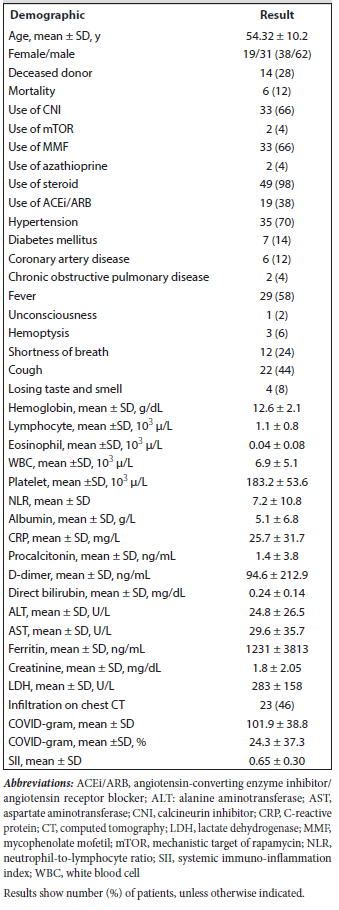
Table 1.Demographic Features and Laboratory Characteristics of Study Patients
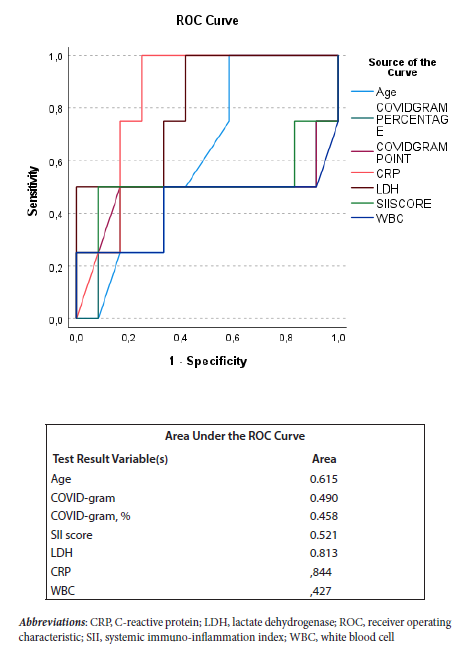
Figure 1.Receiver Operating Characteristic Curves for COVID-gram and Systemic Immuno-Inflammation Index Scores to Predict Mortality in Kidney Transplant Recipients With COVID-19
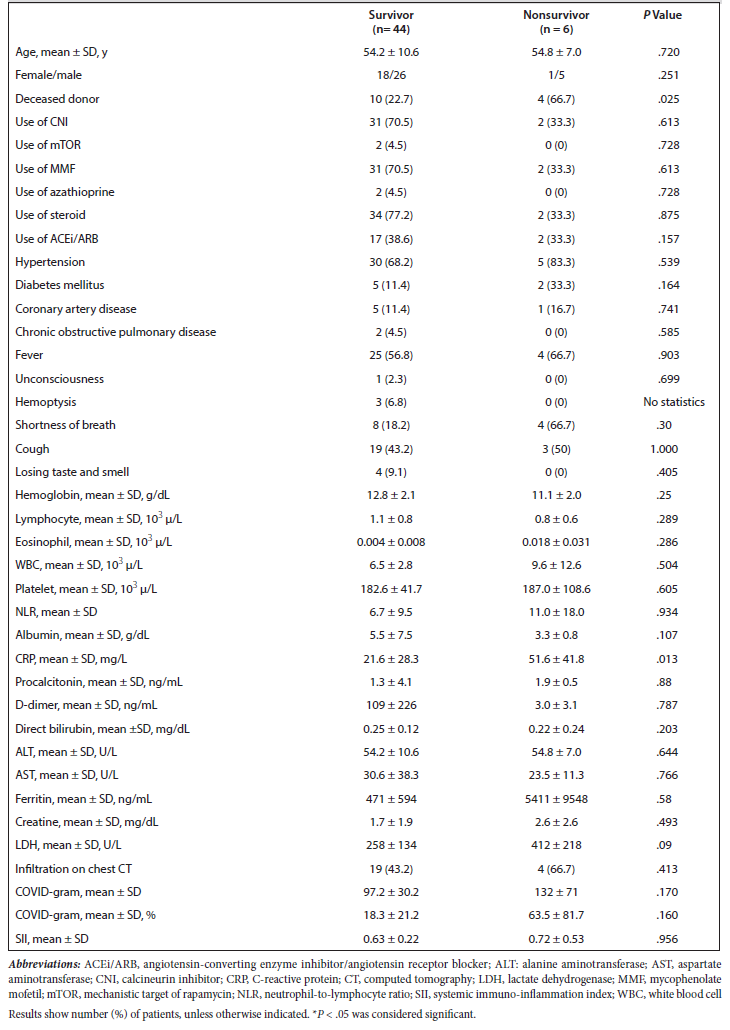
Table 2.Comparisons of Demographic Characteristics and Laboratory Results of Survivor Patients and Nonsurvivor Patients