Volume: 21 Issue: 4 April 2023
FULL TEXT
Objectives: Limited data exist on outcomes after simultaneous liver-kidney transplants with extended criteria donor grafts. We compared outcomes in recipients of simultaneous liver-kidney transplants with donation after circulatory death versus donation after brain death grafts.
Materials and Methods: This retrospective analysis included all liver transplants performed over a 7-year period at a single center. We compared categorical variables using the chi-square test and continuous variables using the t test. We compared survival using the Kaplan-Meier method and performed a univariate analysis of predictors of outcomes using Cox regression method.
Results: Over the study period, 196 patients underwent liver transplant, with 33 (16.8%) undergoing simultaneous liver-kidney transplant. In this cohort, 23 and 10 patients, respectively, received grafts from donors after brain death versus circulatory death. Both groups were comparable with respect to age, sex, hepatitis C virus status, and presence of hepatocellular carcinoma. Median (range) Model for End-Stage Liver Disease score was higher in recipients of donation after brain death grafts (37 [26-40] vs 23 [21-24];
P < .01). Liver allograft survival was comparable in donation after brain death versus donation after circulatory death recipients (P = 0.82) at 1 year (64.0% vs 66.7%), 3 years (57.6% vs 55.6%), and 5 years (57.6% vs 55.6%). Patient survival was also comparable
(P = .89) at 1 year (70.1% vs 77.8%), 3 years (63.1% vs 55.6%), and 5 years (63.1% vs 55.6%). Graft outcomes remained similar even after adjustment for Model for End-Stage Liver Disease score at transplant (hazard ratio 0.58; 95% CI, 0.14-2.44; P = .45). Univariate analysis of predictors of patient survival after simultaneous liver-kidney transplant showed a trend toward statistical significance with recipient age and donor male sex.
Conclusions: Grafts from donors after circulatory death could help safely expand the donor pool in patients undergoing simultaneous liver-kidney transplant without compromising outcomes.
Key words : Combined liver-kidney transplant, Extended criteria donor, Graft survival, Patient survival
Introduction
Organ availability remains a challenge in liver transplant (LT), prompting consideration of extended criteria donors, including donors after circulatory death (DCD). Utilization of DCDs has increased over the past decade, with DCD grafts currently accounting for about 7% of all LTs performed in the United States.1
Although initial reports had described inferior outcomes following DCD LT, compared with LT using donation after brain death (DBD) grafts, primarily because of the increased incidence of biliary complications, more recent data have shown improved outcomes and comparable results from both single-center and registry analyses.2-6 Similarly, although studies comparing kidney transplant using DCD donors have shown an increase in delayed allograft function, reported long-term allograft and patient survival rates are similar to those of recipients of non-DCD kidneys.7,8
Kidney dysfunction is common in patients with liver failure who are waiting for transplant and has been shown to adversely affect outcomes following LT.9 The proportion of patients undergoing simultaneous liver and kidney transplant (SLK) in the United States has increased significantly since the implementation of the Model for End-Stage Liver Disease (MELD) score to prioritize LT recipients in the United States: from 2.5% in 2001 (before MELD allocation) to 8.2% in 2014.10-12 This significant increase in demand for SLK has mandated consideration of extended criteria donor grafts for SLK, including the use of DCDs. However, despite the increase in SLK performed over the past 2 decades, only 29 SLK procedures with DCDs were performed in the United States in 2018.1 Although utilization of DCD organs in LT has been increasing steadily over the past 2 decades, the impact of these extended criteria donors on outcomes following SLK is unclear. Limited data exist on outcomes following SLK using DCD donors. Furthermore, most of the reported literature thus far in DCD-SLK has stemmed from registry analyses.13,14 Thus far, to our knowledge, there have only been 3 nonregistry-based studies addressing DCD-SLK (2 single center and 1 two-center analysis), which have reported conflicting results.14,15
Our aim was to compare outcomes following SLK transplant with DCD and SLK with DBD at a single center and to determine predictors of outcome.
Materials and Methods
Patients
We conducted a retrospective review of all LTs performed at Aurora St. Luke’s Medical Center (Milwaukee, WI, USA) from July 2007 through February 2014. Outcomes of SLK recipients of DCD allografts were compared with DBD recipients during the same study period. All donor and recipient variables were carefully reviewed and recorded.
Variables and outcomes analyzed
The following recipient variables were obtained: age, sex, etiology of liver disease, MELD score at the time of transplant, presence of hepatocellular carcinoma (HCC), hepatitis C virus (HCV) status, death, cause of graft loss, and last follow-up date. Donor and organ procurement parameters analyzed included donor age, sex, cause of death, and warm and cold ischemia time.
Primary outcome measures evaluated were patient and allograft survival. Graft survival was estimated from transplant until graft loss, defined as date of retransplant or death or date of last follow-up. Patient survival was estimated from transplant until death or date of last follow-up for primary transplants only.
Surgical techniques and immunosuppression
All donor and recipient operations were performed by 1 of 3 transplant surgeons from our center. Both transplants are typically performed by the same team. University of Wisconsin solution was used for preservation of all liver allografts. After declaration of death, a 5-minute period of observation was followed before organ retrieval. Donor warm ischemia time (WIT) was defined as the interval from withdrawal of ventilatory and circulatory support to aortic cross clamping and perfusion with cold preservation solution. Cold ischemia time was defined as the time from initiation of donor in vivo cold organ preservation to removal of the graft from 4 °C cold storage. Recipient WIT was the time from removal from cold storage to reperfusion of the liver graft. Thrombolytic agents were not used during procurement over the study period.
All recipient operations were performed using standard piggyback technique without venovenous bypass. Duct-to-duct biliary reconstruction with transcystic biliary tube (5F ureteral stent, Bard polyurethane ureteral catheter; CR Bard, Inc) was used except when deemed not feasible by the recipient surgeon. In recipients with indwelling biliary tubes, cholangiogram was performed on posttransplant days 7 and 21 and as clinically indicated.
A standard immunosuppression protocol was followed in all recipients, using steroid induction followed by tacrolimus, the dosage of which was adjusted based on trough levels. Rejection episodes were treated with increasing tacrolimus levels and steroid boluses, if necessary.
Statistical analyses
We compared recipient and donor factors among the groups using chi-square tests for categorical variables and t test and Wilcoxon rank sum for continuous variables. Continuous data are presented as means and standard deviations or as median values with interquartile ranges. We used the Kaplan-Meier method and Cox proportional hazards regression for survival comparisons. We used SAS version 9.4 for statistical analyses. The study protocol was approved by the institutional review board of Aurora St. Luke’s Medical Center.
Results
Over the study period, 196 patients underwent LT, of which 33 (16.8%) underwent SLK. Of 196 LT patients, 61 (31%) had transplants with DCD grafts. The average annual LT volume at our center over the study period was 27 (Figure 1). Among SLK recipients, 10 and 23 patients, respectively, received DCD and DBD allografts (Figure 2). The outcomes of these 2 groups were retrospectively compared. The median follow-up period posttransplant was 43.0 months.
Donor and recipient variables
Recipient, transplant, and donor characteristics for the DCD-SLK and DBD-SLK groups are summarized in (Table 1). Recipients of DCD and DBD grafts were similar with respect to age, sex, HCV status, and presence of HCC (Table 1). Two (20.0%) DCD-SLK recipients were HCV positive compared with 4 (17.4%) DBD-SLK recipients. One (10.0%) DCD-SLK recipient and 4 (17.4%) DBD-SLK recipients had HCC. The median MELD at LT was significantly higher in DBD-SLK recipients than in DCD-SLK recipients (37 [26-40] vs 23 [21-24]; P < .01). Although we observed no difference in mean recipient WIT among the 2 groups, the DCD-SLK group had slightly longer cold ischemia time (9.1 ± 3.4 vs 7.8 ± 3.1 h; P = .30), although not statistically significant. Age, sex, and proportion of donors above 50 years of age were similar between groups (Table 1).
Patient and graft survival
Four DCD-SLK and 9 DBD-SLK liver grafts were lost over the study period. After a median follow-up of 43.0 months, patient and liver allograft survival results from Kaplan-Meier analysis showed no significant difference between DBD-SLK and DCD-SLK recipients (P = .89 and P = .82, respectively) ((Figure 3) and (Figure 4)). Estimates of patient and graft survival, respectively, were as follows: 70.1% versus 77.8% and 64.0% versus 66.7% at 1 year, 63.1% versus 55.6% and 57.6% versus 55.6% at 3 years, and 63.1% versus 55.6% and 57.6% versus 55.6% at 5 years (Table 2).
Predictors of graft failure and death
With only 13 total events, there were too few events to develop a multivariable model predicting graft or patient survival. In univariate analysis, although we noted no statistically significant predictors of outcomes after SLK, we noted a trend toward statistical significance for patient survival with age at transplant (hazard ratio [HR] 1.98; 95% CI, 0.94-4.14; P = .07) and donor male sex (HR 4.46; 95% CI, 0.96-20.76; P = .06). We noted that DCD recipient status was not significantly associated with patient death (HR 1.09; 95% CI, 0.32-3.74; P = 0.89) or graft loss (HR 0.87; 95% CI, 0.27-2.83; P = .82). When we investigated the potential interaction between MELD at transplant and type of transplant, we also noted no association with MELD in predicting DBD graft loss (MELD HR 0.96; 95% CI, 0.88-1.04, P = .34) versus DCD graft loss (MELD HR 0.93; 95% CI, 0.82-1.06; P = .30) or DBD recipient death (MELD HR 0.97; 95% CI, 0.89-1.07; P = .57) versus DCD recipient death (MELD HR 0.96; 95% CI, 0.84-1.10; P = .59). All other univariate associations are shown in (Table 3) and (Table 4).
Discussion
Strategies to increase the available donor pool for LT include optimal utilization of extended criteria donors, including DCDs. In DCD kidney transplant alone, despite an increase in delayed allograft function, long-term allograft and patient outcomes are similar to those of recipients of non-DCD kidneys.16,17 Utilization of DCD allografts in LT, however, has been limited by concerns regarding decreased allograft survival, primarily due to an increased incidence of biliary complications.4 However, these concerns should be weighed against the survival benefit conferred by these extended criteria grafts, especially in recipients with more advanced liver disease.18
Implementation of the MELD scoring system in February 2002 has resulted in a substantial increase in the number of SLK procedures performed in the United States, increasing from 2.5% in 2001 to 9.9% (717) in 2016.10,12,19 The need for renal replacement therapy has been shown to be an independent predictor of mortality in patients undergoing kidney transplant after LT.20 Given the adverse effects of end-stage renal disease on mortality among LT recipients, consideration of SLK in appropriate LT candidates takes on added significance.21 Although combined liver and kidney transplant from living donors is an alternative to deceased donor SLK, the overall experience with living donors in this setting is very limited.22 In this context, given the increased demand for SLK and mortality effects of renal failure after LT, it is imperative to consider extended criteria donors, including DCD, in SLK recipients.
Over the course of our study period, the number of SLKs performed in the United States ranged from 7.3% of all LTs in 2007 to 8.2% in 2014.23 However, growth of DCD-SLK in the United States has been limited by concerns related to DCD LTs outlined above. From 2000 to 2010, despite a significant increase in SLK in the United States, only 94 recipients underwent SLK procedures with DCD grafts. The proportion of recipients undergoing SLK in our study cohort was much higher than the national average, reflecting the advanced degree of liver disease in our recipients, as suggested by the median MELD score at transplant.
Although several studies have evaluated outcomes of single liver or kidney DCD organ transplant, data on outcomes following DCD-SLK are limited and have mostly stemmed from registry analyses. To date, there have only been 2 single-center reports, 1 two-center report, and 2 registry analyses based on data from the Scientific Registry of Transplant Recipients (SRTR) that have published outcomes specific to DCD-SLK (Table 5).
Early registry studies from the SRTR demonst-rated inferior outcomes following DCD-SLK com-pared with DBD-SLK. In a retrospective analysis comparing outcomes following DCD-SLK and DBD-SLK using the United Network for Organ Sharing (UNOS) database, AlHamad and associates reported inferior patient and graft survival rates in SLK recipients of DCD grafts.13 Similar results were also reported by Wadei and associates.14 Although earlier registry analyses reported inferior outcomes following DCD-SLK, more recently, however, in an updated analysis of UNOS data, improved outcomes have been reported for DCD-SLK, which were comparable to those of DBD-SLK, likely reflecting the impact of the learning curve in DCD LT, especially DCD-SLK.24 In a study that modeled outcomes comparing DCD-SLK with DBD-SLK using SRTR data from 2002 to 2011, Vinson and associates observed benefits to accepting DCD grafts for SLK in patients with a MELD score >30.25
There have only been 3 studies addressing DCD-SLK that did not utilize SRTR data. In the first study of its kind evaluating the impact of DCD on SLK LT, in a single center study of 37 adult patients with primary SLK, LaMattina and colleagues showed similar 1-year survival among recipients of DCD-SLK and DBD-SLK. However, only 5 of the study subjects received DCD grafts26 and follow up was limited to 1 year. However, although Wadei and colleagues reported similar 1-year outcomes for 12 DCD-SLK compared with 54 DBD-SLK transplant procedures, liver graft and patient survival were inferior at 3 and 5 years after SLK.14 More recently, a 2-center report from the Mayo Clinic comparing 30 DCD-SLK to 131 DBD-SLK transplants reported comparable liver graft and patient survival rates at 1 and 3 years.15
As, to our knowledge, only the fourth nonregistry analysis and the third single-center study of DCD-SLK, our experience adds meaningful information to the existing published literature on patient and liver graft outcomes in this subset of liver recipients. Noteworthy is the fact that ours is the only DCD-SLK report, to our knowledge, from a low-volume transplant center and the only single-center study to report outcomes at 3 and 5 years in DCD-SLK that were comparable to DBD-SLK. Although our reported 1-year graft and patient survival rates in DCD-SLK were lower than other single-center reports, our 3- and 5-year graft and patient survival rates were comparable to those in the only other reported single center experience and were also comparable to DBD-SLK.
Several published reports have identified donor and recipient variables associated with outcomes following DCD LT. Analyzing SRTR, Mathur and colleagues identified age, male sex, African American ethnicity, HCV positivity, and MELD at LT as recipient factors associated with graft failure.27 However, only 2 prior reports have identified variables associated with outcome in DCD-SLK, both of which were registry analyses.13,24 AlHamad and colleagues reported recipient African American ethnicity, presence of HCC, need for intensive care unit stay and older donor age as being associated with inferior graft and patient outcomes.13 Similarly, Croome and colleagues identified recipient MELD score and donor risk index as poor prognostic factors.24 On univariate analysis of predictors of outcomes after DCD-SLK, we observed a trend for statistical significance in patient survival with recipient age and donor male sex. Neither DCD recipient status nor MELD score at transplant was associated with either patient death or graft loss.
Our study is limited by its retrospective design and the small number of patients in the DCD-SLK and DBD-SLK groups, which may have limited our power to detect differences. However, despite our lower annual mean LT volume, the proportion of SLK in our cohort was much higher than other single-center and registry analyses, underscoring our experience with this subset of LT recipients. In addition, unlike database or multicenter studies, our experience eliminates the effects of variation in practice patterns among transplant centers. Although registry analyses provide valuable information, they are inherently limited by lack of qualitative details and the reported results may not be applicable to single centers, especially lower volume LT centers. This is because most DCD-SLK procedures in the United States are performed by high-volume centers. Croome and colleagues reported that the 10 highest volume DCD-SLK centers accounted for more than half of all DCD-SLK performed in the United States over the study period.24 However, our average annual LT volume over the study period was only 28, making ours the only report addressing outcomes following DCD-SLK in a low-volume transplant center. Moreover, our study is only the second single-center analysis, to our knowledge, to report liver graft and patient outcomes at 3 and 5 years posttransplant.
Conclusions
In the second largest single-center analysis of liver graft and patient outcomes following DCD-SLK to our knowledge, we observed comparable outcomes to DBD-SLK in a low-volume LT center. Although long-term outcomes remain unclear, DCD grafts offer the potential to safely expand the donor pool for recipients of SLK without compromising liver allograft and patient survival. Our experience confirms the feasibility of DCD-SLK in low-volume centers and may hold important lessons for such centers considering expansion of DCD LTs due to continued scarcity of deceased donor organs.
References:
- Israni AK, Zaun D, Hadley N, et al. OPTN/SRTR 2018 Annual Data Report: Deceased Organ Donation. Am J Transplant. Am J Transplant. 2020;20 Suppl s1:509-541. doi:10.1111/ajt.15678
CrossRef - PubMed - Foley DP, Fernandez LA, Leverson G, et al. Donation after cardiac death: the University of Wisconsin experience with liver transplantation. Ann Surg. 2005;242(5):724-731. doi:10.1097/01.sla.0000186178.07110.92
CrossRef - PubMed - Skaro AI, Jay CL, Baker TB, et al. The impact of ischemic cholangiopathy in liver transplantation using donors after cardiac death: the untold story. Surgery. 2009;146(4):543-553. doi:10.1016/j.surg.2009.06.052
CrossRef - PubMed - De Vera ME, Lopez-Solis R, Dvorchik I, et al. Liver transplantation using donation after cardiac death donors: long-term follow-up from a single center. Am J Transplant. 2009;9(4):773-781. doi:10.1111/j.1600-6143.2009.02560.x
CrossRef - PubMed - Croome KP, Lee DD, Keaveny AP, Burcin Taner C. Improving national results in liver transplantation using grafts from donation after cardiac death donors. Transplantation. 2016;100(12):2640-2647.. doi:10.1097/TP.0000000000001483
CrossRef - PubMed - Laing RW, Scalera I, Isaac J, et al. Liver transplantation using grafts from donors after circulatory death: a propensity score–matched study from a single center. Am J Transplant. 2016;16(6):1795-1804. doi:10.1111/ajt.13699
CrossRef - PubMed - Hoogland ER, Snoeijs MG, Van Heurn LW. DCD kidney transplantation: results and measures to improve outcome. Curr Opin Organ Transplant. 2010;15(2):177-182. doi:10.1097/MOT.0b013e32833734b1
CrossRef - PubMed - Summers DM, Watson CJE, Pettigrew GJ, et al. Kidney donation after circulatory death (DCD): state of the art. Kidney Int. 2015;88(2):241-249. doi:10.1038/ki.2015.88
CrossRef - PubMed - Nair S, Verma S, Thuluvath PJ. Pretransplant renal function predicts survival in patients undergoing orthotopic liver transplantation. Hepatology. 2002;35(5):1179-1185. doi:10.1053/jhep.2002.33160
CrossRef - PubMed - Puri V, Eason J. Simultaneous liver-kidney transplantation. Curr Transplant Reports. 2015;2(4):297-302. doi:10.1007/s40472-015-0077-2
CrossRef - PubMed - Schmitt TM, Kumer SC, Al-Osaimi A, et al. Combined liver-kidney and liver transplantation in patients with renal failure outcomes in the MELD era. Transpl Int. 2009;22(9):876-883. doi:10.1111/j.1432-2277.2009.00887.x
CrossRef - PubMed - Eason JD, Gonwa TA, Davis CL, Sung RS, Gerber D, Bloom RD. Proceedings of consensus conference on simultaneous liver kidney transplantation (SLK). Am J Transplant. 2008;8(11):2243-2251. doi:10.1111/j.1600-6143.2008.02416.x
CrossRef - PubMed - AlHamad T, Spatz C, Uemura T, Lehman E, Farooq U. The outcomes of simultaneous liver and kidney transplantation using donation after cardiac death organs. Transplantation. 2014;98(11):1190-1198. doi:10.1097/TP.0000000000000199
CrossRef - PubMed - Wadei HM, Bulatao IG, Gonwa TA, et al. Inferior long-term outcomes of liver-kidney transplantation using donation after cardiac death donors: single-center and organ procurement and transplantation network analyses. Liver Transpl. 2014;20(6):728-735. doi:10.1002/lt.23871
CrossRef - PubMed - Nunez-Nateras R, Reddy KS, Aqel BA, et al. Simultaneous liver-kidney transplantation from donation after cardiac death donors: an updated perspective. Am J Transplant. 2020;20(12):3582-3589. doi:10.1111/ajt.16191
CrossRef - PubMed - Weber M, Dindo D, Demartines N, Ambühl PM, Clavien PA. Kidney transplantation from donors without a heartbeat. N Engl J Med. 2002;347(4):248-255. doi:10.1056/nejmoa020274
CrossRef - PubMed - Snoeijs MG, Winkens B, Heemskerk MB, et al. Kidney transplantation from donors after cardiac death: a 25-year experience. Transplantation. 2010;90(10):1106-1112. doi:10.1097/TP.0b013e3181f83b0b
CrossRef - PubMed - Taylor R, Allen E, Richards JA, et al. Survival advantage for patients accepting the offer of a circulatory death liver transplant. J Hepatol. 2019;70(5):855-865. doi:10.1016/j.jhep.2018.12.033
CrossRef - PubMed - Kim WR, Lake JR, Smith JM, et al. OPTN/SRTR 2016 Annual Data Report: Liver. Am J Transplant. 2018;18:172-253. doi:10.1111/ajt.14559
CrossRef - PubMed - Cassuto JR, Reese PP, Sonnad S, et al. Wait list death and survival benefit of kidney transplantation among nonrenal transplant recipients. Am J Transplant. 2010;10(11):2502-2511. doi:10.1111/j.1600-6143.2010.03292.x
CrossRef - PubMed - Sharma P, Schaubel DE, Guidinger MK, Goodrich NP, Ojo AO, Merion RM. Impact of MELD-based allocation on end-stage renal disease after liver transplantation. Am J Transplant. 2011;11(11):2372-2378. doi:10.1111/j.1600-6143.2011.03703.x
CrossRef - PubMed - Haberal M, Abbaso?lu O, Büyükpamukçu N, et al. Combined liver-kidney transplantation from a living-related donor. Transplant Proc. 1993;25(3):2211-2213.
CrossRef - PubMed - Kim WR, Lake JR, Smith JM, et al. OPTN/SRTR 2015 Annual Data Report: Liver. Am J Transplant. 2017;17:174-251. doi:10.1111/ajt.14126
CrossRef - PubMed - Croome KP, Mao S, Yang L, Pungpapong S, Wadei HM, Taner CB. Improved national results with simultaneous liver-kidney transplantation using donation after circulatory death donors. Liver Transplant. 2020;26(3):397-407. doi:10.1002/lt.25653
CrossRef - PubMed - Vinson AJ, Gala-Lopez B, Tennankore K, Kiberd B. The use of donation after circulatory death organs for simultaneous liver-kidney transplant: to DCD or not to DCD? Transplantation. 2019;103(6):1159-1167. doi:10.1097/TP.0000000000002434
CrossRef - PubMed - LaMattina JC, Mezrich JD, Fernandez LA, et al. Simultaneous liver and kidney transplantation using donation after cardiac death donors: a brief report. Liver Transpl. 2011;17(5):591-595. doi:10.1002/lt.22264
CrossRef - PubMed - Mathur AK, Heimbach J, Steffick DE, Sonnenday CJ, Goodrich NP, Merion RM. Donation after cardiac death liver transplantation: predictors of outcome. Am J Transplant. 2010;10(11):2512-2519. doi:10.1111/j.1600-6143.2010.03293.x
CrossRef - PubMed

Volume : 21
Issue : 4
Pages : 299 - 306
DOI : 10.6002/ect.2023.0035
From the 1Department of Gastroenterology and Hepatology, Cleveland Clinic Abu Dhabi, Abu Dhabi, United Arab Emirates; and the 2Transplant Center, Aurora St. Luke’s Medical Center, Milwaukee, Wisconsin, USA
Acknowledgements: The authors have not received any funding or grants in support of the presented research or for the preparation of this work and have no declarations of potential conflicts of interest.
Corresponding author: Shiva Kumar, Department of Gastroenterology & Hepatology, Digestive Disease Institute, Cleveland Clinic Abu Dhabi, Al Maryah Island, Abu Dhabi, United Arab Emirates
Phone: +971 2 501 9000
E-mail: kumars5@clevelandclinicabudhabi.ae
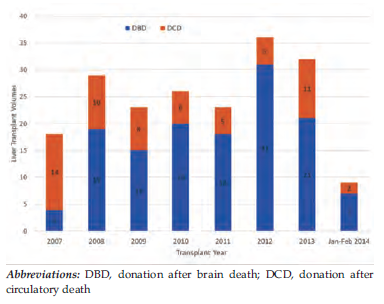
Figure 1. Liver Transplants Performed Over the Study Period
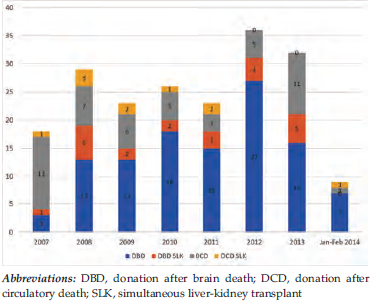
Figure 2. Donation After Circulatory Death and Donation After Brain Death Simultaneous Liver-Kidney Transplants Performed Over the Study Period
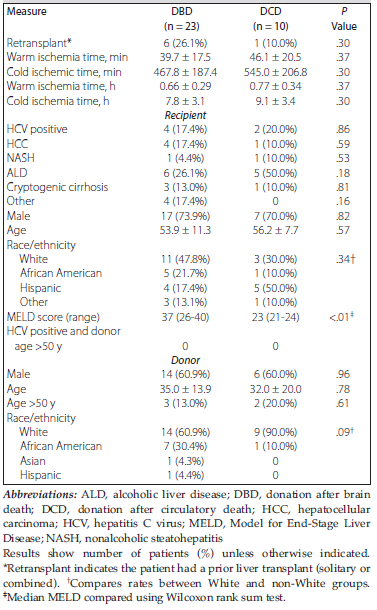
Table 1. Recipient and Donor Characteristics of Simultaneous Liver-Kidney Transplants Using Donation After Circulatory Death and Donation After Brain Death Grafts
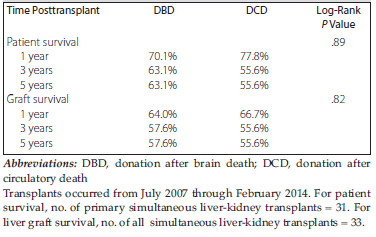
Table 2. Patient Survival Following Primary Simultaneous Liver-Kidney Transplants and Liver Graft Survival Following All Simultaneous Liver- Kidney Transplants
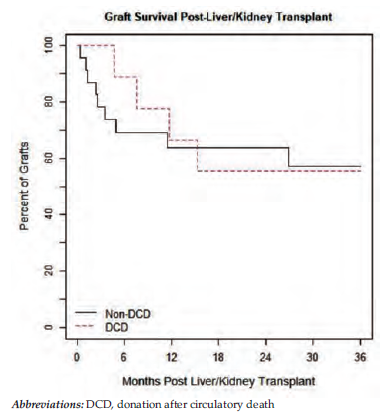
Figure 3. Graft Survival Following Donation After Circulatory Death and Donation After Brain Death Simultaneous Liver-Kidney Transplant
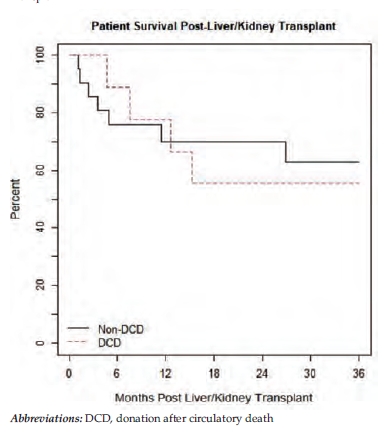
Figure 4. Patient Survival Following Donation After Circulatory Death and Donation After Brain Death Simultaneous Liver-Kidney Transplant
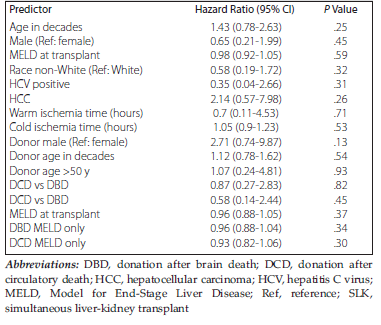
Table 3. Univariate Analysis of Predictors of Graft Survival
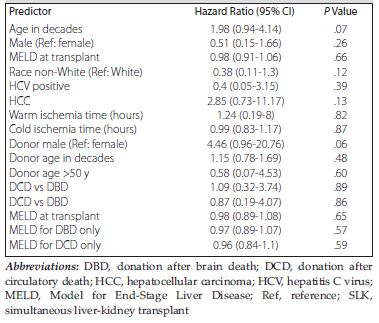
Table 4. Univariate Analysis of Predictors of Patient Survival
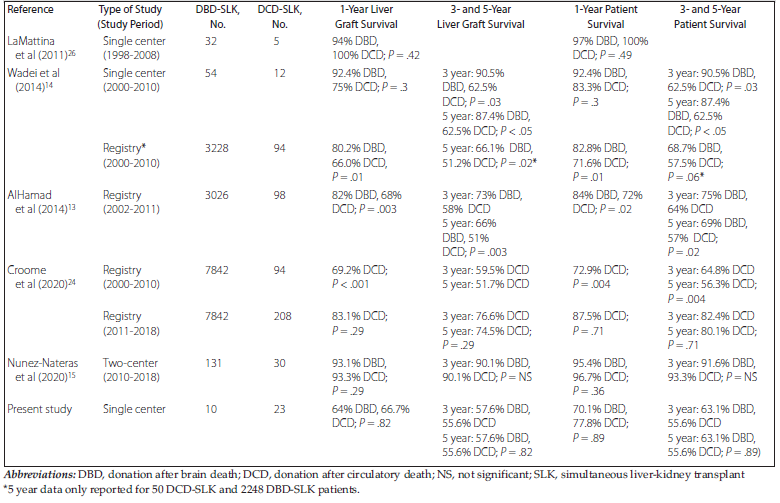
Table 5. Summary of All Reported Studies to Date Evaluating Outcomes Following Donation After Circulatory Death Simultaneous Liver-Kidney Transplant