Volume: 21 Issue: 11 November 2023
FULL TEXT
Parvovirus in Kidney Transplant Recipients: A Single-Center Experience
Abstract
Objectives: Parvovirus testing is not done in routine clinical practice; thus, it is possible that reported parvovirus cases are just the tip of the iceberg of total prevalence. We present a single-center retrospective analysis of 22 events of parvovirus B19 anemia in 20 renal transplant recipients, among which 2 patients had recurrence.
Materials and Methods: For this descriptive analytical study, parvovirus B19 disease was defined as parvovirus infection (detection by real-time poly-merase chain reaction) in the presence of anemia with clinical symptoms or bone marrow biopsy findings consistent with the diagnosis. Study duration was 18 months, from June 2021 through December 2022, and patients were enrolled from a single center.
Results: All patients detected with the virus had received induction with thymocyte globulin and were on standard triple drug immunosuppression. Mean age was 32 ± 12 years with median time to diagnosis of 2 months after transplant. Anemia was observed in all patients with mean hemoglobin level at presentation of 6.02 ± 1.28 g/dL. Creatinine at presentation was 1.49 mg/dL (interquartile range, 0.92-2.69 mg/dL). The most common presentation was asymptomatic patient with evaluation for anemia. During therapy, the highest median creatinine level was 2.0 mg/dL (interquartile range, 1.38-3.2 mg/dL), which was significantly higher than that at presentation (P < .018). After therapy, median creatinine level was 1.3 mg/dL, which was not significantly higher than the baseline level, demonstrating a mostly transient graft dysfunction.
Conclusions: Parvovirus B19 is a relatively under-reported disease in renal transplant recipients, with patients presenting with anemia and the disease causing transient graft dysfunction. Parvovirus B19 infection responds well to a decrease in immunosuppression and intravenous immunoglo-bulin therapy.
Key words : Anemia, Graft dysfunction, Renal transplantation
Introduction
Parvovirus B19 is a single-stranded DNA virus that universally infects humans. In immunocompetent people, the infection is usually cleared by the immune system, with the systemic manifestations being limited to fever and viral exanthem for those presenting in childhood. About 60% to 90% of people have antibodies against parvovirus B19.1,2 However, this is not the case in immunocompromised patients, with parvovirus B19 causing severe anemia. The first case of parvovirus B19 infection posttransplant was reported in 19863; the infection can be seen in any solid-organ transplant and in hematopoietic stem cell transplant. Anemia is the most common manifestation.4 Parvovirus B19 infection can also cause allograft dysfunction in solid-organ transplants, like renal transplant.5 Anemia often occurs after transplant, and there are many contributing factors, such as perioperative blood loss, preexisting chronic inflam-matory state, iron deficiency, and induction and maintenance drugs used for transplant.4 Parvovirus B19 testing is not done in routine clinical practice; therefore, it is possible that reported parvovirus B19 cases are just the tip of the iceberg of total prevalence.
We present a single-center retrospective analysis of 22 events of parvovirus B19 anaemia in 20 renal transplant recipients, among which 2 patients had recurrence.
Materials and Methods
Case definition Parvovirus P19 infection is diagnosed by either serology or direct viral detection in clinical specimens, such as blood, bone marrow, and other solid organs like kidney, liver, and lung.6 Parvovirus B19 serology may not be completely reliable for diagnosis in immunocompromised patients due to inadequate immune response.7,8 Only patients with positive polymerase chain reaction test confirmation of parvovirus P19, with corroborative clinical findings cases, were enrolled in our study. Study duration was 18 months, from June 2021 through December 2022, and patients were enrolled from single center.
Statistical analyses
We used descriptive statistics for data analyses, including presentation in mean ± SD, median, and interquartile range (IQR).
Results
During the study period, 540 kidney transplant procedures were done at our center. Of these, 20 kidney transplant recipients (with total of 22 events) with parvovirus B19 disease were enrolled; 1 patient had simultaneous kidney and pancreatic transplant. Of the 20 patients, 6 (27.3%) were deceased donor transplant recipients (all others were living donor transplant recipients). Ten patients (45.5%) received grafts from parents, 2 (9.1%) from spouses, and 1 from grandparent (4.6%). Three patients (13.6%) received grafts through a living related kidney paired donation program.
All patients detected with the virus had received induction therapy with thymocyte globulin (either rATG or Grafalon) and were on standard triple drug immunosuppression. None of included patients had received interleukin 2 (Simulect) as induction therapy. Among study patients, mean age was 32 ± 12 years, and 15 (75.0%) were male patients (the patient representation may be biased because of the higher number of renal transplant recipients among males in our country).
Median time to onset of symptoms was 2 months (IQR, 1.0-7.5 mo) after transplant. Anemia was observed in all patients, with mean hemoglobin level at presentation of 6.02 ± 1.28 g/dL. Mean hematocrit value at presentation was 19.57 ± 4.28. Leukopenia was observed in 6 patients (with 1 patient having recurrence). The mean leukocyte count at presentation was 6.27 ± 3.84 × 10⁹ cells/L, with lowest white blood cell count (WBC) of 2.1 × 10⁹ cells/L. Two patients had thrombocytopenia, with 1 patient having blood stream infection/sepsis as etiology and the other patient having pancytopenia. Mean platelet count was 230 ± 131 × 109 cells/L. Patients had a median baseline creatinine level of 1.33 mg/dL (IQR, 1.00-1.61 mg/dL) before infection. At time of presentation with infection, median creatinine level was 1.49 mg/dL (IQR, 0.92-2.69 mg/dL), showing no significant difference.
The most common presentation was asympto-matic presentation with evaluation for anemia in 11 patients (50.0%) followed by dyspnea on exertion in 6 patients (27.3%). The common presentation of asymptomatic with anemia evaluation may be because the median time to parvovirus B19 illness was about 2 months posttransplant, when patients were under regular and more intense follow-up. Patients were immunosuppressed during the initial 3 months posttransplant after induction therapy and on higher doses of maintenance immunosup-pression. Six events of infection (27.3%) occurred after antirejection therapy: 5 patients had antibody-mediated rejection and 1 patient had T-cell-mediated rejection. One patient (4.5%) was treated with plasmapheresis for posttransplant recurrence of glomerulonephritis (focal segmental glomerulos-clerosis).
One patient with parvovirus B19 who had disease recurrence came with complaints of severe abdo-minal pain. On evaluation, the patient had acute pancreatitis and epididimo-orchitis with generalized sepsis. He later developed acute respiratory distress syndrome and needed intensive care unit hos-pitalization. All patients were treated with 2 g/kg intravenous immunoglobulin therapy, with decrease in antiproliferative therapy by about 50% as per institutional protocol and further reduction if required as per clinical indication. Packed red blood cell or packed cell volume was transfused if needed per clinician discretion.
During therapy, mean hemoglobin was 5.9 ± 1.09 g/dL, which was not significantly lower than hemoglobin at presentation. After therapy (after an average of 5.4 ± 2.4 weeks), hemoglobin level increased to 10.9 ± 1.6 g/dL, which was significantly higher than level at baseline or presentation (P < .005). During therapy, the highest median creatinine level was 2.0 mg/dL (IQR, 1.38-3.2 mg/dL), which was significantly higher than the level at presentation (P < .018). After therapy, creatinine level decreased, with median posttherapy level of 1.3 mg/dL (IQR, 1.00-1.72 mg/dL), which was not significantly higher than the baseline or presentation creatinine level (P = .2). This demonstrates a mostly transient graft dysfunction, with graft function returning to baseline posttherapy.
Two patients experienced graft loss, with 1 loss because of renal vein thrombosis and the other loss because of severe sepsis-induced graft dysfunction. This patient had prolonged intensive care unit and hospital stays and eventual renal allograft loss.
Discussion
The overall estimated incidence of positive par-vovirus B19 DNA among kidney transplant recipients has been reported as 10.3%. Among kidney transplant patients with anemia, the incidence rate of positive parvovirus B19 DNA has been reported as 27.4%.9
In a prospective study by Huang and colleagues, 118 kidney transplant recipients were followed up and their plasma samples were screened for parvovirus B19 DNA copies by polymerase chain reaction and serology for immunoglobulin M (IgM) and IgG weekly for 1 month and then monthly for 6 months. Among the study population, 10.17% had parvovirus infection and showed a significant drop in hemoglobin and reticulocyte count but no significant renal dysfunction.10
In another study on posttransplant parvovirus B19 infections, Eid and colleagues studied patients over a 16-year period (1990-2005) and documented 7 patients with parvovirus B19 (6 were renal transplant recipients and 1 was a heart transplant recipient); median time to onset of symptoms was 1.5 months.11 This result was comparative to our study, where median time to onset of symptoms was 2 months (IQR, 1.0-7.5 mo) after transplant (Table 1). Anemia was observed in all patients in their study (hemoglobin level ranging from 4.9-6.8 mg/dL), which was also comparative to our study, where we observed mean hemoglobin level at presentation of 6.02 ± 1.28 g/dL, ranging from 4.0 to 8.9 mg/dL. Leukopenia was observed in 5 patients (71.4% of patients) in the study from Eid and colleagues, with WBC ranging from 2.0 to 2.5 × 10⁹ cells/L. In our study, only 6 cases (27.3%) had leukopenia, of which 1 was recurrence. In our study, the mean leukocyte count at presentation was 6.27 ± 3.84 × 10⁹ cells/L, with lowest WBC count of 2.1 × 10⁹ cells/L.
Allograft dysfunction was observed at the time of parvovirus B19 infection in 1 patient (14.28%) in the study from Eid and colleagues. In our study, 6 patients (27.3%) had no allograft dysfunction, 13 patients (59.1%) had transient rise of creatinine, which returned to baseline after therapy and rationalization of medication, and 3 patients (13.6%) had renal allograft dysfunction that was persistent in nature. Two of our patients experienced graft loss (9.1%); however, Eid and colleagues reported all patients alive with functioning allografts.
Eid and colleagues also compared their cases with other 91 cases in the literature (98 cases, all solid-organ transplant and hematopoietic stem cell transplant recipients with parvovirus B19). The investigators showed the median time to onset of parvovirus B19 disease was 1.75 months (range, 1 week to 96 months) after transplant. In 65% of patients, the onset was within 3 months post-transplant. The most common manifestation was anemia (98.8% of all patients), with patients presenting clinically with weakness, dyspnea, and orthostasis. Leukopenia was observed in 37.5% of patients, and thrombocytopenia was observed in 21.0% of patients. Allograft loss, rejection, or dysfunction occurred in 10.4% of patients. Among these cases, 53 were renal transplant recipients (54%) with mean age of 36.7 ± 15.5 years, 63.2% male patients, and median time to onset posttransplant of 1.25 months. Mean low hemoglobin level was 6.2 ± 1.2 g/dL. Leukopenia was observed in 34 patients (64.2%), with lowest mean WBC of 1.2 ± 1.2 × 10⁹ cells/L and allograft dysfunction observed in 15.6% of patients. None of the renal transplant recipients died of parvovirus B19. These results were similar to our study, except our patients had less frequent leukopenia.
Hegde and colleagues evaluated renal transplant from 2013 to 2020 with persistent anemia and reported 71 patients who were tested for parvovirus B19, of which 20 patients had positive tests. Median time to detection of parvovirus B19 was 1.3 months posttransplant. Mean hemoglobin was 6.49 ± 1 g/dL. Leukopenia and thrombocytopenia were present in 20% and 10% of patients, respectively. Graft dysfunction was observed at the time of parvovirus B19 disease in 10 patients (50.0%) (Table 1).12
Our study was similar to a Korean study from Baek and colleagues, which demonstrated no difference in long-term allograft outcome that could be attributed to parvovirus B19 infection.13 In our study, the cases of graft loss had other causative factors, such as severe sepsis leading to acute allograft dysfunction in 1 of the cases and renal vein thrombosis in the other case.
Conclusions
A high index of suspicion is needed for detection of parvovirus B19 infection in posttransplant patients presenting with anemia. The risk of parvovirus B19 infection is significantly higher in patient groups with higher immunosuppression, particularly in those who had treatment for graft rejection and more so if in the immediate posttransplant period. The typical course is benign, with only transient graft dysfunction that responds well to a decrease in immunosuppression and intravenous immunoglo-bulin treatment. If resources permit, a routine parvovirus B19 screening in all transplant recipients is recommended, with close follow-up to further study the prevalence of this disease, which might be missed if only screening and testing patients at high risk of infection.
References:
- Cossart YE, Field AM, Cant B, Widdows D. Parvovirus-like particles in human sera. Lancet. 1975;1(7898):72-73. doi:10.1016/s0140-6736(75)91074-0
CrossRef - PubMed - Cohen BJ, Buckley MM. The prevalence of antibody to human parvovirus 19 in England and Wales. J Med Microbiol. 1988;25(2):151-153. doi:10.1099/00222615-25-2-151
CrossRef - PubMed - Neild G, Anderson M, Hawes S, Colvin BT. Parvovirus infection after renal transplant. Lancet. 1986;2(8517):1226-1227. doi:10.1016/s0140-6736(86)92245-2
CrossRef - PubMed - Rerolle JP, Morelon E, Helal I, Peraldi MN, Mamzer-Bruneel MF, Kreis H. Parvovirus B19-related anaemia after renal transplantation. Scand J Infect Dis. 2004;36(6-7):513-516. doi:10.1080/00365540410020244
CrossRef - PubMed - Cavallo R, Merlino C, Re D, et al. B19 virus infection in renal transplant recipients. J Clin Virol. 2003;26(3):361-368. doi:10.1016/s1386-6532(02)00104-x
CrossRef - PubMed - Eid AJ, Ardura MI; AST Infectious Diseases Community of Practice. Human parvovirus B19 in solid organ transplantation: guidelines from the American society of transplantation infectious diseases community of practice. Clin Transplant. 2019;33(9):e13535. doi:10.1111/ctr.13535
CrossRef - PubMed - Broliden K. Parvovirus B19 infection in pediatric solid−organ and bone marrow transplantation. Pediatr Transplant. 2001;5(5):320-330. doi:10.1034/j.1399-3046.2001.00035.x
CrossRef - PubMed - Kurtzman GJ, Ozawa K, Cohen B, Hanson G, Oseas R, Young NS. Chronic bone marrow failure due to persistent B19 parvovirus infection. N Engl J Med. 1987;317(5):287−294. doi:10.1056/NEJM198707303170506
CrossRef - PubMed - Thongprayoon C, Khoury NJ, Bathini T, et al. Epidemiology of parvovirus B19 and anemia among kidney transplant recipients: a meta-analysis. Urol Ann. 2020;12(3):241-247. doi:10.4103/UA.UA_89_19
CrossRef - PubMed - Huang Q, Wang Y, Chen R, et al. Parvovirus B19 infection in kidney transplant recipients: A prospective study in a teaching hospital in Shanghai, China. Transpl Immunol. 2022;74:101667. doi:10.1016/j.trim.2022.101667
CrossRef - PubMed - Eid AJ, Brown RA, Patel R, Razonable RR. Parvovirus B19 infection after transplantation: a review of 98 cases. Clin Infect Dis. 2006;43(1):40-48. doi:10.1086/504812
CrossRef - PubMed - Hegde U, Mittal A, Rajapurkar M, et al. Parvovirus disease post renal transplant presenting as refractory anemia-single centre experience (Abstract POS-731). Kidney Int Rep. 2021;6(4).
CrossRef - PubMed - Baek CH, Kim H, Yang WS, Han DJ, Park SK. Risk factors and long-term outcomes of parvovirus B19 infection in kidney transplant patients. Transpl Infect Dis. 2017;19(5). doi:10.1111/tid.12754
CrossRef - PubMed

Volume : 21
Issue : 11
Pages : 868 - 871
DOI : 10.6002/ect.2023.0127
From the Department of Nephrology and Transplantation, Institute of Kidney Disease and Research Center, Institute of Transplantation Sciences (IKDRC-ITS), Ahmedabad, Gujarat, India
Acknowledgements: The authors have not received any funding or grants in support of the presented research or for the preparation of this work and have no declarations of potential conflicts of interest. Data are available from the corresponding author on reasonable request.
Corresponding author: Priyash Tambi, Department of Nephrology, IKDRC-ITS, Ahmedabad, 380016 Gujarat, India
Phone: +91 954 938 76 57
E-mail:priyashtambi@gmail.com
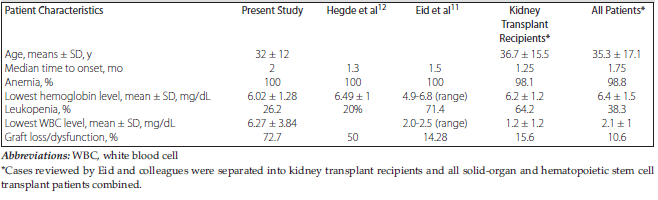
Table 1.Comparison of Patients With Parvovirus Infection