Volume: 18 Issue: 1 February 2020
FULL TEXT
Objectives: Delayed graft function after kidney transplant can affect patient and graft survival, resulting in prolonged hospital stay and need for dialysis. Ischemia times during organ procurement and reanastomosis at transplant are key factors in delayed graft function.
Materials and Methods: We analyzed all living- and deceased-donor renal transplants in Ireland over a 33-month period, with effect of warm ischemia time during anastomosis on delayed graft function being the primary outcome. We performed statistical regression analyses to account for confounding variables. Patients had identical surgical technique and immunosuppression protocols.
Results: Of 481 transplants during the study period, 20 patients were excluded because of paired-kidney exchange, nephron dosing transplant, or simul-taneous pancreas-kidney transplant. In the donor pool, 70% were donors after brainstem death, 3.6% were donors after cardiac death, and 26% were living donors. All living donors were direct altruistic donors and underwent stringent assessment via the ethics committee and multidisciplinary team meeting. Of living donors, 8% were not related. These were true altruistic donors who were acquaintances of the recipients and volunteered themselves for assessment. They were assessed in accordance with the declaration of Istanbul and received no compensation of any kind for donation. Of total patients, 18% had delayed graft function, defined as need for dialysis within 7 days of transplant. Warm ischemia time during anastomosis significantly affected risk of delayed graft function but not graft survival or function at 3 months. This factor did not correlate with hospital stay duration. Time on dialysis and recipient weight significantly correlated with risk of delayed graft function.
Conclusions: Our findings support a role for minimizing warm ischemia time during anastomosis to reduce delayed graft function and need for dialysis in the perioperative period. However, a longer time does not appear to affect creatinine levels and therefore graft function at 3 months.
Key words : Allograft survival, Anastomosis time, Renal allograft transplantation
Introduction
Numerous factors are known to contribute to delayed graft function (DGF) in transplanted kidneys. Cold ischemia time (CIT) is recognized to be one of these key factors in deceased-donor transplant.1-3 However, until recently, less was known about the effects of warm ischemia time (WIT) on both short-term and long-term renal allograft function. Over the past decade, heightened awareness of WIT has arisen with the increasing uptake of partial nephrectomy in urological surgery.4,5 Warm ischemia time has been postulated to play a key role in DGF after kidney transplant,6,7 with both deceased- and living-donor procedures. Its significance is still disputed due to conflicting results as to its effect on both DGF and long-term renal allograft survival.8,9
Warm ischemia time refers to 2 distinct periods in the transplant process. The first WIT occurs during organ procurement and is more prolonged in donations after cardiac death (DCD) procedures than donations after brainstem death (DBD). The second WIT occurs during the vascular anastomosis at the time of transplant. This period, commonly referred to as WIT2, is calculated as the time from organ removal from cold storage to allograft reperfusion. This period is commonly referred to as anastomosis time. Allograft temperatures can rise rapidly to the 15°C metabolic threshold within 20 minutes of the kidney being removed from ice.9 The resulting graft warming increases cellular metabolism, potentially accelerating detrimental changes in the transplanted kidney.
Delayed graft function is important as it can lead to decreased rates of renal allograft survival and function and increased use of resources with longer inpatient hospital stay and the need for dialysis.10 Delayed graft function occurs in < 25% of deceased-donor transplant procedures,11 with the incidence varying accordingly with donor and recipient factors. Although various definitions of DGF exist, the most commonly used is the need for dialysis within the first 7 days posttransplant.10,11 In this study, we investigated variations in WIT2 in the Irish national kidney transplant center and the consequent rates of associated DGF.
Materials and Methods
Overview of study design
Our analyses of a prospectively coded database in the National Kidney Transplant
Centre (Beaumont Hospital, Dublin, Ireland) from January 2015 to September 2017
included donor characteristics, recipient characteristics, clinical findings,
and laboratory data. Both deceased-donor and living-donor recipients were
included in the study. Ethical approval was sought from the hospital
admin-istration central audit department. The primary outcome measurement was
the effect of WIT2 on DGF. Delayed graft function was defined as need for
dialysis within the first week posttransplant. Secondary outcome measurements
were overall incidence of DGF, length of hospital stay, and serum creatinine
levels at 3 months.
Patient demographics
Recipient variables recorded included age, sex, weight, calculated panel
reactive antibodies, human leukocyte antigen mismatch, cause of end-stage renal
disease, diabetes mellitus status at transplant, type and duration of dialysis
before transplant, length of time on transplant wait list, CIT, WIT2, length of
hospital stay, incidence of DGF, and serum creatinine level at 3 months
(μmol/L). Donor characteristics recorded included type of donor (living, DBD,
DCD), age, and cause of death for the deceased donor.
Living donors
The living-donor process is on a direct altruistic donation basis. Potential
donors contact the national transplant service. Although most donors are
relatives of the recipient, a small percentage (8%) are unrelated. These people
are friends or acquaintances of the recipient and undergo strict psychological
counseling before consideration for donation. There is no compensation for organ
donation, and these cases, as all other cases, are reviewed by the ethics
committee prior to donation.
Suitable approved recipients are on the deceased-donor kidney transplant wait list. Potential donors undergo stringent assessment in line with the Istanbul Declaration. They undergo assessment by our transplant ethics committee, and the case is then further reviewed by a multidisciplinary team. The multidisciplinary team is composed of the transplant surgeons, nephrologists, psychosocial team, and immunology team. After preliminary approval, potential donors undergo blood and tissue typing; if the matches are favorable, they are referred for medical and psychosocial assessment. The week before surgery, the potential donor is further reviewed by the surgical team and by an independent assessor. The living donor relationships are outlined in Table 1.
Immunosuppression protocols
All recipients received risk-adjusted induction immunosuppression with either
basiliximab or antithymocyte globulin, intravenous methyl-prednisolone, and oral
tacrolimus. Postoperatively, all patients received a triple immunosuppression
protocol, including prednisolone, tacrolimus, and mycophenolate.
Sulfamethoxazole-trimethoprim and valganciclovir were given as prophylaxis for
pneumocystis pneumonia and Cytomegalovirus, respectively. Tacrolimus levels were
maintained between 10 and 15 ng/mL (Microparticle Enzyme Immunoassay by Abbot
IMX; Fujisawa Healthcare Incorporated, Co., Kerry, Ireland) for the first 6
weeks after transplant and between 8 and 12 ng/mL thereafter. Two doses of
methylprednisolone were administered as a 500-mg intravenous infusion before and
after transplant. This dose was then tapered to 250 mg twice daily intravenously
for 2 days until reduced to a daily morning dose of 250 mg intravenously for
another 2 days. Patients were then switched to a daily dose of 20 mg oral
prednisolone, which was gradually tapered down to a daily maintenance dose of 5
mg of oral prednisolone before the patient is discharged home. Patients were
followed up twice weekly for the first 6 weeks, followed by once weekly for up
to 3 months. After 3 months, patients were followed every 2 weeks for up to 1
year and then monthly thereafter.
Surgical technique
All patients underwent renal transplant via an extraperitoneal approach, except
in young pediatric patients in whom a midline intraperitoneal approach was
utilized. Allograft vasculature was anastomosed in an end-to-side manner to the
external iliac artery and vein in the right iliac fossa, unless contra-indicated
or in young pediatric patients. An ice-soaked sterile swab was used by the
surgeon to stabilize the kidney, preventing it from falling into the wound,
during anastomosis. The kidney was not wrapped in this swab during the
anastomosis, resulting in warming of the organ once removed from ice. Inferior
vena caval extension was routinely fashioned for the right kidney allograft.
Mannitol (10%) was administered prior to reperfusion,
and 80 mg intravenous furosemide was routinely administered at the end of
surgery.
Statistical analyses
We used STATA 13 SE (College Station, TX, USA) for statistical analysis. Summary
statistics were obtained using conventional methods. Because our data were
nonparametric, results are presented as median and interquartile range. Linear
regression models were used to assess the correlation between 2 continuous
variables. Differences in WIT2 between groups with or without DGF were tested
using the Wilcoxon rank sum test. For the two-group comparison of cate-gorical
variables, chi-square tests were applied. Multivariate logistic regression was
used to assess correlations between DGF and key variables. Variables that were
significant in the univariate analysis were included in the multiple logistic
regression analysis. Variables considered for statistical associations with
outcomes were recipient age, sex, calculated panel reactive antibodies, diabetes
mellitus status at transplant, CIT, WIT2, duration on dialysis, type of dialysis
(preemptive, hemodialysis, or continuous ambulatory peritoneal dialysis [CAPD]),
time on transplant wait list, and donor age. Variables that were significant at
P < .1 on univariate analyses were included in the multivariate model. A
P value
of .05 or less was considered statistically significant.
Results
Patient demographics
Between January 2015 and September 2017, 481 kidney transplants were performed,
of which 16 were children under 18 years of age. Twenty patients were excluded
from the final analysis; this group included 17 patients who had transplants
performed outside the jurisdiction as part of a paired-kidney exchange program,
1 patient who had nephron-dosing kidney transplant, and 2 patients who had
simultaneous pancreas-kidney transplants. Data
on WIT2 were available for 446 patients (96.7%). Baseline study population
characteristics are presented in Table 2.
Type of donor included 70% DBDs, 3.6% DCDs, and 26% living donors. Most recipients (65%) were male, and 79% of all recipients were either on hemodialysis or CAPD at time of transplant. Forty-eight patients (10.4%) in our population experienced acute rejection during the study period. The median WIT2 was 43 minutes (interquartile range, 34-53 min).
Delayed graft function
Eighty-four patients (18.2%) developed DGF, the highest incidence of which was
among DCD recipients (47%) (Table 3). Longer WIT2 was significantly associated
with the risk of DGF, as shown in the box and whisker plot (Figure 1; P =
.0012). However, we found that WIT2 did not correlate with length of hospital
stay, as shown on the scatter plot and linear regression analysis in Figure 2 (r
= 0.014, P = .315; 95% confidence interval, -0.013 to -0.041),
or with serum creatinine levels at 3 months posttransplant (Figure 3; r = 0.23,
P = .169; 95% confidence interval, -0.098 to 0.559). The adjusted multivariate
logistic regression analysis showed that WIT2, recipient weight, and time on
dialysis all statistically correlated with DGF risk. As shown in Table 3,
patients who were on CAPD or preemptive dialysis had a marginally reduced risk
of DGF.
Discussion
Many short- and- long-term factors have been postulated to contribute to graft function after kidney transplant. Inhibitory factors are typically related to donor and recipient comorbidities, such as obesity, increasing age, cardiovascular disease, and diabetes.12 These risk factors are difficult to modify or alter during the period surrounding transplant. Alteration of surgical factors, such as ischemia time, may allow transplant surgeons to improve graft and patient outcomes. The main finding of the present study is that prolonged warm ischemic time during the vascular anastomosis (ie, WIT2) is an independent predictor for delayed renal allograft function. Important secondary findings are that recipient weight and time spent on dialysis before transplant significantly affected the incidence of DGF in our cohort. This finding is well documented in the transplant literature.13,14 Preemptive dialysis and CAPD appeared to confer a protective value in reducing DGF. This apparent protective effect of CAPD was similarly shown in a previous comparison of transplant outcomes in patients on peritoneal and hemodialysis by Snyder and associates.15
Prolonged CIT has also been shown to affect long-term graft function and survival,1-3,11 as has been WIT during organ procurement.16 Warm ischemia time during organ retrieval varies widely between living and deceased donors, from minimal and rarely recorded to potentially quite lengthy in DCDs. In our DCD recipients, we also observed a higher incidence of DGF. The role of WIT2 during vascular anas-tomosis is less well defined. This time is characterized in minutes as time from removal of the kidney and placement on ice until reperfusion. Although intraparenchymal temperature was not measured directly during this time frame in our study population, vascular anastomosis time could be considered as a surrogate measure of WIT2. Ischemia-reperfusion injury results from activation of the complement cascade, a release of free radical species, and cellular apoptosis as a result of metabolic supply and demand mismatch during the ischemic period. Its molecular effects have been well studied, and methods to reduce the extent of the injury17 include the use of pulsatile perfusion or the use of ice bags during vascular anastomosis to prevent kidney warming.
The rising temperature of the kidney during vascular anastomosis increases the cellular metabolic demand within the kidney, with metabolic activity recommencing once the kidney reaches 15°C to 18°C.18 Therefore, the graft is thought to be protected from ischemia below these temperatures. A study from Kuipers and associates found that the kidney can reach this critical threshold at just 20 minutes in living-donor transplants.9 Therefore, a longer WIT2 (ie, > 20 min) should theoretically increase the risk of DGF. The rate of DGF in their study however was low (0.7%) despite their relatively longer WIT2, which averaged 41 minutes. This likely reflects the better graft performance from living donors with regard to reduced CIT and better donor charac-teristics. Karipineni and associates used an ice-bag technique to eliminate WIT2 during vascular anastomosis in deceased-donor transplants. The authors found no differences in DGF rates between groups, even when they corrected for confounding factors, suggesting that WIT2 minimally contributes to DGF.8 Conversely, in a retrospective cohort study of nearly 14 000 transplants, Heylen and associates suggested that a prolonged vascular anastomosis time is negatively associated with graft survival, with this finding more apparent in their DCD group.19
In studies that investigated WIT2, it is suggested that WIT2 positively correlates with DGF, but, bar the above mentioned, there have been minimal studies documenting the effects of WIT2 on long-term graft survival. Although not a study of long-term effects, Marzouk and associates showed that each 5-minute increase in WIT2 equated to 1 extra hospital bed day. In their retrospective cohort study of 298 patients, the rate of DGF was 18.8%. A WIT2 of > 29 minutes conferred a 3.5-fold increased risk of DGF.7 In a study of long-term graft survival, Weissenbacher and associates found a positive correlation between WIT2 and graft survival at 5 years,20 with an absolute reduction in 5-year graft survival of 4% with WIT2 of > 30 minutes compared with < 30 minutes. The group found WIT2 to be an independent predictor of patient and graft survival.
Our study supports the literature, as we found a statistically significant correlation between WIT2 and DGF. However, in our cohort of 18% with DGF, WIT2 did not appear to affect short-term graft outcomes at 3 months posttransplant. That is, we observed no significant difference in serum creatinine levels at 1 and 3 months, irrespective of WIT2. Furthermore, no correlation between DGF and inpatient length of hospital stay was found, which was in contrast to the findings of Marzouk and associates.7 Despite the heterogonous donor pool in which both living and deceased donors were included, our WIT2 had a relatively confined range of 34 to 53 minutes, similar to that reported by Kuipers and associates in their living-donor series.9 With the use of multivariate logistic regression analyses to adjust for the heterogeneity in the groups and despite potential confounding variables, WIT2 remained significantly associated as a predictor of DGF in our study.
Conclusions
Our results demonstrated that prolonged WIT2 is an independent predictor for DGF in both living-donor and deceased-donor renal transplant. However, prolonged WIT2 does not appear to affect duration of inpatient hospital stay or serum creatinine levels at 1 and 3 months posttransplant. Recipient weight and pretransplant hemodialysis also contributed to DGF, with CAPD and preemptive dialysis offering possible protection against DGF.
References:
- Debout A, Foucher Y, Trebern-Launay K, et al. Each additional hour of cold ischemia time significantly increases the risk of graft failure and mortality following renal transplantation. Kidney Int. 2015;87(2):343-349.
CrossRef - PubMed - Kayler LK, Srinivas TR, Schold JD. Influence of CIT-induced DGF on kidney transplant outcomes. Am J Transplant. 2011;11(12):2657-2664.
CrossRef - PubMed - Salahudeen AK, Haider N, May W. Cold ischemia and the reduced long-term survival of cadaveric renal allografts. Kidney Int. 2004;65(2):713-718.
CrossRef - PubMed - Volpe A, Blute ML, Ficarra V, et al. Renal ischemia and function after partial nephrectomy: a collaborative review of the literature. Eur Urol. 2015;68(1):61-74.
CrossRef - PubMed - Rod X, Peyronnet B, Seisen T, et al. Impact of ischaemia time on renal function after partial nephrectomy: a systematic review. BJU Int. 2016;118(5):692-705.
CrossRef - PubMed - Hellegering J, Visser J, Kloke HJ, et al. Deleterious influence of prolonged warm ischemia in living donor kidney transplantation. Transplant Proc. 2012;44(5):1222-1226.
CrossRef - PubMed - Marzouk K, Lawen J, Alwayn I, Kiberd BA. The impact of vascular anastomosis time on early kidney transplant outcomes. Transplant Res. 2013;2(1):8.
CrossRef - PubMed - Karipineni F, Campos S, Parsikia A, et al. Elimination of warm ischemia using the Ice Bag Technique does not decrease delayed graft function. Int J Surg. 2014;12(6):551-556.
CrossRef - PubMed - Kuipers TG, Hellegering J, El Moumni M, et al. Kidney temperature course during living organ procurement and transplantation. Transpl Int. 2017;30(2):162-169.
CrossRef - PubMed - Shoskes DA, Cecka JM. Deleterious effects of delayed graft function in cadaveric renal transplant recipients independent of acute rejection. Transplantation. 1998;66(12):1697-1701.
CrossRef - PubMed - Irish WD, Ilsley JN, Schnitzler MA, Feng S, Brennan DC. A risk prediction model for delayed graft function in the current era of deceased donor renal transplantation. Am J Transplant. 2010;10(10):2279-2286.
CrossRef - PubMed - Legendre C, Canaud G, Martinez F. Factors influencing long-term outcome after kidney transplantation. Transpl Int. 2014;27(1):19-27.
CrossRef - PubMed - Meier-Kriesche HU, Kaplan B. Waiting time on dialysis as the strongest modifiable risk factor for renal transplant outcomes: a paired donor kidney analysis. Transplantation. 2002;74(10):1377-1381.
CrossRef - PubMed - Meier-Kriesche HU, Arndorfer JA, Kaplan B. The impact of body mass index on renal transplant outcomes: a significant independent risk factor for graft failure and patient death. Transplantation. 2002;73(1):70-74.
CrossRef - PubMed - Snyder JJ, Kasiske BL, Gilbertson DT, Collins AJ. A comparison of transplant outcomes in peritoneal and hemodialysis patients. Kidney Int. 2002;62(4):1423-1430.
CrossRef - PubMed - Osband AJ, Zaki RF. Extraction time of kidneys during organ procurement impacts function. Clin Transplant. 2011;25(2):235-238.
CrossRef - PubMed - Kosieradzki M, Rowinski W. Ischemia/reperfusion injury in kidney transplantation: mechanisms and prevention. Transplant Proc. 2008;40(10):3279-3288.
CrossRef - PubMed - Szostek M, Kosieradzki M, Chmura A, et al. Does "second warm ischemia time" play a role in kidney allograft function? Transplant Proc. 1999;31(1-2):1037-1038.
CrossRef - PubMed - Heylen L, Pirenne J, Samuel U, et al. The impact of anastomosis time during kidney transplantation on graft loss: a Eurotransplant cohort study. Am J Transplant. 2017;17(3):724-732.
CrossRef - PubMed - Weissenbacher A, Oberhuber R, Cardini B, et al. The faster the better: anastomosis time influences patient survival after deceased donor kidney transplantation. Transpl Int. 2015;28(5):535-543.
CrossRef - PubMed

Volume : 18
Issue : 1
Pages : 13 - 18
DOI : 10.6002/ect.2018.0377
From the Department of Transplant, Urology and Nephrology (TUN), National Kidney
Transplant Service, Beaumont Hospital, and the Department of Data and
Statistics, Beaumont Hospital, Dublin, Ireland
Acknowledgements:The authors have no sources of funding for this study and have
no conflicts of interest to declare. We would like to acknowledge Ann Cooney,
medical statistical analysis office, Beaumont Hospital, Dublin, Ireland
Corresponding author: Anna L. Walsh, Department of Urology and Transplantation,
Beaumont Hospital, Dublin 9, Ireland
Phone: +35 3851018613
E-mail: annalucy@gmail.com
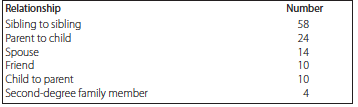
Table 1. Living Donor Relationships (N = 120)
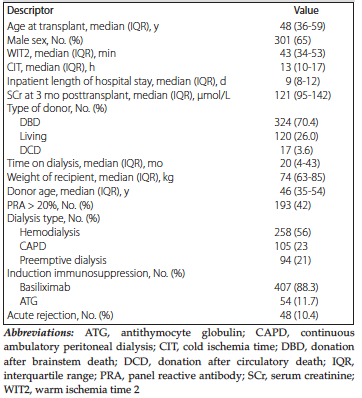
Table 2. Characteristics of Study Group (N = 461)
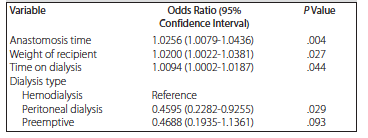
Table 3. Best-Fit Logistic Regression Model of Predictor for Delayed Graft Function
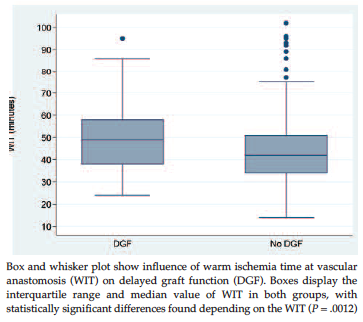
Figure 1. Influence of Warm Ischemia Time at Vascular Anastomosis on Delayed Graft Function
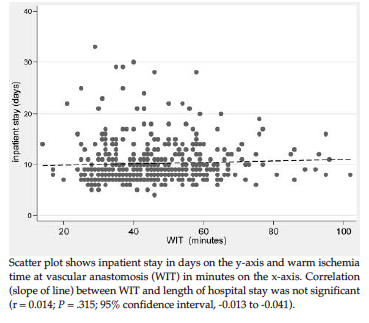
Figure 2. Correlation Between Warm Ischemia Time at Vascular Anastomosis and Length of Hospital Stay
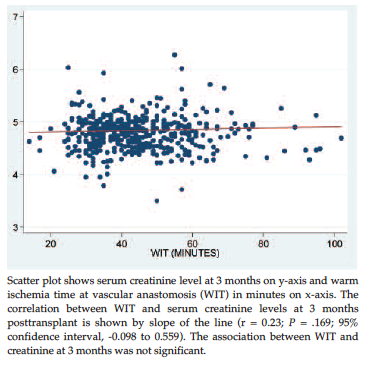
Figure 3. Correlation Between Warm Ischemia Time at Vascular Anastomosis and Serum Creatinine at 3 Months