Volume: 17 Issue: 4 August 2019
FULL TEXT
Objectives: Liver transplant recipients are at high risk of developing osmotic demyelination syndrome because of electrolyte imbalance, fluid management, transfusion, and administration of immunosup-pressive agents during the perioperative period. During the first 9 years of liver transplant procedures conducted at our institution, we experienced 5 cases (1.2%) of osmotic demyelination syndrome in 402 transplant recipients. We established a hyponatremia-oriented management protocol to carefully monitor sodium concentration during and after transplant in patients with preoperative hyponatremia. Here, our aim was to investigate the incidence of this syndrome post-transplant in patients who received hyponatremia-oriented management at our center.
Materials and Methods: We retrospectively reviewed the medical records of 1437 patients who underwent liver transplant between 2005 and 2017, after hyponatremia-oriented management had been established at our center. We evaluated predisposing conditions, clinical parameters, and biological para-meters of patients who were diagnosed with osmotic demyelination syndrome posttransplant.
Results: Of 1437 patients, 4 (0.28%) were diagnosed with osmotic demyelination syndrome based on neuroimaging findings. All 4 patients were in chronic hyponatremia pretransplant (range, 110-118 mEq/L), including 3 who experienced rapid changes of sodium (over 8 mEq/L/day) within 1 month pretransplant and 1 who had rapid increase of sodium during postoperative care. The incidence of osmotic demyelination syndrome was decreased by hyponatremia-oriented management with favorable outcome.
Conclusions: To decrease the incidence of osmotic demyelination syndrome, we should focus on iden-tifying patients at higher risk and apply appropriate management of fluids and electrolytes before liver transplant.
Key words : Electrolyte imbalance, Fluid management, Morbidity, Sodium
Introduction
Osmotic demyelination syndrome (ODS) after liver transplant (LT) is a rare but potentially fatal com-plication with an incidence ranging from 0.5% to 3.5%.1-4 Although central pontine myelinolysis (CPM) is a classical presentation that reflects great susceptibility of pontine white matter tracts, extra-pontine myelinolysis (EPM) is also quite common.3 The underlying mechanism of the development of ODS remains largely unknown. However, severe pretransplant hyponatremia, rapid correction of chronic hyponatremia, and intraoperative fluctuation of sodium concentration have been reported to be common triggers of ODS in LT recipients.3-6
During the first 9 years since we started LT procedures at our center (from 1996 to 2004), we experienced 5 cases (1.2%) of ODS in 402 LT recipients.7 Patients presented with several sequelae such as speech disorders and gait disturbances.
Large changes in sodium concentration (range, 12-21 mEq/L/d) occurred during surgery for the first 3 cases. After we changed the intraoperative main fluid from isotonic saline to half saline or plasma solution A in recipients with preoperative hypo-natremia (≤ 130 mEq/L), there were no cases of acute changes in sodium concentration during surgery. However, we experienced another 2 cases of ODS, with sodium increasing over 20 mEq/L over 2 days in the intensive care unit during the postoperative period. Thereafter, we established a hyponatremia-oriented management (HOM) protocol to carefully monitor sodium concentrations during and after LT in patients with preoperative hyponatremia.7 In this retrospective study, we report the incidence, nature, causes, and functional outcomes of ODS in LT recipients after HOM was implemented at our institution based on a single-center experience.
Materials and Methods
Study patients and data collections
After obtaining approval from the Institutional Review Board of our institution
(SMC 2017-07-103), we retrospectively investigated all patients who received LT
between January 2005 and June 2017. We identified the incidence of pretransplant
severe hyponatremia (≤ 125 mEq/L) and followed the changes in sodium
concentration in these patients during the perioperative period. Characteristics
of patients with and without severe hyponatremia were compared.
We confirmed the ODS by the following steps. First, recipients with medical code related to ODS and those who had preoperative hyponatremia (≤ 130 mEq), large variations of sodium concentration (≥ 8 mEq/L/d) within perioperative day 7, neuroimaging tests within postoperative month 2, or received neurologist consultation within post-operative month 2 were enrolled. Neurologic symptoms suggestive of ODS in patient medical records were reviewed, including progressive lethargy, seizure, dysarthria, flaccid quadriparesis, pseudobulbar palsy, focal neurological signs, and altered mental status. Finally, ODS diagnosis was made based on neurologic symptoms correlated with results of brain magnetic resonance imaging (MRI). We investigated the clinical and biochemical parameters of recipients with ODS up to post-operative month 1. We also examined variations of sodium concentration before LT.
Hyponatremia-oriented management
Since 2005, we have performed HOM during and after LT in patients with
hyponatremia. In brief, during the intraoperative period, the main fluid
received during surgery is half saline or Plasma Solution A (CJ Pharmaceutical,
Seoul, Korea). If the sodium concentration (arterial blood-gas analysis
including electrolytes were conducted at least every hour) had increased more
than 5 mEq/L from the preoperative level, additional half saline 200 mL was
infused. Next, a mixture of NaHCO3 60 or 80 mEq in half saline (1 L) was infused
during treatment of severe metabolic acidosis (base excess < -10 mEq/L).
During the postoperative period, a warning note was posted at bedside, such as “CPM risk! Preoperative sodium concentration is 000 mEq/L. Be careful about sudden increase of sodium con-centration.” Sodium was not mixed in the main fluid.
Statistical analyses
Statistical analyses were performed using SPSS version 23.0 (SPSS Inc., Chicago,
IL, USA). The prevalence of severe hyponatremia and clinical characteristics in
LT patients were estimated using descriptive statistics. For simple group
comparisons, categorical variables are presented as numbers and percentages.
These variables were compared using the chi-square test or the Fisher exact
test. Conti-nuous variables are presented as mean and standard deviation. These
variables were compared using t test or the Mann-Whitney U test. Statistical
signi-ficance was defined as P < .05.
Results
Hyponatremia
Between January 2005 and June 2017, 1437 con-secutive LT procedures (1260 adult
and 177 pediatric patients, 1084 living-donor and 353 deceased-donor) were
performed. Table 1 presents the incidence of severe hyponatremia (≤ 125 mEq/L)
and changes in sodium concentration over 7 days during the perioperative period.
Overall, 131 LTs (9.1%) were performed for patients who were in severe
hypo-natremic state (≤ 125 mEq/L). Sodium fluctuation
(≥ 10 mEq/L/3d) occurred in 22.9% (30/131) before surgery. However, there were
no cases of rapid increases in sodium concentration during post-operative days 1
to 3. A rapid increase in sodium concentration (≥ 8 mEq/L/d) occurred in 6
recipients during surgery. Two patients were unable to recover consciousness due
to impaired hepatic function of transplanted liver. Two other recipients
initially recovered consciousness but died in the hospital due to sepsis. One
recipient experienced hand tremor and severe postoperative psychotic delirium
during postoperative month 1. However, the patient recovered without further
problems. The other recipient recovered without any symptoms. However, MRI was
not performed for these patients; therefore, we could not confirm the diagnosis
of ODS. The 131 recipients with preoperative severe hyponatremia showed advanced
liver cirrhosis and delayed recovery after LT compared with those who did not
have preoperative severe hyponatremia, although survival rates were not
statistically different between the 2 groups (Table 2).
Osmotic demyelination syndrome
The overall incidence of ODS was 0.28% (4/1437). All cases were adults. In
pediatric recipients, ODS did not occur. Table 3 and Table 4 show the clinical
findings of patients with ODS. All patients except patient 1730 achieved good
functional recovery and favorable progress to date. Preoperative severe
hyponatremia (range, 110-118 mEq/L) was shown in 4 patients with ODS. Three of
these patients (patients 515, 831, and 881) had corrected hyponatremia with 3%
NaCl before surgery (Figure 1). All 3 patients showed lethargy, dysarthria, or
quadriplegia after rapid increase of sodium concentration. Although they showed
altered mentality, it was difficult to differentiate from hepatic
encephalopathy. The appearance of ODS lesions on conventional T2-weighted MRI
was often delayed. Thus, additional imaging studies were not performed until LT.
One ODS patient (patient 1730) underwent sodium fluctuation (9 mEq/L/d) on postoperative day 3 (Figure 1). The hepatic artery was suspected to occlude. Thus, NaHCO3 was infused (NaHCO3 of 180 mEq in 5% dextrose at 1 L: hydration 3 mL/kg/h for 1 h before computed tomography and 1 mL/kg/h for 6 h after computed tomography) to prevent kidney injury following the use of contrast agent. This patient gradually developed tremor in both hands, dysarthria, and right-side weakness. An MRI examination was done on posttransplant day 29, and he was diagnosed as having CPM.
Discussion
In the present study, the incidence of ODS was 0.28% (4/1437 patients), which was lower than that shown in previous studies2,3,6 and our earlier experience. Severe hyponatremia and an unintentional rapid increase of sodium concentration through fluid management in the perioperative period can cause subsequent complications in the form of ODS. Increased sodium was considered more important than severity of hyponatremia in the occurrence of neurologic complications. Lee and associates reported that patients experienced significantly higher perioperative sodium variations over 24 hours, especially during surgery, which could have been related to ODS.5 In our review, there was 6 cases (0.42%) of greater change (≥ 8 mEq/L/d) in sodium concentration following HOM during surgery. This may have been the main reason why ODS showed a low incidence in our recipients.
There are many reports about the safe rate for sodium correction.5,8-12 We identified patients based on the lowest correction rate that was reported for finding ODS cases.13,14 A diagnosis of ODS was based on neurologic symptoms correlated with results of brain MRI after LT. However, one recipient with EPM findings on MRI presented with a normal sodium level without manifestation of sodium concentration fluctuations during the perioperative period. He presented with seizure and drowsy mental status after air embolism originating from a disconnection of central venous line at the intensive care unit on posttransplant day 7. Before this event, he did not show any neurologic symptoms, although his blood pressure was not well-controlled (systolic blood pressure of about 150-200 mm Hg). Other possible explanations of ODS include the use of tacrolimus15-17 and low cholesterol concentration (26 mg/dL on posttransplant day 1).5,15 However, 1 day after the embolic event, he showed recovered mental status with mild dysarthria and hand tremor. Thus, treatment with tacrolimus was continued. After 7 days, these sequelae had fully recovered. Unlike acute vascular infarction of the brain stem, clinical symptoms of ODS generally begin 2 to 7 days after sodium concentration is increased. They symptoms are progressive.18 Thus, we speculate that the air embolic event and the uncontrolled high blood pressure might have caused the EPM-like lesion shown on MRI.
Treatment of hyponatremia in patients with cirrhosis has been emphasized because the existence of hyponatremia is a major risk factor for the development of overt hepatic encephalopathy.19,20 In addition, cirrhotic patients frequently experience hemorrhage and general weakness. They frequently receive transfusion and fluids with electrolytes. Thus, sodium concentration should be carefully monitored during administration of blood products and/or hypertonic saline during preoperative care of LT recipients. In addition, ODS is frequently suspected after all other possibilities are excluded. Conventional MRI findings lag clinical manifestations of CPM.21 However, diffusion MRI can be used for identification in the first 24 hours after onset of clinical symptoms lasting up to 21 days.18,22 Thus, early diagnosis of patients with suspected CPM is now possible with strict monitoring of electrolyte concentration and diffusion MRI.
Hyponatremia is a frequent complication in patients with advanced cirrhosis and ascites.19,23 Our review also showed that advanced cirrhosis, ascites, and hepatic encephalopathy were associated with hyponatremia in LT recipients. However, during long-term follow-up after LT, the survival rate was not significantly different between recipients with hyponatremia and those who did not have hyponatremia. Although there have been several case reports about treatment of ODS, definitive treatment that can convincingly halt the progress or reverse ODS has not been found.24 Thus, there is a need to recognize preventable adverse effects caused by the rapid increase of sodium.
Despite HOM, rapid sodium increase (≥ 8 mEq/L/d) occurred in 6 recipients during LT. All cases experienced massive bleeding during surgery and were transfused with over 10 units of packed red blood cells. In cases of massive bleeding, it is considered necessary to perform more frequent evaluations of electrolytes and modify HOM. All recipients in this review period received tacrolimus as immunosuppressant, and the 4 patients with ODS had well controlled blood pressure. However, future protocols must include the comprehensive con-sideration of these risk factors.
Our study has several limitations. Diagnosing ODS based on clinical manifestations can be difficult, as signs and symptoms of ODS are often absent or masked by other neurologic abnormalities unrelated to ODS. Findings from autopsy series suggest that asymptomatic or mildly symptomatic ODS may be significantly more common than what is suspected in LT patients.12,25 All patients with clinically possible or asymptomatic ODS did not undergo routine brain imaging. Thus, the true incidence of ODS could be higher. Because of the low incidence of ODS, we could not analyze risk factors or establish a safe rate of sodium concentration increase. However, we found that the incidence of ODS was low in hyponatremia patients who did not receive a rapid increase of sodium concentration.
Conclusions
We found that ODS was gradually decreased after implementation of HOM in our institution. Our review indicates that the occurrence of ODS not related to hyponatremia seems to be rare. We should focus on identifying patients at higher risk of ODS and observe them comprehensively with consistent fluid and electrolyte management by a multidis-ciplinary team to achieve favorable recovery.
References:
- Al-Sarraf AJ, Haque M, Pudek M, Yoshida EM. Central pontine myelinolysis after orthotopic liver transplant-a rare complication. Exp Clin Transplant. 2010;8(4):321-324.
PubMed - Morard I, Gasche Y, Kneteman M, et al. Identifying risk factors for central pontine and extrapontine myelinolysis after liver transplantation: a case-control study. Neurocrit Care. 2014;20(2):287-295.
CrossRef - PubMed - Yu J, Zheng SS, Liang TB, Shen Y, Wang WL, Ke QH. Possible causes of central pontine myelinolysis after liver transplantation. World J Gastroenterol. 2004;10(17):2540-2543.
CrossRef - PubMed - Zhang ZW, Kang Y, Deng LJ, et al. Therapy of central pontine myelinolysis following living donor liver transplantation: Report of three cases. World J Gastroenterol. 2009;15(31):3960-3963.
CrossRef - PubMed - Lee EM, Kang JK, Yun SC, et al. Risk factors for central pontine and extrapontine myelinolysis following orthotopic liver transplantation. Eur Neurol. 2009;62(6):362-368.
CrossRef - PubMed - Bernhardt M, Pflugrad H, Goldbecker A, et al. Central nervous system complications after liver transplantation: common but mostly transient phenomena. Liver Transpl. 2015;21(2):224-232.
CrossRef - PubMed - Jeong HK, Gwak MS, Kim, GS. Central pontine myelinolysis after liver transplantation: A case report. Korean J Anesthesiol. 2006;50(4):469-473.
CrossRef - Karp BI, Laureno R. Pontine and extrapontine myelinolysis: a neurologic disorder following rapid correction of hyponatremia. Medicine (Baltimore). 1993;72(6):359-373.
CrossRef - PubMed - Soupart A, Decaux G. Therapeutic recommendations for management of severe hyponatremia: current concepts on pathogenesis and prevention of neurologic complications. Clin Nephrol. 1996;46(3):149-169.
PubMed - Lin CM, Po HL. Extrapontine myelinolysis after correction of hyponatremia presenting as generalized tonic seizures. Am J Emerg Med. 2008;26(5):632 e635-636.
CrossRef - PubMed - Laureno R, Karp BI. Myelinolysis after correction of hyponatremia. Ann Intern Med. 1997;126(1):57-62.
CrossRef - PubMed - Newell KL, Kleinschmidt-DeMasters BK. Central pontine myelinolysis at autopsy; a twelve year retrospective analysis. J Neurol Sci. 1996;142(1-2):134-139.
CrossRef - Spasovski G, Vanholder R, Allolio B, et al. Clinical practice guideline on diagnosis and treatment of hyponatraemia. Eur J Endocrinol. 2014;170(3):G1-47.
CrossRef - PubMed - Crivellin C, Cagnin A, Manara R, et al. Risk factors for central pontine and extrapontine myelinolysis after liver transplantation: a single-center study. Transplantation. 2015;99(6):1257-1264.
CrossRef - PubMed - Fukazawa K, Nishida S, Aguina L, Pretto E, Jr. Central pontine myelinolysis (CPM) associated with tacrolimus (FK506) after liver transplantation. Ann Transplant. 2011;16(3):139-142.
CrossRef - PubMed - Ravaioli M, Guarino M, Stracciari A, et al. Speech disorder related to tacrolimus-induced pontine myelinolysis after orthotopic liver transplantation. Transpl Int. 2003;16(8):507-509.
CrossRef - PubMed - Reyes J, Gayowski T, Fung J, Todo S, Alessiani M, Starzl TE. Expressive dysphasia possibly related to FK506 in two liver transplant recipients. Transplantation. 1990;50(6):1043-1045.
CrossRef - PubMed - Guzman-De-Villoria JA, Ferreiro-Arguelles C, Fernandez-Garcia P. Differential diagnosis of T2 hyperintense brainstem lesions: Part 2. Diffuse lesions. Semin Ultrasound CT MR. 2010;31(3):260-274.
CrossRef - PubMed - Guevara M, Baccaro ME, Torre A, et al. Hyponatremia is a risk factor of hepatic encephalopathy in patients with cirrhosis: a prospective study with time-dependent analysis. Am J Gastroenterol. 2009;104(6):1382-1389.
CrossRef - PubMed - Leise MD, Yun BC, Larson JJ, et al. Effect of the pretransplant serum sodium concentration on outcomes following liver transplantation. Liver Transpl. 2014;20(6):687-697.
CrossRef - PubMed - Kumar SR, Mone AP, Gray LC, Troost BT. Central pontine myelinolysis: delayed changes on neuroimaging. J Neuroimaging. 2000;10(3):169-172.
CrossRef - PubMed - Ruzek KA, Campeau NG, Miller GM. Early diagnosis of central pontine myelinolysis with diffusion-weighted imaging. AJNR Am J Neuroradiol. 2004;25(2):210-213.
PubMed - Yun BC, Kim WR, Benson JT, et al. Impact of pretransplant hyponatremia on outcome following liver transplantation. Hepatology. 2009;49(5):1610-1615.
CrossRef - PubMed - Saner FH, Koeppen S, Meyer M, et al. Treatment of central pontine myelinolysis with plasmapheresis and immunoglobulins in liver transplant patient. Transpl Int. 2008;21(4):390-391.
CrossRef - PubMed - Kato T, Hattori H, Nagato M, et al. Subclinical central pontine myelinolysis following liver transplantation. Brain Dev. 2002;24(3):179-182.
CrossRef - PubMed

Volume : 17
Issue : 4
Pages : 540 - 545
DOI : 10.6002/ect.2018.0216
From the 1Department of Anesthesiology and Pain Medicine, Sungkyunkwan
University School of Medicine, Seoul, Korea; and the 2Department of
Anesthesiology and Pain Medicine, Kangwon National University School of
Medicine, Chuncheon, Korea
Acknowledgements: The authors have no sources of funding for this study and have
no conflicts of interest to declare.
Corresponding author: Gaab Soo Kim, Department of Anesthesiology and Pain
Medicine, Samsung Medical Center, Sungkyunkwan University School of Medicine, 81
Ilwon-ro, Gangnam-gu, Seoul 06351, Korea
Phone: +82 0234100360
E-mail: gskim@skku.edu
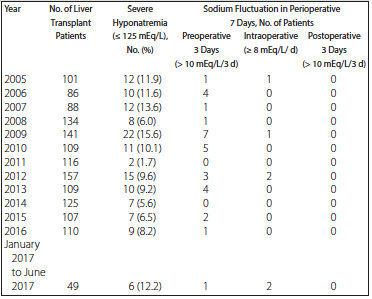
Table 1. Incidence of Severe Hyponatremia and Changes in Sodium Concentration
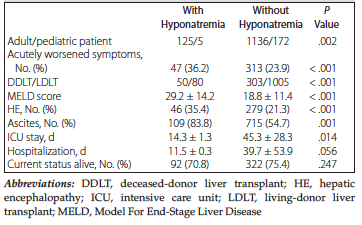
Table 2. Characteristics and Outcomes of Recipients With and Without Preoperative Severe Hyponatremia
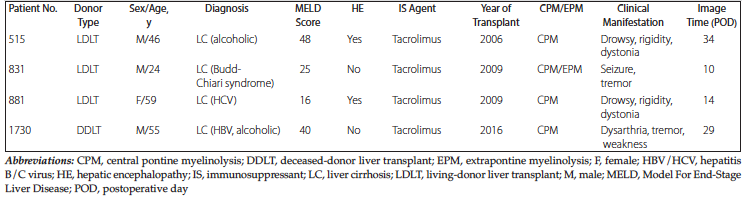
Table 3. Details of 4 Recipients Who Developed Osmotic Demyelination Syndrome After Liver Transplant

Table 4. Intraoperative Details of 4 Recipients Who Developed Osmotic Demyelination Syndrome After Liver Transplant
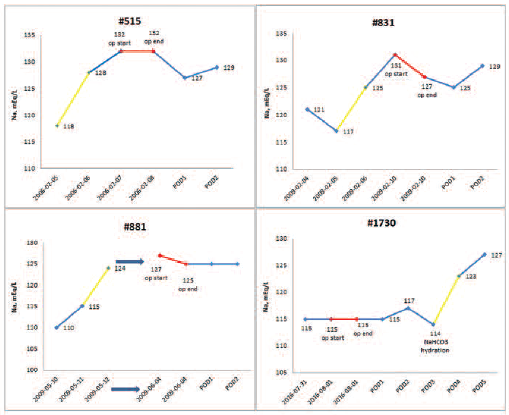
Figure 1. Changes in Sodium Concentration in 4 Patients With Osmotic Demyelination Syndrome