Volume: 15 Issue: 4 August 2017
FULL TEXT
Objectives: To date, fatigue is still poorly understood in recipients of orthotopic liver transplant and simultaneous/sequential liver and kidney transplant procedures. The present study examined the appearance of fatigue in patients who received orthotopic liver and sequential liver and kidney transplant procedures compared with the general population and the influence of various clinical and socioeconomic factors on fatigue levels.
Materials and Methods: The Multidimensional Fatigue Inventory survey was sent to all patients with a history of orthotopic liver and simultaneous/sequential liver and kidney transplant. The results were compared to data from a reference population.
Results: Our survey included 276 eligible patients: 256 recipients (92.7%) of orthotopic liver transplant and 20 recipients (7.3%) of simultaneous/sequential liver and kidney transplant. Significantly lower fatigue scores were found in the general population compared with both transplant groups (P < .001). There were also no significant differences between the transplant groups. Among the clinical and socioeconomic factors, history of hepatocellular carcinoma, chronic kidney disease, age, family status, and education had a significant impact on fatigue levels.
Conclusions: This is the first study to compare fatigue in recipients of orthotopic liver and simultaneous/-sequential liver and kidney transplant. We found that fatigue is an important but still poorly understood outcome after transplant.
Key words : Liver transplantation, MFI-20, Multidimensional Fatigue Inventory, Renal transplant
Introduction
For patients with end-stage liver disease (ESLD), orthotopic liver transplant (OLT) is currently the only curative treatment option. Orthotopic liver transplant offers good long-term survival, and the 10-year-survival rate is approximately 60%.1
A challenging problem is the development of end-stage renal failure after OLT, with a probable need for renal replacement therapy.2,3 Simultaneous or sequential kidney and liver transplant is a common and widely performed procedure.4,5 However, this procedure is associated with a higher morbidity.6
Patients with ESLD are often confronted with physical restrictions, such as recurrent ascites7 or encephalopathy,8 and most of these events are potentially life-threatening.9-11 However, survival and life-threatening complications are not the only issues to both physicians and patients. Many patients with ESLD face serious restrictions in their health-related quality of life,12,13 with mental disorders, such as anxiety and depression, also occurring after these procedures.14 Another important impairment of patients with ESLD is the presence of fatigue.15
The term fatigue commonly expresses an everyday experience after physical exercise or inadequate sleep. As stated by Smets and associates, the term fatigue is used to describe a symptom that indicates the presence of disease.16 It is considered a multidimensional condition that includes both experienced fatigue and physiologic fatigue.17 Fatigue has different aspects, such as general, mental, and physical. Reduced activity and reduced motivation are also considered indicators of fatigue.18 A validated and frequently used instrument to measure fatigue levels is the Multidimensional Fatigue Inventory (MFI-20), which consists of 20 items that assess the different aspects of fatigue.19
In most cases, these psychosocial variables, including health-related quality of life, mental health, and fatigue, improve after OLT.20,21 However, the few studies that have examined fatigue in OLT recipients have found that fatigue is still present after liver transplant and remains a major concern.21-23 Reports about psychosocial outcome factors in recipients of liver and kidney transplant procedures are rare and have a limited number of cases.24 The present cross-sectional study aimed to identify clinical factors influencing fatigue and to measure fatigue in patients with a history of OLT and patients with a history of simultaneous/sequential liver and kidney transplant (LKTX) compared with the general population.
Materials and Methods
Study design
We identified all patients who had undergone OLT or LKTX at the University
Hospital (Leipzig, Germany) between 1993 and 2013. The MFI-20 survey was sent to
these patients via mail with postage-paid return envelopes. We asked all
patients to return the completed questionnaires within 2 weeks. After this
period had expired, we contacted all patients who had not returned the survey a
second time. The received questionnaires were then scanned and digitized
manually and double-checked.
Before the study was started, we obtained informed consent from all patients and the consent of the local ethics committee (No. 414-12-17122012).
Patient selection
All patients over 18 years old with a complete medical history available in
our database were included in the study. The included patients were divided into
2 groups: (1) patients with a history of OLT (OLT group) and (2) patients with a
history of LKTX (LKTX group). Fatigue scores were assessed in both groups.
Moreover, we analyzed the impact of several clinical and psychosocial variables
of fatigue in these patients.
Control groups
Results from transplant patients were compared with reference data from the
German general population. These original data were obtained from an earlier
investigation performed by one of the authors of this manuscript.25
To create a representative sample that was comparable to the patient cohorts of
the present study, individuals in the general population cohort were matched
according to age and sex.
Multidimensional fatigue inventory
The MFI-20 is a self-reported questionnaire to measure fatigue that was
first described by Smets and colleagues.16 It contains 20 items
divided into 5 subscales: general fatigue, physical fatigue, reduced activity,
reduced motivation, and mental fatigue. For each item, there are 5 possible
answers (5-point Likert scale). For each subscale, a score ranging from 4 to 20
can be calculated. The total fatigue score is calculated by adding up the scores
from the 5 subscales (range, 20-100). Higher scores indicate high fatigue
levels. The MFI-20 has been shown to have a high internal consistency and
validity.26
In addition to the MFI-20, we asked the patients to describe their current health status compared with the year before. The question was a 5-point Likert-scale item with the following possible answers: “much better,” “slightly better,” “equal,” “slightly worse,” and “much worse.”
Statistical analyses
For data collection and statistical analysis, Microsoft Excel (Microsoft,
Redmond, WA, USA) and SPSS version 17.0 (IBM, Armonk, NY, USA) were used. The
MFI-20 questionnaires were first digitized and computed by the Evasys system
(Electric Paper Evaluations Systems GmbH, Lüneburg, Germany) and then imported
into Excel and SPSS. To guarantee consistency, all data were manually
controlled.
For the analysis of statistical differences between the different groups, we used nonparametric tests like the Mann-Whitney U test and the Kruskal-Wallis test. Continuous variables are displayed as mean and standard deviation.
Categorical variables, including sex, age group, underlying disease, comorbidities, time since transplant, family and relationship status, and religion, were compared using cross tables, chi-square tests, or t tests. Results were considered statistically significant if P was less than .05.
The data presented are part of a large cross-sectional study of transplant candidates and transplant recipients. So far, data have been previously published in parts.27-30 Nonetheless, these publications focused on different inclusion criteria and used a different patient subset (eg, patients who have history of liver transplant vs patients on wait lists). Here, we initially report on the recipients of a liver and kidney transplant, thus providing crucial new insights in this field.
Results
Patient characteristics
In total, 689 OLT and LKTX recipients who were still alive were identified.
These 689 patients received the MFI-20 survey. Twenty-seven patients (3.9%) had
to be excluded since their relatives informed us about the death of the patient.
In total, there were 276 eligible surveys (41.5%): 255 OLT recipients (92.8%)
and 20 LKTX recipients (7.2%).
With regard to time since transplant, there were 142 patients (51.6%) whose OLT was performed less than 5 years before the study time, 68 (26.6%) who received OLT 5 to 10 years before the study time, and 46 patients (18.0%) who received OLT more than 10 years before the study time. In the LKTX group, time since transplant was as follows: 7 patients (35.0%) with transplant less than 5 years, 10 (50.0%) with transplant 5 to 10 years, and 3 (15.0%) with transplant > 10 years before study enrollment.
There were no significant differences regarding age, religion, family status, or relationship status (P > .05) between the 3 groups.
When we analyzed for associations regarding the underlying disease, there were significant differences between the groups (P < .001). Moreover, there were significantly more patients with a history of hepatocellular carcinoma (HCC) in the OLT group than in the LKTX group. The baseline characteristics, including relevant comorbidities, are summarized in Table 1. These medical conditions were not further subclassified. Chronic kidney disease was defined as a permanent reduction of glomerular filtration rate to < 90 mL/min/1.73 m² (stage II according to “Kidney Disease Improving Global Outcomes” or higher31). Among the patients with chronic kidney disease, no patients had end-stage renal failure.
The matched MFI-20 group of the reference population consisted of 1309 individuals of which 816 patients (62.3%) were men and 493 (37.7%) were women. The mean age was 57.5 years.
Multidimensional Fatigue Inventory questionnaire and general health
question
The comparison of the 5 subscales and the summation score showed significant
differences between both groups and the general population (general fatigue,
physical fatigue, reduced activity, mental fatigue, and summation score: all
P < .001; Figures 1 and 2). The lowest fatigue scores in each subscale were
found in the general population. In the OLT and LKTX groups, scores did not
differ significantly (general fatigue: P = .660; physical fatigue: P
= .537; reduced activity: P = .874; reduced motivation: P = .852;
mental fatigue: P = .994; summation score: P = .861). The
reference population showed significantly lower values for general, physical,
and mental fatigue; reduced activity; and summation score (all P < .001) than
the OLT patients. For reduced motivation, no significant differences were found
(P = .524). When compared with the LKTX recipients, there were significantly
lower scores for general fatigue (P < .001), physical fatigue (P =
.008), and summation score (P = .036). Reduced activity (P =
.111), reduced motivation (P = .999), and mental fatigue (P =
0.157) did not differ significantly.
As shown in Figure 3, of the 276 patients, 146 (52.9%) answered the general health question (OLT group: 132 responses; LKTX group: 14 responses; P = .085).
Impact of clinical factors on fatigue
As shown in Table 2, patients in the OLT and LKTX groups who had chronic kidney
disease had significantly higher fatigue summation scores than patients without
chronic kidney disease (mean [standard deviation] of 47.2 [14.8] vs 54.1 [17.6];
P = .001). The scores for general and physical fatigue (P = .001
for both), reduced activity (P < .001), and reduced motivation (P
= .011) were also significantly increased. Patients with a history of HCC had
significantly lower general fatigue (P = .017) than patients without
history of HCC. The summation score (mean [standard deviation] of 47.3 [16.0] vs
51.9 [16.8]; P = .074) was also lower but without statistical
significance. All other clinical factors, including the underlying disease, the
presence of arterial hypertension and diabetes mellitus, and the time since
transplant, had no significant effect on fatigue scores.
Impact of socioeconomic factors on fatigue
The impact of socioeconomic factors on fatigue is shown in Table 3. The
variables sex, relationship status, and religiousness had no impact on the
fatigue subscales and summation score (P > .05). When compared with regard to
age, significantly lower scores for general, physical, and mental fatigue (P <
.05 for all 3) and summation scores (P = .012) were found in patients
younger than 50 years and patients between 65 and 69 years old compared with
patients who were between 50 and 54, 55 and 59, 60 and 64, and over 70 years
old.
When different groups were compared regarding family status, statistically significant differences were found for physical fatigue (P = .031). Post hoc tests revealed significant differences between divorced and unmarried patients. The highest scores were found in the divorced who, compared with unmarried patients, had significantly higher scores for general fatigue (P = .004), physical fatigue (P = .002), mental fatigue (P < .021), and summation score (mean [standard deviation] of 57.5 [16.2] vs 47.7 [13.7]; P = .009).
Patients with higher secondary school qualifications had significantly lower scores in the mental scales of reduced activity (P = .014) and mental fatigue (P = .010).
Discussion
The present study showed that OLT and LKTX recipients have significantly higher fatigue scores than the general population. It is, to the authors’ best knowledge, the first study to compare fatigue in the above-mentioned patient groups. Recipients of LKTX showed equal fatigue scores versus OLT recipients. The comparison of the findings of the present study with the current literature is difficult as only a few studies have compared OLT and LKTX recipients versus the general population.
Similar to van den Berg-Emons and associates, we found a considerable amount of fatigue symptoms in our study collective.22 The nature of fatigue was mainly due to physical limitations, with higher fatigue scores for physical fatigue and reduced activity. Moreover, Berg-Emons and colleagues revealed an association between fatigue and age. Kalaitzakis and associates compared patients before and after liver transplant and found reduced fatigue scores after transplant. However, physical fatigue, in particular, was still present among OLT recipients.21 These findings are comparable with the results found in the present study. In contrast to these studies, we found no association between fatigue and sex and time since transplant. Fatigue appears to be a chronic problem after OLT with no change after 2 years, and there is a relation between fatigue and the physical domains of health-related quality of life.23 It is well-known that these domains of health-related quality of life are reduced after liver transplant.32 A possible explanation for the presence of fatigue after OLT might be that these patients have multiple comorbidities related to immunosuppressive therapy, such as osteoporosis, arterial hypertension, and chronic kidney disease.33-35 Fatigue is common in patients with chronic disease,36 and OLT recipients with chronic kidney disease appear to have increased fatigue scores.21 As described in the literature, we found higher fatigue scores in patients with kidney disease,37 so this could be a factor contributing to the increased fatigue scores compared with the general population.
Patients who underwent LKTX showed fatigue scores higher than the general population but not higher than OLT recipients. This appears to be surprising since the overall results and outcomes of LKTX procedures are acceptable but inferior to those of patients who undergo single-organ transplant procedures.38,39 Thus, the fatigue scores found in the present study do not mirror the physical challenge that is represented by a double-organ transplant. However, almost 20% of patients from the OLT group stated that their health status had improved, whereas there were no patients from the LKTX group who marked a response of healthier than the year before. This finding potentially shows the negative effect of combined liver and kidney transplant procedures on general health status. It is also probable that the underlying renal disease in LKTX patients has a negative influence on fatigue and general health. Kirchner and associates demonstrated that fatigue is reduced significantly in patients with polycystic liver and kidney disease after transplant.24
In the present study, we examined the influence of clinical and psychosocial variables on fatigue. As already mentioned, comorbidities, especially chronic kidney disease, negatively influence fatigue. Chronic disease and morbidity in general greatly affect fatigue, and this is also mirrored by the fact that there was a strong correlation between the current self-reported health status and the assessment of fatigue symptoms.
Moreover, there appears to be some age dependency of fatigue syndrome.22,25 Unlike other studies, we could not find a relation between sex and fatigue.22,25 There was no association between the underlying disease and fatigue except for history of HCC. Transplant recipients with a history of HCC had significantly lower scores than patients without a history of HCC. At first, these findings seem to be paradoxical, since most cancer patients struggle with fatigue syndrome.40,41 However, a possible explanation could be the fact that HCC potentially results in less impairment of liver function than shown in patients with cirrhosis when the transplant is performed. This is because the urgency of OLT in HCC patients is not assessed using the laboratory Model for End-Stage Liver Disease score, which is a good indicator for liver function,42 but with an exceptional Model for End-Stage Liver Disease score,43 which does not rely on the actual laboratory findings. A second possible explanation is the presence of a response shift effect. This effect is common in health-related quality of life assessments, which can lead to a change in a person’s values, internal standards, and conceptualization.44 The cure of the underlying cancer can potentially lead to a subjectively stronger effect of OLT in HCC patients than in patients without HCC.
Among the social factors, family status (especially being divorced) and education were found to be significantly associated with different levels of fatigue; these observations were also reported in previous studies.45,46
A strength of our study is the large sample size, which leads to representative results. Moreover, we were able to compare our findings with those of a large reference population. However, the group sizes of our study collective were not homogenous, which may be a potential bias. Another shortcoming is the fact that we did not evaluate fatigue syndrome prospectively. Thus, the identification of factors influencing fatigue would be easier to evaluate in prospective studies.
In summary, we found significantly increased fatigue scores, except reduced motivation, in both posttransplant groups compared with the reference population. However, fatigue was not increased in LKTX patients compared with OLT patients.
Both OLT and LKTX are associated with relevant comorbidities, which led to an increased amount of fatigue symptoms compared with the reference population. Various psychosocial factors, such as education and family status, are related to different levels of fatigue. However, causality can only be suggested since the study design was cross-sectional.
Conclusions
Although patients who received both a liver and kidney transplant are potentially confronted with an increased physical and psychologic stress compared with OLT recipients, both groups of recipients have similar fatigue scores. Nevertheless, fatigue is present in both groups and needs to be taken into account. Fatigue in transplant patients is still poorly understood, and there are many factors influencing fatigue levels.
References:
- European Liver Transplant Registry - ELTR. 2014; http://www.eltr.org/spip.php?article157. Accessed June 24, 2014.
- Kubal C, Cockwell P, Gunson B, et al. Chronic kidney disease after nonrenal solid organ transplantation: a histological assessment and utility of chronic allograft damage index scoring. Transplantation. Feb 2012;93(4):406-411.
CrossRef - PubMed - Farkas SA, Schnitzbauer AA, Kirchner G, Obed A, Banas B, Schlitt HJ. Calcineurin inhibitor minimization protocols in liver transplantation. Transpl Int. Jan 2009;22(1):49-60.
CrossRef - PubMed - Hanish SI, Samaniego M, Mezrich JD, et al. Outcomes of simultaneous liver/kidney transplants are equivalent to kidney transplant alone: a preliminary report. Transplantation. 2010;90(1):52-60.
CrossRef - PubMed - Gonwa TA, McBride MA, Mai ML, Wadei HM. Kidney transplantation after previous liver transplantation: analysis of the organ procurement transplant network database. Transplantation. 2011;92(1):31-35.
CrossRef - PubMed - Salizzoni M, Gennari F, Liddo G, et al. Sequential liver-kidney transplantation. Transplant Proc. 2004;36(3):543-544.
CrossRef - PubMed - Schuppan D, Afdhal NH. Liver cirrhosis. Lancet. 2008;371(9615):838-851.
CrossRef - PubMed - Rai R, Saraswat VA, Dhiman RK. Gut microbiota: its role in hepatic encephalopathy. J Clin Exp Hepatol. 2015;5(Suppl 1):S29-36.
CrossRef - PubMed - Ahmed R, Santhanam P, Rayyan Y. MELD-Na as a prognostic indicator of 30- and 90-day mortality in patients with end-stage liver disease after creation of transjugular intrahepatic portosystemic shunt. Eur J Gastroenterol Hepatol. 2015;27(10):1226-1227.
CrossRef - PubMed - Roberts LN, Bernal W. Management of bleeding and thrombosis in critically ill patients with liver disease. Semin Thromb Hemost. 2015;41(5):520-526.
CrossRef - PubMed - Dever JB, Sheikh MY. Review article: spontaneous bacterial peritonitis - bacteriology, diagnosis, treatment, risk factors and prevention. Aliment Pharmacol Ther. 2015;41(11):1116-1131.
CrossRef - PubMed - Santos GG, Gonçalves LC, Buzzo N, et al. Quality of life, depression, and psychosocial characteristics of patients awaiting liver transplants. Transplant Proc. 2012;44(8):2413-2415.
CrossRef - PubMed - De Bona M, Ponton P, Ermani M, et al. The impact of liver disease and medical complications on quality of life and psychological distress before and after liver transplantation. J Hepatol. 2000;33(4):609-615.
CrossRef - PubMed - Karam V, Castaing D, Danet C, et al. Longitudinal prospective evaluation of quality of life in adult patients before and one year after liver transplantation. Liver Transpl. 2003;9(7):703-711.
CrossRef - PubMed - Swain MG. Fatigue in liver disease: pathophysiology and clinical management. Can J Gastroenterol. 2006;20(3):181-188.
CrossRef - PubMed - Smets EM, Garssen B, Bonke B, De Haes JC. The Multidimensional Fatigue Inventory (MFI) psychometric qualities of an instrument to assess fatigue. J Psychosom Res. 1995;39(3):315-325.
CrossRef - PubMed - Friedman JH, Abrantes A, Sweet LH. Fatigue in Parkinson's disease. Expert Opin Pharmacother. 2011;12(13):1999-2007.
CrossRef - PubMed - Visser MR, Smets EM. Fatigue, depression and quality of life in cancer patients: how are they related? Support Care Cancer. 1998;6(2):101-108.
CrossRef - PubMed - Smets EM, Garssen B, Cull A, de Haes JC. Application of the multidimensional fatigue inventory (MFI-20) in cancer patients receiving radiotherapy. Br J Cancer. 1996;73(2):241-245.
CrossRef - PubMed - Zahn A, Seubert L, Jünger J, et al. Factors influencing long-term quality of life and depression in German liver transplant recipients: a single-centre cross-sectional study. Ann Transplant. 2013;18:327-335.
CrossRef - PubMed - Kalaitzakis E, Josefsson A, Castedal M, et al. Factors related to fatigue in patients with cirrhosis before and after liver transplantation. Clin Gastroenterol Hepatol. 2012;10(2):174-181.
CrossRef - PubMed - van den Berg-Emons R, van Ginneken B, Wijffels M, et al. Fatigue is a major problem after liver transplantation. Liver Transpl. 2006;12(6):928-933.
CrossRef - PubMed - van Ginneken BT, van den Berg-Emons RJ, van der Windt A, et al. Persistent fatigue in liver transplant recipients: a two-year follow-up study. Clin Transplant. 2010;24(1):E10-16.
CrossRef - PubMed - Kirchner GI, Rifai K, Cantz T, et al. Outcome and quality of life in patients with polycystic liver disease after liver or combined liver-kidney transplantation. Liver Transpl. 2006;12(8):1268-1277.
CrossRef - PubMed - Schwarz R, Krauss O, Hinz A. Fatigue in the general population. Onkologie. 2003;26(2):140-144.
CrossRef - PubMed - Lin JM, Brimmer DJ, Maloney EM, Nyarko E, Belue R, Reeves WC. Further validation of the Multidimensional Fatigue Inventory in a US adult population sample. Popul Health Metr. 2009;7:18.
CrossRef - PubMed - Benzing C, Krezdorn N, Förster J, et al. Health-related quality of life and affective status in liver transplant recipients and patients on the waiting list with low MELD scores. HPB (Oxford). 2016;18(5):449-455.
CrossRef - PubMed - Benzing C, Krezdorn N, Förster J, et al. Impact of different immunosuppressive regimens on the health-related quality of life following orthotopic liver transplantation. Clin Transplant. 2015;29(12):1081-1089.
CrossRef - PubMed - Benzing C, Krezdorn N, Hinz A, et al. Mental status in patients before and after liver transplantation. Ann Transplant. 2015;20:683-693.
CrossRef - PubMed - Krenzien F, Krezdorn N, Morgul MH, et al. The elderly liver transplant recipients: anxiety, depression, fatigue and life satisfaction. Z Gastroenterol. 2017 Mar 14. [Epub ahead of print]. doi: 10.1055/s-0043-102580.
CrossRef - PubMed - Eckardt KU, Berns JS, Rocco MV, Kasiske BL. Definition and classification of CKD: the debate should be about patient prognosis--a position statement from KDOQI and KDIGO. Am J Kidney Dis. 2009;53(6):915-920.
CrossRef - PubMed - Masala D, Mannocci A, Unim B, et al. Quality of life and physical activity in liver transplantation patients: results of a case-control study in Italy. Transplant Proc. 2012;44(5):1346-1350.
CrossRef - PubMed - Kim JM, Kwon CH, Yun IJ, et al. A multicenter experience with generic mycophenolate mofetil conversion in stable liver transplant recipients. Ann Surg Treat Res. 2014;86(4):192-198.
CrossRef - PubMed - Ellero-Simatos S, Szymańska E, Rullmann T, et al. Assessing the metabolic effects of prednisolone in healthy volunteers using urine metabolic profiling. Genome Med. 2012;4(11):94.
CrossRef - PubMed - Jacobson PA, Schladt D, Oetting WS, et al. Genetic determinants of mycophenolate-related anemia and leukopenia after transplantation. Transplantation. 2011;91(3):309-316.
CrossRef - PubMed - Swain MG. Fatigue in chronic disease. Clin Sci (Lond). Jul 2000;99(1):1-8.
CrossRef - PubMed - Artom M, Moss-Morris R, Caskey F, Chilcot J. Fatigue in advanced kidney disease. Kidney Int. Sep 2014;86(3):497-505.
CrossRef - PubMed - Haad CR, Rodriguez-Benot A, Martinez-Vaquera S, et al. Combined liver-kidney transplantation: survey of a single center in Spain. Transplant Proc. 2013;45(10):3640-3643.
CrossRef - PubMed - Veras FJ, Coelho GR, Feitosa-Neto BA, Cerqueira JB, Garcia RC, Garcia JH. Combined liver-kidney transplantation: experience at a Brazilian university hospital. Arq Bras Cir Dig. 2014;27(1):53-55.
CrossRef - PubMed - Campos MP, Hassan BJ, Riechelmann R, Del Giglio A. Cancer-related fatigue: a practical review. Ann Oncol. 2011;22(6):1273-1279.
CrossRef - PubMed - Hofman M, Ryan JL, Figueroa-Moseley CD, Jean-Pierre P, Morrow GR. Cancer-related fatigue: the scale of the problem. Oncologist. 2007;12 Suppl 1:4-10.
CrossRef - PubMed - Singal AK, Kamath PS. Model for End-stage Liver Disease. J Clin Exp Hepatol. 2013;3(1):50-60.
CrossRef - PubMed - Roayaie K, Feng S. Allocation policy for hepatocellular carcinoma in the MELD era: room for improvement? Liver Transpl. 2007;13(11 Suppl 2):S36-43.
CrossRef - PubMed - Sprangers MA, Schwartz CE. Integrating response shift into health-related quality of life research: a theoretical model. Soc Sci Med. 1999;48(11):1507-1515.
CrossRef - PubMed - Jason LA, Richman JA, Rademaker AW, et al. A community-based study of chronic fatigue syndrome. Arch Intern Med. 1999;159(18):2129-2137.
CrossRef - PubMed - Oerlemans S, Mols F, Issa DE, et al. A high level of fatigue among long-term survivors of non-Hodgkin's lymphoma: results from the longitudinal population-based PROFILES registry in the south of the Netherlands. Haematologica. 2013;98(3):479-486.
CrossRef - PubMed
Volume : 15
Issue : 4
Pages : 437 - 444
DOI : 10.6002/ect.2016.0138
From the 1Department of Surgery, Campus Charité-Mitte | Campus
Virchow-Klinikum, Charité-Universitätsmedizin Berlin, Germany the 2Department
of Visceral, Thoracic, Transplantation and Vascular Surgery, University Hospital
Leipzig, Leipzig, Germany; the 3Department of Plastic, Hand and
Reconstructive Surgery, Hannover Medical School, Hannover, Germany; and the
4Department of Medical Psychology and Medical Sociology, University
Hospital Leipzig, Leipzig, Germany
Acknowledgements: The authors declare that they have no sources of
funding for this study, and they have no conflicts of interest to declare. We
thank Dorothee Weinert and Jerome Denis Braun for helping us with the
identification of the patients in this study.
Corresponding author: Christian Benzing, Department of Surgery, Campus
Charité-Mitte | Campus Virchow-Klinikum, Charité-Universitätsmedizin Berlin,
Augustenburger Platz 1,
Phone: +49 (0) 30 450 652 359
E-mail:
Christian.benzing@charite.de

Table 1. Patient Characteristics
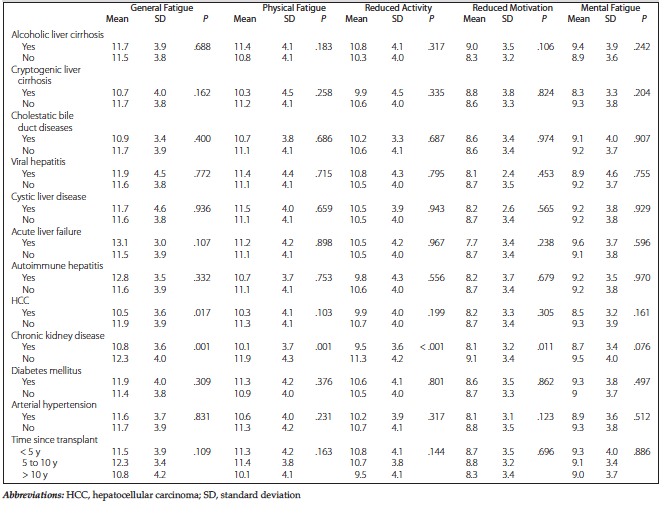
Table 2. Impact of Clinical Parameters on Fatigue
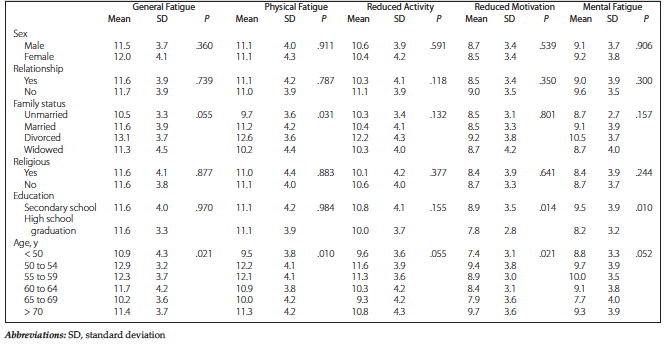
Table 3. Impact of Socioeconomic Variables on Fatigue
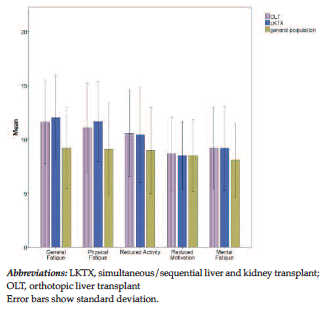
Figure 1. Multidimensional Fatigue Inventory Survey Results for the Different Groups
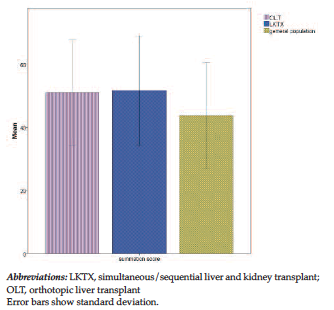
Figure 2. Multidimensional Fatigue Inventory Survey Summation Scores for the Different Groups
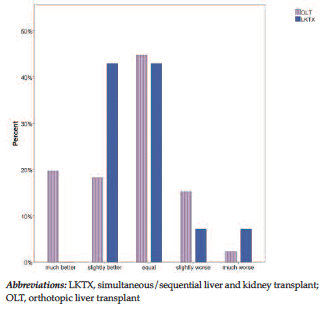
Figure 3. Self-Reported Health Status Compared With the Year Before According to the Main Groups