Volume: 15 Issue: 3 June 2017
FULL TEXT
Good right ventricular function and responsiveness to vasodilator therapy are the most important prerequisites for successful liver transplant in patients with portopulmonary hypertension. A patient with portopulmonary hypertension and good right ventricular function presented for deceased-donor liver transplant. Pulmonary arterial pressure was controlled with epoprostenol and sildenafil preoperatively. After anesthesia induction, pulmonary arterial pressure increased significantly and the procedure was aborted. Additional medical treatment included aggressive vasodilator therapy and the transplant was successfully performed 1 month later. During the procedure, elevations in pulmonary arterial pressure responded to a combination of inhaled nitric oxide, intravenous milrinone and nitroglycerin, and optimization of mechanical ventilation.
Key words : End-stage liver disease, Epoprostenol, Sildenafil, Transplant criteria
Introduction
Portopulmonary hypertension (POPH) is increased resistance to pulmonary arterial blood flow in the setting of portal hypertension (PH). The POPH is a rare, very dangerous complication of end-stage liver disease. The incidence of POPH in patients with liver failure ranges from 2% to 8%.1-3 Autopsy studies have indicated that only 0.7% cirrhotic patients have changes consistent with POPH.4 Although most frequently associated with cirrhosis, there is no correlation between the severity of hepatic dysfunction, level of PH, and severity of POPH.5-6 Moderate and severe POPH have a significant association with perioperative mortality (> 50% to 100%).7-10
Case Report
Informed written consent for this report was obtained. A 48-year-old man with end-stage liver disease, due to hepatitis C and alcohol abuse, presented for a deceased-donor orthotopic liver transplant (OLT). His preoperative course was complicated by POPH, confirmed by right heart catheterization. Therapy with epoprostenol (9 ng/kg/min) and sildenafil (20 mg, 3 times daily) was started 2 years before the first transplant attempt. At 4 months before transplant, he was admitted to the hospital due to shortness of breath associated with worsening POPH (68/46/35 mm Hg). Epoprostenol was increased (14 ng/kg/min), furosemide was added to his medication regimen, and pulmonary arterial pressure (PAP) decreased (42/26/7 mm Hg). At 1 month before OLT, the patient underwent right heart catheterization, which showed improvement of PAP (42/25/7 mm Hg; wedge pressure, 5 mm Hg). An inhaled nitric oxide (iNO) test demonstrated an excellent response (mean PAP [mPAP] reduced to 21 mm Hg on 20 ppm iNO).
A liver graft from a compatible donor was offered. According to our institutional protocol, 2 radial arterial lines and a right internal jugular 9-French multilumen access catheter were placed. In addition, a pulmonary artery catheter was introduced to monitor PAP. After induction, the mPAP increased (43 mm Hg). At this point, the pulmonary capillary wedge pressure (PCWP) was 11 mm Hg and the transpulmonary pressure gradient (TPG) was 32 mm Hg. The TPG was represented by mPAP minus PCWP. The iNO (20 ppm) and ventilation adjustments (100% oxygen; mild hyperventilation with end-tidal carbon dioxide at 30 mm Hg) were instituted but were ineffective. Subsequently, iNO was increased (to 40 ppm, then to 80 ppm), resulting in only modest decreases in mPAP (39 mm Hg). Furosemide and nitroglycerin were administered. The mPAP remained elevated (65/40/28 mm Hg), PCWP was 19 mm Hg, TPG was 21 mm Hg, and surgery was aborted.
The patient was transferred to the medical intensive care unit and intubated
while receiving iNO, epoprostenol, and sildenafil. The mPAP remained from 50 to
59 mm Hg despite continued treatment. The iNO was tapered the next day, and
aggressive optimization of PAP was initiated. Epoprostenol was gradually
increased (20 ng/kg/min). The mPAP improved
to an acceptable level of 35 mm Hg. Transthoracic echocardiogram showed moderate
to severe right ventricular dilation and mildly reduced systolic function. After
2 weeks of therapy, right ventricular function (RVF) was significantly improved.
At the explicit wish of the patient, another attempt at OLT was pursued. After 1 month, the patient received an offer of a deceased liver graft. In the operating room, a pulmonary artery catheter demonstrated mPAP 35 mm Hg (PCWP, 8 mm Hg; TPG, 27 mm Hg). After induction, the PAP again increased. Hyperventilation (end-tidal carbon dioxide, 30 mm Hg) was performed, resulting in a reduction of PAP to 42/33/26 mm Hg (Figure 1). After surgical incision, the PAP increased again to 51/36/29 mm Hg (PCWP, 19 mm Hg; TPG, 17 mm Hg). Increasing the iNO concentration resulted in only moderate reductions in PAP. Milrinone (0.5 μg/kg/min) was started. This combination therapy improved the PAP significantly. During the anhepatic phase of surgery, the PAP initially decreased, and then increased to 66/39/28 mm Hg (PCWP 20 mm Hg; TPG, 19 mm Hg) immediately after venous reperfusion. Nitroglycerin (initially, 1 μg/kg/min, then 2 μg/kg/min) was started and milrinone was increased (1 μg/kg/min). This combination maintained the mPAP < 40 mm Hg. The transplant was completed successfully and the patient was transferred to the surgical intensive care unit in stable condition with PAP 61/36/23 mm Hg. The patient was successfully extubated on postoperative day 2 and discharged home on post-operative day 28. At 14 months after transplant, he was in good condition with excellent liver function. He remained on epoprostenol and sildenafil, but dosing had been significantly reduced.
Discussion
We described a case of OLT in a patient with severe POPH. Good response to preoperative vasodilator medications and aggressive multimodal intra-operative therapy enabled us to successfully perform the transplant.
In addition to the usual criteria used to diagnose POPH (which includes PH associated with end-stage liver disease, mPAP > 25 mm Hg, pulmonary vascular resistance > 240 dynes/s/cm−5, and PCWP < 15 mm Hg), TPG > 12 mm Hg should be considered.11-13 The TPG can be very useful in differentiating between true POPH and elevated PAP due to different causes such as heart failure, mitral stenosis,12-13 or volume overload.14 In these cases, both PAP and PCWP can be significantly increased. However, it should be noted that increases in both TPG and PCWP do not exclude a diagnosis of POPH.14
The pathogenesis of POPH is not completely understood. It has been proposed that prolonged pulmonary vasoconstriction results in vascular re-modeling of the pulmonary vascular bed. Pulmonary vasoconstriction occurs as a direct result of increased shear stress in the hyperdynamic pulmonary circulation observed in patients with end-stage liver disease. This process frequently is complicated by thrombosis in the microcirculation.15-18 Proliferative pulmonary vasculopathy with intimal and medial thickening and plexiform lesions are the typical histopathologic findings.18
There are multiple theories concerning the patho-genesis of POPH. Recent publications favor the role of cytokines, especially endothelin 1 and interleukin 6.19 Other studies have demonstrated that sex (females), autoimmune diseases,20 single-nucleotide polymorphisms of estrogen receptor 1 and phosphodiesterase 5 genes,21 and other factors22 were associated with an increased incidence of POPH.
Intraoperative treatment of patients with POPH is challenging. Considering the extremely high perioperative mortality related to chronic and acute right ventricular dysfunction,6,23 a patient’s suita-bility for transplant must be demonstrated before surgery. Typical criteria include (1) good RVF, considered to be the most important requirement for successful transplant,23 and (2) responsiveness to pulmonary vasodilators.24 Our patient had excellent RVF before the first transplant attempt and good response to epoprostenol and sildenafil.
Epoprostenol is most frequently used for the treatment of POPH.8,18,24-27 Epoprostenol binds to endothelial receptors, resulting in increased cyclic adenosine monophosphate levels in the cytosol. This leads to smooth muscle relaxation with subsequent vasodilation. Epoprostenol must be administered by continuous infusion and requires central venous access. There are several reports related to the use of oral, inhaled, or subcutaneous prostanoids for the treatment of POPH, but their role is unclear.6,18,22,23
Sildenafil also is commonly used in the treatment of POPH.9,26,28-29 Sildenafil inhibits phosphodiesterase 5, resulting in increased cyclic guanosine monop-hosphate and subsequent vasodilation. It usually is used in combination with other medications.30-31
Use of the endothelin A/B receptor antagonist bosentan currently is under investigation. Hoeper and associates showed the effectiveness of bosentan as monotherapy32 and in combination with inhaled iloprost33 for the treatment of POPH. Approximately 10% patients treated with bosentan develop hepa-totoxicity due to intracellular bile salt accumulation. Rubin and coworkers performed a double-blind, randomized, placebo-controlled multicenter interna-tional study in patients with PH and observed that, when bosentan was used at a dose of 125 mg twice daily, there was no difference in liver function tests between study and control groups.34 Patients with POPH were not included in the study. A
new selective endothelin A receptor antagonist, ambrisentan, recently has been introduced into clinical practice; in 13 patients with POPH, its use was associated with a significant reduction of PAP without any signs of hepatic dysfunction after 12 months of therapy.35
Ventilation adjustments are important in the intraoperative treatment of elevated PAP. Mild hyperventilation (PaCO2 30-35 mm Hg), increasing the fraction of inspired oxygen, and correcting any acid-base derangement contribute to reducing pulmonary vascular resistance.36
The OLT is a viable therapeutic option for patients with POPH. Swanson and coworkers demonstrated that patients with medically treated PH and OLT had a better 5-year survival (67%) than patients treated only pharmacologically without OLT (45%).6,11 However, unless patients with preserved RVF demonstrated a good response to vasodilator therapy, OLT was associated with a poor outcome.6 The pharmacologic therapy of PH usually should be continued for several months after OLT.6,24 This likely is related to the time required to reverse the pulmonary vascular remodeling that occurred. Ogawa and coworkers showed the viability of living-donor liver transplant in patients with POPH.37 The feasibility of this approach should be evaluated.
Use of transesophageal echocardiography (TEE) during liver transplant is increasing in United States transplant centers. The TEE is a reliable monitor for fluid treatment, left ventricular function, and early detection of intracardiac thrombi. For patients with known POPH, RVF monitoring is important for optimal treatment. There always is a concern about bleeding from esophageal varices when introducing any device into the esophagus. However, the incidence of this complication is very low. Burger-Klepp and associates, in a retrospective study, reported the use of TEE in 396 patients undergoing OLT; 287 of the 396 patients had documented esophageal varices, but only 1 patient had a bleeding episode requiring treatment.38 The overall incidence of TEE-related complications (with and without treatment) is 0.33%.39
Historically, patients with POPH have been recognized as having very high risk for OLT with unacceptably increased morbidity and mortality.11,40-41 During the past 10 to 15 years, newer medications and aggressive perioperative treatment have enabled centers to successfully transplant these patients. However, there remain specific medical requirements that must be met before these patients are considered candidates for transplant.
Our patient responded to preoperative vasodilator therapy and had acceptable RVF before transplant. Intraoperative treatment was based on optimization of mechanical ventilation and a combination of intravenous and inhaled medications. This patient was informed about the high risk associated with surgery, but explicitly expressed a wish to proceed. In this report, we highlighted the importance of careful patient selection and aggressive perioperative treatment of POPH for successful OLT in this difficult clinical situation.
References:
- Krowka MJ. Portopulmonary hypertension. Semin Respir Crit Care Med.
2012;33(1):17-25.
CrossRef - PubMed - Castro M, Krowka MJ, Schroeder DR, et al. Frequency and clinical
implications of increased pulmonary artery pressures in liver transplant
patients. Mayo Clin Proc. 1996;71(6):543-551.
CrossRef - PubMed - Taura P, Garcia-Valdecasas JC, Beltran J, et al. Moderate primary
pulmonary hypertension in patients undergoing liver transplantation. Anesth
Analg. 1996;83(4):675-680.
CrossRef - PubMed - McDonnell PJ, Toye PA, Hutchins GM. Primary pulmonary hypertension and
cirrhosis: are they related? Am Rev Respir Dis. 1983;127(4):437-441.
PubMed - Hadengue A, Benhayoun MK, Lebrec D, Benhamou JP. Pulmonary hypertension
complicating portal hypertension: prevalence and relation to splanchnic
hemodynamics. Gastroenterology. 1991;100(2):520-528.
PubMed - Safdar Z, Bartolome S, Sussman N. Portopulmonary hypertension: an
update. Liver Transpl. 2012;18(8):881-891.
CrossRef - PubMed - Budhiraja R, Hassoun PM. Portopulmonary hypertension: a tale of two
circulations. Chest. 2003;123(2):562-576.
CrossRef - PubMed - Krowka MJ, Mandell MS, Ramsay MA, et al. Hepatopulmonary syndrome and
portopulmonary hypertension: a report of the multicenter liver transplant
database. Liver Transpl. 2004;10(2):174-182.
CrossRef - PubMed - Krowka MJ, Plevak DJ, Findlay JY, Rosen CB, Wiesner RH, Krom RA.
Pulmonary hemodynamics and perioperative cardiopulmonary-related mortality
in patients with portopulmonary hypertension undergoing liver
transplantation. Liver Transpl. 2000;6(4):443-450.
CrossRef - PubMed - Rodríguez-Roisin R, Krowka MJ, Hervé P, Fallon MB, ERS Task Force
Pulmonary-Hepatic Vascular Disorders (PHD) Scientific Committee.
Pulmonary-hepatic vascular disorders (PHD). Eur Respir J.
2004;24(5):861-880.
CrossRef - PubMed - Swanson KL, Wiesner RH, Nyberg SL, Rosen CB, Krowka MJ. Survival in
portopulmonary hypertension: Mayo Clinic experience categorized by treatment
subgroups. Am J Transplant. 2008;8(11):2445-2453.
CrossRef - PubMed - Naeije R, Vachiery JL, Yerly P, Vanderpool R. The transpulmonary
pressure gradient for the diagnosis of pulmonary vascular disease. Eur
Respir J. 2013;41(1):217-223.
CrossRef - PubMed - Task Force for Diagnosis and Treatment of Pulmonary Hypertension of
European Society of Cardiology (ESC), European Respiratory Society (ERS),
International Society of Heart and Lung Transplantation (ISHLT), et al.
Guidelines for the diagnosis and treatment of pulmonary hypertension. Eur
Respir J. 2009;34(6):1219-1263.
CrossRef - PubMed - Krowka MJ, Swanson KL, Frantz RP, McGoon MD, Wiesner RH. Portopulmonary
hypertension: results from a 10-year screening algorithm. Hepatology.
2006;44(6):1502-1510.
CrossRef - PubMed - Gaine SP, Rubin LJ. Primary pulmonary hypertension. Lancet.
1998;352(9129):719-725.
CrossRef - PubMed - Hervé P, Lebrec D, Brenot F, et al. Pulmonary vascular disorders in
portal hypertension. Eur Respir J. 1998;11(5):1153-1166.
CrossRef - PubMed - Saleemi S. Portopulmonary hypertension. Ann Thorac Med. 2010;5(1):5-9.
CrossRef - PubMed - Hoeper MM, Krowka MJ, Strassburg CP. Portopulmonary hypertension and
hepatopulmonary syndrome. Lancet. 2004;363(9419):1461-1468.
CrossRef - PubMed - Pellicelli AM, Barbaro G, Puoti C, et al. Plasma cytokines and
portopulmonary hypertension in patients with cirrhosis waiting for
orthotopic liver transplantation. Angiology. 2010;61(8):802-806.
CrossRef - PubMed - Kawut SM, Krowka MJ, Trotter JF, et al. Clinical risk factors for portopulmonary hypertension. Hepatology. 2008;48(1):196-203.
- Roberts KE, Fallon MB, Krowka MJ, et al. Genetic risk factors for
portopulmonary hypertension in patients with advanced liver disease. Am J
Respir Crit Care Med. 2009;179(9):835-842.
CrossRef - PubMed - Schermuly RT, Ghofrani HA, Wilkins MR, Grimminger F. Mechanisms of
disease: pulmonary arterial hypertension. Nat Rev Cardiol.
2011;8(8):443-455.
CrossRef - PubMed - Ramsay M. Portopulmonary hypertension and right heart failure in
patients with cirrhosis. Curr Opin Anaesthesiol. 2010;23(2):145-150.
CrossRef - PubMed - Ashfaq M, Chinnakotla S, Rogers L, et al. The impact of treatment of
portopulmonary hypertension on survival following liver transplantation. Am
J Transplant. 2007;7(5):1258-1264.
CrossRef - PubMed - Safdar Z. Treatment of pulmonary arterial hypertension: the role of
prostacyclin and prostaglandin analogs. Respir Med. 2011;105(6):818-827.
CrossRef - PubMed - Swanson KL, Krowka MJ. Screen for portopulmonary hypertension,
especially in liver transplant candidates. Cleve Clin J Med.
2008;75(2):121-122, 125-130, 133.
CrossRef - PubMed - Melgosa MT, Ricci GL, García-Pagan JC, Blanco I, et al. Acute and
long-term effects of inhaled iloprost in portopulmonary hypertension. Liver
Transpl. 2010;16(3):348-356.
CrossRef - PubMed - Gough MS, White RJ. Sildenafil therapy is associated with improved
hemodynamics in liver transplantation candidates with pulmonary arterial
hypertension. Liver Transpl. 2009;15(1):30-36.
CrossRef - PubMed - Hemnes AR, Robbins IM. Sildenafil monotherapy in portopulmonary
hypertension can facilitate liver transplantation. Liver Transpl.
2009;15(1):15-19.
CrossRef - PubMed - Austin MJ, McDougall NI, Wendon JA, et al. Safety and efficacy of
combined use of sildenafil, bosentan, and iloprost before and after liver
transplantation in severe portopulmonary hypertension. Liver Transpl.
2008;14(3):287-291.
CrossRef - PubMed - Hollatz TJ, Musat A, Westphal S, et al. Treatment with sildenafil and
treprostinil allows successful liver transplantation of patients with
moderate to severe portopulmonary hypertension. Liver Transpl.
2012;18(6):686-695.
CrossRef - PubMed - Hoeper MM, Halank M, Marx C, et al. Bosentan therapy for portopulmonary
hypertension. Eur Respir J. 2005;25(3):502-508.
CrossRef - PubMed - Hoeper MM, Seyfarth HJ, Hoeffken G, et al. Experience with inhaled
iloprost and bosentan in portopulmonary hypertension. Eur Respir J.
2007;30(6):1096-1102.
CrossRef - PubMed - Rubin LJ, Badesch DB, Barst RJ, et al. Bosentan therapy for pulmonary
arterial hypertension. N Engl J Med. 2002;346(12):896-903.
CrossRef - PubMed - Cartin-Ceba R, Swanson K, Iyer V, Wiesner RH, Krowka MJ. Safety and
efficacy of ambrisentan for the treatment of portopulmonary hypertension.
Chest. 2011;139(1):109-114.
CrossRef - PubMed - Fischer LG, Van Aken H, Bürkle H. Management of pulmonary hypertension:
physiological and pharmacological considerations for anesthesiologists.
Anesth Analg. 2003;96(6):1603-1616.
CrossRef - PubMed - Ogawa E, Hori T, Doi H, Segawa H, Uemoto S. Living-donor liver
transplantation for moderate or severe porto-pulmonary hypertension
accompanied by pulmonary arterial hypertension: a single-centre experience
over 2 decades in Japan. J Hepatobiliary Pancreat Sci. 2012;19(6):638-649.
CrossRef - PubMed - Burger-Klepp U, Karatosic R, Thum M, et al. Transesophageal
echocardiography during orthotopic liver transplantation in patients with
esophagogastric varices. Transplantation. 2012;94(2):192-196.
CrossRef - PubMed - Lu SY, Matsusaki T, Abuelkasem E, et al. Complications related to
invasive hemodynamic monitors during adult liver transplantation. Clin
Transplant. 2013;27(6):823-828.
CrossRef - PubMed - Mandell MS, Groves BM. Pulmonary hypertension in chronic liver disease.
Clin Chest Med.1996;17(1):17-33.
CrossRef - PubMed - Robalino BD, Moodie DS. Association between primary pulmonary
hypertension and portal hypertension: analysis of its pathophysiology and
clinical, laboratory and hemodynamic manifestations. J Am Coll Cardiol.
1991;17(2):492-498.
CrossRef - PubMed

Volume : 15
Issue : 3
Pages : 361 - 365
DOI : 10.6002/ect.2014.0250
From Departments of 1Anesthesia and 2Surgery, Penn State Milton S.
Hershey Medical Center, Hershey, PA, USA
Acknowledgements: None of the authors reported any conflicts of interest.
No funding was received for this study.
Corresponding author: Dmitri Bezinover, MD, Penn State Hershey
Anesthesia, 500 University Drive, Hershey, PA 17033 USA
Phone: +1 717 531 6597
Fax: +1 717 531 7790
E-mail: dbezinover@hmc.psu.edu
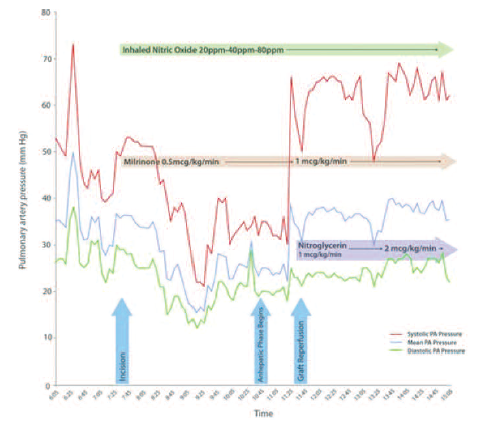
Figure 1. Pulmonary Arterial Pressure Response to Therapy