Volume: 14 Issue: 2 April 2016
FULL TEXT
Objectives: Laparoscopic living-donor nephrectomy is now widely used because of its many beneficial features. Currently, there are 2 major techniques: the laparoscopic intraperitoneal approach and the retroperitoneoscopic approach. There is no evidence to support one particular approach over another. Therefore, in this study, we conducted a systematic literature review with the aim of defining which technique is superior.
Materials and Methods: The Embase, PubMed, and Cochrane literature databases were searched for English language articles published between January 1994 and January 2013 using the terms “laparoscopic donor nephrectomy,” “retroperitoneoscopic donor nephrectomy,” and “live donor nephrectomy.” A meta-analysis was undertaken, and I2 statistical analyses were used to describe the percentage of variation across studies due to heterogeneity rather than chance.
Results: With the use of our selection criteria, 55 papers on the laparoscopic intraperitoneal approach and 6 papers on the retroperitoneoscopic approach were included in this study. We found significantly lower transfusion rate, fewer patients with delayed graft functions, less vessel injuries, and less conversion to open surgical procedure with the retroperitoneoscopic approach than with the laparoscopic intraperitoneal approach.
Conclusions: From this review, a high degree of study heterogeneity was identified, suggesting an urgent need for consistency in reporting laparoscopic living-donor nephrectomy. Results of the meta-analyses may define a better technique for the future. The retroperitoneoscopic approach may be better than the laparoscopic intraperitoneal approach with fewer complications and fewer patients with delayed graft function. Further study of laparoscopic living-donor nephrectomy is recommended to define a standard and thus to minimize the surgical morbidities.
Key words : Laparoscopic donor nephrectomy, Living kidney donor, Retroperitoneoscopic donor nephrectomy
Introduction
Laparoscopic living-donor nephrectomy has been widely accepted as a safe procedure with multiple benefits, and kidney graft function has been shown to be comparable to that shown in patients who undergo open donor nephrectomy.1-6 Currently, there are 2 major techniques for laparoscopic donor nephrectomy: the laparoscopic intraperitoneal approach (LIA) and the retroperitoneoscopic approach (RA). In addition, a hand-assisted technique has also been applied to each of these 2 approaches. There is no evidence supporting one particular approach over the other. In the era of open donor nephrectomy, a retroperitoneal approach using a flank incision is the usual approach,7-9 as the kidney is located in the retroperitoneal space, and less frequently as an intraperitoneal approach with a midline or subcostal incision. Therefore, the aim of this study was to conduct a literature review on the techniques used for laparoscopic living-donor nephrectomy and to perform a meta-analysis to compare the outcomes and complications associated with LIA versus RA. The hand-assisted technique was not included in our review.
Materials and Methods
The Embase, PubMed, and Cochrane literature databases were searched for English language articles published between January 1994 and January 2013 using the terms “laparoscopic donor nephrectomy,” “retroperitoneoscopic donor nephrectomy,” and “live donor nephrectomy.” Inclusion criteria were as follows: (1) a case series of 100 or more cases and (2) donor nephrectomy performed using either LIA or RA without hand assistance. We collected the following data: intraoperative variables (length of time of surgical procedure, kidney warm ischemia time, estimated blood loss, blood transfusion rate, and whether there was conversion to open surgical procedure), operative complications (vessel injury, adjacent organ injury, bowel injury, chylous ascites), whether a repeat operation was needed, length of hospital stay, and whether patients required readmission. In addition, data on ureteral complications, delayed graft function, and graft loss in the recipients were included. Review papers that repeated cohorts were excluded. Data extraction was conducted by the same author using an established data collection spreadsheet (Table 1). When more than 1 paper described the same study, the publication with the most comprehensive data was used.
Statistical analyses
Meta-analysis was undertaken using the Meta Package in R Version 3.0.1.10
We used I2 statistics to describe the percentage of variation across studies due
to heterogeneity rather than chance.11 When high I2 statistics
indicate substantial heterogeneity, meta-analysis is often omitted, or a random
effects model can be used; however, results must be interpreted with caution.
The random effects model assumes that the effects in the different models follow
a distribution, and confidence intervals combine between-study and within-study
variances.12 The outcomes of intraoperative variables, donor
surgical complications and graft-related urologic complications, delayed graft
function, and graft loss in the recipients were summarized using means and 95%
confidence intervals.
Results
Overall, 1084 papers for LIA and 75 papers for RA were identified in the literature search. Excluding the papers with case volumes of less than 100 patients, 66 papers that reported on use of LIA and 11 papers that reported on use of RA met our selection criteria. After we excluded studies that used the hand-assisted technique, 55 papers that reported on use of LIA and 6 papers that reported on use of RA were included in this review. A summarized diagram for the literature search is shown in Figure 1.
Details of included papers are listed in Table 1. Most of the published studies (90.2%) reported on use of LIA, which has been much more widely used than RA in living-donor nephrectomies in the United States, North America, Australia, and the United Kingdom. The RA has been used in Asia and some European countries.
There were no significant differences between these 2 surgical approaches in terms of surgical time, kidney warm ischemia time, estimated blood loss, bowel injury, chylous ascites, rate of repeat surgical procedures, ureteral complications, and graft loss. However, patients whose surgeons used RA had significantly lower transfusion rates, fewer reports of delayed graft function, less vessel injury, and less conversion to open surgical procedure than patients whose surgeons employed LIA. It was noted that the length of hospital stay was longer when RA was used. Our meta-analysis results are detailed in Table 2.
Discussion
Living-donor nephrectomy is a unique surgical procedure in that healthy people are subjected to surgical risks for the benefit of others, usually a family member or a friend. Before the laparoscopic era, living-donor nephrectomy was performed by open surgical procedure using a flank incision and a retroperitoneal approach to the kidney. The major complication rate was about 2%.9,70 Alternative techniques have included using a midline or subcostal abdominal incision via the intraperitoneal approach.
Since 1994, minimal invasive laparoscopic living-donor nephrectomy has gradually become the preferred technique due to its multiple benefits: less pain, better cosmetic outcome, quicker convalescence, and fewer complications.71, 72 The successful application of laparoscopic donor nephrectomy has reduced some distress to living kidney donors with equally successful outcomes of kidney graft function.2,4-6 Over the past 2 decades, laparoscopic living-donor nephrectomy has been widely accepted and become the standard of care in most transplant units.
Currently, there are various laparoscopic techniques for living-donor nephrectomies including LIA and RA, with or without hand-assisted techniques. In this review, we found that LIA has been more widely used than RA (9:1). Its popularity has been explained by a better working space, the easy orientation of abdominal anatomy under laparoscopic vision, and the possible influence of general surgeons who are more accustomed to the intraperitoneal approach. However, in open donor nephrectomy, the retroperitoneal approach with flank incision has been often used because it provides direct access to the kidney without entering the intraperitoneal cavity and interfering with abdominal organs.2, 8 This advantage of direct access to the kidney also applies to the RA in minimally invasive donor nephrectomy.
In 1994, living-donor nephrectomy with RA was first reported by Yang and associates.73 It has been widely used in Japan, India, and China.14-17 In view of the kidney’s anatomy, this approach provides quick access to the renal artery and renal vein. The ureter is usually visualized after establishing the workspace. Kidney dissection can be conducted without needing to retract the spleen on the left side or retract the liver on the right side. Therefore, the risk of lacerating the spleen or liver is completely preventable. Disturbance to the bowel can also be avoided, as there is no need to enter the intraperitoneal cavity. In addition, this approach is favored in dealing with lumbar veins as it allows direct visualization during donor nephrectomy.15-17 Therefore, the risk of vessel injury during donor nephrectomy is less when using the RA.
This literature review demonstrates that vessel injuries are fewer and thus blood transfusion rates are lower when RA is used. Rates of conversion to open surgical procedure and delayed graft function are also lower in patients who had RA. This result may be partly related to the surgeon’s experience as more experienced surgeons have less vessel injury and surgical complications. There was no significant difference in terms of surgical time, kidney warm ischemic time, and ureteral complications between the 2 approaches. The finding of a fewer number of vessel injuries with RA is similar to that reported in a systematic review by Fan and associates74 in a comparison of laparoscopic intraperitoneal versus retroperitoneoscopic radical nephrectomy for renal cell carcinoma, in which the overall intraoperative complication rate was demonstrated to be significantly lower (odds ratio, 2.12; P = .003) and the surgical time was shorter with RA. These results are consistent with the anatomic explanation, as the retroperitoneal approach provides direct access to the renal hilum, whereas the intraperitoneal approach requires mobilizing the colon. Furthermore, use of RA avoids conversion to open surgical procedures due to adhesions from previous abdominal surgical procedures. It also preserves the donor’s virgin abdomen and thus reduces the chance of complications during any future abdominal surgical procedure. The longer hospital stays in studies of RA are probably due to coverages differences in health care systems.
The limitation of this study is that most of the papers were clinical retrospective studies. Some surgical parameters were missing. Therefore, the high degree of study heterogeneity is obvious, suggesting that there is an urgent need for consistency and standard procedures in reporting the outcomes of laparoscopic living-donor nephrectomy. This will ensure that the results can be combined in meta-analyses that assess the outcomes of new surgical procedures to define a criterion standard technique.
In conclusion, use of RA in living-donor nephrectomy has the advantages of quick access to renal vessels, better visualization of lumbar veins, and less interference with abdominal organs. Our meta-analysis shows that blood transfusion rates are lower and delayed graft function, vessel injuries, and conversions to open surgical procedure are fewer in patients who had RA. Therefore, in living-donor nephrectomy, RA may be better than LIA. Further study of the techniques for living-donor nephrectomy is recommended to define a standard and thus, to minimize the surgical risks and complications.
References:
- Shokeir AA. Open versus laparoscopic live donor nephrectomy: a focus on
the safety of donors and the need for a donor registry. J Urol.
2007;178(5):1860-1866.
CrossRef - PubMed - Wilson CH, Sanni A, Rix DA, Soomro NA. Laparoscopic versus open
nephrectomy for live kidney donors. Cochrane Database Syst Rev.
2011(11):CD006124.
CrossRef - PubMed - Yuan H, Liu L, Zheng S, et al. The safety and efficacy of laparoscopic
donor nephrectomy for renal transplantation: an updated meta-analysis.
Transplant Proc. 2013;45(1):65-76.
CrossRef - PubMed - Ahearn AJ, Posselt AM, Kang SM, Roberts JP, Freise CE. Experience with
laparoscopic donor nephrectomy among more than 1000 cases: low complication
rates, despite more challenging cases. Arch Surg. 2011;146(7):859-864.
CrossRef - PubMed - Paragi PR, Klaassen Z, Fletcher HS, et al. Vascular constraints in
laparoscopic renal allograft: comparative analysis of multiple and single
renal arteries in 976 laparoscopic donor nephrectomies. World J Surg.
2011;35(9):2159-2166.
CrossRef - PubMed - Simforoosh N, Basiri A, Shakhssalim N, et al. Long-term graft function
in a randomized clinical trial comparing laparoscopic versus open donor
nephrectomy. Exp Clin Transplant. 2012;10(5):428-432.
CrossRef - PubMed - Bachmann A, Wolff T, Giannini O, et al. How painful is donor nephrectomy?
Retrospective analysis of early pain and pain management in open versus
laparoscopic versus retroperitoneoscopic nephrectomy. Transplantation.
2006;81(12):1735-1738.
CrossRef - PubMed - Uehling DT, Malek GH, Wear JB. Complications of donor nephrectomy. J
Urol. 1974;111(6):745-746.
PubMed - Simforoosh N, Basiri A, Tabibi A, Shakhssalim N, Hosseini Moghaddam SM.
Comparison of laparoscopic and open donor nephrectomy: a randomized
controlled trial. BJU Int. 2005;95(6):851-855.
CrossRef - PubMed - R Core Team (2013). R: A language and environment for statistical computing. R Foundation for Statistical Computing, Vienna, Austria. http://www.R-project.org/. Accessed February 1, 2016.
- Higgins JP, Thompson SG, Deeks JJ, Altman DG. Measuring inconsistency in
meta-analyses. BMJ. 2003;327(7414):557-560.
CrossRef - PubMed - Schroll JB, Moustgaard R, Gotzsche PC. Dealing with substantial
heterogeneity in Cochrane reviews. Cross-sectional study. BMC Med Res
Methodol. 2011;11:22.
CrossRef - PubMed - Kohei N, Kazuya O, Hirai T, et al. Retroperitoneoscopic living donor
nephrectomy: experience of 425 cases at a single centre. J Endourol. 2012;
24 (11): 1783-1787.
CrossRef - PubMed - Ma L, Li G, Huang Y, et al. Retroperitoneoscopic live-donor right
nephrectomy: a Chinese single centre. Exp Clin Transplant. 2011; 9 (1):
20-25.
PubMed - Modi P, Kadam G, Devra A. Obtaining cuff of inferior vena cava bu use of
the Endo-TA stapler in retroperitoneoscopic right-side donor nephrectomy.
Urol. 2007;69(5):832-834.
CrossRef - PubMed - Modi PR, Shah VR, Vanikar AV, Trivedi HL. Impact of retroperitoneoscopic
donor nephrectomy on renal allograft in Indian and African recipients.
Transpl P. 2007;39(3):723-725.
CrossRef - PubMed - Tenable K, Minamoto N, Ishida H, et al. Retroperitoneoscopic live donor nephrectomy (RPLDN): establishment and initial experience of RPLDN at a single centre. Am J Transplant. 2005;5(4 pt 1):739-745.
- Barth RN, Phelan MW, Goldschen L, et al. Single-port donor nephrectomy
provides improved patient satisfaction and equivalent outcomes. Ann Surg.
2013;257(3):527-533.
CrossRef - PubMed - Breda A, Veale J, Liao J, Schulam PG. Complications of laparoscopic
living donor nephrectomy and their management: the UCLA experience. Urology.
2007;69(1):49-52.
CrossRef - PubMed - Carter JT, Freise CE, McTaggart RA, et al. Laparoscopic procurement of
kidneys with multiple renal arteries is associated with increased ureteral
complications in the recipient. Am J Transplant. 2005; 5(6):1312-1318.
CrossRef - PubMed - Chan DY, Fabrizio MD, Ratner LE, Kavoussi LR. Complications of
laparoscopic live donor nephrectomy: the first 175 cases. Transpl Proc.
2000;32(4):778.
CrossRef - PubMed - Cheng EY, Leeser DB, Kapur S, Del Pizzo J. Outcomes of laparoscopic
donor nephrectomy without intraoperative systemic heparinization. J Urol.
2010;183(6):2282-2286.
CrossRef - PubMed - Chin EH, Hazzan D, Herron DM, et al. Laparoscopic donor nephrectomy:
intraoperative safety, immediate morbidity, and delayed complications with
500 cases. Surg Endo. 2007;21(4):521-526.
CrossRef - PubMed - Chin EH, Hazzan D, Edye M, et al. The first decade of a laparoscopic
donor nephrectomy program: effect of surgeon and institution experience with
512 cases from 1996 to 2006. J Am Coll Surg. 2009;209(1):106-113.
CrossRef - PubMed - Crane C, Lam VW, Alsakran A, et al. Are there anatomical barriers to
laparoscopic donor nephrectomy? ANZ J Surg. 2010;80(11):781-785.
CrossRef - PubMed - Cooper M, Kramer A, Nogueira JM, Phelan M. Recipient outcomes of dual
and multiple renal arteries following 1000 consecutive laparoscopic donor
nephrectomies at a single institution. Clin Transplant. 2013;27(2):261-216.
CrossRef - PubMed - Desai MR, Ganpule AP, Gupta R, Thimmegowda M. Outcome of renal
transplantation with multiple versus single renal arteries after
laparoscopic live donor nephrectomy: a comparative study. Urol.
2007;69(5):824-827.
CrossRef - PubMed - Diner EK, Radolinski B, Murdock JD, Ghasemian SR. Right laparoscopic
donor nephrectomy: the Washington Hospital Center experience. Urology.
2006;68(6):1175-1177.
CrossRef - PubMed - Dols LF, Kok NF, Alwayn IP, Tran TC, Weimar W, Ijzermans JN.
Laparoscopic donor nephrectomy: a plea for the right-sided approach.
Transplantation. 2009;87(5):745-750.
CrossRef - PubMed - Fettouh HA, Raoul HA, Shenoufyl A, et al. Laparoscopic donor nephrectomy:
single-centre experience in Egypt with 400 consecutive cases. Transpl P.
2007:39(4):807-810.
CrossRef - PubMed - Fettouh HA. Laparoscopic donor nephrectomy in the presence of vascular
anomalies: evaluation of outcome. J Endourol. 2008;22(1):77-82.
CrossRef - PubMed - Fuller TF, Liefeldt L, Dragun D, Tullmann M, Loening SA, Giessing M. [Urological
evaluation and follow-up of the kidney transplant patient]. Der Urologe Ausg
A. 2006;45(1):53-59.
CrossRef - PubMed - Harper JD, Breda A, Leppert JT, Veale JL, Gritsch HA, Schulam PG.
Experience with 750 consecutive laparoscopic donor nephrectomies--is it time
to use a standardized classification of complications? J Urol.
2010;183(5):1941-1946.
CrossRef - PubMed - Hawasli A, Berri R, Meguid A, Le K, Oh H. Total laparoscopic live donor
nephrectomy: a 6-year experience. Am J Surg. 2006;191(3):325-329.
CrossRef - PubMed - He B, Mitchell A, Delriviere L, et al. Laparoscopic donor nephrectomy.
ANZ J Surg. 2011;81(3):159-163.
CrossRef - PubMed - Hsu TH, Su LM, Ratner LE, Jarrett TW, Kavoussi LR. Demographics of 353
laparoscopic renal donor and recipient pairs at the Johns Hopkins Medical
Institutions. J Endourol. 2003;17(6):393-396.
CrossRef - PubMed - Jacobs SC, Cho E, Dunkin BJ, et al. Laparoscopic live donor nephrectomy:
The university of maryland 3-year experience. J Urology. 2000;164:1494-1499.
CrossRef - PubMed - Jacobs SC, Cho E, Foster C, Liao P, Bartlett ST. Laparoscopic donor
nephrectomy: the University of Maryland 6-year experience. J Urology.
2004;171(1):47-51.
CrossRef - PubMed - Kapoor A, Lambe S, Kling AL, Piercey KR, Whelan PJ. Outcomes of
laparoscopic donor nephrectomy in the presence of multiple renal arteries.
Urol Ann. 2011;3(2):62-65.
CrossRef - PubMed - Kaushik M, Bagul A, Yates PJ, Elwell R, Nicholson ML. Comparison of
techniques of vascular control in laparoscopic donor nephrectomy: The
leicester experience. Transpl P. 2006;38(10):3406-3408.
CrossRef - PubMed - Ko EY, Castle EP, Desai PJ, et al. Utility of the endovascular stapler
for right-sided laparoscopic donor nephrectomy: a 7-year experience at Mayo
Clinic. J Am Coll Surg. 2008;207(6):896-903.
CrossRef - PubMed - Kocak B, Koffron AJ, Baker TB, et al. Proposed classification of
complications after live donor nephrectomy. Urology. 2006;67(5):927-931.
CrossRef - PubMed - Kocak B, Baker TB, Koffron AJ, Leventhal JR. Laparoscopic living donor
nephrectomy: a single-center sequential experience comparing hand-assisted
versus standard technique. Urol. 2007;70(6):1060-1063.
CrossRef - PubMed - Kocak B, Baker TB, Koffron AJ, Leventhal JR. Ureteral complications in
the era of laparoscopic living donor nephrectomy: do we need to preserve the
gonadal vein with the specimen? J Endourol. 2010; 24(2):247-251.
CrossRef - PubMed - Kok NF, Dols LF, Hunink MG, et al. Complex vascular anatomy in live
kidney donation: imaging and consequences for clinical outcome.
Transplantation. 2008;85(12):1760-1765.
CrossRef - PubMed - Kuo PC, Cho ES, Flowers JL, Jacobs S, Bartlett ST, Johnson LB.
Laparoscopic living donor nephrectomy and multiple renal arteries. Am J
Surgery. 1998;176 (6):559-563.
CrossRef - PubMed - Lee BR, Chow GK, Ratner LE, Kavoussi LR. Laparoscopic live donor
nephrectomy: outcomes equivalent to open surgery. J Endourol.
2000;14(10):811-819.
CrossRef - PubMed - Leventhal JR, Kocak B, Salvalaggio PR, et al. Laparoscopic donor
nephrectomy 1997 to 2003: lessons learned with 500 cases at a single
institution. Surgery. 2004;136(4):881-890.
CrossRef - PubMed - Leventhal JR, Paunescu S, Baker TB, et al. A decade of minimally
invasive donation: experience with more than 1200 laparoscopic donor
nephrectomies at a single institution. Clin Transplant. 2010;24(2):169-74.
CrossRef - PubMed - Lind MY, Hazebroek EJ, Kirkels WJ, Hop WC, Weimar W, Ijzermans JN.
Laparoscopic versus open donor nephrectomy: ureteral complications in
recipients. Urology. 2004;63(1):36-39.
CrossRef - PubMed - Lucas SM, Liaw A, Mhapsekar R, et al. Comparison of donor, and early and
late recipient outcomes following hand assisted and laparoscopic donor
nephrectomy. J Urol. 2013;189(2):618-622.
CrossRef - PubMed - Melcher ML, Carter JT, Posselt A, et al. More than 500 consecutive
laparoscopic donor nephrectomies without conversion or repeated surgery.
Arch Surg. 2005;140(9):835-839.
CrossRef - PubMed - Ng CS, Abreu SC, Abou El-Fettouh HI, et al. Right retroperitoneal versus
left transperitoneal laparoscopic live donor nephrectomy. Urology.
2004;63(5):857-861.
CrossRef - PubMed - Nogueira JM, Cangro CB, Fink JC, et al. A comparison of recipient renal
outcomes with laparoscopic versus open live donor nephrectomy.
Transplantation. 1999;67(5):722-728.
CrossRef - PubMed - Olakkengil SA, Norwood MG, Strickland AD, Behnia-Willison F, Mohan Rao
M, Hewett PJ. Perspectives of laparoscopic donors toward a new procedure:
transvaginal donor nephrectomy. J Laparoendoscopic & Adv Surg Techn Part A.
2010;20(10):803-806.
CrossRef - PubMed - Permpongkosol S, Link RE, Su LM, et al. Complications of 2,775
urological laparoscopic procedures: 1993 to 2005. J Urol.
2007;177(2):580-585.
CrossRef - PubMed - Philosophe B, Kuo PC, Schweitzer EJ, et al. Laparoscopic versus open
donor nephrectomy: comparing ureteral complications in the recipients and
improving the laparoscopic technique. Transplantation. 1999;68(4):497-502.
CrossRef - PubMed - Posselt AM, Mahanty H, Kang SM, et al. Laparoscopic right donor
nephrectomy: a large single-center experience. Transplantation.
2004;78(11):1665-1669.
CrossRef - PubMed - Power RE, Preston JM, Griffin A, Martin I, Wall DR, Nicol DL.
Laparoscopic vs open living donor nephrectomy: a contemporary series from
one centre. BJU Int. 2006;98(1):133-136.
CrossRef - PubMed - Rao MM, Russell CH. Laparoscopic live donor nephrectomy. ANZ J Surg.
2005;75(1-2):6-9.
CrossRef - PubMed - Ratner LE, Montgomery RA, Maley WR, et al. Laparoscopic live donor
nephrectomy: the recipient. Transplantation. 2000;69(11):2319-2323.
CrossRef - PubMed - Rawlins MC, Hefty TL, Brown SL, Biehl TR. Learning laparoscopic donor
nephrectomy safely: a report on 100 cases. Arch Surg. 2002;137(5):531-534.
CrossRef - PubMed - Sasaki TM, Finelli F, Bugarin E, et al. Is laparoscopic donor
nephrectomy the new criterion standard? Arch Surg. 2000;135(8):943-947.
CrossRef - PubMed - Simforoosh N, Basiri A, Tabibi A, Shakhssalim N. Laparoscopic donor
nephrectomy--an Iranian model for developing countries: a cost-effective no-rush
approach. Exp Clin Transplant. 2004;2(2):249-253.
PubMed - Simforoosh N, Basiri A, Fattahi MR, et al. Living unrelated versus
living related kidney transplantation: 20 years' experience with 2155 cases.
Transpl P. 2006;38(2):422-425.
CrossRef - PubMed - Simon SD, Castle EP, Ferrigni RG, et al. Complications of laparoscopic
nephrectomy: the Mayo clinic experience. J Urol. 2004;171(4):1447-1450.
CrossRef - PubMed - Su LM, Ratner LE, Montgomery RA, et al. Laparoscopic live donor
nephrectomy: trends in donor and recipient morbidity following 381
consecutive cases. Ann Surg. 2004;240(2):358-363.
CrossRef - PubMed - Srivastava A, Gupta N, Kumar A. Evolution of the technique of
laparoscopic live donor nephrectomy at a single center: experience with more
than 350 cases. Urologia internationalis. 2008;81(4):431-436.
CrossRef - PubMed - Sundaram CP, Martin GL, Guise A, et al. Complications after a 5-year
experience with laparoscopic donor nephrectomy: the Indiana University
experience. Surg Endo. 2007;21(5):724-728.
CrossRef - PubMed - Blohme I, Fehrman I, Norden G. Living donor nephrectomy. Complication
rates in 490 consecutive cases. Scand J Urol Nephrol. 1992;26(2):149-153.
PubMed - Fonouni H, Mehrabi A, Golriz M, et al. Comparison of the laparoscopic
versus open live donor nephrectomy: an overview of surgical complications
and outcome. Langenbecks Arch Surg. 2014;399(5):543-551.
CrossRef - PubMed - Flowers JL, Jacobs S, Cho E, et al. Comparison of open and laparoscopic
live donor nephrectomy. Ann Surg. 1997;226(4):483-489.
CrossRef - PubMed - Yang SC, Lee DH, Rha KH, Park K. Retroperitoneoscopic living donor
nephrectomy: two cases. Transplant Proc. 1994;26(4):2409.
PubMed - Fan XX, Xu KW, Lin TX et al. Comparison of transperitoneal and
retroperitoneal laparoscopic nephrectomy for renal cell carcinoma: a
systematic review and meta-analysis. BJU International. 2012;111:611-621
CrossRef - PubMed

Volume : 14
Issue : 2
Pages : 129 - 138
DOI : 10.6002/ect.2015.0237
From the 1WA Liver and Kidney Transplant Surgical Services,
Department of General Surgery, Sir Charles Gairdner Hospital, Nedlands 6009,
Perth, Western Australia; the 2School of Surgery; the 3School
of Population Health, The University of Western Australia, Crawley WA 6009,
Perth, Western Australia; 4Self employed
Acknowledgements: There are no conflicts of interest to disclose and no
funding for this study.
Corresponding author: Bulang He, Liver and Kidney Transplant Unit, Sir
Charles Gairdner Hospital, Hospital Avenue, Nedlands 6009, Perth, Western
Australia, Australia
Phone: +61 8 9346 4055
Fax: +61 8 9346 7442
E-mail:
bulang.he@health.wa.gov.au
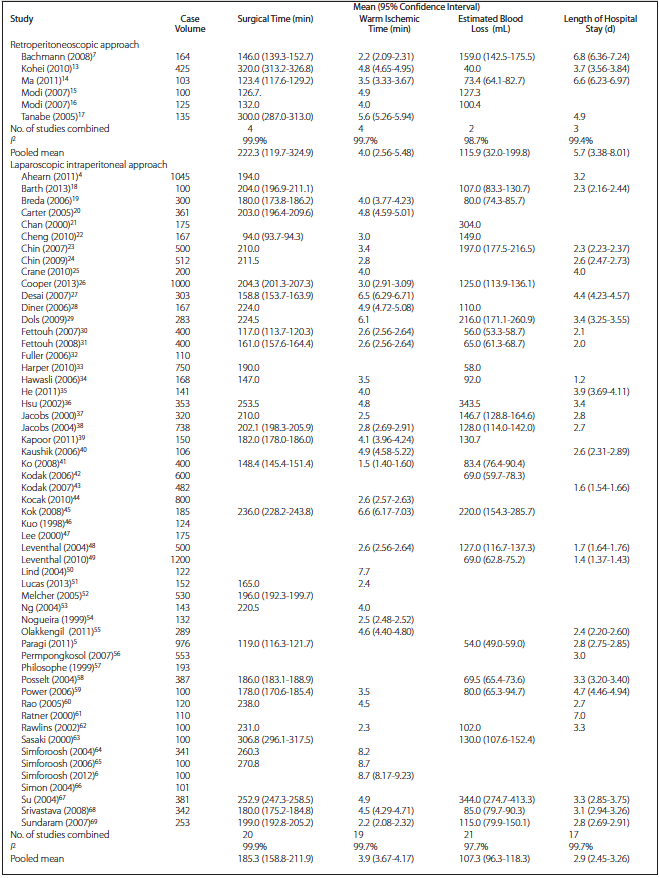
Table 1. List of All Studies for Meta-Analysis
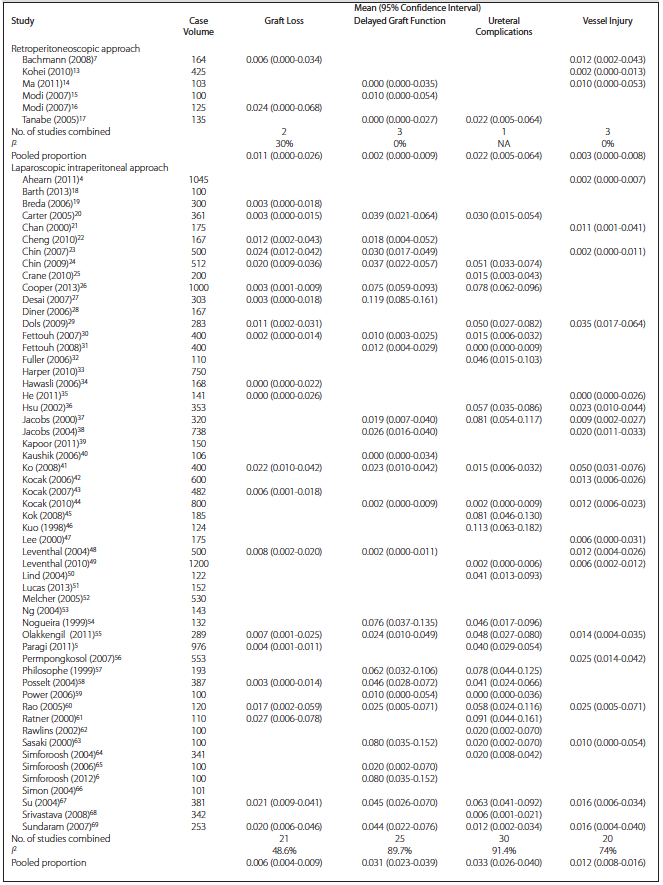
Table 1 (Continued). List of All Studies for Meta-Analysis
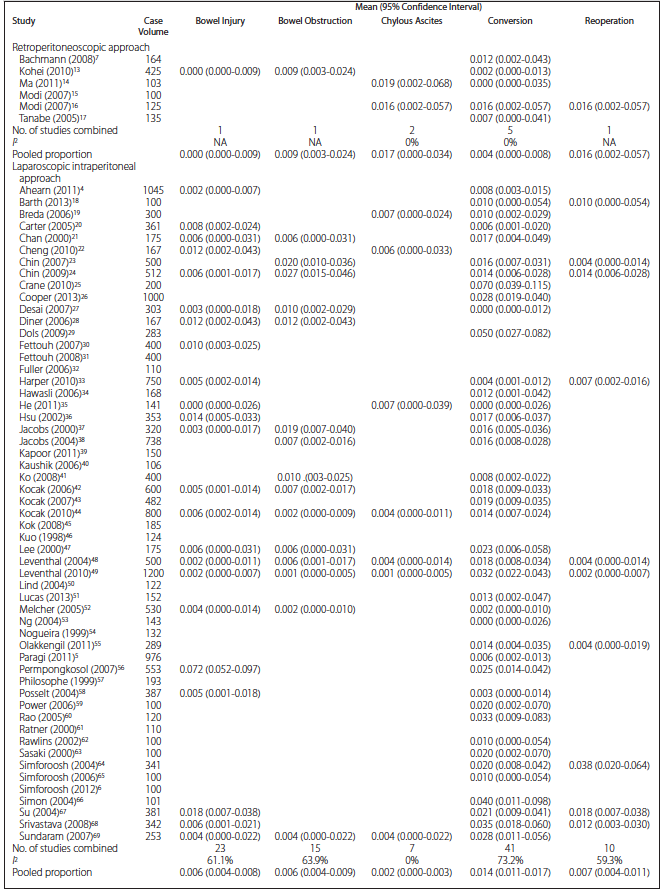
Table 1 (Continued). List of All Studies for Meta-Analysis
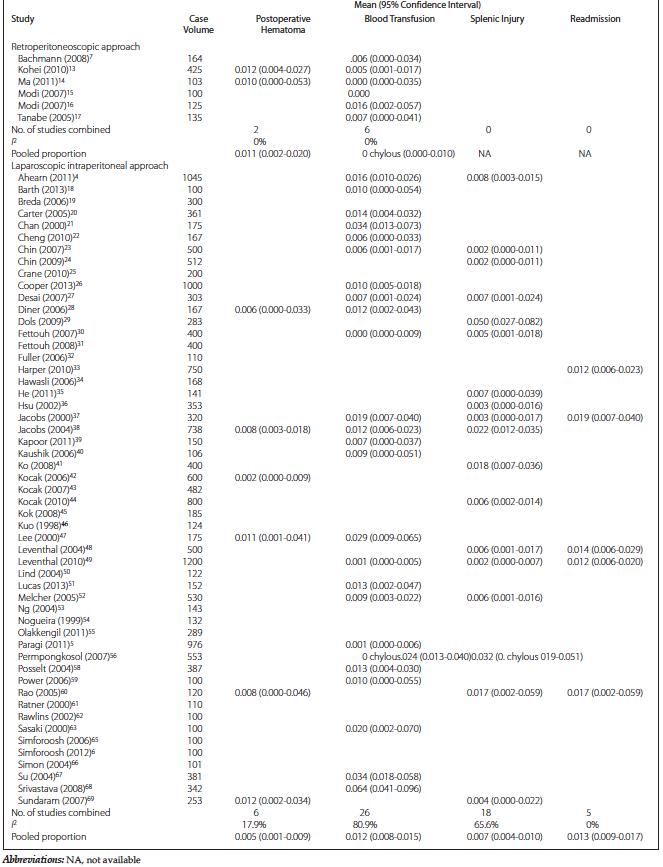
Table 1 (Continued). List of All Studies for Meta-Analysis
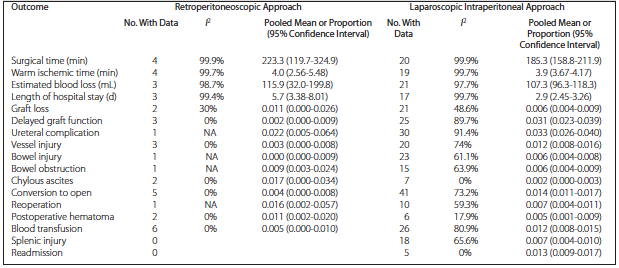
Table 2. Summary of Meta-Analyses
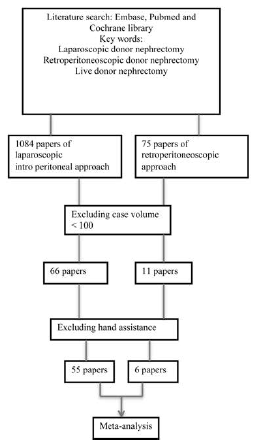
Figure 1. Diagram of Literature Search