Volume: 12 Issue: 4 August 2014
FULL TEXT
Refinements of surgical techniques in liver transplant during the last 10 years have offered more successful outcomes for recipients with portal vein thrombosis. Patency of the portal vein after a thrombectomy can be neither adequately evaluated, nor objectively assessed; therefore, we suggest that rerouting part of the portal flow through a “passing loop,” with or without augmenting the portal flow, may be a salvage procedure, when there is a possible postoperative rethrombosis of the portal vein.
Key words : Portal vein thrombosis, Jump graft, Cryopreserved iliac veins
Introduction
Portal vein thrombosis is a not an uncommon finding when evaluating patients undergoing liver transplant. Reports have estimated the incidence of portal vein thrombosis in recipients to be approximately 4.9% to 10.6%.1-4 The incidence of rethrombosis in liver transplant recipients with native portal vein thrombosis has been reported as high as 28%.2-7 We describe a modification of portal inflow restoration in patients with partial portal vein thrombosis.
An accurate knowledge of the patient’s portal venous anatomy and hemodynamics is essential for several surgical options of portal venous graft inflow in patients with a portal vein thrombosis—a condition that had been considered previously a contra-indication for a liver transplant. These options, although technically challenging, show encouraging results.
In the light of high risk of portal vein rethrombosis and unfavorable, or at least contradicting, results of using cryopreserved jump grafts,8-10 we thought that keeping 2 pathways might be a “safeguard” against deleterious complications of graft portal hypo-perfusion, due to either portal vein pathological narrowing or postoperative rethrombosis.
Laboratory results, such as postoperative liver enzymes, total bilirubin, prothrombin time, international normalized ratio, and amount of ascetic fluid drain output during the first 2 weeks after surgery have been correlated with portal hemodynamic derangements, such as graft hypoperfusion/ hyperperfusion/dysfunction.11-14
We describe a surgical technique used in 2 cases, 1 was a deceased-donor liver transplant, and other one was a living-donor liver transplant; however, further understanding of the effect on portal flow hemodynamics must be investigated before the procedure becomes routine.
Case 1
On December 1, 2010, a 44-year-old woman under-went a deceased-donor liver transplant for advanced cryptogenic cirrhosis. The portal vein (PV) was reconstructed after a thrombectomy in the usual manner via an anastomosis between the native PV and the graft PV. Intraoperative ultrasound showed an intrahepatic portal flow signal of the right portal vein graft of 12 cm/s; which was attributed to inadequate thrombectomy or to massive collaterals and possible portosystemic shunts. We decided to bypass the suspect portal flow partial obstruction (using a cryopreserved iliac vein jump graft), and connecting the dilated superior mesenteric vein to a healthy distal part of recipient PV (Figure 1). This anastomosis was done by partial side clamping of portal vein, without another episode of portal ischemia. The PV signal improved significantly, to more than 35 cm/second. Postoperatively and on day 14, her total bilirubin was 27 μmol/L, her international normalized ratio was 1.3, and a drain output was < 0.5 liter, and her aspartate aminotransferase never went beyond 16.67 μkat/L at any time. During 2 years’ follow-up, her laboratory values and ultrasound images showed a patent passing loop and satisfactory intrahepatic portal inflow with good graft function.
Case 2
On July 10, 2012, a 41-year-old woman underwent a living-donor liver transplant for liver cirrhosis, secondary to hepatitis B virus, with a 2-cm hepato-cellular carcinoma in segment IV. The procedure was done in a standard fashion. Intraoperatively, there was a sluggish flow in the portal vein, with a partial mural thrombus estimated as occupying approximately 50% of its lumen. After a throm-bectomy, her portal flow significantly improved, but it was still not satisfactory.
An alternate portal venous inflow was fashioned using an end-to-side anastomosis of a cryopreserved iliac vein graft (neoportal) to the superior mesenteric vein, using 5-0 polydioxanone suture, which was tunneled through transverse mesocolon. The native recipient portal vein provided a passing loop for the neoportal via end-to-side anastomosis as depicted in Figure 2. The portal flow in the vein graft improved significantly and graft reperfusion was satisfactory. Intraoperative ultrasound showed satisfactory portal flow. The artery was reconstructed using a microsurgical technique followed by a duct-to-duct biliary anastomosis.
Postoperatively, and on day 14, her total bilirubin was 49 μmol/L, her international normalized ratio was 1.9, and her drain output was 1900 mL. Her aspartate aminotransferase never went beyond 16.67 μkat/L at any time. After 9 months’ follow-up, her laboratory values and ultrasound images showed intrahepatic portal flow through the mesoportal jump graft and preservation of liver functions. However, the passing loop made of the native PV graft could no longer be identified during follow-up imaging. This might support our claim that using double routes can salvage the graft from the complications of PV thrombosis. It is also noteworthy that this patient, while she was on a prophylactic dosage of heparin, developed recurrent attacks of lower gastrointestinal bleeding of occult origin that was not identified by endoscopy. Therefore, subcutaneous heparin was given only after her condition was stabilized.
Discussion
Patency of PV, after thrombectomy, can neither be adequately evaluated, nor objectively assessed; therefore, we are suggesting that rerouting or detouring a part of the portal flow through a passing loop to bypass a possible pathological narrowing, might be a salvage procedure in the event of possible postoperative thrombosis of either pathways; however, we can also claim its additional augmenting effect on portal flow similar to portal revascularization techniques (coronary-portal, cavo-portal, reno-portal, or arterialization of portal vein)7; from the theoretical point of view, this technique may shunt significant additional systemic blood flow to the portal circulation.
In conclusion, a passing loop might be a safeguard against complications of graft portal hypoperfusion owing to portal vein narrowing or rethrombosis after liver transplant; however, questions like: Does a passing loop have a real augmenting effect? Or, is it just providing an accessory route for portal flow? What is the effect of a passing loop on the intrahepatic portal pressures and portal hemodynamics? And do these issues have to be elucidated before we can adopt this technique in routine practice?
References:
- Egawa H, Tanaka K, Kasahara M, et al. Single center experience of 39
patients with preoperative portal vein thrombosis is among 404 adult living
donor liver transplantations. Liver Transpl. 2006;12(10):1512-1518.
CrossRef - PubMed - Davidson BR, Gibson M, Dick R, Burroughs A, Rolles K. Incidence, risk
factors, management, and outcome of portal vein abnormalities at orthotopic
liver transplantation. Transplantation. 1994;57(8):1174-1177.
CrossRef - PubMed - Seu P, Shackleton CR, Shaked A, et al. Improved results of liver
transplantation in patients with portal vein thrombosis. Arch Surg.
1996;131(8):840-844; discussion 844-845.
CrossRef - PubMed - Yerdel MA, Gunson B, Mirza D, et al. Portal vein thrombosis in adults
undergoing liver transplantation: risk factors, screening, management, and
outcome. Transplantation. 2000;69(9):1873-1881.
CrossRef - PubMed - Manzanet G, Sanjuán F, Orbis P, et al. Liver transplantation in patients
with portal vein thrombosis. Liver Transpl. 2001;7(2):125-131.
CrossRef - PubMed - Settmacher U, Nüssler NC, Glanemann M, et al. Venous complications after
orthotopic liver transplantation. Clin Transplant. 2000;14(3):235-241.
CrossRef - PubMed - Kadry Z, Selzner N, Handschin A, Müllhaupt B, Renner EL, Clavien PA.
Living donor liver transplantation in patients with portal vein thrombosis:
a survey and review of technical issues. Transplantation.
2002;74(5):696-701.
CrossRef - PubMed - Kuang AA, Renz JF, Ferrell LD, et al. Failure patterns of cryopreserved
vein grafts in liver transplantation. Transplantation. 1996;62(6):742-747.
CrossRef - PubMed - Sugawara Y, Makuuchi M, Tamura S, et al. Portal vein reconstruction in
adult living donor liver transplantation using cryopreserved vein grafts.
Liver Transpl. 2006;12(8):1233-1236.
CrossRef - PubMed - Nikitin D, Jennings LW, Khan T, et al. Twenty years' follow-up of portal
vein conduits in liver transplantation. Liver Transpl. 2009;15(4):400-406.
CrossRef - PubMed - Soejima Y, Shimada M, Suehiro T, et al. Outcome analysis in
adult-to-adult living donor liver transplantation using the left lobe. Liver
Transpl. 2003;9(6):581-586.
CrossRef - PubMed - Clavien PA, Camargo CA Jr, Croxford R, Langer B, Levy GA, Greig PD.
Definition and classification of negative outcomes in solid organ
transplantation. Application in liver transplantation. Ann Surg.
1994;220(2):109-120.
CrossRef - PubMed - Hill MJ, Hughes M, Jie T, et al. Graft weight/recipient weight ratio:
how well does it predict outcome after partial liver transplants? Liver
Transpl. 2009;15(9):1056-1062.
CrossRef - PubMed - Dahm F, Georgiev P, Clavien PA. Small-for-size syndrome after partial
liver transplantation: definition, mechanisms of disease and clinical
implications. Am J Transplant. 2005;5(11):2605-2610.
CrossRef - PubMed

Volume : 12
Issue : 4
Pages : 374 - 376
DOI : 10.6002/ect.2013.0095
From the King Faisal Specialist Hospital, Liver Transplant and HBP Surgery,
Riyadh, Saudi Arabia
Acknowledgements: The authors state that they received no funding for the
study, and have no conflicts of interest to declare.
Corresponding author: Firas Zahr Eldeen, King Faisal Specialist Hospital,
Liver Transplant and HBP Surgery, Takhassusi Street, Riyadh 3354, Saudi Arabia
Phone: +96 614 424 818
Fax: +96 614 424 817
E-mail:
firaszahreldeen@yahoo.ca
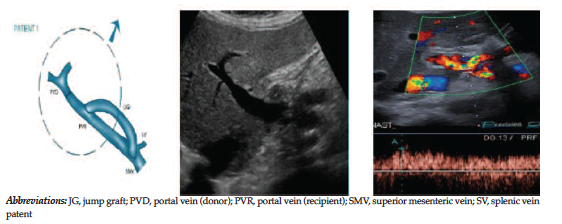
Figure 1. Study Showing Patent Native Portal and Neoportal 12/7/2011
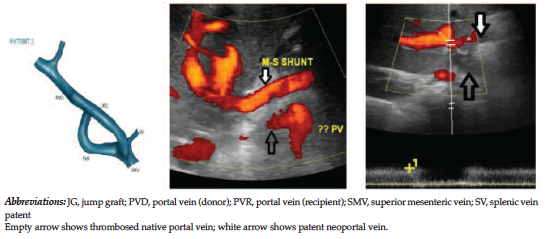
Figure 2. Study Showing Thrombosed Native Portal and Patent Neoportal 18/7/2011