Volume: 12 Issue: 3 June 2014
FULL TEXT
Objectives: Few data regarding viral replication in patients receiving belatacept are available. The aim of this single-center study was to compare the incidence of viral infections (cytomegalovirus, Epstein Barr virus, BK virus, and JC virus), in 62 de novo kidney transplant patients enrolled in the BENEFIT studies, receiving either belatacept (n=42) or cyclosporine (n=20).
Materials and Methods: By means of polymerase chain reaction, belatacept-treated patients were tested for cytomegalovirus, Epstein-Barr virus, BK virus, and JC virus infections monthly for 36 months, monthly for the first 6 months, and then quarterly for 36 months in cyclosporine-treated patients. Additional samples were obtained when a viral infection was suspected.
Results: The number of positive cytomegalovirus, BK virus, or JC virus viremias over the number of polymerase chain reactions performed through all 3 years was similar in both groups. Conversely, over the 3-year study, the number of positive Epstein-Barr virus viremias over the number of Epstein-Barr virus polymerase chain reactions performed was significantly higher in the belatacept group (76% vs 50%; P = .047). The number of Epstein-Barr virus primary infection was similar in both groups, while the number of Epstein-Barr virus reactivation was higher in the belatacept group.
Conclusions: Epstein-Barr virus replication occurs more often in patients receiving belatacept, than it does in those receiving cyclosporine.
Key words : Belatacept, Cytomegalovirus, Epstein Barr virus, BK virus, JC virus, Kidney transplant
Introduction
Kidney transplant, the standard of care for patients with end-stage renal disease, improves survival and quality of life.1 Although advances in posttransplant immunosuppressive management have reduced the rates of acute rejection and improved 1-year outcomes, commensurate improvements in long-term kidney-allograft survival have not been observed.2,3 The commonly used calcineurin inhibitors (CNI), effective for immunosuppression, may contribute to late allograft loss and death. Calcineurin inhibitors are potentially nephrotoxic and have adverse effects on blood pressure, lipid levels, and glucose homeostasis.4,5 Thus, CNIs promote cardiovascular disease, the most common cause of death among transplant recipients, as well as interstitial fibrosis and tubular atrophy, and are the most common cause of late graft loss among surviving patients.6,7
Current long-term outcomes for kidney transplant recipients indicate a need for selective immuno-suppressants that improve long-term patient and allograft survival by avoiding the chronic toxicities of nonselective immunosuppressive therapies. Multiple small molecules and biological agents are currently being studied.8 Blockade of T-cell costimulation is a promising approach9,10 and has been intensively investigated since the development of belatacept.
Belatacept, a selective costimulation blocker, binds to the surface costimulatory ligands (CD80 and CD86) of antigen-presenting cells. In the context of antigen recognition (signal 1), the interaction of CD80 and CD86 with the surface costimulatory receptor, CD28, of T cells (signal 2), is required for the latter’s full activation. Blockade of signal 2 inhibits T-cell activation, thereby promoting anergy and apoptosis.11 Belatacept is a human fusion protein that combines the extracellular portion of cytotoxic T-lymphocyte–associated antigen 4 (CTLA4) with the constant-region fragment (Fc) of human IgG1 (CTLA4Ig).12-14
Several phase 2 and phase 3 clinical trials,15-18 which are investigating the use of belatacept in de novo kidney transplants, found that belatacept was effective at preventing acute rejection and preserving kidney function by avoiding CNI-induced nephrotoxicity. It also minimizes metabolic adverse events, which could result in improved long-term cardiovascular outcome. However, the incidence of Epstein-Barr virus (EBV)-induced posttransplant lymphoma disease (PTLD) is numerically greater in patients receiving belatacept compared with those treated with cyclosporine17-18; this has mainly occurred in recipients who are EBV-seronegative whereas their donor is EBV seropositive.
Viral infections are quite common in transplant patients receiving immunosuppressive drugs. For instance, cytomegalovirus (CMV) infections are more frequently observed in patients receiving CNIs compared with those receiving mammalian target of rapamycin inhibitors (mTOR-I)19 and in patients receiving mycophenolic acid compared with azathioprine.20 Incidence of BK virus (BKV) replication and nephropathy is significantly higher in patients receiving tacrolimus than it is in those receiving cyclosporine.21 However, few data regarding viral replication and infection in patients receiving belatacept are available.
The aim of this single-center study was to compare the incidence of viral infections, notably CMV, EBV, BKV, and JC virus (JCV), in de novo kidney transplant patients receiving either belatacept-based or cyclosporine-based immunosuppression.
Materials and Methods
The population in this study represents the 62 patients enrolled at our transplant center in Toulouse in the BENEFIT (Belatacept Evaluation of Nephro-protection and Efficacy as First-line Immuno-suppression Trial) and BENEFIT-EXT (Belatacept Evaluation of Nephroprotection and Efficacy as First-line Immunosuppression Trial—EXTended criteria donors) studies between December 2005 and May 2007, who were followed for at least 3 years. BENEFIT and BENEFIT-EXT are 3-year, randomized, partially blinded, phase 3 studies in which patients have been randomized 1:1:1 to receive a more intensive regimen of belatacept, a less intensive regimen of belatacept, or cyclosporine as the primary maintenance immunosuppressive therapy. The study was blinded to patients and study personnel with respect to assignment of belatacept-dose regimen, and was open-labeled with respect to allocation to belatacept or cyclosporine, primarily because of the need for therapeutic-dose monitoring in cyclosporine-treated patients. Each patient was treated with an induction of basiliximab (20 mg IV on days of transplant and 4, oral mycophenolate mofetil (MMF) (2 g/d) in 2 divided doses, and steroids (tapered to ≥ 2.5 mg/d by posttransplant month 6). In the BENEFIT study, patients who had received an extended-criteria donor-kidney transplants were excluded, unlike in the BENEFIT-EXT study, which enrolled this category of patient.17,18 All patients were given sulfametho-xazole/trimethoprim for pneumocystis jirovecii prophylaxis for the first 6 months posttransplant.
By means of molecular tools, all patients were tested prospectively for CMV, EBV, BKV, and JCV infections. Whole blood samples were collected monthly for 36 months just before belatacept infusion in the belatacept-treated patients, and monthly for the first 6 months, then quarterly for 36 months during follow-up visits in cyclosporine-treated patients. Additional samples were obtained when a viral infection was suspected. Cytomegalovirus prophylaxis by valganciclovir was given for the first 3 months posttransplant in CMV-seropositive recipients, as well as in CMV-seronegative recipients whose donor was CMV seropositive. Viral infection was defined as a positive DNAemia. Viral disease was defined as the presence of a positive DNAemia with clinical symptoms.
Virologic methods
Quantitative real-time PCRs for CMV, EBV, BKV, and JCV were performed according
to previously published methods.22-24
Statistical analyses
Analyses were performed according to intention-to-treat, with data included from
all patients who underwent a transplant. Reported values represent either means
(± SD) or median (ranges). Quantitative variables were compared using the t
test. Proportions were compared using the Fisher exact test. A value of P
≤ .05 was considered statistically significant.
Results
Characteristics and disposition of patients
A total of 62 patients were included: 42 of these were randomized into the
belatacept regimen (group 1, and either more intensive or less intensive), and
20 into the cyclosporine (group 2) regimen (Figure 1). Recipient-baseline and
donor-baseline characteristics were well balanced. The mean age of recipients
was 48.4 ± 13.4 years in group 1 and 47.5 ± 15 years in group 2 (P = NS).
There were 25 males in group 1 and 14 in group 2 (P = NS). Mean duration
of dialysis was 44.6 ± 30.4 months in group 1 and 43.1 ± 28.8 months in group 2
(P = NS). All patients had negative panel-reactive antibodies, and all
were recipients of a first kidney transplant. The numbers of HLA A/B mismatches
(2.4 ± 0.94 in group 1 and 2.3 ± 0.98 in group 2), HLA DR/DQ mismatches (1.44 ±
1.99 in group 1 and 1.6 ± 1.35 in group 2), and numbers of total HLA mismatches
(4.38 ± 1.6 in group 1 and 3.9 ± 1.8 in group 2) were similar in both groups.
There was no difference in mean donor age between either group (47.02 ± 15.1 in group 1 and 47.6 ± 15.9 in group 2). Twenty-two donors in group 1 were males compared with 11 in group 2 (P = NS), and 37 donors were deceased donors in group 1, compared with 20 in group 2 (P = NS).
The rate of immunosuppressive discontinuation of study medication during the 36 months posttransplant follow-up was significantly different between the 2 groups: 14% in group 1 and 50% in group 2 (P = .005). Of the 6 group 1 patients who discontinued the study, 3 were switched to tacrolimus for steroid-resistant acute rejection, 1 had posttransplant lymphoproliferative disorder (PTLD), 1 had colon cancer, and 1 had ganciclovir-resistant CMV disease. Of the 10 group 2 patients who discontinued the study, 7 were switched to tacrolimus for steroid-resistant acute rejection, and 3 were switched to mTOR-I for CNI-related toxicity (Figure 1).
Patient-survival and graft-survival rates
There was no statistical difference between the incidence of graft-survival and
patient-survival rates and the time from transplant until patient death or graft
loss. Graft losses, 1 from group 1 and the other from group 2, were due to
noncompliance to immunosuppression medications intake. One group 1 patient died
of central nervous system lymphoma and one group 2 patient died of septic shock.
Incidence of cytomegalovirus infection
Cytomegalovirus donor (D) and recipient (R) status, notably D+/R+,
D+/R–, D-/R+, and D–/R-, number of patients on CMV prophylaxis, and duration of
prophylaxis were comparable between both groups. The incidence of CMV infection
was 47% in group 1 and 45% in group 2 (P = NS). Primary infection rate in
D+/R– CMV-status patients was 54% in group 1 and 45% in group 2 (P = NS).
Seventy-six percent of CMV seropositive recipients in group 1 and 65% from group
2 had reactivation of CMV (P = NS).
Resistance to ganciclovir was comparable between both groups. There was no significant difference between the 2 groups concerning the time since transplant until the first positive CMV DNAemia was detected, or the time from prophylaxis withdrawal until the first CMV DNAemia was detected. The number of positive CMV DNAemias over the numbers of CMV PCRs performed during the first, second, and third years, and through all 3 years, as well as the number of treated CMV DNAemias over the numbers of CMV PCRs performed during the first, second, and third years, and through all 3 years, were similar in both groups (Table 1). These results were not changed when these 5 parameters were compared in D+/R– patients from the 2 groups.
Incidence of Epstein-Barr virus infection
Epstein-Barr virus donor and recipient serostatus, that is, D+/R+, D+/R–, D–/R+,
and D–/R–, were similar in both groups. Primary infection occurred in 2 of the 3
EBV D+/R– belatacept-treated patients and 2 of the 4 EBV D+/R–
cyclosporine-treated patients (P = NS). Rate of EBV reactivation was
numerically different in both groups: 78% in group 1 vs 50% in group 2 (P
= .056). Rate of EBV infection (primary infection or reactivation) was
statistically higher in the belatacept group, that is, 76% vs 50% (P =
.047). There was no significant difference between the 2 groups concerning the
time from transplant until detection of the first positive EBV DNAemia. The
number of positive EBV DNAemias over the numbers of EBV PCRs performed during
the first, second, and third years, and through all 3 years, as well as the
number of treated EBV DNAemias over the numbers of EBV PCRs performed during the
first, second, and third years, and through all 3 years, were similar in both
groups (Table 2). Over the 3-year period there were 2 cases of PTLD in group 1
in EBV seropositive patients and none in group 2. Both cases of PTLD were
located within the central nervous system (CNS); both were EBV-related. One
patient was a 71-year-old man who was seropositive for CMV and EBV at
transplant, who had CMV reactivation at month 10 posttransplant, and EBV
reactivation at month 3. He did not have an acute rejection of his graft.
Diagnosis of B-cell CNS lymphoma was made by month 13 and he died soon after.
The second patient was 44 years old, seropositive for EBV at transplant with
reactivation at month 8, was seronegative for CMV with a seropositive CMV donor,
and had a flair-up of CMV disease at month 6 posttransplant. He was treated, at
2 months posttransplant, with anti-thymocyte globulins for steroid-resistant
rejection. He had JC viremia at posttransplant month 15 and was diagnosed with
B-cell CNS lymphoma by M16. He was treated by chemotherapy, radiotherapy, and
withdrawn of all immunosuppressants except the steroids. At the time of this
writing, he is alive 5 years later with a functioning graft.
Incidence of BK virus infection
A rate of 4.7% of belatacept-treated patients developed BKV nephropathy compared
with 5% who were treated with cyclosporine (P = NS). Median time from
transplant until detection of the first positive BKV DNAemia was 8 months in the
belatacept group compared with 4 months in the cyclosporine group (P =
NS). The number of positive BKV viremias over the numbers of BKV PCRs obtained
during the first, second, and third years, and through all 3 years, were similar
in both groups (Table 3).
Incidence of JC virus infection
Over the 3-year period, 5 patients were found to have JCV viremia, and all were
within the belatacept group, although there was no statistical difference
between either group in the number of positive JCV viremias over the number of
JCV PCRs performed in the first, second, and third years, or through all 5
years. All patients had other viral infections: 4 cases of CMV, 4 of EBV, and 1
mixed EBV, CMV, and BKV. None of the patients with JCV DNAemias developed
progressive multifocal leukoencephalopathy.
Maintenance immunosuppression combined with belatacept or cyclosporine
There was no imbalance in dose levels of either mycophenolate mofetil or of
steroids in either group. In group 1, nine patients stopped MMF: 5 because of
CMV infection, 2 because of BKV nephropathy, 1 for PTLD, and 1 after graft loss.
In group 2, three patients stopped MMF: 2 because of BKV nephropathy and 1 for
graft loss (data not shown).
Kidney function
Glomerular-filtration rate was estimated by creatinine clearance using the
modification of diet in renal disease equation. Creatinine clearance was
numerically higher through the total 3-year follow-up of group 1 patients;
however, the difference was statistically significant between the 2 groups only
at 1 year posttransplant, that is, 56 ± 13 mL/min (belatacept group) vs 45 ± 18
mL/min (cyclosporine group; P = .009). There was no statistical imbalance
in either the incidence of acute rejection (steroid-sensitive,
steroid-resistant, or humoral) or the time from transplant to the occurrence of
the first rejection between the 2 groups (Table 4).
Discussion
The number of solid-organ transplants conducted has increased worldwide since the first successful human-kidney transplant was performed in 1954.25 As immunosuppressive agents and graft-survival rates have improved, infection and malignancy have become the main barriers to disease-free survival after organ transplant.26 As a result of the growing population of immunosuppressed patients with prolonged survival, an increased incidence and spectrum of opportunistic infections is now observed among other viral infections.27 The aim of this study was to look, by means of a systematic and very frequent PCR monitoring, at the effect of belatacept used as a maintenance therapy in kidney transplant patients, on CMV, EBV, BKV, or JCV infections, compared with cyclosporine therapy.
Cytomegalovirus is the most serious virologic agent to affect transplant recipients. The incidence of CMV infection is around 60% and the incidence of CMV disease is 25%.28 Most infections begin 1 to 6 months after transplant. Despite antiviral prophylaxis among high-risk recipients, particularly CMV-seronegative recipients of organs from CMV-seropositive donors (CMV D+/R–), a large number (estimated range, 15%-38%) still develop delayed onset CMV disease soon after completion of antiviral prophylaxis.29 The serologic status of pretransplant recipients determines both the incidence and severity of disease.30,31 The clinical effects of CMV infection are the infectious syndromes produced by the virus itself, predisposition to super-infections by opportunistic pathogens, and the virus’s possible implications in allograft dysfunction, new onset diabetes mellitus, and increased patient mortality.32,33
Cytomegalovirus infection has been associated with increased immunosuppression exposure to induction with anti-thymocyte globulins and muromonab, and to the occurrence of rejection (and its treatment). Alemtuzumab induction, together with tacrolimus therapy, increases the incidence of CMV infections when compared with tacrolimus plus MMF, but none of these infections were tissue invasive.34 In some studies, treatment with MMF increased the incidence of CMV infection as compared with placebo or AZA or everolimus.35,36 Glotz and associates37 observed that, in anti-thymocyte globulin induction with tacrolimus versus sirolimus maintenance therapy, the rate of CMV infection was statistically higher in the tacrolimus group. Webster and associates38 observed that when mTOR inhibitors replace antimetabolites, the risk of CMV infection was reduced by 51%. In the present study, in which a systematic PCR monitoring was performed, the incidence of CMV infection over 3 years was comparable between both groups, and was concordant with the results of the belatacept phase 2 and phase 3 trials,15 in which there was no mandatory monitoring for CMV infection. In these later studies, only CMV infections declared by the investigators were considered.
Epstein-Barr virus is a herpes virus with a double-stranded DNA core that targets B lymphocytes. The critical effect of EBV in organ-transplant recipients is its role in the pathogenesis of posttransplant lymphoproliferative disorders (PTLD). In adult solid-organ recipients, PTLD has been reported in up to 2.3% of kidney transplants.39 Over a 10-year period, the risk of PTLD in kidney transplant recipients was 12-fold higher than it was in the general population.40 It was highest during the first year, after which the rate of PTLD decreased.40,41 It is associated with a reported mortality of 40% to 60%.42 The risk factors for PTLD include pretransplant EBV serologic status and immunosuppression. Allograft recipients who are EBV-seronegative before the transplant, and receive an organ from a seropositive donor, are at the greatest risk. Induction or rejection therapy, with monoclonal or polyclonal antibodies, increases the risk of PTLD,40,43 whereas MMF maintenance immuno-suppression has been associated with a significantly decreased risk of PTLD, perhaps because of its role in preventing EBV DNAemia.43,44
In a pooled belatacept analysis of 1425 intent-to-treat patients (more intensive belatacept, n=477; less intensive belatacept, n=472; cyclosporine, n=476), with a median follow-up of 2.4 years, a total of 15 cases of PTLD, including 8 cases that involved the CNS, were reported.45 Of the 15 PTLD cases, 8 occurred in the more intensive belatacept treatment, 5 in the less intensive belatacept therapy, and 2 in patients receiving cyclosporine. Of the 8 CNS PLTD cases, 6 were reported in the more intensive belatacept group and 2 were from the less intensive belatacept group.45 Risk factors for PTLD included primary EBV infection after transplant into a seronegative recipient of an allograft from a seropositive donor, allograft rejection, and exposure to antilymphocyte preparations, and CMV coinfection.45
In our study, the number of EBV infection, that is, primary infection or reactivation, was significantly higher in the belatacept group. However, EBV seronegative patients from the belatacept group did not have a greater number of EBV primary infections compared with EBV seronegative patients receiving CNIs. Conversely, there was a higher rate of EBV reactivations in seropositive patients from the belatacept group compared with those receiving CNIs. Two patients in our population had PTLD: both were within the belatacept group and both had it localized within the CNS. Both cases of PTLD were located within the CNS; both were EBV-related. One patient died before any specific therapy could be given. The other patient is still alive 5 years later with a functioning graft; he was treated by chemotherapy, radiotherapy, and withdrawal of all immuno-suppressants except the steroids. Because belatacept does not selectively target alloreactive T lymphocytes, and must be combined with classic immuno-suppressive drugs. It therefore increases the risk for infectious and neoplastic complications, particularly posttransplant lymphoproliferative disorders.46
The use of potent immunosuppressive therapies has coincided with the emergence of polyomavirus infection and nephropathy, which are associated with the BK virus. The prevalence of BKV viruria and BKV viremia in renal-transplant recipients is around 40% and 12%.23 BK virus nephropathy, which affects about 8% of recipients, manifests as an asymptomatic gradual rise in serum creatinine levels and results in allograft loss or permanent dysfunction in 40% to 60% of cases.47 The diagnosis is based on detection of viruria, viremia, and histologic findings from a kidney biopsy.48 Immunosuppression with tacrolimus and MMF has been considered the most important risk factor for infection.49 However, it has been reported with any triple-drug regimen, and perhaps the overall load of immunosuppressive drugs is the most important risk factor.50 Our results showed an incidence of 5% BK nephropathy in both groups, with no significant difference in the incidence of BKV viremia between either group.
There is little information on JCV infection in renal transplant patients. The seroprevalence of JCV reaches about 50% by the age of 60 to 69 years.24 Five of our patients had JCV viremia and were in the belatacept group, but the incidence between the 2 groups was not statistically significant. All patients had other viral infections: 2 cases of CMV, 2 of EBV, and 1 mixed EBV, CMV, and BKV. No patient developed progressive multifocal leukoencephalopathy, regardless of the viral load. Detection of JCV may indicate an over-immunosuppressed patient.
Limitations of the study include its relatively small size and its lack of statistical power. There was also the potential for observer bias, as with any open-label study.
In conclusion, belatacept as a maintenance therapy in kidney transplant patients does not increase the incidence of CMV, BKV, or JCV infections compared with cyclosporine therapy, but it is associated with increase reactivation of EBV.
References:
- Wolfe RA, Ashby VB, Milford EL, et al. Comparison of mortality in all
patients on dialysis, patients on dialysis awaiting transplantation, and
recipients of a first cadaveric transplant. N Engl J Med.
1999;341(23):1725-1730.
CrossRef - PubMed - Meier-Kriesche HU, Schold JD, Srinivas TR, Kaplan B. Lack of improvement
in renal allograft survival despite a marked decrease in acute rejection
rates over the most recent era. Am J Transplant. 2004;4(3):378-383.
CrossRef - PubMed - United Network for Organ Sharing National Data. Available at: http://www.unos.org/. 2008. Accessed November 15, 2009.
- Burdmann EA, Andoh TF, Yu L, Bennett WM. Cyclosporine nephrotoxicity.
Semin Nephrol. 2003;23(5):465-476.
CrossRef - Miller LW. Cardiovascular toxicities of immunosuppressive agents. Am J
Transplant. 2002;2(9):807-818.
CrossRef - PubMed - Ojo AO, Hanson JA, Wolfe RA, Leichtman AB, Agodoa LY, Port FK. Long-term
survival in renal transplant recipients with graft function. Kidney Int.
2000;57(1):307-313.
CrossRef - PubMed - Nankivell BJ, Borrows RJ, Fung CL, O'Connell PJ, Allen RD, Chapman JR.
The natural history of chronic allograft nephropathy. N Engl J Med.
2003;349(24):2326-2333.
CrossRef - PubMed - Cooper JE, Wiseman AC. Novel immunosuppressive agents in kidney
transplantation. Clin Nephrol. 2010;73(5):333-343.
CrossRef - PubMed - Badell IR, Russell MC, Thompson PW, et al. LFA-1-specific therapy
prolongs allograft survival in rhesus macaques. J Clin Invest.
2010;120(12):4520-4531.
CrossRef - PubMed - Ford ML, Larsen CP. Translating costimulation blockade to the clinic:
lessons learned from three pathways. Immunol Rev. 2009;229(1):294-306.
CrossRef - PubMed - Sayegh MH, Turka LA. The role of T-cell costimulatory activation
pathways in transplant rejection. N Engl J Med. 1998;338(25):1813-1821.
CrossRef - PubMed - Gupta G, Womer KL. Profile of belatacept and its potential role in
prevention of graft rejection following renal transplantation. Drug Des
Devel Ther. 2010;4:375-382.
CrossRef - PubMed - Linsley PS, Greene JL, Brady W, Bajorath J, Ledbetter JA, Peach R. Human
B7-1 (CD80) and B7-2 (CD86) bind with similar avidities but distinct
kinetics to CD28 and CTLA-4 receptors. Immunity. 1994;1(9):793-801. Erratum
in: Immunity 1995;2(2):following 203.
CrossRef - PubMed - Larsen CP, Pearson TC, Adams AB, et al. Rational development of LEA29Y
(belatacept), a high-affinity variant of CTLA4-Ig with potent
immunosuppressive properties. Am J Transplant. 2005;5(3):443-453.
CrossRef - PubMed - Vincenti F, Larsen C, Durrbach A, et al. Costimulation blockade with
belatacept in renal transplantation. N Engl J Med. 2005;353(8):770-781.
CrossRef - PubMed - Ferguson R, Grinyó J, Vincenti F, et al. Immunosuppression with
belatacept-based, corticosteroid-avoiding regimens in de novo kidney
transplant recipients. Am J Transplant. 2011;11(1):66-76.
CrossRef - PubMed - Vincenti F, Charpentier B, Vanrenterghem Y, et al. A phase III study of
belatacept-based immunosuppression regimens versus cyclosporine in renal
transplant recipients (BENEFIT study). Am J Transplant. 2010;10(3):535-546.
CrossRef - PubMed - Durrbach A, Pestana JM, Pearson T, et al. A phase III study of
belatacept versus cyclosporine in kidney transplants from extended criteria
donors (BENEFIT-EXT study). Am J Transplant. 2010;10(3):547-557.
CrossRef - PubMed - Tedesco Silva H Jr, Cibrik D, et al. Everolimus plus reduced-exposure
CsA versus mycophenolic acid plus standard-exposure CsA in renal-transplant
recipients. Am J Transplant. 2010;10(6):1401-1413.
CrossRef - PubMed - Bernabeu-Wittel M, Naranjo M, Cisneros JM, et al. Infections in renal
transplant recipients receiving mycophenolate versus azathioprine-based
immunosuppression. Eur J Clin Microbiol Infect Dis. 2002;21(3):173-180.
CrossRef - PubMed - Hirsch HH, Vincenti V, Friman S, et al. Risk factors of polyomavirus BKV
high-level viruria and viremia in de novo renal transplantation: a
multivariate analysis from the DIRECT Study comparing cyclosporine and
tacrolimus. Transplantation. 2010 [Abstract No. 1664].
CrossRef - Mengelle C, Sandres-Sauné K, Pasquier C, et al. Automated extraction and
quantification of human cytomegalovirus DNA in whole blood by real-time PCR
assay. J Clin Microbiol. 2003;41(8):3840-2845.
CrossRef - PubMed - Basse G, Mengelle C, Kamar N, et al. Prospective evaluation of BK virus
DNAemia in renal transplant patients and their transplant outcome.
Transplant Proc. 2007;39(1):84-87.
CrossRef -
PubMed - Mengelle C, Kamar N, Mansuy JM, et al. JC virus DNA in the peripheral
blood of renal transplant patients: a 1-year prospective follow-up in
France. J Med Virol. 2011;83(1):132-136.
CrossRef - PubMed - Murray JE. Reflections on the first successful kidney transplantation.
World J Surg. 1982;6(3):372-376.
CrossRef - PubMed - Dunn DL. Problems related to immunosuppression. Infection and malignancy
occurring after solid organ transplantation. Crit Care Clin.
1990;6(4):955-977.
PubMed - Fishman JA. Infection in solid-organ transplant recipients. N Engl J
Med. 2007;357(25):2601-2614.
CrossRef - PubMed - Sagedal S, Hartmann A, Nordal KP, et al. Impact of early cytomegalovirus
infection and disease on long-term recipient and kidney graft survival.
Kidney Int. 2004;66(1):329-337.
CrossRef - PubMed - Arthurs SK, Eid AJ, Pedersen RA, et al. Delayed-onset primary
cytomegalovirus disease and the risk of allograft failure and mortality
after kidney transplantation. Clin Infect Dis. 2008;46(6):840-846.
CrossRef - PubMed - Rowshani AT, Bemelman FJ, van Leeuwen EM, Vanlier RA, Ten Berge IJ.
Clinical and immunological aspects of cytomegalovirus infection in solid
organ transplant recipients. Transplantation. 2005;79:381-386.
CrossRef - PubMed - Weikert BC, Blumberg EA. Viral infection after renal transplantation:
surveillance and management. Clin J Am Soc Nephrol. 2008;3(suppl 2):S76-S86.
CrossRef - PubMed - Sagedal S, Rollag H, Hartmann A. Cytomegalovirus infection in renal
transplant recipients is associated with impaired survival irrespective of
expected mortality risk. Clin Transplant. 2007;21(3):309-313.
CrossRef - PubMed - Hartmann A, Sagedal S, Hjelmesaeth J. The natural course of
cytomegalovirus infection and disease in renal transplant recipients.
Transplantation. 2006;82(suppl 2):S15-S17.
CrossRef - PubMed - Margreiter R, Klempnauer J, Neuhaus P, Muehlbacher F, Boesmueller C,
Calne RY. Alemtuzumab (Campath-1H) and tacrolimus monotherapy after renal
transplantation: results of a prospective randomized trial. Am J Transplant.
2008;8(7):1480-1485.
CrossRef - PubMed - Mycophenolate mofetil in cadaveric renal transplantation. US Renal
Transplant Mycophenolate Mofetil Study Group. Am J Kidney Dis.
1999;34(2):296-303.
CrossRef - Vítko S, Margreiter R, Weimar W, et al. Three-year efficacy and safety
results from a study of everolimus versus mycophenolate mofetil in de novo
renal transplant patients. Am J Transplant. 2005;5(10):2521-2530. Erratum
in: Am J Transplant. 2006;6(1):243.
CrossRef - PubMed - Glotz D, Charpentier B, Abramovicz D, et al. Thymoglobulin induction and
sirolimus versus tacrolimus in kidney transplant recipients receiving
mycophenolate mofetil and steroids. Transplantation. 2010;89(12):1511-1517.
CrossRef - PubMed - Webster AC, Lee VW, Chapman JR, Craig JC. Target of rapamycin inhibitors
(sirolimus and everolimus) for primary immunosuppression of kidney
transplant recipients: a systematic review and meta-analysis of randomized
trials. Transplantation. 2006;81(9):1234-1248.
CrossRef - PubMed - Taylor AL, Marcus R, Bradley JA. Post-transplant lymphoproliferative
disorders (PTLD) after solid organ transplantation. Crit Rev Oncol Hematol.
2005;56(1):155-167.
CrossRef - PubMed - Opelz G, Döhler B. Lymphomas after solid organ transplantation: a
collaborative transplant study report. Am J Transplant. 2004;4(2):222-230.
CrossRef - PubMed - Smith JM, Rudser K, Gillen D, et al. Risk of lymphoma after renal
transplantation varies with time: an analysis of the United States Renal
Data System. Transplantation. 2006;81(2):175-180.
CrossRef - PubMed - Dharnidharka VR, Sullivan EK, Stablein DM, Tejani AH, Harmon WE; North
American Pediatric Renal Transplant Cooperative Study (NAPRTCS). Risk
factors for posttransplant lymphoproliferative disorder (PTLD) in pediatric
kidney transplantation: a report of the North American Pediatric Renal
Transplant Cooperative Study (NAPRTCS). Transplantation.
2001;71(8):1065-1068.
CrossRef - PubMed - Cherikh WS, Kauffman HM, McBride MA, Maghirang J, Swinnen LJ, Hanto DW.
Association of the type of induction immunosuppression with posttransplant
lymphoproliferative disorder, graft survival, and patient survival after
primary kidney transplantation. Transplantation. 2003;76(9):1289-1293.
CrossRef - PubMed - Holmes MV, Caplin B, Atkinson C, et al. Prospective monitoring of
Epstein-Barr virus DNA in adult renal transplant recipients during the early
posttransplant period: role of mycophenolate mofetil. Transplantation.
2009;87(6):852-856.
CrossRef - PubMed - Grinyó J, Charpentier B, Pestana JM, et al. An integrated safety profile
analysis of belatacept in kidney transplant recipients. Transplantation.
2010;90(12):1521-1527.
CrossRef - PubMed - Snanoudj R, Zuber J, Legendre C. Co-stimulation blockade as a new
strategy in kidney transplantation: benefits and limits. Drugs.
2010;70(16):2121-2131.
CrossRef - PubMed - Hirsch HH, Knowles W, Dickenmann M, et al. Prospective study of
polyomavirus type BK replication and nephropathy in renal-transplant
recipients. N Engl J Med. 2002;347(7):488-496.
CrossRef - PubMed - Bohl DL, Brennan DC. BK virus nephropathy and kidney transplantation.
Clin J Am Soc Nephrol. 2007;2(suppl 1):S36-S46.
CrossRef - PubMed - Ramos E, Drachenberg CB, Papadimitriou JC, et al. Clinical course of
polyoma virus nephropathy in 67 renal transplant patients. J Am Soc Nephrol.
2002;13(8):2145-2151.
CrossRef - PubMed - Vasudev B, Hariharan S, Hussain SA, Zhu YR, Bresnahan BA, Cohen EP. BK
virus nephritis: risk factors, timing, and outcome in renal transplant
recipients. Kidney Int. 2005;68(4):1834-1839.
CrossRef - PubMed

Volume : 12
Issue : 3
Pages : 212 - 219
DOI : 10.6002/ect.2013.0252
From the 1Department of Nephrology, Dialysis and Organ
Transplantation, CHU Rangueil; 2INSERM U563, IFR–BMT, CHU Purpan; the
3Department of Virology, CHU Purpan, Toulouse, France; and the 4Université
Paul Sabatier, Toulouse, France
Acknowledgements: NK received honoraria from Novartis, Astellas, Pfizer,
Roche, and Genzyme. LR received honoraria from BMS, Novartis, Astellas, Pfizer,
Fresenius, Amgen, Roche, Veloxis, and Genzyme. The authors have no conflicts of
interest to disclose, and there was no funding for this study.
Corresponding author: Lionel Rostaing MD, PhD, Department of Nephrology,
and Organ Transplantation, CHU Rangueil, TSA 50032, 31059 Toulouse Cedex 9,
France
Phone: +33 5 61 32 25 84
Fax: +33 5 61 32 28 64
E-mail:
rostaing.l@chu-toulouse.fr

Figure 1. Patients Disposition

Table 1. Analysis of Cytomegalovirus Parameters Over the 3-Year Period
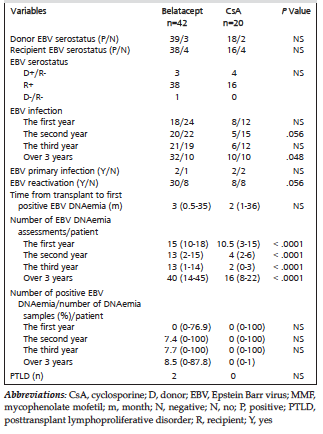
Table 2. Analysis of Epstein-Barr Virus Parameters Over the 3-Year Period

Table 3. Analysis of BK Virus Parameters Over the 3-Year Period
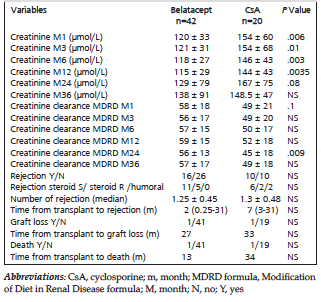
Table 4. Patient, Graft Survival, and Kidney Allograft Parameters Outcome