Volume: 11 Issue: 3 June 2013
FULL TEXT
Renal transplant is the preferred treatment for patients with uremia. The renal transplant procedure is well established with a high success rate, but surgical complications are encountered occasionally. We report a case of sudden onset of anuria of the graft kidney owing to acute external iliac artery dissection diagnosed by Doppler sonography. Urgent endarterectomy with thrombus removal of false lumen prevented ischemia and occlusion of the right femoral artery. Without accurate diagnosis and management, this complication could have caused graft loss and death. We believe that renal transplant requires attentive teamwork to keep the graft functioning well.
Key words : Renal transplant, External iliac artery dissection
Introduction
Renal transplant (RTx) is the preferred treatment for patients with end-stage renal disease, offering better quality of life and conferring greater longevity than long-term dialysis. Though the RTx procedure is safe and is associated with a high success rate and a good prognosis, surgical complications may still occur including hemorrhage, vascular, and urologic complications.1 The dissection of the external iliac artery (DEIA) is rare, and to our knowledge, only 6 cases have been reported thus far. Most cases occurred during trauma handling2-5; only 1 case involved spontaneous dissection.6 Three cases were managed by percutaneous transluminal angioplasty with a stent and 1 case was given bypass surgery.2 Five cases were detected several days after the operation, and only 1 case simultaneously occurred during the operation.5 We report a case of DEIA diagnosed by Doppler sonography right after the RTx. The patient immediately received vascular repair to preserve the renal graft and the right lower limb. We also review the clinical presentations, risk factors, diagnosis, and treatment of all 7 reported cases of DEIA.
Case report
A 52-year-old man was admitted to our hospital for a second renal transplant, which was donated by his wife, in December 2009. Twenty years earlier, he was on continuous ambulatory peritoneal dialysis for end-stage renal disease and underwent a deceased-donor RTx in the left iliac fossa 1 year later. Unfortunately, progressive deterioration of graft function diagnosed as chronic transplant nephropathy occurred 2 years previous, and he was back on hemodialysis 1 year before this admission. He also had a history of hypertension and hyperlipidemia (total cholesterol: 7.87 mmol/L) with regular controlin the past. The patient was given a phosphate binder for hyperphosphatemia (calcium: 2.43 mmol/L, phosphorus: 1.71 mmol/L), and he received 1α,25-dihydroxycholecalciferol to control secondary hyperparathyroidism (i-PTH: 452 pg/mL). Because of his lengthy history of chronic kidney disease, the Agatston score was only 2.1, but there was no significant stenosis over the coronary arteries on multidetector computed tomography of theheart.
His wife’s left kidney was resected by laparoscopy without complication and implanted in the patient’s right iliac fossa. Warm ischemic time was 2 minutes and cold ischemic time was 1 hour 52 minutes. The external iliac arterial end-to-side anastomosis was constructed with interrupted sutures of 6-0 polypropylene. After restoration of circulation, graft kidney perfusion was achieved. The urine was clear and came out immediately. Doppler sonography of the graft renal artery showed that the flow began well before wound closure. However, after the patient’s arrival in the postoperative room, there was no urine output for 30 minutes, and there was markedly high blood pressure with systolic blood pressure up to 170 mm Hg. Urgent Doppler sonography disclosed nearly complete loss of graft perfusion, and renal artery occlusion was suspected. Unfortunately, diminished pulsation of the right femoral artery also was detected by comparison to the left side, and pulsation of the right dorsalis pedis was not palpable either. Taking these factors into consideration, we suspected an occlusion of the external iliac artery (EIA) near the graft renal artery, and we performed surgical intervention immediately.
A small arteriotomy was done over the EIA below the anastomosis of the graft renal artery. The EIA dissection with thrombosis over the false lumen had compressed the blood flow of the true lumen. The dissection extended to the bifurcation of the external and internal iliac arteries and the common iliac artery was looped (Figure 1 left-hand illustration). The EIA was longitudinally incised after proximal control with Pot clump, then the an endarterectomy was performed and the thrombus in the false lumen was removed. The torn intima was repaired with 7-0 Prolene to the adventitia over the prior arterial clumping area (Figure 1, right-hand illustration). The orifice of the graft renal artery was found to be intact. Blood flow and pulsation of the graft renal artery and the right femoral artery were restored immediately after removal of Pot clump.
The following Doppler sonography of the graft kidney disclosed adequate perfusion without focal defect, and the serum creatinine concentration was 91.5 µmol/L 1 week after RTx. The pathology of the torn intima of the EIA showed only a mild intimal tear with mild atherosclerosis (Figure 2). The following computed tomography angiography of the abdomen after repair disclosed residual hematoma in anterior and medial parts of the graft kidney space without active bleeding, and no further dissection of the EIA (Figure 3), but it also revealed atherosclerosis of the aorta. For anticoagulation, heparinization with low molecular weight heparin was given for 3 days. Lifelong clopidogrel also was prescribed.The patient was discharged with a serum creatinine concentration level of 99.1 µmol/L without claudication 14 days postoperatively.
Discussion
Dissection of the external iliac artery is rare and is not well-established right after RTx. Unfortunately, it is a devastating complication, which causes graft loss owing to a lack of collateral circulation and may jeopardize survival of a lower limb if there is further dissection. To our knowledge, only 5 cases have been reported to date (Table 1).2-6 Of them, the former 4 cases occurred several days after operation, and the fifth case was noticed during the operation. Our case was the first one that was found right after operation.
The operation was performed again with intimal repair immediately, thereby restoring blood flow to the allograft and the right lower limb. Percutaneous transluminal angioplasty with stent was successful in 3 cases and 1 case was given bypass surgery. Though open-end arterectomy was unsuccessful in the fifth case, implantation of an endovascular metallic stent avoided occlusion of the ostium of the renal graft artery and preserved blood flow. Our case is the only one in which endarterectomy with thrombus removal in the false lumen and intimal repair were performed.
The most common cause of DEIA is traumatic handling7 in RTx, and only 1 case has resulted in spontaneous dissection.6 The mechanism and technique play major roles in DEIA, but the risk factors for cardiovascular disease should be considered as the essential causes. Chronic kidney disease predisposes individuals to atherosclerotic and cardiomyopathic diseases.8 Besides traditional risk factors (old age, male sex, hypertension, dyslipidemia, smoking, and diabetes mellitus), there are several nontraditional risk factors for cardiovascular disease in chronic kidney disease including anemia, microalbuminuria, increased inflammation and oxidative stress, and abnormalities in bone and mineral metabolism.8-10 In these 6 cases, all were men with chronic kidney disease, and all underwent chronic hemodialysis with a combination of traditional and nontraditional risk factors for cardiovascular disease predisposing these episodes. In addition to these factors, polycystic kidney disease is known to cause vascular abnormalities such as arterial dilatation and dissection, as in case number 2.
In our case, the patient had no diabetes mellitus or history of smoking, but he had hypertension, hypercholesterolemia, and abnormalities in bone and mineral metabolism with a long-term history (20 years) of chronic kidney disease, which led to significant atherosclerosis of the abdominal aorta. Atherosclerosis and operative trauma (eg, clamping of the artery during anastomosis) can lead to early graft loss and acute or chronic graft failure because of vascular lesions.2-6 In cases with serious symptoms, treatment consists of bypass surgery2 or endovascular stent insertion.2-6 Fortunately, DEIA is still rare compared with the prevalence of atherosclerosis, even in high-risk patients, but clinicians should be alert to the possibility of DEIA. Dissection can be avoided by gentle and careful handling of the EIA and avoidance of excessive traction, cannulation for transplant perfusion or surgical clamping, kinking or torsion of the vessels.
In our case, the presentations of DEIA were high blood pressure, oligoria or anuria, acute renal failure, bruit over the graft kidney, and a decrease or absence of pulsation below the affected artery. A circumspect physical examination helped us to reach a diagnosis quickly before we performed other image studies. Doppler sonography, which reduces the need for both perfusions of graft and/or femoral artery, is the most widely available procedure for diagnosis of DEIA. Prompt diagnosis and immediate treatment is the criterion standard for this complication. We suggest prompt Doppler sonography of the graft kidney right after operation because of its high sensitivity and specificity. Bilateral lower limbs pulsation checkup also is necessary. In addition, daily Doppler sonography examination effectively monitors graft function, and it detects additional causes of graft deterioration on admission. Contrast-enhanced computed tomography is another confirmative diagnostic tool, but contrast nephrotoxicity may occur in frail graft kidneys. Angiography and operation are invasive and destructive, but they can provide a definitive diagnosis and immediate therapeutic modalities for DEIA.
When does DEIA occur? We believe it occurs after vascular injury, such as with angiography,2 and traumatic handling2-5 immediately or delayed after RTx, but congenital defects such as anomalies of the external iliac artery also may lead to spontaneous occurrence at various times after surgery. Therefore, clinicians should be suspect to any suspicious clinical manifestations. In our case, diagnosis was achieved rapidly, and endarterectomy with thrombus removal and repair of torn intima of DEIA after RTx were performed to obtain a good prognosis.
In conclusion, we should observe clinical manifestations and perform meticulous physical examinations in high-risk patients to prevent the devastating complications of DEIA in RTx recipients. Gentle and careful handling of vessels may decrease the possibility of external iliac artery dissection. Prompt Doppler sonography to evaluate perfusion of the graft kidney and surrounding vessels is necessary and effective right after RTx and daily in all recipients. Only during early accurate diagnosis and timely management will salvage the graft function. We believe that RTx requires attentive teamwork to keep the graft functioning well.
References:
- Humar A, Matas AJ. Surgical complications after kidney transplantation.
Semin Dial. 2005;18(6):505-510.
CrossRef - PubMed - Merkus JW, Dun GC, Reinaerts HH, Huysmans FT. Iliac artery dissection
after renal transplantation. Nephrol Dial Transplant. 1992;7(12):1242-1245.
PubMed - Benedetti E, Baraniewski HM, Asolati M, Pollak R, Schuler JJ. Iliac
reconstruction with arterial allograft during pancreas-kidney
transplantation. Clin Transplant. 1997;11(5 Pt 1):459-462.
PubMed - Delles C, Wittmann M, Renders L, et al. Restoration of renal allograft
function by endovascular stenting of an iliac artery dissection. Nephrol
Dial Transplant. 2002;17(6):1116-1118.
CrossRef - PubMed - Kimura T, Saito T, Tsuchiya T, et al. Treatment of external iliac artery
dissection with endovascular stent placement in a patient with simultaneous
pancreas and kidney transplantation. Transplant Proc. 2005;37(8):3572-3573.
CrossRef - PubMed - Esteban RJ, Sánchez D, González F, Bravo JA, Asensio C. Spontaneous
iliac artery dissection in a kidney transplantation treated with and
endovascular stent. Nephrol Dial Transplant. 1999;14(6):1610.
CrossRef - PubMed - Lazzeri M, Benaim G, Turini D, Beneforti P, Turini F. Iatrogenic
external iliac artery disruption during open pelvic lymph node dissection:
successful repair with hypogastric artery transposition. Scand J Urol
Nephrol. 1997;31(2):205-207.
CrossRef - PubMed - Shamseddin MK, Parfrey PS. Mechanisms of the cardiorenal syndromes. Nat
Rev Nephrol. 2009;5(11):641-649. doi: 10.1038/nrneph.2009.156.
CrossRef - PubMed - Kendrick J, Chonchol MB. Nontraditional risk factors for cardiovascular
disease in patients with chronic kidney disease. Nat Clin Pract Nephrol.
2008;4(12):672-681. doi: 10.1038/ncpneph0954.
CrossRef - PubMed - Stenvinkel P, Carrero JJ, Axelsson J, Lindholm B, Heimbürger O, Massy Z.
Emerging biomarkers for evaluating cardiovascular risk in the chronic kidney
disease patient: how do new pieces fit into the uremic puzzle? Clin J Am Soc
Nephrol. 2008;3(2):505-521. doi: 10.2215/CJN.03670807.
CrossRef - PubMed

Volume : 11
Issue : 3
Pages : 274 - 277
DOI : 10.6002/ect.2012.0152
From the 1Division of Nephrology, Department of Internal Medicine;
the 2Division of Urology; the 3Divison of Cardiovascular
Surgery, Taichung Veterans General Hospital; and the 4Department of
Life Science, Tunghai University, Taichung, Taiwan
Acknowledgements: The authors have no conflicts of interest to declare.
Corresponding author: Hao-Chung Ho, MD, Division of Urology, Department
of Surgery, Taichung Veterans General Hospital, Taichung, Taiwan 160, Section 3,
Chung-Kang Road, Taichung, 407, Taiwan
Phone: +886 4 2359 2525 ext 5121
Fax: +886 4 2374 1325
E-mail: brainhcho@gmail.com
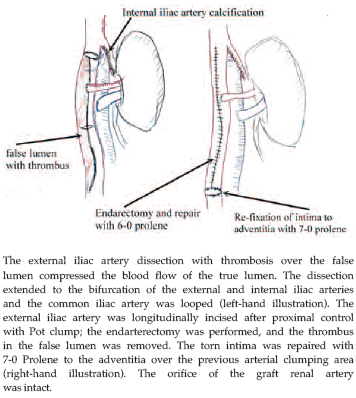
Figure 1. A Small Arteriotomy Was Performed Over the External Iliac Artery Below the Anastomosis of the Graft Renal Artery
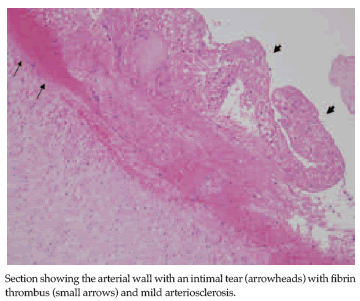
Figure 2. Pathology of the Intimal Tear of the External Iliac Artery
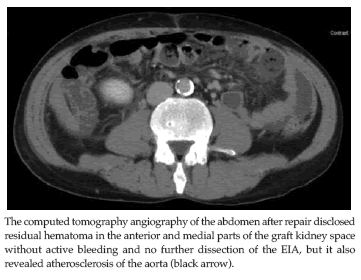
Figure 3. Computed Tomography Angiography of the Abdomen
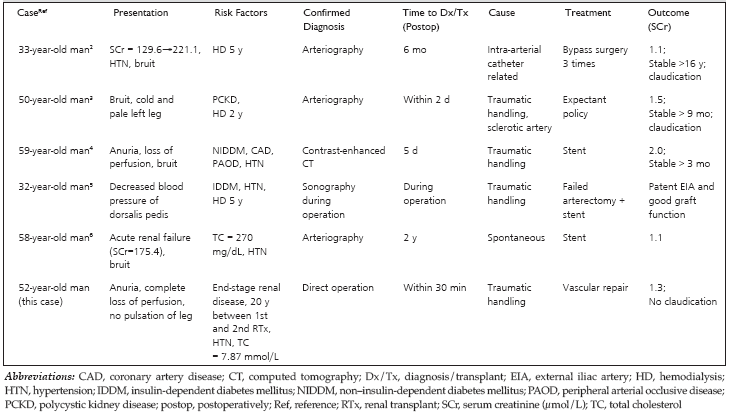
Table 1. Summary of 7 Cases of External Iliac Artery Dissection After Renal Transplant