Volume: 11 Issue: 3 June 2013
FULL TEXT
Objectives: The immunologic status of kidney allograft recipients affects transplant outcome. High levels of pretransplant serum soluble CD30 correlate with an increased risk of acute rejection. Studies show conflicting results. We evaluated the relation between pretransplant serum sCD30 levels with the risk of posttransplant acute kidney rejection in renal transplant recipients.
Materials and Methods: This prospective cohort study was performed between March 2010 and March 2011 on 77 kidney transplant recipients (53 men [68.8%], 24 women [31.2%]; mean age, 41 ± 14 y). Serum samples were collected 24 hours before transplant and analyzed for soluble CD30 levels by enzyme-linked immunosorbent assay. Patients were followed for 6 months after transplant. Acute biopsy-proven rejection episodes were recorded, serum creatinine levels were measured, and glomerular filtration rates were calculated at the first and sixth months after transplant. Preoperative serum soluble CD30 levels were compared in patients with and without rejection.
Results: The mean pretransplant serum soluble CD30 level was 92.1 ± 47.3 ng/mL. At 6 months’ follow-up, 10 patients experienced acute rejection. Mean pretransplant soluble CD30 levels were 128.5 ± 84 ng/mL versus 86.7 ± 37 ng/mL in patients with and without acute rejection episodes (P = .008). At 100 ng/mL, the sensitivity, specificity, and positive and negative predictive values of pretransplant serum soluble CD30 level to predict acute rejection were 70%, 73.6%, 29.1%, and 94.3%.
Conclusions: We showed a significant relation between pretransplant serum soluble CD30 levels and acute allograft rejection. High pretransplant levels of serum soluble CD30 can be a risk factor for kidney transplant rejection, and its high negative predictive value at various cutoffs make it useful to find candidates with a low risk of acute rejection after transplant.
Key words : Serum sCD30, Acute rejection, Kidney transplant
Introduction
One of the most important issues in kidney transplant is immunologic tolerance of the transplanted organ by the recipient. Immunologic status of patients can have a direct effect on transplant outcome, and presence of preformed anti-human leukocyte antigen (HLA) antibodies may lead to decreased graft survival.1 For proper management of allograft recipients, treatment options should be individualized in accordance with the immunologic sensitivity of the recipient.2-4
For many years, panel reactive antibodies (PRA) have been used as a principle marker to detect patients with an increased risk of transplant rejection.2 Increased incidence of acute rejection episodes correlates well with high PRA reactivity.2,5,6 Panel reactive antibodies have been the main method for detecting sensitization since 1960s. Recent changes in the technique of PRA has been introduced as calculated PRA, which helps to facilitate transplant of highly sensitized patients.7 However, unfavorable graft outcomes including acute and chronic rejection still happen, even with HLA-matched donors and recipients. As a result, researchers have paid attention to other complementary factors, such as donor-specific antibodies, to predict transplant rejection. Current debates regarding the potential value of such complementary factors in predicting graft outcome have convinced transplant specialists to search for other noninvasive immunologic markers such as serum soluble CD30 (sCD30), which can be used as a predictor of graft rejection.8,9
Serum soluble CD30 is a soluble form of CD30 that is released by hydrolytic cleavage. It was first identified as a cell surface antigen on Hodgkin and Reed-Sternberg cells.8,10 It is a 120-KDa transmembrane glycoprotein that belongs to the tumor necrosis factor-2/nerve growth factor super family.2,8,10,11 CD30, which is preferentially expressed on human CD4+ and CD8+ T cells, can also be found on B cells, natural killer cell, and some other nonlymphoid cells.9 It has been hypothesized that this molecule is involved in balancing Th1 and Th2 immune responses.11 Various studies have shown that elevation of the sCD30 serum concentration in patients receiving kidney transplants could result in an increased rate of acute rejection.2,8,9,12 This study sought to evaluate the relation between sCD30 and acute kidney rejection episodes in a prospective cohort of renal transplant recipients.
Materials and Methods
This prospective study was performed at Hasheminejad Kidney Center, between March 2010 and March 2011, on 77 kidney transplant recipients (53 men [68.8%], 24 women [31.2%]; mean age, 41 ± 14 y). The recipients not accessible for follow-up due to referral to other centers, were excluded. All protocols were approved by the ethics committee of the institution before the study began, and the protocols conformed with the ethical guidelines of the 1975 Helsinki Declaration. Written, informed consent was obtained from all patients.
Serum samples were collected 24 hours before transplant. Each sample was analyzed for its sCD30 concentration using a commercially available enzyme-linked immunoassay kit (e-Bioscience, Vienna, Austria) in accord with the manufacturer’s instructions. The concentration of sCD30 was determined by comparing the optical density of sample microwells with the optical density of microwells containing standard dilutions of sCD30. Each sample was measured for sCD30 two times (in 2 separate runs), and if the difference between measurements was less than 15%, then the mean value was used as its sCD30 concentration; otherwise, the testing was repeated. Values less than 100 ng/mL were assumed to be associated with low risk of acute rejection.2,11
Patients were followed for 6 months after the transplant. Serum creatinine was measured, and glomerular filtration rate (GFR) was calculated at 1 and 6 months after transplant according to Cockcroft-Gault equation (estimated GFR). Acute rejection episodes were recorded. The definition of acute rejection was a rise in serum creatinine ≥ 35 μmol/L (≥ 0.4 mg/dL) together with pathological criteria of cellular or humoral acute rejection according to the Banff 2007 Classification at kidney biopsy.13
Panel reactive antibodies were assessed with standard World Health Organization cytotoxicity method with 10 to 20 cells.14 Statistical analyses were performed with SPSS software (SPSS: An IBM Company, version 15.0, IBM Corporation, Armonk, NY, USA). P values less than .05 were considered significant. The chi-square and t tests were used to compare qualitative and quantitative values. The relation between quantitative variables was evaluated by correlation coefficient. Sensitivity, specificity, positive predictive value, and negative predictive value were calculated according to standard methods via the above-mentioned software.
Results
The mean duration of dialysis was 52 months, and the causes for end-stage renal disease were mainly diabetes mellitus, hypertension, and obstructive uropathy. Mean pretransplant sCD30 concentration was 92.16 ± 47.30 ng/mL. Table 1 summarizes the mean values of serum creatinine, GFR, and sCD30 concentrations at different checkpoints.
During the 6-month follow-up, 10 patients (13%) developed biopsy-proven acute rejection episodes. Mean pretransplant sCD30 concentration was significantly higher in patients with biopsy-proven acute rejection than in rejection-free patients (128.5 ± 84.1 vs 86.7 ± 37.1 ng/mL; P = .008) (Table 2).
The serum concentration of sCD30 was ≥ 100 ng/mL in 24 patients (31.1%), and ≤ 100 U/mL in 53 subjects (68.9%). Seven patients (29.1%) developed acute rejection in the first group (sCD30 ≥ 100 ng/mL) compared with 3 patients (5.6%) in the second group (sCD30 < 100 ng/mL) (odds ratio=6.5, [CI 95%: 1.5-27.7]; P = .005). Therefore, at a cutoff of 100 U/mL, the sensitivity, specificity, positive predictive value, and negative predictive value of pretransplant serum sCD30 levels to predict acute rejection were 70%, 74.6%, 29.1%, and 94.3% (Table 3).
Figure 1 shows the receiver operator characteristic curve of the test to determine the cutoff point with maximum diagnostic accuracy. According to the Figure, a cutoff of 107 had a sensitivity and specificity of 70% and 80.6%. This value reflect the optimal cutoff where the greatest possible diagnostic accuracy of pretransplant sCD30 test could be achieved at our study (area under curve: 67%, CI 95%: 0.45-0.89).
The correlation between sCD30 and serum creatinine and GFR at first and sixth months after transplant were assessed (Table 4), which showed that pretransplant sCD30 was not correlated with first-month posttransplant serum creatinine and GFR levels, while it significantly correlated with sixth-month posttransplant serum creatinine and GFR levels.
Sixty-five patients (84.4%) had negative PRA and 12 patients (15.6%) had positive PRA. Eight patients in the PRA-negative group and 2 patients in the PRA-positive group developed acute rejection episodes (12.3% vs 16.7%; P = .511). Therefore, there was no statistically significant relation between PRA positivity and acute rejection.
The majority of patients (approximately 70%) included in our study were PRA negative. None of the remaining 30% showed PRA reactivity of more than 20%. Four patients (33.3%) had a sCD30 ≥ 100 ng/mL in the PRA-positive group, and 22 patients (31.4%) had a sCD30 ≥ 100 ng/mL in the PRA-negative group. There was no significant relation between PRA positivity and high sCD30 level (P = .714). Mean values for sCD30 in patients with and without a previous history of kidney transplant were 105 ± 37 ng/mL and 90 ± 47 ng/mL, with no statistically significant difference (P = .357). Pretransplant sCD30 concentrations were not significantly different between men and women (95.8 ± 51.8 vs 83.3 ± 29.9; P = . 261). Serum soluble CD30 levels were significantly higher in patients younger than 40 years versus those older than 40 years (107 ± 59.1 vs 79.9 ± 28.1; P = .008).
Discussion
In this prospective observational cohort study, we tried to find a relation between pretransplant sCD30 level, as an indicator of immunologic system activity and transplant success, as represented by acute rejection episodes. During follow-up, biopsy-proven acute rejection was observed in 10 of 77 patients (13%). We could show that mean concentration of pretransplant serum sCD30 was significantly higher in patients with biopsy-proven acute rejection episodes than those without acute rejection.
Susal and colleagues previously demonstrated that pretransplant serum levels of sCD30 were related to the survival rate of the transplanted organ, and 5-year survival rates were higher in patients with pretransplant sCD30 < 100 ng/mL than it was in those with levels > 100 ng/mL (75% ± 1% vs 64% ± 2%; P = .0001).2 Graft survival was affected by pretransplant sCD30 not only in first transplant, but also in retransplants. Similar effects have been noted in patients receiving well HLA-matched kidneys as well as in recipients of poorly HLA-matched grafts. The authors concluded that subjects with high levels of pretransplant sCD30 required more antirejection treatment after the first posttransplant year, while having higher rates of graft loss during follow-up.2
In another study, Yang and associates showed a similar relation between pretransplant and posttransplant sCD30 and the incidence of acute graft rejection episodes.15 Their study suggested that the higher the pretransplant and 7-day posttransplant sCD30 levels were, the more was the probability of graft rejection. However, that study could not find any significant relation between sCD30 levels measured 1 month after transplant and graft rejection. Cervelli and associates found a strong relation between posttransplant levels of sCD30 and acute rejection risk.10 They noticed that if sCD30 concentration declined after immunosuppressive therapy, then the rate of acute rejection would reduce dramatically, while failure of sCD30 levels to decrease after immunosuppression would lead to a high probability of acute rejection, despite proper administration of immunosuppressive drugs. They suggested that patients with increased pretransplant and posttransplant levels of this marker should receive stronger immunosuppressive regimens to properly protect their grafts against immunologic host response.
On the other hand, some studies did not find any correlation between sCD30 level and occurrence of acute rejection. Azarpira and associates were unable to find any relation between pretransplant or 5-day posttransplant sCD30 levels, graft survival, or incidence of acute rejection.16 Interestingly, Nafar and associates did find a significant relation between posttransplant sCD30 levels and acute rejection; however, they failed to show such a relation with pretransplant sCD30 levels.17 Furthermore, in their study, there was no statistically significant difference between pretransplant and posttransplant sCD30 levels (58 ± 52 ng/mL vs 55 ± 49 ng/mL).
Currently, a cutoff of 100 U/mL is used to differentiate between high- and low-risk patients in many similar studies; however, there are some studies that find different cutoffs as the optimal discriminating value.2,8,9,18 For instance, Kamali and Nafar, in 2 separate studies, determined the optimal cutoff to be 20 U/mL and 41 U/mL.17,19
Examining the distribution of sCD30 values among patients with and without acute rejection, we noticed that pretransplant sCD30 level was a sensitive tool to predict acute rejection at low cutoff points, and at best scenario (ie, a cutoff of 60 ng/mL), the test had a sensitivity of 80%. On the other hand, it was a specific test, with a specificity greater than 90% at higher cutoff (ie, 140-150 ng/mL), and in this circumstance, it had a low sensitivity. Therefore sCD30 is a powerful test to differentiate patients who may remain rejection-free from those who may experience allograft rejection in future. The negative predictive value at different cutoff points was > 85%. In other words, the negative results of the test can be used to detect low probability of acute rejection. It seems that the test has more value to predict acute rejection-free patients from subjects who may experience acute rejection, at a cutoff point of 107 ng/mL. At this point, the test has a reasonable sensitivity of 70% and specificity of 80.6%.
Our study shows a direct relation between pretransplant sCD30 levels and posttransplant serum creatinine levels. Higher pretransplant levels of sCD30 could lead to higher posttransplant serum creatinine concentrations and lower GFR levels. We did not find any significant relation between PRA positivity and sCD30 values. This may be because of the relatively low level of PRA in our transplanted patients, that is, actually no recipient had a PRA higher than 20%.
Generally, there is a higher incidence of autoimmune diseases, such as collagen vascular disorders, among women, which can lead to presume that the activity of the immunologic system and consequently, the level of sCD30, may be higher in women. Several studies have shown results in favor of this presumption, such as Spiridon and associates, which showed a significantly higher level of sCD30 in women compared with men (P < .03).1 However, in our study, pretransplant sCD30 concentrations were not significantly different between men and women. This may be due to a true similarity of sCD30 levels in the 2 sex groups or may it may be due to a small sample size.
Serum soluble CD30 level was significantly higher in those aged < 40 years. This may be because of the higher activity of immunologic system in younger patients compared with older ones. Interestingly, Azarpira and associates noticed that candidates aged younger than 20 years had higher levels of sCD30, similar to our study.16 Also, in another study by Susal and colleagues, significantly higher levels of sCD30 were found in younger allograft recipients than in adults, and the authors concluded that this might be due to the higher incidence of acute rejection among young patients in their study.2
In conclusion, our study demonstrates a significant relation between pretransplant sCD30 levels and acute kidney allograft rejection. According to our findings, in clinical practice, this association can be used to predict acute rejection episodes in patients receiving a renal allograft with an acceptable sensitivity and specificity. High negative predictive value of this test, at various cutoff points, makes it especially useful to find candidates with a low risk of acute rejection after transplant. Our limitation was the unavailability of other factors (eg, HLA typing or titer of donor specific antibodies) that may have affected transplant outcome.
References:
- Spiridon C, Nikaein A, Lerman M, Hunt J, Dickerman R, Mack M. CD30, a
marker to detect the high-risk kidney transplant recipients. Clin
Transplant. 2008;22(6):765-769.
CrossRef - PubMed - Süsal C, Pelzl S, Döhler B, Opelz G. Identification of highly responsive
kidney transplant recipients using pretransplant soluble CD30. J Am Soc
Nephrol. 2002;13(6):1650-1656.
CrossRef - PubMed - Vela C, Cristol JP, Chong G, et al. Antilymphocyte globulins versus OKT3
as prophylactic treatment in highly sensitized renal transplant recipients.
Transpl Int. 1994;7(suppl 1):S259-S262.
CrossRef - PubMed - Opelz G. Efficacy of rejection prophylaxis with OKT3 in renal
transplantation. Collaborative Transplant Study. Transplantation.
1995;60(11):1220-1224.
CrossRef - PubMed - Shenton BK. The detection and relevance of pretransplant antibodies.
Transpl Immunol. 1994;2(2):135-137.
CrossRef - PubMed - Opelz G, Wujciak T. Cadaveric kidneys should be allocated according to
the HLA match. Transplant Proc. 1995;27(1):93-99.
PubMed - Leffell MS. The calculated panel reactive antibody policy: an
advancement improving organ allocation. Curr Opin Organ Transplant.
2011;16(4):404-409.
CrossRef - PubMed - Altermann W, Schlaf G, Rothhoff A, Seliger B. High variation of
individual soluble serum CD30 levels of pre-transplantation patients: sCD30
a feasible marker for prediction of kidney allograft rejection? Nephrol Dial
Transplant. 2007;22(10):2795-2799.
CrossRef - PubMed - Pelzl S, Opelz G, Wiesel M, et al. Soluble CD30 as a predictor of kidney
graft outcome. Transplantation. 2002;73(1):3-6.
CrossRef - PubMed - Cervelli C, Fontecchio G, Scimitarra M, et al. Evaluation of serum sCD30
in renal transplantation patients with and without acute rejection.
Transplant Proc. 2009;41(4):1159-1161.
CrossRef - PubMed - Platt RE, Wu KS, Poole K, Newstead CG, Clark B. Soluble CD30 as a
prognostic factor for outcome following renal transplantation. J Clin
Pathol. 2009;62(7):662-663.
CrossRef - PubMed - Cinti P, Pretagostini R, Arpino A, et al. Evaluation of pretransplant
immunologic status in kidney-transplant recipients by panel reactive
antibody and soluble CD30 determinations. Transplantation.
2005;79(9):1154-1156.
CrossRef - PubMed - Ordonez NG. Urinary tract. In: Rosai J, ed. Rosai and Ackerman’s
Surgical Pathology. 10th ed. Philadelphia, PA: Elsevier; 2011:1154-1158.
CrossRef - - Fuggle SV, Martin S. Tools for human leukocyte antigen antibody
detection and their application to transplanting sensitized patients.
Transplantation. 2008;86(3):384-390.
CrossRef - PubMed - Yang JL, Hao HJ, Qin B, et al. The relationship between acute rejection
and expression of sCD30 for the patients after kidney transplantation. [in
Chinese]. Zhonghua Yi Xue Za Zhi. 2005;85(10):651-653.
PubMed - Azarpira N, Aghdaie MH, Malekpour Z. Soluble CD30 in renal transplant
recipients: is it a good biomarker to predict rejection? Saudi J Kidney Dis
Transpl. 2010;21(1):31-36.
PubMed - Nafar M, Farrokhi F, Vaezi M, et al. Pre-transplant and post-transplant
soluble CD30 for prediction and diagnosis of acute kidney allograft
rejection. Int Urol Nephrol. 2009;41(3):687-693.
CrossRef - PubMed - Giannoli C, Bonnet MC, Perrat G, et al. High pretransplantation soluble
CD30 levels: impact in renal transplantation. Transplant Proc.
2007;39(8):2574-2575.
CrossRef - PubMed - Kamali K, Abbasi MA, Farokhi B, et al. Posttransplant soluble CD30 as a
predictor of acute renal allograft rejection. Exp Clin Transplant.
2009;7(4):237-240.
PubMed

Volume : 11
Issue : 3
Pages : 229 - 233
DOI : 10.6002/ect.2012.0113
From the Departments of 1Pathology, Hasheminejad Kidney Center,
and 2Medicine, Nephrology Section, Tehran University of Medical
Sciences, Tehran, Iran
Corresponding author: Shahrzad Ossareh, MD, Associate Professor of
Medicine, Head, Hemodialysis Ward, Hasheminejad Kidney Center, Tehran University
of Medical Sciences,Valinejad str Vanak sq Tehran 19697, Iran
Phone: +98 21 8864 4420
Fax: +98 21 8864 4441
E-mail: ossareh_s@yahoo.com
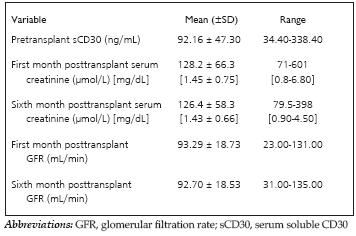
Table 1. Mean Values for Serum Creatinine, eGFR, and sCD30 Concentration in 77 Kidney Transplant Patients Before and After Transplant
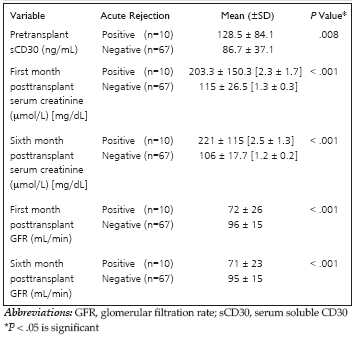
Table 2. Mean Values for sCD30, Serum Creatinine, and GFR in Patients With and Without Biopsy-Proven Acute Rejection Episodes
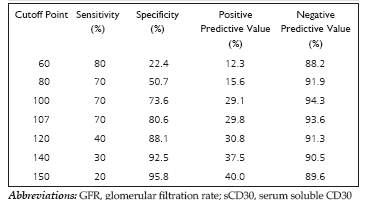
Table 3. Sensitivity, Specificity, Positive Predictive Value, and Negative Predictive Value of sCD30 for Diagnosis of Acute Rejection at Different Cutoff Points
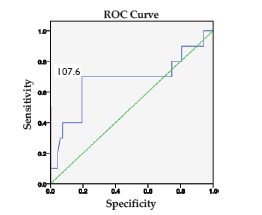
Figure 1. Receiver Operator Characteristic Curve (Area Under Curve: 67%, CI 95%: 0.45-0.89
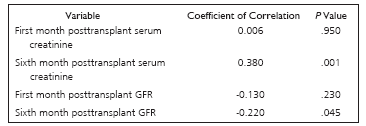
Table 4. Correlation of sCD30 With Posttransplant Serum Creatinine and GFR