Volume: 11 Issue: 2 April 2013
FULL TEXT
This case report shows that the 5-year outcome of a reused kidney from live-kidney allograft recipients because of intractable recurrence of thrombotic microangiopathy was excellent.
Key words : Retransplant, Reuse, Long-term, Outcome
Dear Editor,
Few cases of dealing with the reuse of kidney allografts have been reported. Tariel and associates in 2003,1 and Celik and associates in 2007,2 each reported 1 case of reusing a kidney transplant from a brain-dead kidney transplant recipient. In 2008, we reported the first case of reusing a kidney transplant from a live-kidney transplant recipient with intractable recurrent thrombotic microangiopathy.3 Recently, Gallon and associates reported the successful reuse of a kidney allograft from a live-kidney transplant recipient with severe focal segmental glomerulosclerosis.4 Almost no data regarding the long-term outcomes of reused kidney allografts exist. We describe the 5-year outcome of the recipient of a reused kidney allograft.
A 34-year-old kidney allograft recipient developed intractable severe recurrent idiopathic thrombotic microangiopathy in the allograft within a few weeks of the transplant. This was despite intensive plasma exchanges, and steroid and rituximab therapies. Eculizumab was not used; hence, at 8 weeks after transplant, we performed a nephrectomy. The kidney allograft was considered to be functioning well (serum creatinine 120 μmol/L, microalbuminuria 1.2 g/d). After having given written, informed consent, a 54-year-old non–HLA-sensitized hemodialysis woman, whose kidneys failed because of polycystic kidney disease, received a reused kidney allograft. The surgical procedure was difficult but uneventful. The second recipient received an induction therapy of antilymphocyte globulins, followed by tacrolimus, mycophenolate mofetil, and low-dose steroids. The posttransplant phase was uneventful, and the patient returned to work within 1 year after transplant. After retransplant, she did not present with delayed graft function. At 6 months after retransplant, her serum creatinine was 97 μmol/L, estimated Modification of Diet in Renal Disease glomerular filtration rate was 60 mL/min, and albuminuria was 0.5 g/d. At 5 years after the transplant, her serum creatinine was 79 μmol/L, estimated glomerular filtration rate was 70 mL/min, and albuminuria was < 0.5 g/d (Figure 1A).
A kidney-edge biopsy performed before retransplant showed 1 normal artery and 30 glomeruli: 1 contained microthrombi, 2 had widening of the subendothelial space, but the others were normal. A second biopsy performed 45 days after the retransplant showed mild glomerular lesions (Banff t0,i0,g1, ptc0,v0,aah1,cg0,ci1,ct1,cv0,mm0, and negative C4d staining). Another biopsy performed at 2 years after the transplant found almost normal renal parenchyma, 1 histologically normal arteriole, and 12 almost histologically normal glomeruli (Banff t0,i0,g0,v0,ptc0,aah0,cg0,ci0,ct1,cv1,mm0, and negative C4d staining) (Figure 1B).
Hence, the 5-year outcome of the reused kidney was excellent. This case report highlights that the reuse of kidney allografts from live-kidney allograft recipients in cases of intractable recurrence of the initial disease, such as thrombotic microangiopathy, is possible, safe, and is associated with a good long-term outcome.
References:
- Tariel E, Desgrandchamps F, Mongiat-Arthus P, et al. Use of a previously
transplanted kidney for second transplantation [in French]. Prog Urol.
2003;13(1):121-122.
PubMed - Celik A, Saglam F, Cavdar C, et al. Successful reuse of a transplanted
kidney: 3-year follow-up. Am J Kidney Dis. 2007;50(1):143-145.
CrossRef: http://dx.doi.org/10.1053/j.ajkd.2007.04.016
PubMed - Kamar N, Rischmann P, Guilbeau-Frugier C, et al. Successful
retransplantation of a kidney allograft affected by thrombotic
microangiopathy into a second transplant recipient. Am J Kidney Dis.
2008;52(3):591-594.
CrossRef: http://dx.doi.org/10.1053/j.ajkd.2008.03.037
PubMed - Gallon L, Leventhal J, Skaro A, Kanwar Y, Alvarado A. Resolution of
recurrent focal segmental glomerulosclerosis after retransplantation. N Engl
J Med. 2012;366(17):1648-1649.
CrossRef: http://dx.doi.org/10.1056/NEJMc1202500
PubMed

Volume : 11
Issue : 2
Pages : 203 - 204
DOI : 10.6002/ect.2012.0240
From the 1Department of Nephrology, Dialysis and Organ
Transplantation; the 2Department of Urology and Kidney
Transplantation; the 3Department of Pathology, CHU Rangueil; the
4Université Paul Sabatier; and the 5INSERM U1043, IFR–BMT, CHU
Purpan, Toulouse, France
Acknowledgements: Julie Bellière wrote the paper, Federico Sallusto
performed the kidney transplant; Céline Guilbeau-Frugier performed the
pathological analysis; Lionel Rostaing and Nassim Kamar reviewed the paper; and
Nassim Kamar performed the follow-up. The authors have no conflicts of interest
to disclose.
Corresponding author: Nassim Kamar MD, PhD, Department of Nephrology,
Dialysis and Organ Transplantation, CHU Rangueil, TSA 50032, 31059 Toulouse
Cedex 9, France
Phone: +33 5 61 32 23 35
Fax: +33 5 61 32 39 89
E-mail: kamar.n@chu-toulouse.fr
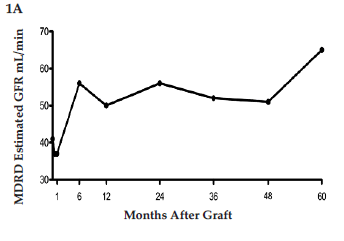
Figure 1A. Outcome of Estimated Glomerular Filtration Rate After Kidney-Allograft Retransplant
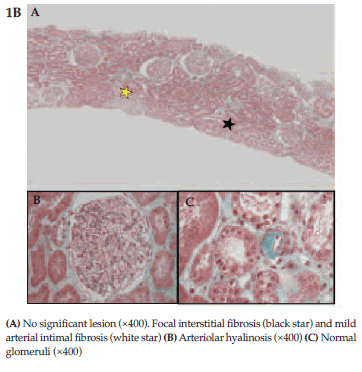
Figure 1B. Masson’s Trichrome Light Green