Volume: 11 Issue: 2 April 2013
FULL TEXT
Objectives: To determine the mycophenolic acid pharmacokinetic profile early after transplant in Iranian kidney graft recipients.
Materials and Methods: A cross-sectional study was performed during 6 months in 31 patients who recently had kidney transplant and received fixed doses of mycophenolate mofetil (2 g/d). The plasma levels of mycophenolic acid were determined by high performance liquid chromatography.
Results: The mean first mycophenolic acid peak level was 10 ± 5 mg/L. The mean mycophenolic acid area under the curve was 26 ± 19 mgh/L and apparent clearance was 57 ± 55 L/h. The mycophenolic acid area under the curve values of only 8 patients (26%) were within the therapeutic range (30-60 mgh/L). The first, second, and third mycophenolic acid peak levels correlated significantly with mycophenolic acid area under the curve (P < .05). Mycophenolic acid concentration at 10 hours had the highest correlation with mycophenolic acid area under the curve (r=0.962; P < .05). No statistically significant differences were evident in the mean mycophenolic acid area under the curve between men and women.
Conclusions: There was a high degree of variation between different patients in mycophenolic acid pharmacokinetics early after kidney transplant.
Key words : Allograft, Renal, Rejection, Immunosuppression, Mycophenolate mofetil
Introduction
Mycophenolate mofetil (MMF) was introduced in clinical practice in 1995.1 In 3 large clinical trials, MMF reduced acute rejection by 30% to 50% compared with azathioprine or placebo in the first 6 months after renal transplant.2-4 In contrast with azathioprine, MMF has a selective effect on the proliferation of B and T lymphocytes by inhibiting inosine monophosphate dehydrogenase.5 Therefore, azathioprine use has been discontinued in many regimens. In recent protocols, MMF is used as part of maintenance immunosuppressive therapy worldwide.6
After oral administration, MMF is rapidly and extensively absorbed and hydrolyzed by serum esterase to its active metabolite, mycophenolic acid (MPA).7 The pattern of plasma MPA alteration in healthy individuals demonstrates a first peak level (Cmax1) at approximately 1 hour after MMF administration. Mycophenolic acid is metabolized to pharmacologically inactive phenolic glucuronide metabolite by uridine diphosphate glucuronosyltransferase (UDP-GT) in the kidney and liver. A secondary plasma MPA peak level (Cmax2) is often observed 6 to 12 hours after oral administration, suggesting enterohepatic circulation via phenolic glucuronide metabolite conversion to MPA by the glucuronidase of gastrointestinal flora.8, 9
There is an association between the MPA concentration-time curve, quantified by the area under the curve (AUC), and risk of acute rejection in both adult and pediatric patients early after transplant.9, 10 Furthermore, early after transplant, high variations between patients in AUC has been documented.11, 12 Therefore, therapeutic drug monitoring of MMF is recommended early after transplant.13 The main purpose of this study was to determine the MPA pharmacokinetic profile early after transplant in Iranian kidney graft recipients.
Methods and Materials
Study protocol
This cross-sectional study was performed during 6 months at a kidney transplant
ward of an affiliated hospital. The study protocol was approved by the
Institutional Review Board and Ethics Committee of the hospital, and written
informed consent was obtained from each patient before blood sampling. Patients
of a consecutive series were included 9 to 10 days after kidney transplant. They
all had normal renal graft functioning (serum creatinine
< 123.76 µmol/L). All patients received MMF (2 g/d orally) as a part of the
immunosuppression protocol. Patients who were seropositive for cytomegalovirus
and/or received ganciclovir or polyclonal antibodies were excluded from the
study. Patients with liver enzymes > 3 times above the upper limit of normal
also were excluded. Demographic data (age, sex, and weight), time after
transplant, first serum creatinine level after transplant, and serum creatinine
at the time of blood sampling (9-10 days after kidney transplant) were recorded.
Blood sampling and drug assays
A 4.5 mL peripheral venous blood sample was withdrawn from the patients into a
tube containing ethylenediaminetetraacetic acid before the patients received MMF
(time, 0 min) and at 20, 40, 60, and 90 minutes and 2, 3, 4, 6, 8, 10, and 12
hours after receiving half of 2-gram daily dosage of oral MMF. Each blood sample
was centrifuged at 5000 rpm for 15 minutes and the plasma fraction was isolated
and stored at -70°C until analyzed.
Plasma concentration of MPA was analyzed by a validated high performance liquid chromatography method. A stock solution of MPA (concentration, 1 g/L) in methanol (high performance liquid chromatography grade) was prepared and further diluted with methanol to obtain a diluted solution (400 mg/L). This solution was used to prepare different concentrations of MPA standard solutions (range, 0.1 to 80 mg/L). Naproxen solution (concentration, 40 mg/L; volume, 50 µL) as internal standard and acetonitrile (500 µL) were added to MPA standard solutions (450 µL). The solutions were mixed for 1 minute and centrifuged at 10 000 rpm for 10 minutes. Clear supernatant (50 µL) was then injected 3 times into the high performance liquid chromatography column. Chromatographic analysis of MPA was achieved with a reversed phase column (length, 250 mm; inner diameter, 4.6 mm; particle size, 10 µm) (C-18 Hamilton PRP-1, Hamilton Company, Reno, NV, USA) connected to a suitable guard column (length, 25 mm; inner diameter, 2.3 mm, particle size, 12-20 µm) (Hamilton Company). The mobile phase consisted of acetonitrile and 0.02 M potassium dihydrogen phosphate buffer (volume:volume, 51:49; with 85% phosphoric acid added to adjust the pH to 3) and was pumped at a flow rate of 1 mL/minute. Detection was made by an ultraviolet detector (wavelength, 215 nm). Mycophenolic acid and internal standard peaks were extrapolated (retention time: MPA peak, 7.30 min; internal standard peak, 11.35 min). The calibration curve was obtained (range, 0.1-80 mg/L). The equation of the best fit regression line was y = 0.0657x + 0.0101 (r2=0.9986). The mean recovery of MPA from serum was 94.8%. The within- and between-day coefficient of variations for MPA concentration ranged from 0.6% to 8.2% and 1.9% to 6.1%. The MPA concentration was determined by the ratio of the MPA peak area to the area of the internal standard. The peak concentration (Cmax) and time of peak concentration (tmax) were determined directly from the plasma concentration-time curve. The MPA AUC was calculated using the linear trapezoidal rule. The apparent MPA clearance (CL/f) was calculated by dividing the MMF dosage by the AUC.
Statistical analyses
Categorical data are expressed as a percentage. Continuous variables are
reported as means
± standard deviation (SD). The relation between age, weight, and MMF daily
dosage (mg/kg/d) and MPA AUC and CL/f were examined with Pearson product moment
correlation test. The Pearson product moment correlation test also was used to
assess the correlation between MPA AUC and the first, second, and third MPA peak
levels (Cmax1, Cmax2, Cmax3) and each determined MPA concentration. Independent
t test was used to compare mean MPA AUC between men and women, patients younger
and older than 40 years, and patients < 60 kg and > 60 kg. Statistical analyses
were performed with statistical software (Statistical Package for the Social
Sciences, version 11.5, SPSS Inc., Armonk, NY). Statistical significance was
defined by P < .05.
Results
During the 6 months of the study, 31 kidney transplant recipients (23 men and 8 women) were included (Table 1). All kidney transplants were the first transplants received by the patients, and all transplanted kidneys were from living donors. The immunosuppression regimen consisted of MMF (Table 1) in combination with an oral glucocorticoid (prednisolone 2 mg/kg/d the day before surgery, 1 mg/kg/d on the first day after surgery and then 5-10 mg/d over 4 weeks) and a calcineurin inhibitor (cyclosporine at an initial dosage of 5 mg/kg/d and then was adjusted to achieve target 2 h post-dosing [C2] levels between 800-1000 µg/L during the first 6 months after surgery).
The mean MPA plasma concentration-time profiles and the pharmacokinetics parameters of MPA of the 31 patients showed that the mean Cmax1 was detected at a time range of 18 to 120 minutes (range of tmax1) (Table 2 and Figure 1). The second peak had mean Cmax2 at 1.5 to 10 hours (range of tmax2) after MMF administration in 26 patients (84%) (Table 2). The pattern of MPA concentration alteration showed a third peak (Cmax3) in 8 patients (26%) at 6 to 10 hours (range of tmax3) after MMF administration (Table 2). According to calculation by the linear trapezoidal rule, the mean MPA AUC had a wide range, with much variation between patients (Table 2). The MPA AUC values were below 30 to 60 mgh/L in 22 patients (71%) and were within 30 to 60 mgh/L in 8 patients (26%). A wide range of MPA CL/f also was observed (Table 2).
The Pearson correlation analysis showed that there was no statistically significant relation between MPA AUC and age (r=-0.087; not significant), weight (r=0.095; not significant), or MMF daily dosage (r=-0.081; not significant). Age, weight, or MMF daily dose also did not correlate with CL/f. However, there was a statistically significant correlation between MPA AUC and Cmax1 (r=0.559; P = .001), Cmax2 (r=0.451; P < .03), and Cmax3 (r=0.836; P = .01). Furthermore, MPA AUC correlated significantly with all determined MPA concentrations (P < .05). The MPA concentrations at 20 minutes had the lowest (r=0.419), and at 10 hours the highest (r=0.962), correlations with MPA AUC. Independent t test showed that the mean MPA AUC and CL/f values were similar in women and men (MPA AUC: women, 31 ± 17 mgh/L; men, 25 ± 19 mgh/L; not significant) (MPA CL/f: women, 42 ± 21 L/h; men, 62 ± 52 L/h; not significant). There were no statistically significant differences in MPA AUC and CL/f values between patients younger or older than 40 years or patients with body weight < 60 kg or > 60 kg.
Discussion
Therapeutic drug monitoring of MMF early after transplant may demonstrate adequate therapeutic immunosuppressive effects and may prevent acute rejection episodes or adverse reactions.14, 15 The pattern of the concentration-time profile of MMF in the present study was consistent with other studies.8, 16 The Cmax1 was evident within 18 to 120 minutes after dosing. Rapid absorption was followed by rapid distribution and metabolism. The Cmax2 observed in 26 patients (84%) between 1.5 and 10 hours after dosing may be attributed to the enterohepatic recirculation.17 The tmax2 reported from 2 similar surveys in Iran (range, 6-10 h)18, 19 were within the range observed in the present study. Congruent with the present study, a previous study showed a statistically significant correlation between MPA AUC and Cmax2 in kidney transplant patients early after transplant (r=0.58; P < .05).20
Large variation in MPA plasma level between patients was noted in the present study. Kidney transplant recipients receiving the same doses of MMF may have > 10-fold variation in MPA AUC during the initial weeks after transplant.21 Pharmacogenetics (UDP-GT gene polymorphism), coadministered immunosuppressants (calcineurin inhibitors), comorbidities (diabetes mellitus and liver disease), and graft function after transplant may contribute to AUC variation between individuals.
The results of several studies in kidney transplant recipients have suggested that MPA AUC in the approximate range of 30 to 60 mgh/L could be a target for decreasing the risk of acute rejection during the early and maintenance periods after transplant.14, 17 The AUC of only 8 patients (26%) in the present study were within the therapeutic range. In contrast with the current findings, our previous study on 21 kidney transplant recipients at 3 months after transplant showed that the MPA AUC of 17 patients (81%) ranged from 30 to 60 mgh/L (unpublished data). In another study, 12 of 19 kidney transplant recipients (64%) early after transplant (time after transplant, 17 ± 6 d) had MPA AUC values within the therapeutic range.18 These differences could be explained partially by the varied times after transplant. The mean MPA AUC in the present study was much lower than that reported previously (42 mgh/L) in a study of MPA pharmacokinetic parameters after a 2 g/d MMF dose in 46 kidney transplant recipients, from 6 to 9 months after transplant.15 Several studies in kidney transplant recipients have demonstrated that the mean total MPA AUC is 30% to 50% lower in the first few weeks after transplant than at 2 to 6 months after transplant.17, 22 Considering renal function early after transplant (normal versus impaired), not more than 22% increase in the AUC of total MPA is detected.23 The lower MPA AUC in the early than later periods after transplant could be, in part, a result of a pharmacokinetics drug interaction between MMF and cyclosporine. High doses of cyclosporine inhibit the enterohepatic recirculation of MPA.24, 25 In addition, protein binding changes with time after transplant, with the free fraction decreasing and total MPA concentrations increasing over time. This may decrease the MPA clearance and increase the MPA AUC.26 Other plausible factors contributing to this phenomenon are poor gastrointestinal MMF absorption in the preoperative phase27 and increased MPA metabolism by high glucocorticoid doses that may induce UDP-GT expression.28
In the present study, there was no significant difference of MPA AUC or CL/f between men and women. A previous study showed similar mean MPA AUC values in women and men (women, 39 ± 18 mgh/L; men, 31 ± 18 mgh/L; not significant) early after renal transplant.18 In another study, higher MPA levels were reported in women than men.25 A higher MPA concentration may be expected in women because MMF and estrogens have a common metabolic pathway and similar binding site to UDP-GT.8, 25
Other characteristics of the present cohort, including age, weight, and MMF daily dose, did not affect MPA pharmacokinetic parameters (AUC and CL/f). The present results are consistent with a previous study that reported that MPA and MPA glucuronide AUC were not predicted by patient weight, age, or serum alkaline phosphatase during the first month after kidney transplant.12 Another study showed that body weight was a poor predictor of MPA AUC in renal transplant recipients.29 In contrast with these results, a statistically significant correlation previously was shown between total body weight and MPA AUC (r=-0.627; P = .01) and CL/f (r=0.555; P = .004); the MMF daily dosage (mg/kg/d) correlated significantly with MPA AUC (r=0.628; P = .01) and CL/f (r=-0.604; P = .02).18 Another study suggested that MMF dosage in relation to body weight independently may affect MPA pharmacokinetics.25 There is controversy about the relation between body weight and MPA pharmacokinetics parameters, and further studies in large cohorts are warranted to clarify the precise role of body weight in the pharmacokinetics of MPA.
Despite the fact that MPA AUC from 0 to 12 hours is the best predictor of acute graft rejection, the determination of MPA AUC for graft recipients is not feasible in clinical practice because it is costly, laborious, and requires multiple blood samples. Therefore, an abbreviated MPA AUC value based on a single or limited sampling of blood could be an appropriate, convenient, and practical alternative. The MPA concentration at 10 hours after MMF administration had the highest correlation with MPA AUC in the present study. A previous study showed a regression model with MPA concentrations at 10 hours (C10), with an equation (AUC = [14.46 × C10] + 15.547) that best predicted MPA AUC from 0 to 12 hours.20 Unlike these results, another study demonstrated that MPA concentration at 2 hours had the highest correlation with MPA AUC (r=0.622) in Thai kidney transplant recipients.30 Various factors could explain these differences, including race, immunosuppression protocol, time from transplant, or MMF dosage. All patients in the present study received cyclosporine as a calcineurin inhibitor, but the Thai subjects were on cyclosporine or tacrolimus.30 Furthermore, the present study was performed early (9 or 10 days) after kidney transplant, but the minimum time from transplant in the Thai study was 4 months.30
Adverse gastrointestinal effects are common in patients taking MMF, but changing from MMF to enteric-coated mycophenolate sodium in patients with severe gastrointestinal adverse effects maybe an alternative to lessen these symptoms. In this way, graft rejection caused by MMF dose reduction could be prevented. Using enteric-coated mycophenolate sodium may have the same therapeutic effect as MMF, with better tolerance and potential to use higher doses.31 With enteric-coated mycophenolate sodium, similar to MMF, limited sampling times may be related to AUC, and multiple blood sampling may not be required. 32
The present study has several limitations. The survey was performed in a single center, and the results may be susceptible to a center effect and may not be reproducible in other settings. All blood sampling was performed only 9 or 10 days after kidney transplant, and evaluating the possible effect of time after transplant on MPA pharmacokinetic parameters was not feasible. All patients had normal graft function, and the effect of renal graft dysfunction on MPA pharmacokinetics in our cohort is unknown. Furthermore, common MMF adverse reactions such as diarrhea, leukopenia, and anemia were not recorded, and we did not investigate the relation between MMF adverse reactions and pharmacokinetic parameters.
In summary, the present data showed much variation in MPA pharmacokinetics between different patients early after kidney transplant. The MPA concentration at 10 hours had the highest correlation with MPA AUC, and the MPA AUC values of most patients were below the therapeutic range. Therefore, therapeutic drug monitoring of MMF early after kidney transplant may be necessary to individualize the dosing and minimize the risk of acute graft rejection.
References:
- Abbott KC, Hypolite IO, Viola R, et al. Hospitalizations for cytomegalovirus
disease after renal transplantation in the United States. Ann Epidemiol.
2002;12(6):402-409.
CrossRef - PubMed - Sollinger HW. Mycophenolate mofetil for the prevention of acute rejection in
primary cadaveric renal allograft recipients. Transplantation.
1995;60(3):225-232.
CrossRef - PubMed - The Tricontinental Mycophenolate Mofetil Renal Transplantation Study Group. A
blinded, randomized clinical trial of mycophenolate mofetil for the prevention
of acute rejection in cadaveric renal transplantation. Transplantation.
1996;61(7):1029-1037.
CrossRef - PubMed - European Mycophenolate Mofetil Cooperative Study Group. Placebo-controlled
study of mycophenolate mofetil combined with cyclosporin and corticosteroids for
prevention of acute rejection. Lancet. 1995;345(8961):1321-1325.
CrossRef - PubMed - Allison AC, Eugui EM. Mechanisms of action of mycophenolate mofetil in
preventing acute and chronic allograft rejection. Transplantation. 2005;80(2
suppl):S181-S190.
CrossRef - PubMed - Remuzzi G, Lesti M, Gotti E, et al. Mycophenolate mofetil versus azathioprine
for prevention of acute rejection in renal transplantation (MYSS): a randomised
trial. Lancet. 2004;364(9433):503-512.
CrossRef - PubMed - Morii M, Ueno K, Ogawa A, et al. Impairment of mycophenolate mofetil
absorption by iron ion. Clin Pharmacol Ther. 2000;68(6):613-616.
CrossRef - PubMed - Cho EK, Han DJ, Kim SC, Burckart GJ, Venkataramanan R, Oh JM. Pharmacokinetic
study of mycophenolic acid in Korean kidney transplant patients. J Clin
Pharmacol. 2004;44(7):743-750.
CrossRef - PubMed - Payen S, Zhang D, Maisin A, et al. Population pharmacokinetics of
mycophenolic acid in kidney transplant pediatric and adolescent patients. Ther
Drug Monit. 2005;27(3):378-388.
CrossRef - PubMed - Weber LT, Shipkova M, Armstrong VW, et al. The
pharmacokinetic-pharmacodynamic relationship for total and free mycophenolic
Acid in pediatric renal transplant recipients: a report of the german study
group on mycophenolate mofetil therapy. J Am Soc Nephrol. 2002;13(3):759-768.
PubMed - Cox VC, Ensom MH. Mycophenolate mofetil for solid organ transplantation:
does the evidence support the need for clinical pharmacokinetic monitoring? Ther
Drug Monit. 2003;25(2):137-157.
CrossRef - PubMed - Johnson AG, Rigby RJ, Taylor PJ, et al. The kinetics of mycophenolic acid
and its glucuronide metabolite in adult kidney transplant recipients. Clin
Pharmacol Ther. 1999;66(5):492-500.
CrossRef - PubMed - van Gelder T, Shaw LM. The rationale for and limitations of therapeutic drug
monitoring for mycophenolate mofetil in transplantation. Transplantation.
2005;80(2 suppl):S244-S253.
CrossRef - PubMed - Shaw LM, Holt DW, Oellerich M, Meiser B, van Gelder T. Current issues in
therapeutic drug monitoring of mycophenolic acid: report of a roundtable
discussion. Ther Drug Monit. 2001;23(4):305-315.
CrossRef - PubMed - Cattaneo D, Gaspari F, Ferrari S, et al. Pharmacokinetics help optimizing
mycophenolate mofetil dosing in kidney transplant patients. Clin Transplant.
2001;15(6):402-409.
CrossRef - PubMed - Brunet M, Martorell J, Oppenheimer F, et al. Pharmacokinetics and
pharmacodynamics of mycophenolic acid in stable renal transplant recipients
treated with low doses of mycophenolate mofetil. Transpl Int. 2000;13 (suppl
1):S301-S305.
CrossRef - PubMed - Pawinski T, Durlik M, Szlaska I, Urbanowicz A, Majchrnak J, Gralak B.
Comparison of mycophenolic acid pharmacokinetic parameters in kidney transplant
patients within the first 3 months post-transplant. J Clin Pharm Ther.
2006;31(1):27-34.
CrossRef - PubMed - Nazemian F, Mohammadpur AH, Abtahi B, Naghibi M. Pharmacokinetics of
mycophenolic acid during the early period after renal transplant. Exp Clin
Transplant. 2007;5(2):658-663.
PubMed - Mohammadpur AH, Nazemian F, Abtahi B, Naghibi M. Influence of renal graft
function on mycophenolic acid pharmacokinetics during the early period after
kidney transplant. Exp Clin Transplant. 2008;6(4):276-281.
PubMed - Mohammadpour AH, Nazemian F, Abtahi B, et al. Estimation of abbreviated
mycophenolic acid area under the concentration-time curve during early
posttransplant period by limited sampling strategy. Transplant Proc.
2008;40(10):3668-3672.
CrossRef - PubMed - Shaw LM, Korecka M, Aradhye S, et al. Mycophenolic acid area under the curve
values in African American and Caucasian renal transplant patients are
comparable. J Clin Pharmacol. 2000;40(6):624-633.
CrossRef - PubMed - Shaw LM, Nawrocki A, Korecka M, Solari S, Kang J. Using established
immunosuppressant therapy effectively: lessons from the measurement of
mycophenolic acid plasma concentrations. Ther Drug Monit. 2004;26(4):347-351.
CrossRef - PubMed - Meier-Kriesche HU, Shaw LM, Korecka M, Kaplan B. Pharmacokinetics of
mycophenolic acid in renal insufficiency. Ther Drug Monit. 2000;22(1):27-30.
CrossRef - PubMed - Gregoor PJ, de Sévaux RG, Hené RJ, et al. Effect of cyclosporine on
mycophenolic acid trough levels in kidney transplant recipients.
Transplantation. 1999;68(10):1603-1606.
CrossRef - PubMed - Kuriata-Kordek M, Boratynska M, Falkiewicz K, et al. The influence of
calcineurin inhibitors on mycophenolic acid pharmacokinetics. Transplant Proc.
2003;35(6):2369-2371.
CrossRef - PubMed - Taber DJ, Dupuis RE. Kidney and liver transplantation. In: Koda-Kimble MA, Young LY, Kradjan WA, et al, eds. Applied Therapeutics The Clinical Use of Drugs. 10th ed. Philadelphia, PA: Lippincott Williams & Wilkins; 2012:853.
- Wollenberg K, Krumme B, Schollmeyer P, Kirste G. Pharmacokinetics of
mycophenolic acid after renal transplantation. Transplant Proc.
1998;30(5):2237-2239.
CrossRef - PubMed - Cattaneo D, Perico N, Gaspari F, Gotti E, Remuzzi G. Glucocorticoids
interfere with mycophenolate mofetil bioavailability in kidney transplantation.
Kidney Int. 2002;62(3):1060-1067.
CrossRef - PubMed - Bullingham RE, Nicholls A, Hale M. Pharmacokinetics of mycophenolate mofetil
(RS61443): a short review. Transplant Proc. 1996;28(2):925-929.
PubMed - Jirasiritham S, Sumethkul V, Mavichak V, Na-Bangchang K. The
pharmacokinetics of mycophenolate mofetil in Thai kidney transplant recipients.
Transplant Proc. 2004;36(7):2076-2078.
CrossRef - PubMed - Sabbatini M, Capone D, Gallo R, et al. EC-MPS permits lower gastrointestinal
symptom burden despite higher MPA exposure in patients with severe MMF-related
gastrointestinal side-effects. Fundam Clin Pharmacol. 2009;23(5):617-624.
CrossRef - PubMed - Capone D, Tarantino G, Kadilli I, et al. Evalutation of mycophenolic acid
systemic exposure by limited sampling strategy in kidney transplant recipients
receiving enteric-coated mycophenolate sodium (EC-MPS) and cyclosporine. Nephrol
Dial Transplant. 2011;26(9):3019-3025.
CrossRef - PubMed

Volume : 11
Issue : 2
Pages : 112 - 117
DOI : 10.6002/ect.2012.0094
From the 1Research Center for Rational Use of Drugs; the
2Department of
Pharmaceutics, Faculty of Pharmacy; the 3Nephrology Research Center, Imam
Khomeini Hospital; and the 4Department of Clinical Pharmacy, Faculty of
Pharmacy, Tehran University of Medical Sciences, Tehran, Iran
Corresponding author: Kheirollah Gholami, Research Center for Rational Use of
Drugs, Tehran University of Medical Sciences, Tehran, Iran
Phone: +98 21 66959058
Fax: +98 21 66954709
E-mail:
khgholami@sina.tums.ac.ir
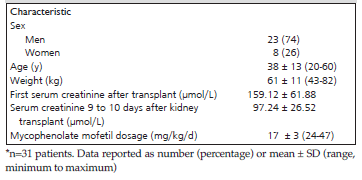
Table 1. Demographic Characteristics of the Study Patients With Kidney Transplant*
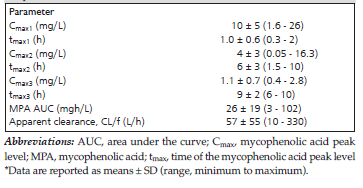
Table 2. Pharmacokinetics Parameters of Mycophenolic Acid in the Study Population*
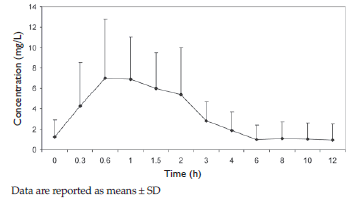
Figure 1. Mycophenolic Acid Concentration Against Time for the Study Population (n=31)