Volume: 10 Issue: 6 December 2012
FULL TEXT
Materials and Methods: During a 1-year period, all patients who underwent renal transplant at our hospital were recruited into a prospective study. Doppler ultrasound was performed on all patients 6 days and 3 months after the transplant and the resistive index and the pulsatility index were calculated for each patient. Then, the association between these indices and 3-month outcomes of patients were investigated.
Results: Thirty-eight patients including 21 men (mean age, 36.6 ± 13.1 y) were evaluated. There was a positive correlation between the resistive index and the pulsatility index at 6 days after transplant and the serum creatinine measured at the same day (P < .001 and r=0.570 for resistive index; P < .001 and r=0.547 for pulsatility index). There was also a positive correlation between the pulsatility index and the resistive index at 6 days after transplant and 3-month serum creatinine level (P = .009 and r=0.420 for resistive index; P = .009 and r=0.417 for pulsatility index). There were negative correlations between the resistive index and the pulsatility index on the sixth day after surgery and creatinine clearance measured at 6 days and 3 months after transplant.
Conclusions: This study reveals a strong-to-medium correlation between the resistive index and the pulsatility index, serum creatinine level, measured 6 days after transplant.
Key words : Creatinine, Doppler ultrasound, Kidney, Transplantation
Introduction
Advantages in renal transplant compared with dialysis include a lower cost, higher long-term survival, and improved quality of life for patients with end-stage renal disease make it the treatment of choice for these patients.1 However, renal transplant half-life is still poor in spite of significant advances in immunosuppression therapy that have resulted in improved short-term (1 y) renal allograft survival.2, 3 Although allograft rejection during the first year after transplant infrequently causes immediate loss of the graft, it can cause constant allograft dysfunction in a considerable percentage of cases.2 Moreover, it has been shown that acute rejection and delayed graft dysfunction adversely affect long-term survival of the graft after renal transplant.4-6 Early diagnosis of acute allograft rejection is important for long-term renal allograft survival.2
Histologic examination of the percutaneous needle transplant biopsy is still the criterion standard for diagnosing acute rejection; however, it is an invasive procedure and has some limitations.6 Thus, a noninvasive technique to detect acute rejection in the renal allograft has been sought.7
Duplex Doppler ultrasonography is suggested as a noninvasive way of assessing the hemodynamics of renal blood flow in renal and intrarenal arteries in patients with various renal diseases and patients undergoing renal transplant.8, 9 However, there are conflicting data regarding the reliability of some indices, such as the resistive and the pulsatility indices in renal transplant recipients by this technique.9-13 The present study was designed and conducted to evaluate the association between the value of these indices during the first week after transplant and 3-month outcomes in renal transplant recipients.
Materials and Methods
After approval of the ethical committee of human research of the Ahvaz Jundishapur University of Medical Sciences, this study was carried out at the Golestan Hospital, Iran, between October 2009 and October 2010. All patients with end-stage renal disease who underwent a living-donor renal transplant during this time were recruited in this prospective study after informed consent was obtained. All protocols conformed with the ethical guidelines of the 1975 Helsinki Declaration. Patients who had a serum creatinine (Cr) level > 265.2 µmol/L (3 mg/dL) during the 6 days after transplant (because these patients were considered as having delayed graft function that could interfere with the follow-up after 3 month), those with hydronephrosis of grade 2 or higher, renal artery stenosis of 50% and more, compressing mass (eg, hematoma or seroma around the grafted kidney), severe hypotension (systolic blood pressure of < 70 mm Hg), acute pyelonephritis, and a diagnosis of acute tubular necrosis after transplant were excluded. Those patients who did not reach to an acceptable creatinine level were not suitable cases to follow-up, and we preferred to have a more homogenous population of renal function and so, patients with Cr > 3 µmol/L were excluded. For each patient, in addition to the demographics, age of the donor and the recipient, systolic and diastolic blood pressures, heart rate of recipient before and after transplant, serum level of cyclosporine, history of cigarette smoking, and duration of dialysis before transplant were recorded.
Six days after transplant, Doppler ultrasound was performed on all patients by an ultra-sonographer who was blind to the Cr level of the patients. The ultrasonographer used a convex probe of MHz (ProSound 3500Plus, Aloka, Japan) that was repeated 3 months after transplant under the same conditions. Resistive index (RI) was calculated using following equation: RI= peak systolic velocity (PSV) - end-diastolic velocity (EDV)/PSV. Pulsatility index (PI) also was calculated using following ratio; PI = (PSV-EDV)/mean velocity.
Serum Cr level was measured at 6 days and 3 months after renal transplant and clearance of Cr was estimated using the Cockcroft-Gault equation as below:14
Clearance of Cr = {[140-age (y)] × weight (kg)/[72 × plasma Cr (µmol/L) × 88.4]} × (0.85 if female).
Statistical analyses
Statistical analyses were performed with SPSS software (SPSS: An IBM Company,
version 17.0, IBM Corporation, Armonk, New York, USA). Continuous data are
expressed as means ± standard deviation and were compared using paired samples t
test and Wilcoxon signed rank test (for variables without normal distribution).
Pearson product moment correlation analysis also was performed to evaluate the
correlation between RI and PI with other variables. We considered r ≥ 0.50
as strong and
0.30 ≤ r < 0.50 as medium correlations. Finally, linear regression
analysis was done to find some models to predict the relation between serum Cr
and clearance of Cr and RI and PI measured at 6 days after transplant.
Results
During the study, 43 patients underwent renal transplant. Five cases were excluded owing to renal artery stenosis of 70% (n=1), death (n=1), segmental artery stenosis (n=1), and acute tubular necrosis (n=2). Four out of the remaining 38 patients, did not present for a 3-month sonographic evaluation and these patients were only included in the analysis of PI and RI measured 6 days after transplant.
Thirty-eight patients (21 men; mean age, 36.6 ± 13.1 y) were included in the final analysis. At 6 days after transplant, systolic blood pressure in recipients was significantly higher compared to pretransplant systolic blood pressure (153.4 ± 12.2 vs 142.6 ± 11.9 mm Hg; P < .001). However, there was no significant difference between the transplant (89.1 ± 10.5) and posttransplant (92.07 ± 10.8) diastolic blood pressure of recipients (P = .12). Mean SCr level was 112.26 ± 47.73 µmol/L and 99.89 ± 32.70 µmol/L at 6 days and 3 months after transplant (P = .17). Mean Cr clearance was 77.8 ± 22.4 at 6 days after transplant while it increased to 82.08 ± 21.9 three months after renal transplant (P = .36). There was a medium negative correlation between serum cyclosporine level and serum Cr level, while there was a positive medium correlation between serum cyclosporine level and Cr clearance. In this study, we did not find an association between the recipient and donor age, the duration of dialysis before transplant, history of cigarette smoking, heart rate, and pretransplant blood pressure with RI and PI (P > .05).
Mean PSV was 34.2 ± 10 and 34.3 ± 7.9 at 6 days and 3 months after transplant which was not statistically significant (P = .96). Similarly, there was no significant difference between mean EDV values at 6 days and 3 months after renal transplant (10.9 ± 3.6 vs 11.4 ± 1.3; P = .40). Mean RI at 6 days and 3 months after the operation was 0.68 ± 0.08 and 0.66 ± 0.08 (P = .26). However, there was significant difference between mean PI values at 6 days and 3 months after renal transplant (1.37 ± 0.31 vs 1.21 ± 0.29; P = .02).
There were strong positive correlations between calculated RI at 6 days and 3 months after transplant (P < .001 and correlation coefficient=0.890). Similarly, there were strong positive correlations between calculated PI at 6 days and 3 months after transplant (P < .001 and correlation coefficient=0.950). There were medium positive correlations between RI and PI at 3 months after renal transplant with both posttransplant systolic and diastolic blood pressures. Table 1 demonstrates the correlation between PSV, EDV, RI, and PI, with serum Cr and Cr clearance. As the Table shows, there is a strong positive correlation between both RI and PI at 6 days after transplant and serum Cr measured at the same day. Moreover, there was a medium positive correlation between PI and RI measured on the sixth posttransplant day and 3-month serum Cr level. There were medium negative correlations between sixth day RI and PI and Cr clearance measured at 6 days and 3 months after transplant.
Using linear regression below yielded models for predicting posttransplant levels of serum Cr and Cr clearance:
Third month serum Cr=-0.114 + 1.84 × RI6
Sixth day serum Cr=-0.652 + 2.74 × RI6
Third month Cr clearance=145.1 - 90.9 3 × RI6
Sixth day Cr clearance=163.5 - 123.5 × RI6
Third month serum Cr=0.48 + 0.5 × PI6
Sixth day serum Cr=0.26 + 0.73 × PI6
Third month Cr clearance=115.07 - 24.5 × PI6
Sixth day Cr clearance=124 - 34.7 × PI6
Where RI6 and PI6 are RI and PI measured 6 days after transplant. Figure 1 demonstrates the correlation between RI and PI of 6 days after renal transplant and latest SCr and Cr clearance.
Discussion
Our findings showed a strong positive correlation between RI and PI 6 days after transplant and serum Cr measured on the same day. Additionally, our results revealed a medium positive correlation between PI and RI calculated at the sixth posttransplant day with a 3-month serum Cr level. Similarly, we found medium negative correlations between the sixth day RI and PI and the CR clearance measured at 6 days and 3 months after transplant. Supporting our results, Ardalan and associates suggested statistically significant correlations between RI or PI with serum Cr level during the first month after renal transplant.15 Chudek and colleagues also found significant negative correlations between donor glomerular filtration rate and PI and RI.16
Renal Doppler ultrasound is the imaging modality of choice for following up of renal transplant recipients. It can diagnose initial graft dysfunction as well as postoperative complications.17 In addition, Doppler ultrasound can be used to measure some indices. Resistive index is one that is an indirect indicator for degree of resistance of the intrarenal vessels. In other words, it shows the “vascular compliance” of the recipient.17 However, RI has some limitations such as wide normal range that makes its values limited.18 Additionally, many conditions such as acute rejection, acute tubular necrosis, venous thrombosis, hydronephrosis, and pyelonephritis can result in elevation of RI immediately after renal transplant,17, 19 whereas RI changes are not specific for any of these clinical entities.20 Regardless of these limitations, elevation of RI after renal transplant is an indicator of graft dysfunction that may adversely affect long-term graft survival.21
There are conflicting results regarding the value of indices such as RI and PI that measure using Doppler ultrasound in predicting graft dysfunction in renal transplant recipients. Many studies support the use of these indices.13, 21-23 Kahraman and associates showed that and RI > 0.7 and a PI > 1.1 are associated with a decline in allograft function at 1 year compared to 1 month.22 Similarly, Barba and colleagues found a cutoff point of 0.7 for RI in predicting graft dysfunction.17 On the other hand, many studies failed to show a role for these indices for predicting of allograft rejection.7, 24, 25 However, complicated patients including those with acute tubular necrosis, acute rejection, delayed function, and cyclosporine toxicity were not excluded from some of these studies, which partly may explain the discrepancy between these studies’ findings and those that support the use of RI and PI for predicting renal graft dysfunction.22 In the present study, we also excluded complicated cases and obtained results supporting the value of these indices for predicting renal allograft function.
Finally, although some authors found an association between recipient age and RI,26 in the present study, we did not find any association between recipient and donor age, duration of dialysis before transplant, history of cigarette smoking, heart rate, and pretransplant blood pressure with RI and PI.
Any of the previous predictors of graft outcome, including early serum Cr level, relative renal size, and also Doppler indices are not definite predictors of further allograft function. So, we tried to find additional indices to predict graft survival, irrespective of etiology. A moderate-to-strong correlation between Doppler indices and early serum Cr could be used as an additional predicting factor for graft outcome. Also, this study could provide a background to compare the sensitivity of Doppler sonography and serum creatinine in graft survival.
In this study, we found a strong-to-medium correlation between RI and PI and serum Cr level measured 6 days after transplant. In addition, a smaller correlation also was found between indices measured by Doppler ultrasound and serum Cr and Cr clearance at 3 month after transplant. Therefore, it seems that RI and PI at 6 days after renal transplant can probably be used to predict serum Cr level as well as Cr clearance in renal transplant recipients.
References:
- Ghazanfar A, Tavakoli A, Augustine T, Pararajasingam R, Riad H, Chalmers N.
Management of transplant renal artery stenosis and its impact on long-term
allograft survival: a single-centre experience. Nephrol Dial Transplant.
2011;26(1):336-343.
CrossRef - PubMed - Hauser IA, Spiegler S, Kiss E, et al. Prediction of acute renal allograft
rejection by urinary monokine induced by IFN-gamma (MIG). J Am Soc Nephrol.
2005;16(6):1849-1858.
CrossRef - PubMed - Durrbach A, Francois H, Beaudreuil S, Jacquet A, Charpentier B. Advances in
immunosuppression for renal transplantation. Nat Rev Nephrol. 2010;6(3):160-167.
CrossRef - PubMed - Nicholson ML, Wheatley TJ, Horsburgh T, Edwards CM, Veitch PS, Bell PR. The
relative influence of delayed graft function and acute rejection on renal
transplant survival. Transpl Int. 1996;9(4):415-419.
CrossRef - PubMed - Hariharan S, Johnson CP, Bresnahan BA, Taranto SE, McIntosh MJ, Stablein D.
Improved graft survival after renal transplantation in the United States, 1988
to 1996. N Engl J Med. 2000;342(9):605-612.
CrossRef - PubMed - Chandraker A. Diagnostic techniques in the work-up of renal allograft
dysfunction--an update. Curr Opin Nephrol Hypertens. 1999;8(6):723-728.
CrossRef - PubMed - Dupont PJ, Dooldeniya M, Cook T, Warrens AN. Role of duplex Doppler
sonography in diagnosis of acute allograft dysfunction-time to stop measuring
the resistive index? Transpl Int. 2003;16(9):648-652.
CrossRef - PubMed - Galesić K, Brkljacić B, Sabljar-Matovinović M,
Morović-Vergles J, Cvitković-Kuzmić A, Bozikov V. Renal vascular
resistance in essential hypertension: duplex-Doppler ultrasonographic
evaluation. Angiology. 2000;51(8):667-675.
PubMed - Rodrigo E, López-Rasines G, Ruiz JC, et al. Determinants of resistive index
shortly after transplantation: independent relationship with delayed graft
function. Nephron Clin Pract. 2010;114(3):c178-c186.
CrossRef - PubMed - Loock MT, Bamoulid J, Courivaud C, et al. Significant increase in 1-year
posttransplant renal arterial index predicts graft loss. Clin J Am Soc Nephrol.
2010;5(10):1867-1872.
CrossRef - PubMed - Elli A, Quarto di Palo F, Rivolta R, et al. Effect of increased arterial
resistance index on long-term outcome of well-functioning kidney grafts. Transpl
Int. 2000;13(suppl 1):S84-S89.
CrossRef - PubMed - Quarto di Palo F, Rivolta R, Elli A, Castagnone D. Relevance of resistive
index ultrasonographic measurement in renal transplantation. Nephron.
1996;73(2):195-200.
CrossRef - PubMed - Nezami N, Tarzamni MK, Argani H, Nourifar M. Doppler ultrasonographic
indices after renal transplantation as renal function predictors. Transplant
Proc. 2008;40(1):94-99.
CrossRef - PubMed - Cockcroft DW, Gault MH. Prediction of creatinine clearance from serum
creatinine. Nephron. 1976;16(1):31-41.
CrossRef - PubMed - Ardalan MR, Tarzamani MK, Mortaazavi M, Bahloli A. Relation between
resistive index and serum creatinine level in first month after renal
transplantation. Transplant Proc. 2003;35(7):2628-2629.
CrossRef - PubMed - Chudek J, Kolonko A, Król R, Ziaja J, Cierpka L, Wiecek A. The intrarenal
vascular resistance parameters measured by duplex Doppler ultrasound shortly
after kidney transplantation in patients with immediate, slow, and delayed graft
function. Transplant Proc. 2006;38(1):42-45.
CrossRef - PubMed - Barba J, Rioja J, Robles JE, et al. Immediate renal Doppler ultrasonography
findings (<24 h) and its association with graft survival. World J Urol.
2011;29(4):547-553.
CrossRef - PubMed - Wang SM, Lai MK, Chueh SC, Chen J. The utility of resistance index of distal
interlobular arteries in evaluating renal graft function. Transplant Proc.
2004;36(7):2184-2185.
CrossRef - PubMed - Jimenez C, Lopez MO, Gonzalez E, Selgas R. Ultrasonography in kidney
transplantation: values and new developments. Transplant Rev (Orlando).
2009;23(4):209-213.
CrossRef - PubMed - Meyer M, Paushter D, Steinmuller DR. The use of duplex Doppler
ultrasonography to evaluate renal allograft dysfunction. Transplantation.
1990;50(6):974-978.
CrossRef - PubMed - Radermacher J, Mengel M, Ellis S, et al. The renal arterial resistance index
and renal allograft survival. N Engl J Med. 2003;349(2):115-124.
CrossRef - PubMed - Kahraman S, Genctoy G, Cil B, et al. Prediction of renal allograft function
with early Doppler ultrasonography. Transplant Proc. 2004;36(5):1348-1351.
CrossRef - PubMed - Mehrsai A, Salem S, Ahmadi H, et al. Role of resistive index measurement in
diagnosis of acute rejection episodes following successful kidney
transplantation. Transplant Proc. 2009;41(7):2805-2807.
CrossRef - PubMed - Chiang YJ, Chu SH, Chuang CK, et al. Resistive index cannot predict
transplant kidney function. Transplant Proc. 2003;35(1):94-95.
CrossRef - PubMed - Trillaud H, Merville P, Tran Le Linh P, Palussière J, Potaux L, Grenier N.
Color Doppler sonography in early renal transplantation follow-up: resistive
index measurements versus power Doppler sonography. AJR Am J Roentgenol.
1998;171(6):1611-1615.
PubMed - Nouri-Majelan N, Nafici R. Duplex sonographic measurements in allografted
kidneys: a cross-sectional study. Transplant Proc. 2007;39(4):1103-1107.
CrossRef - PubMed

Volume : 10
Issue : 6
Pages : 568 - 572
DOI : 10.6002/ect.2012.0076
From the 1Department of Nephrology; the 2Department of Radiology, Golestan
Hospital, Ahvaz Jundishapur University of Medical Sciences, Ahvaz, Iran; and the
3Department of Pharmaceutics, Faculty of Pharmacy, Tehran University of Medical
Sciences, Tehran, Iran
Acknowledgements: This study was performed as the residency thesis of Dr.
Mansoori and supported by a grant from Ahvaz Jundishapur University of Medical
Sciences. Also, the authors would like to thank Farzan institute for Research
and Technology for technical assistance. The authors have no conflicts of
interest to declare.
Corresponding author: Ali Ghorbani, Flat 1, No 51, Siami Alley, Sattarkhan
Avenue, Tohid Square, PO Box: 13185-1678, Tehran 14416, Iran
Phone: +98 21 6643 9463
Fax: +98 21 6691 9206
E-mail:
dralighorbani@yahoo.com
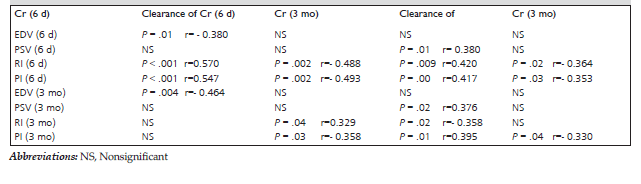
Table 1. Correlation Between Peak Systolic Volume (PSV), End Diastolic Volume (EDV), Resistive Index (RI), and Pulsatility Index (PI) with Serum Creatinine (SCr) and Clearance of Cr
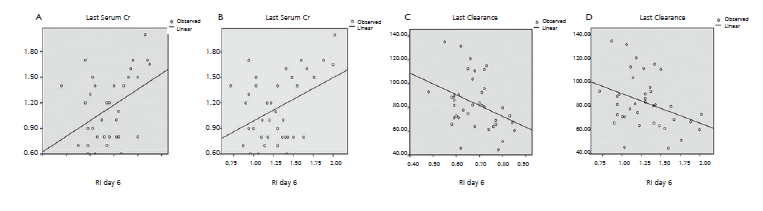
Figure 1. (A). Correlation Between 6-Day RI and Last Measured Serum Cr. (B). Correlation Between 6-Day PI and Last Measured Serum Cr. (c). Correlation Between 6-Day RI and Last Cr Clearance. (D). Correlation Between 6-Day PI and Last Cr Clearance