Volume: 9 Issue: 4 August 2011
FULL TEXT
Thiopurine S-Methyltransferase Polymorphism in Iranian Kidney Transplant Recipients
Objectives: Thiopurine S-methyltransferase is an enzyme that catalyzes S-methylation of azathioprine as an immunosuppressive drug. Genetic polymorphisms influence thiopurine S-methyltransferase activity. There are 3 variant alleles: thiopurine S-methyltransferase*2, *3A, and *3C are responsible for more than 95% cases of low-enzyme activity.
Materials and Methods: We studied these polymorphisms and the occurrence of azathioprine adverse effects in 50 renal transplant recipients undergoing triple immunosuppressive therapy including azathioprine, cyclosporine, and prednisone. Thiopurine S-methyltransferase genetic polymorphism was determined by polymerase chain reaction restriction fragment length polymorphism assay and allele-specific polymerase chain reaction methods. Azathioprine dosage; leukocyte, erythrocyte, and platelet counts; and graft rejection episodes were analyzed during hospitalization.
Results: Two patients (2%) were heterozygous for thiopurine S-methyltransferase*3C, the remaining patients were thiopurine S-methyltransferase wild-type *1/*1 (98%). Thiopurine S-methyltransferase wild-type homozygous and heterozygous patients were administered similar azathioprine dosages at the beginning of treatment (2.42 ± 0.50 and 2.52 ± 0.40 mg/kg/24 h). During subsequent days, mean azathioprine dosage administered to thiopurine S-methyltransferase wild-type homozygous patients was similar to heterozygous patients, but with no statistical difference (P = .28). Three patients had an acute rejection episode during this time. Five patients (10%) had reduced azathioprine dosage owing to adverse effects. Adverse reactions consisted of hematotoxicity (n=2), hepatotoxicity (n=1), and gastrointestinal toxicity (n=2). All recipients were wild-type homozygotes.
Conclusions: The frequency of thiopurine S-methyltransferase gene mutations is low among our patients. The incidence of adverse reactions to azathioprine was also low, even in patients carrying a variant of thiopurine S-methyltransferase. We conclude that determining thiopurine S-methyltransferase genotype is not useful in our population to predict adverse reactions to azathioprine.
Key words : Thiopurine, Genetic polymorphism, Renal, Transplantation, Azathioprine
Introduction
Thiopurine S-methyltransferase (TPMT; EC 2.1.1.67), an enzyme that catalyzes S-methylation of thiopurine drugs, exhibits a genetic polymorphism in 10% of white persons. It is present in many tissues, such as blood cells, heart, placenta, pancreas, and intestine.1 Thiopurine S-methyltransferase catalyzes S-methylation of anticancer and immunosuppressant thiopurine drugs, such as 6-mercaptopurine, 6-thioguanine, and azathioprine, to inactive metabolites.2 These drugs are widely used to manage acute lymphoblastic leukemia, acute myeloid leukemia, inflammatory bowel disease, and rheumatoid arthritis.3 Among these drugs, azathioprine was commonly used as an immunosuppressive drug in renal transplant medicine. Enzyme deficiency is associated with severe or even fatal hematopoietic toxicity after standard doses of thiopurine drugs.1 There is interindividual variability of TPMT activity, caused by genetic polymorphism in the coding regions of the TPMT gene that is inherited as an autosomal codominant trait.4 Three alleles TPMT*2, *3A, and *3C account for up to 95% of intermediate or low enzyme activity cases. The TPMT*3A allele contains 2 point mutations: G460A in exon 7 and A719G in exon 10 that lead to Ala154Thr and Tyr240Cys amino acid substitutions. Thiopurine S-methyltransferase*3C has only a single A719G transversion, and TPMT*2 contains a G238C transversion, producing an Ala80Pro substitution.5, 6 The clinical effect of heterozygosity in the TPMT gene remains controversial, some studies have shown an association between heterozygosity and azathioprine or 6-mercaptopurine–related myelotoxicity,7-9 and some have found no association.10-12 Owing to such controversial studies, in this retrospective study, we investigated 50 adult kidney transplant recipients and evaluated whether azathioprine-related adverse effects, such as hematotoxicity, hepatotoxicity, or gastrointestinal toxicity can be explained by the TPMT polymorphism.
Materials and Methods
The patients underwent a kidney transplant between 2002 to 2004 in the Department of Transplant Surgery, Namazi Hospital affiliated with the Shiraz University of Medical Sciences. The ethics committee of Shiraz University of Medical Sciences approved the study protocol, and conforms with the ethical guidelines of the 1975 Helsinki Declaration. Written, informed consent was obtained from all subjects. Recipients who received azathioprine as a part of standard immunosuppressive therapy (azathioprine, cyclosporine, and prednisone) were selected. All subjects were of South Iranian nationality. Patients were excluded from the study if azathioprine was replaced by another immunosuppressive drug (mycophenolate mofetil), if they failed graft function during hospitalization after transplant, or if they received allopurinol, a drug that interacts with azathioprine. Finally, 50 patients met the study criteria. They were initially given azathioprine (Imuran) at an oral dosage of approximately 2.5 mg/kg/24 hour, which was reduced to 1.5 mg/kg/24 hour during the first week of treatment. The azathioprine dosage was reduced in case of severe leukopenia (defined as white blood cell count below 3.0 × 10⁹/L). Gastrointestinal toxicity was defined as accompanying symptoms such as nausea, vomiting, and abdominal pain, and the symptoms were relieved after azathioprine dosage reduction. Hepatotoxicity defined as serum alanine transaminase levels greater than twice the upper normal limit (40 U/L). All patients were given cyclosporine and prednisone according to the standard immunosuppressive regimen. The initial dosage was approximately 3-5 mg/kg/24 hour. The daily dosage was then adjusted, according to blood trough cyclosporine concentration (C0), to a target concentration of 180 ng/mL. Acute clinical rejection was recorded and biopsy proven rejection was graded according to Banff criteria.13
Genotyping of thiopurine S-methyltransferase
Genomic DNA was extracted from stored buffy coat samples by means of a
commercial extraction kit (DNP, DNA Extraction Kit, Sinagene Company, Tehran,
Iran). The 3 principal TPMT mutations (G238C, G460A, and A719G) were determined
by polymerase chain reaction (PCR)-based assays. The standard PCR program was
performed to amplify exon 5, 7, and 10 with different annealing temperatures,
which were 59°C, 59°C, and 60°C.
The temperature profile consisted of an initial denaturation step at 95°C for 5 minutes followed by 30 cycles of 1 minute at 95°C, 1 minute at specified annealing temperatures, 1 minute at 72°C, and a final extension for 10 minutes at 72°C.
The G238C mutation was detected by using an allele-specific PCR as previously described by Yates and associates with modification.14
P1-R (5'-TAAATAG GAACCATCGGACAC-3') (reverse) and either P1-FW (5'-GTATGATTTTATGCAGGTTTG-3') or P1-FM (5'-GTATGATTTTATGCAGGTTTC-3') were used for the wild-type specific or mutant specific reactions. The length of PCR product was 254 base pair. A719G and G460A point mutations were detected by using PCR-restriction fragment length polymorphism (RFLP) method as previously described.14 P2-F (5'-CAGGCTTTAGCATAATTTTCAATTCCTC-30) and P2-R (5'-TGTTGGGATTACAGGTGTGAGCCAC-3') were used to amplify a 293 bp fragment covering the A719G point mutation. A 317-bp fragment covering G460A polymorphism was amplified with primer P3-F (5'-AGGCTCCTAAAACCAT GAGGG-3') and P3-R (5'GTATACTAAAAAATTAAGACAGC-3'). Genotype analysis for G460A point mutation was carried out by digesting of PCR product with MwoI enzyme, which yields fragment of 240 and 77 bp for wild-type allele and leaves the PCR product undigested for the mutant allele.
The PCR product of exon 10 was digested with restriction enzyme AccI to detect A719G mutation, which yields fragments of 207 and 86 bp for the mutant allele and leaves PCR product undigested for the wild-type allele. All PCR products and digestion fragments were visualized on 3% agarose gel stained with ethidium bromide.14 Statistical analyses were performed with SPSS software for Windows (Statistical Product and Service Solutions, version 15.0, SSPS Inc, Chicago, IL, USA). Values for P < .05 were considered statistically significant.
Results
Characteristics of the patients are given in Table 1. The azathioprine doses and laboratory parameters (white blood cells, red blood cells, and platelets) on the day of transplant, and 15 days after surgery are shown in Table 2. In screening for TPMT*2,*3A,*3B, and *3C, patients (2%) were heterozygous for TPMT*3C; the remaining patients were TPMT wild-type *1/*1 (98%) (Table 3). Thiopurine S-methyltransferase wild-type homozygous and heterozygous patients were administered similar azathioprine dosages at the beginning of treatment (2.42 ± 0.50 and 2.52 ± 0.40 mg/kg/24 h). During subsequent days after treatment, mean azathioprine dosage administered to TPMT wild-type homozygous patients was similar to heterozygous patients with no statistical significance (P = .28). Three patients had acute rejection in this period; the TPMT gene polymorphism did not influence the frequency of acute graft rejection episodes.
Azathioprine-related adverse events
In this study, azathioprine dosage was reduced in 5 patients (10%) owing to
adverse effects (Table 4). Adverse reactions consisted of hematotoxicity (n=2),
hepatotoxicity (n=1), and gastrointestinal toxicity (n=2) (Table 4). All these
recipients were homozygote wild type, and no correlation between TPMT variant
and azathioprine toxicity was detected.
Discussion
Molecular study of TPMT polymorphism is an alternative tool for enzyme activity assays because it is not influenced by blood transfusions or drug interactions. Increased risk of thiopurine drug toxic effects in patients heterozygous for 1 of the common TPMT variant alleles is controversial in different studies. Inosine triphosphate pyrophosphatase (ITPase; EC 3.6.1.19), another enzyme implicated in thiopurine metabolism, was studied in a previous study, and patients with ITPA variant genotype were at high risk of developing azathioprine-related toxicity.15-17
Myelotoxicity of thiopurine drugs in patients inheriting 2 variant TMPT alleles is seen in the treatment of rheumatoid arthritis, acute lymphoblastic leukemia, Crohn disease, and transplant medicine.18 The clinical significance of heterozygosity in the TPMT gene is more controversial. Hindorf and associates reported that subjects with intermediate TPMT activity were more sensitive to azathioprine dosage increase compared with subjects with normal enzyme activity.19
Ganiere-Monteil and associates studied the effect of age on TPMT enzyme activity. There was no significant difference in TPMT activity between cord bloods and children, suggesting that TPMT activity was already mature at birth. The enzyme was significantly lower in children than in adults. The frequency of mutant alleles in French people, was 3.0% for TPMT*3A, 0.7% for TPMT*2, and 0.4% for TPMT*3C. In the whole population, there were 91.9% homozygous wild type, 7.9% heterozygous mutants, and 0.2% homozygous mutants.
When individual TPMT activity was compared with genotype, there was an overlapping region where subjects were either homozygous wild type or heterozygous, had low TPMT activity. They emphasized on measuring TPMT activity to detect patients at risk of thiopurine toxicity.20 In an Argentinian study, variants of TPMT alleles were present in 8.2% of the examined subjects. The frequency of TPMT*3A, TPMT*2, and TPMT*4 was 3.1%, 0.7% and 0.3%. Thiopurine S-methyltransferase*3A was the most prevalent allele, resemble with results from white populations. All examined subjects with normal activity had wild-type genotype, and individuals with low to intermediate activity were heterozygous for one of the mutant alleles.21 Pandya and associates, in a study of 88 renal transplant recipients, observed azathioprine toxic effects were more frequent in heterozygous renal transplant recipients, compared with wild-type homozygotes.22 Fabre and associates, in a study of 172 renal transplant recipients,23 found a difference in the percentage of wild-type homozygous and heterozygous individuals whose azathioprine dose had been decreased significantly 1 year after transplant. The results of our study show no association of the TPMT gene polymorphism with azathioprine toxicity in renal transplant recipients. In our study, hematologic parameters (eg, white blood cells, red blood cells, and platelets) did not differ significantly between TPMT wild type and those recipients harboring variant allele. Similar results were reported by Fabre and associates.23
Kurzawski and associates evaluated variant TPMT (*2, *3A, *3B, and *3C) and ITPA (94C>A and IVS2+21A>C) alleles as risk factors for azathioprine intolerance in Polish renal transplant recipients. They found that carriers of variant TPMT alleles were more susceptible to azathioprine-related myelotoxicity than wild type.24, 25 In contrast, ITPA genotype did not influence azathioprine dosage, hematologic parameters, or leucopenia risk. According to their findings, routine genotyping of renal transplant recipients for TPMT variants to reducing the risk of azathioprine-related myelotoxicity was suggestive, but there was not enough evidence to do ITPA testing in a Polish population.24-26 The same result about TPMT heterozygote patients was found in Chinese and Thai renal transplant recipients.27-29 Recently, Xiong and associates, found no statistical significant associations between inosine triphosphate pyrophosphohydrolase (ITPA 94C>A) phenotype or genotype and azathioprine-related hematotoxicity or hepatotoxicity in Chinese kidney transplant recipients. But patients with ITPA 94C>A homozygous allele are at a high risk of developing azathioprine-related gastrointestinal toxicity and flulike symptoms. They found that ITPA activity reduced in patients with the 94C>A mutation.29
Moloney and associates suggested that inheritance of the TPMT variant gene in conjunction with ultraviolet radiation had a synergistic effect on development of skin cancers in azathioprine-treated transplant patients.30 In Chinese people, a novel missense mutation Phe→Leu at 208 aa position in exon 9 (ss105107120) was identified that associated with a decreased TPMT enzyme activity.31 In people who are susceptible to azathioprine, alternative regimens such as cyclosporine, mycophenolate mofetil, or tacrolimus should be considered.32
Formea and associates, reported although the mean azathioprine dosages for wild-type homozygote and TPMT variant allele carriers were comparable after 30 days of treatment, mean values of red blood cells, hematocrit, and hemoglobin were significantly lower in the latter group of patients.33 Xin and associates found a correlation between TPMT variants and leukopenia episodes in renal transplant recipients treated with azathiopurine.34
In our study, TPMT coding polymorphisms were not associated with the risk of graft rejection episodes. This is in keeping with the previous findings.22, 23
Poli and associates studied gene polymorphisms of tumor necrosis factor-alpha (TNFalpha), interleukin (IL)-6, IL-10, interferon-gamma (IFNgamma), and transforming growth factor-beta (TGFbeta), as well as TPMT, and their effect on both the individual’s risk of rejection, as well as tolerance to immunosuppressive therapy, in Italian people. They suggested that genotyping might individualize immunosuppressive therapy in organ transplant recipients in the future.35 Cattaneo and associates believed that it was mandatory to develop mathematical models able to incorporate multiple gene polymorphisms with pharmacokinetic data to develop algorithms to individualize the best immunosuppressive therapy for each patient before transplant.36
Allograft rejection episodes depend on immunologic concordance between donor and recipient, immunosuppressive regimens, and many more factors. Therefore, we suggest that TPMT genetic testing before initiation of thiopurine drug therapy is not necessary as a routine pharmacogenetics study in our population and study on other single nucleotide polymorphisms of TPMT or other genes like ITPA variants are suggestive.
References:
- Sahasranaman S, Howard D, Roy S. Clinical pharmacology and pharmacogenetics of thiopurines. Eur J Clin Pharmacol. 2008;64(8):753-767.
- Krynetski EY, Tai HL, Yates CR, et al. Genetic polymorphism of thiopurine S-methyltransferase: clinical importance and molecular mechanisms. Pharmacogenetics. 1996;6(4):279-290.
- McLeod HL, Siva C. The thiopurine S-methyltransferase gene locus -- implications for clinical pharmacogenomics. Pharmacogenomics. 2002;3(1):89-98.
- Weinshilboum RM, Sladek SL. Mercaptopurine pharmacogenetics: monogenic inheritance of erythrocyte thiopurine methyltransferase activity. Am J Hum Genet. 1980;32(5):651-662.
- Krynetski EY, Schuetz JD, Galpin AJ, Pui CH, Relling MV, Evans WE. A single point mutation leading to loss of catalytic activity in human thiopurine S-methyltransferase. Proc Natl Acad Sci U S A. 1995;92(4):949-953.
- Tai HL, Krynetski EY, Yates CR, et al. Thiopurine S-methyltransferase deficiency: two nucleotide transitions define the most prevalent mutant allele associated with loss of catalytic activity in Caucasians. Am J Hum Genet. 1996;58(4):694-702.
- Black AJ, McLeod HL, Capell HA, et al. Thiopurine methyltransferase genotype predicts therapy-limiting severe toxicity from azathioprine. Ann Intern Med. 1998;129(9):716-718.
- Relling MV, Hancock ML, Rivera GK, et al. Mercaptopurine therapy intolerance and heterozygosity at the thiopurine S-methyltransferase gene locus. J Natl Cancer Inst. 1999;91(23):2001-2008.
- Zelinkova Z, Derijks LJ, Stokkers PC, et al. Inosine triphosphate pyrophosphatase and thiopurine s-methyltransferase genotypes relationship to azathioprine-induced myelosuppression. Clin Gastroenterol Hepatol. 2006;4(1):44-49.
- Naughton MA, Battaglia E, O'Brien S, Walport MJ, Botto M. Identification of thiopurine methyltransferase (TPMT) polymorphisms cannot predict myelosuppression in systemic lupus erythematosus patients taking azathioprine. Rheumatology (Oxford). 1999;38(7):640-644.
- Gearry RB, Barclay ML, Burt MJ, et al. Thiopurine S-methyltransferase (TPMT) genotype does not predict adverse drug reactions to thiopurine drugs in patients with inflammatory bowel disease. Aliment Pharmacol Ther. 2003;18(4):395-400.
- Takatsu N, Matsui T, Murakami Y, et al. Adverse reactions to azathioprine cannot be predicted by thiopurine S-methyltransferase genotype in Japanese patients with inflammatory bowel disease. J Gastroenterol Hepatol. 2009;24(7):1258-1264.
- Serón D, Moreso F, Bover J, et al. Early protocol renal allograft biopsies and graft outcome. Kidney Int. 1997;51(1):310-316.
- Yates CR, Krynetski EY, Loennechen T, et al. Molecular diagnosis of thiopurine S-methyltransferase deficiency: genetic basis for azathioprine and mercaptopurine intolerance. Ann Intern Med. 1997;126(8):608-614.
- Zelinkova Z, Derijks LJ, Stokkers PC, et al. Inosine triphosphate pyrophosphatase and thiopurine s-methyltransferase genotypes relationship to azathioprine-induced myelosuppression. Clin Gastroenterol Hepatol. 2006;4(1):44-49.
- Ansari A, Arenas M, Greenfield SM, et al. Prospective evaluation of the pharmacogenetics of azathioprine in the treatment of inflammatory bowel disease. Aliment Pharmacol Ther. 2008;28(8):973-983.
- Marinaki AM, Ansari A, Duley JA, et al. Adverse drug reactions to azathioprine therapy are associated with polymorphism in the gene encoding inosine triphosphate pyrophosphatase (ITPase). Pharmacogenetics. 2004;14(3):181-187.
- Reuther LO, Vainer B, Sonne J, Larsen NE. Thiopurine methyltransferase (TPMT) genotype distribution in azathioprine-tolerant and -intolerant patients with various disorders. The impact of TPMT genotyping in predicting toxicity. Eur J Clin Pharmacol. 2004;59(11):797-801.
- Hindorf U, Peterson C, Almer S. Assessment of thiopurine methyltransferase and metabolite formation during thiopurine therapy: results from a large Swedish patient population. Ther Drug Monit. 2004;26(6):673-678.
- Ganiere-Monteil C, Medard Y, Lejus C, et al. Phenotype and genotype for thiopurine methyltransferase activity in the French Caucasian population: impact of age. Eur J Clin Pharmacol. 2004;60(2):89-96.
- Laróvere LE, de Kremer RD, Lambooy LH, De Abreu RA. Genetic polymorphism of thiopurine S-methyltransferase in Argentina. Ann Clin Biochem. 2003;40(Pt 4):388-393.
- Pandya B, Thomson W, Poulton K, Bruce I, Payne D, Qasim F. Azathioprine toxicity and thiopurine methyltransferase genotype in renal transplant patients. Transplant Proc. 2002;34(5):1642-1645.
- Fabre MA, Jones DC, Bunce M, et al. The impact of thiopurine S-methyltransferase polymorphisms on azathioprine dose 1 year after renal transplantation. Transpl Int. 2004;17(9):531-539.
- Kurzawski M, Dziewanowski K, Lener A, Drozdzik M. TPMT but not ITPA gene polymorphism influences the risk of azathioprine intolerance in renal transplant recipients. Eur J Clin Pharmacol. 2009;65(5):533-540.
- Kurzawski M, Dziewanowski K, Gawrońska-Szklarz B, Domański L, Droździk M. The impact of thiopurine s-methyltransferase polymorphism on azathioprine-induced myelotoxicity in renal transplant recipients. Ther Drug Monit. 2005;27(4):435-441.
- Loennechen T, Lysaa RA, Giverhaug T, Sylte I, Mathiesen LE, Aarbakke J. New techniques for optimization of thiopurine therapy in leukemia and transplantation [in Norwegian]. Tidsskr Nor Laegeforen. 2002;122(11):1107-1110.
- Song DK, Zhao J, Zhang LR. TPMT genotype and its clinical implication in renal transplant recipients with azathioprine treatment. J Clin Pharm Ther. 2006;31(6):627-635.
- Vannaprasaht S, Angsuthum S, Avihingsanon Y, et al. Impact of the heterozygous TPMT*1/*3C genotype on azathioprine-induced myelosuppression in kidney transplant recipients in Thailand. Clin Ther. 2009;31(7):1524-1533.
- Xiong H, Xin HW, Wu XC, Li Q, Xiong L, Yu AR. Association between inosine triphosphate pyrophosphohydrolase deficiency and azathioprine-related adverse drug reactions in the Chinese kidney transplant recipients. Fundam Clin Pharmacol. 2010;24(3):393-400.
- Moloney FJ, Dicker P, Conlon PJ, Shields DC, Murphy GM. The frequency and significance of thiopurine S-methyltransferase gene polymorphisms in azathioprine-treated renal transplant recipients. Br J Dermatol. 2006;154(6):1199-1200.
- Kham SK, Soh CK, Aw DC, Yeoh AE. TPMT*26 (208F-->L), a novel mutation detected in a Chinese. Br J Clin Pharmacol. 2009;68(1):120-123.
- Schütz E, Gummert J, Armstrong VW, Mohr FW, Oellerich M. Azathioprine pharmacogenetics: the relationship between 6-thioguanine nucleotides and thiopurine methyltransferase in patients after heart and kidney transplantation. Eur J Clin Chem Clin Biochem. 1996;34(3):199-205.
- Formea CM, Myers-Huentelman H, Wu R, et al. Thiopurine S-methyltransferase genotype predicts azathioprine-induced myelotoxicity in kidney transplant recipients. Am J Transplant. 2004;4(11):1810-1817.
- Xin HW, Xiong H, Wu XC, Li Q, Xiong L, Yu AR. Relationships between thiopurine S-methyltransferase polymorphism and azathioprine-related adverse drug reactions in Chinese renal transplant recipients. Eur J Clin Pharmacol. 2009;65(3):249-255.
- Poli F, Piccolo G, Scalamogna M. Genetic polymorphisms influencing therapy and susceptibility to rejection in organ allograft recipients. BioDrugs. 2002;16(1):11-17.
- Cattaneo D, Baldelli S, Perico N. Pharmacogenetics of immunosuppressants: progress, pitfalls and promises. Am J Transplant. 2008;8(7):1374-1383.
Volume : 9
Issue : 4
Pages : 241 - 246
From the 1Organ Transplant Research Center, and the
2Organ Transplant Center,
Nemazi Hospital, Shiraz University of Medical Sciences, Shiraz, Iran
Address reprint requests to: Negar Azarpira, MD, Organ Transplant Research
Center, Shiraz University of Medical Sciences, Shiraz, Iran
Phone: +98 711 6474331
Fax: +98 711 6474331
E-mail:
negarazarpira@yahoo.com
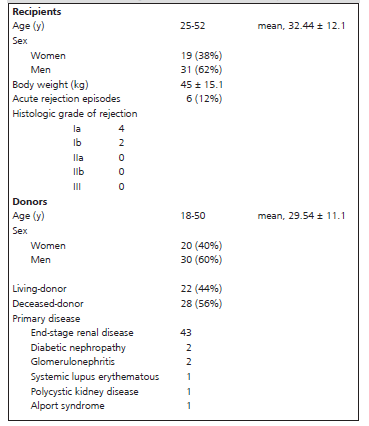
Table 1. Characteristics of patients included in this study (n=50).
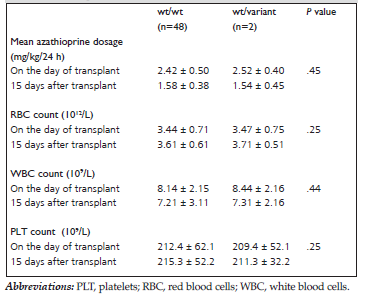
Table 2. Azathioprine dosage and hematologic parameters in TPMT wildtype homozygote and heterozygote patients during early hospitalization after renal transplant.
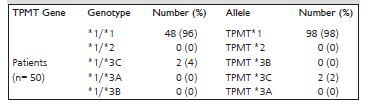
Table 3. Genotypes and allele frequencies of TPMT variants in renal transplant patients (n=50).
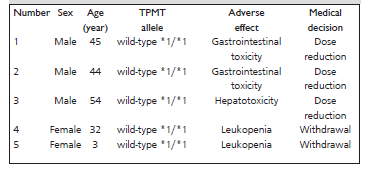
Table 4. Characteristics of 5 patients with hematologic, gastrointestinal, and hepatotoxicity after azathioprine therapy.