Volume: 7 Issue: 3 September 2009
FULL TEXT
Objectives: To optimize transgene expression levels after Adeno-associated virus (AAV)-mediated gene transfer, different delivery methods were compared in a transplant setting.
Materials and Methods: Heterotopic abdominal heart transplants were performed in male Lewis rats (250-280 g). According to the vector application method, animals were divided into 3 groups: group 0.35 mL, containing saline solution AAV2/9-LacZ (2 x 10¹¹ vector genome) was injected directly into the myocardium (apex) immediately after reperfusion. Group 0.3 mL contained a cardioplegic solution AAV2/9-LacZ vectors (3 x 10¹² vector genome), which was rapidly injected into the aortic root, with the pulmonary trunk clamped. Before transplant the transfected heart was incubated for 25 minutes in iced cardioplegia. A reperfusion system was applied in group 5 mL. For 25 minutes, a cold solution of cardioplegia and AAV2/9–LacZ vectors (5 x 10¹² vector genome) was recirculated through the donor heart. Transplanted grafts were explanted after 3 weeks. To detect and to measure marker gene expression, X-gal staining was performed.
Results: In groups 0.35 mL and 0.3 mL, higher transfection efficiency was observed compared to group 5 mL (P < .05). While positive-stained myocardia were detected around the injection site in group 0.35 mL, the expression pattern was much more homogenous in group 0.3 mL.
Conclusions: Results demonstrate that intracoronary injection of the vectors with the pulmonary trunk clamped leads to the highest and most homogenous distribution of transgene expression in the graft.
Key words : Transfection, Myocardium, Cardiac transplant, Introcoronary infusion, Perfusion
Gene therapy is thought to be a promising approach to treat the disease associated with transplant, such as ischemia-reperfusion injury, cardiac allograft vasculopathy, and chronic rejection. Adeno-associated virus (AAV) is the most attractive vehicle for gene therapy owing to its characteristics of nonpathogenicity, low immunogenicity, and long-term transgene expression. Adeno-asscociated virus 9 has been shown to be a robust tropism for myocardium in current in vitro and in vivo studies compared with other serotypes (1, 2). Efficient transfection of the transplanted heart has been achieved using ex vivo heart perfusion with AAV9 (3); however, the required equipment for the recirculation system complicates the procedure of transplant. Continuous perfusion of hyperkalemic solution results in endothelium dysfunction and edema of the myocardium (4, 5). Thus, to simplify the gene delivery method and balance the transfection efficiency would be a worthy protection of the graft function worth investigating in the transplant setting.
Materials and Methods:
Male inbred Lewis rats, weighting 250-300 g, were used as recipients and donors for syngeneic abdominal heterotopic heart transplant. Procedure and handling of animals were reviewed and approved by the Animal Care and Use Committee of the Surgical Research Institute of the Ludwig-Maximilians-University.
Production of Adeno-associated virus
Adeno-asscociated virus 2/9 vectors were cotransfected with 2 helper plasmids to
293 cells by the calcium phosphate precipitation method, and the Cytomegalovirus
promoter was inserted into the vectors. Vectors were purified by CsCl2 centrifugation. Viral titers were determined by dot blot analysis of the DNA
content and expressed as number of viral genomes.
Donor heart procurement
Explantation of the heart was performed as previously described (6). Brifely,
after anesthesia, a median sternotomy was performed to expose the heart after an
intravenous administration of 500 IU heparin. A 24-gauge cannula was inserted
into the innominate artery, followed by infusion of cold University of Wisconsin
(UW) solution into the aortic root. The venae cavae were ligated separately, and
the pulmonary veins were ligated en bloc with 5-0 silk line. After harvesting,
the heart was immersed into cold saline solution for vector delivery.
Gene delivery to the graft
Group 0.35 mL: Direct intramyocardial injection of 0.35 mL saline solution
containing AAV2/9-LacZ (2 × 10¹¹ vector genome [vg]) was injected directly into
the myocardium (apex) immediately after reperfusion
Group 0.3 mL: Intracoronary
infusion of 0.3 mL of UW solution containing AAV2/9-LacZ (3 × 10¹² vg) was
infused into the coronary artery through the inserted canula over 10 seconds,
and was trapped in the graft with the pulmonary trunk clamped for 25 minutes (Figure
1).
Group 5 mL: Ex vivo perfusion. The heart was placed into a 10 mL syringe
tube containing 5 mL UW solution mixed with AAV2/9-LacZ vectors (5 × 10¹² vg). A
peristaltic pump was used to continuously perfuse the heart with the vectors for
25 minutes at a flow rate of 0.75 mL/min, and the temperature of perfusion
solution was controlled at 4°C (Figure 2).
After gene delivery (except group 0.35 mL), the donor heart was im¬planted into the recipient abdomen by anastomosis of the donor aorta and pulmonary artery to the recipient abdominal aorta and inferior vena cava, respectively. Graft survival was evaluated by daily abdominal palpation.
Evaluation for transfection efficiency
Three weeks after operation, transplanted hearts were harvested and rinsed with
saline. The tissues were snap-frozen in liquid nitrogen and 5-µm cryostat
sections were cut at 25-µm intervals. The slides were fixed in 0.05%
glutaraldehyde for 5 minutes at room temperature, and then were washed twice in
phosphate buffered saline and stained with X-gal solution overnight at 37°C.
Gene transduction efficiency was determined by blue stained cells in the grafts
under a light microscope.
Results
There was no technical failure during the experimental period. All grafts functioned well at the time of explantation. As shown in Figure 3, there was a dramatic increase in gene delivery as assessed by LacZ expression in groups 0.35 mL and 0.3 mL compared with group 5 mL (the mean number of positive cells per section was P < .05 in groups 0.3 mL versus group 0.35 mL or 5 mL) (Table 1). The transgene expression pattern was much more homogenous in group 0.3 mL compared to that of the other groups.
Discussion
We have shown that clamping the pulmonary trunk during the vector infusion and incubation results in a relative higher transfection efficiency of AAV2/9-mediated gene transfer to the myocardium. This technique is simple, does not require special equipments, and is feasible for clinical application.
The superiority of this delivery method is attributed to the volume of coronary circulation in the rat heart being about 300 µL (7); thus, 300 µL of vector solution is sufficient to infuse the whole microvasculature. However, the minimum volume required for the recirculation system of ex vivo perfusion is 5 mL in the current study. When the vectors were applied by the 2 different delivery methods, the concentration of vectors was much lower in the perfusion method compared with the clamping technique owing to the dilution of the vectors with the recirculation solution. Second, vector-target cell contact is enhanced by trapping of vectors within the coronary vasculature without the influence of vascular shear stress resulting from the continuous perfusion. Third, the vector delivery flow rate is much higher with this delivery method: 1.8 mL/min (0.3 mL/10 s) compared with 0.75 mL/min during perfusion delivery. This resulted in a higher intracoronary vasculature pressure, facilitating the vectors to cross the endothelial barrier in micro¬vessels. In the current study, all grafts recovered well within a few minutes after reperfusion and exhibited normal contractile function. This demonstrates that the sustained pressure during the clamping period does not compromise the graft function and is well tolerated by both myocardium and endothelium.
Although direct intramyocardial injection leads to efficient transduction, the limitations of this technique are the potential of vessel injury and local transfected area around the injection site.
Efficient transfection of the myocardium using ex vivo perfusion has been achieved (3); however, it is much lower in our current study despite a higher dosage of applied vectors. The following factors are attributed to this difference: First, in our preliminary study if the perfusate was not cooled by ice prior to infusion into the heart the temperature of the perfusate solution could rise to above 15°C (data not shown) although the container and heart were kept in ice. We found the reasons are the generated friction heat from the pump and the perfusate warming up, due to the recirculation circuit exposed to room temperature. It has been demonstrated that the ability of AAV to cross the endothelium and translocate into nuclei of target cells was decreased more than 95% at the temperature of 4°C compared with 37°C (8). However, in our study, to avoid warm ischemia during transfection, we used ice to cool the perfusate before infusion of the graft. This might have decreased the transfection efficiency. Secondly, the AAV vectors applied in the study by Miyagi (3) is driven by combination of a Cytomegalovirus enhancer and promoter, so the RNA transcription and protein translation levels of the transgene can be significantly increased in the presence of a combination of enhancer/promoter compared to the presence of promoter only (9, 10), which was used in our study. In addition, ex vivo perfusion of heart has been demonstrated to result in myocardium edema and endothelium dysfunction (4, 5). Thus, this method might increase the rate of primary graft dysfunction in the transplant setting.
Conclusions
Intracoronary infusion of vectors with the pulmonary trunk clamped is a simple gene delivery method and results in efficient transduction under cardioplegic cold conditions. Furthermore, this clamping technique does not compromise the graft function. Further investigations are currently underway to evaluate the effectiveness of this gene delivery technique using therapeutic transgenes to modulate the rejection after heterotopic rat heart transplant.
References:
- Pacak CA, Mah CS, Thattaliyath BD, et al. Recombinant adeno-associated virus serotype 9 leads to preferential cardiac transduction in vivo. Circ Res. 2006;99(4):e3-e9.
- Inagaki K, Fuess S, Storm TA, et al. Robust systemic transduction with AAV9 vectors in mice: efficient global cardiac gene transfer superior to that of AAV8. Mol Ther. 2006;14(1):45-53.
- Miyagi N, Rao VP, Ricci D, et al. Efficient and durable gene transfer to transplanted heart using adeno-associated virus 9 vector. J Heart Lung Transplant. 2008;27(5):554-560.
- He GW, Yang CQ. Impaired endothelium-derived hyperpolarizing factor-mediated relaxation in coronary arteries by cold storage with University of Wisconsin solution. J Thorac Cardiovasc Surg. 1998;116(1):122-130.
- Poston RS, Gu J, Prastein D, et al. Optimizing donor heart outcome after prolonged storage with endothelial function analysis and continuous perfusion. Ann Thorac Surg. 2004;78(4):1362-1370; discussion 1362-1370.
- Burdorf L, Schuhmann N, Postrach J, et al. AAV-mediated gene transfer to cardiac cells in a heterotopic rat heart transplantation model. Transplant Proc. 2007;39(2):567-568.
- Logeart D, Hatem SN, Rücker-Martin C, et al. Highly efficient adenovirus-mediated gene transfer to cardiac myocytes after single-pass coronary delivery. Hum Gene Ther. 2000;11(7):1015-1022.
- Di Pasquale G, Chiorini JA. AAV transcytosis through barrier epithelia and endothelium. Mol Ther. 2006;13(3):506-516.
- Isomura H, Stinski MF. The human cytomegalovirus major immediate-early enhancer determines the efficiency of immediate-early gene transcription and viral replication in permissive cells at low multiplicity of infection. J Virol. 2003;77(6):3602-3614.
- Meier JL, Pruessner JA. The human cytomegalovirus major immediate-early distal enhancer region is required for efficient viral replication and immediate-early gene expression. J Virol. 2000;74(4):1602-1613.

Volume : 7
Issue : 3
Pages : 184 - 187
From the
1Department of Cardiac Surgery, Ludwig-Maximilians-University of Munich,
Munich, Germany,
2Internal Medicine I, Klinikum Grosshadern, Ludwig-Maximilians-University
of Munich, Germany,
3Department of Surgery, Tongji Medicine School, Tongji
University, Shanghai, China
Supported by the German Research Foundation (Deutsche Forschungsgemeinschaft)
Transregio Research Unit 535, Germany.
Acknowledgement: We thank James M. Wilson (University of Pennsylvania) for
providing the AAV9 capsid.
Address reprint requests to: Jiang Xiaofeng, Department of Cardiac Surgery,
Ludwig-Maximilians-University, Marchioninistr. 15, 81377 Munich, Germany.
Phone: +49-89-2180-76506
Fax: +49-89-2180-76503
E-mail:
Xiaofeng.Jiang@med.uni-muenchen.de
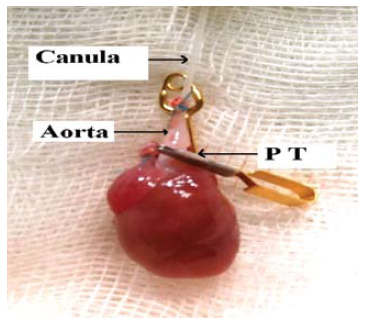
Figure 1. Scheme illustrated for intracoronary infusion. University of Wisconsin solution containing vectors was infused into graft through a cannula inserted into the aortic root with the pulmonary trunk clamped.
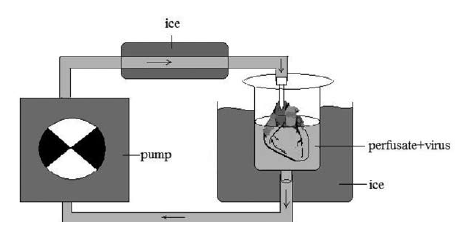
Figure 2. Scheme illustrated for the perfusion system. Perfusate mixed with virus was recirculated to infuse the graft through a peristaltic pump. Ice was used to cool the perfusate solution before it was infused into the heart.
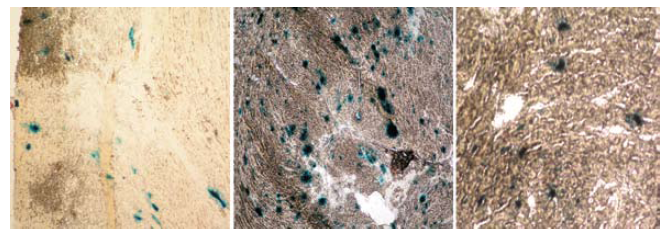
Figure 3. Representative section of the grafts from each group 3 weeks after transfection. (A) Positive cells were localized around the needle track following intramyocardial injection of 2.0 × 10¹¹ vg of AAV2/9-LacZ. (B) Homogenous and numerous positive cells can be observed in the graft treated with infusion of 3.0 × 10¹² vg of AAV2/9-LacZ into the aorta with the pulmonary trunk clamped. (C) Widespread, but sparse transfected cells, can be seen in the graft transfected by means of ex vivo perfusion of the heart with 5.0 × 10¹² vg of AAV2/9-LacZ.
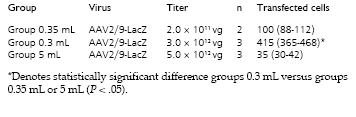
Table 1. Gene transfer efficiency with different delivery methods.